
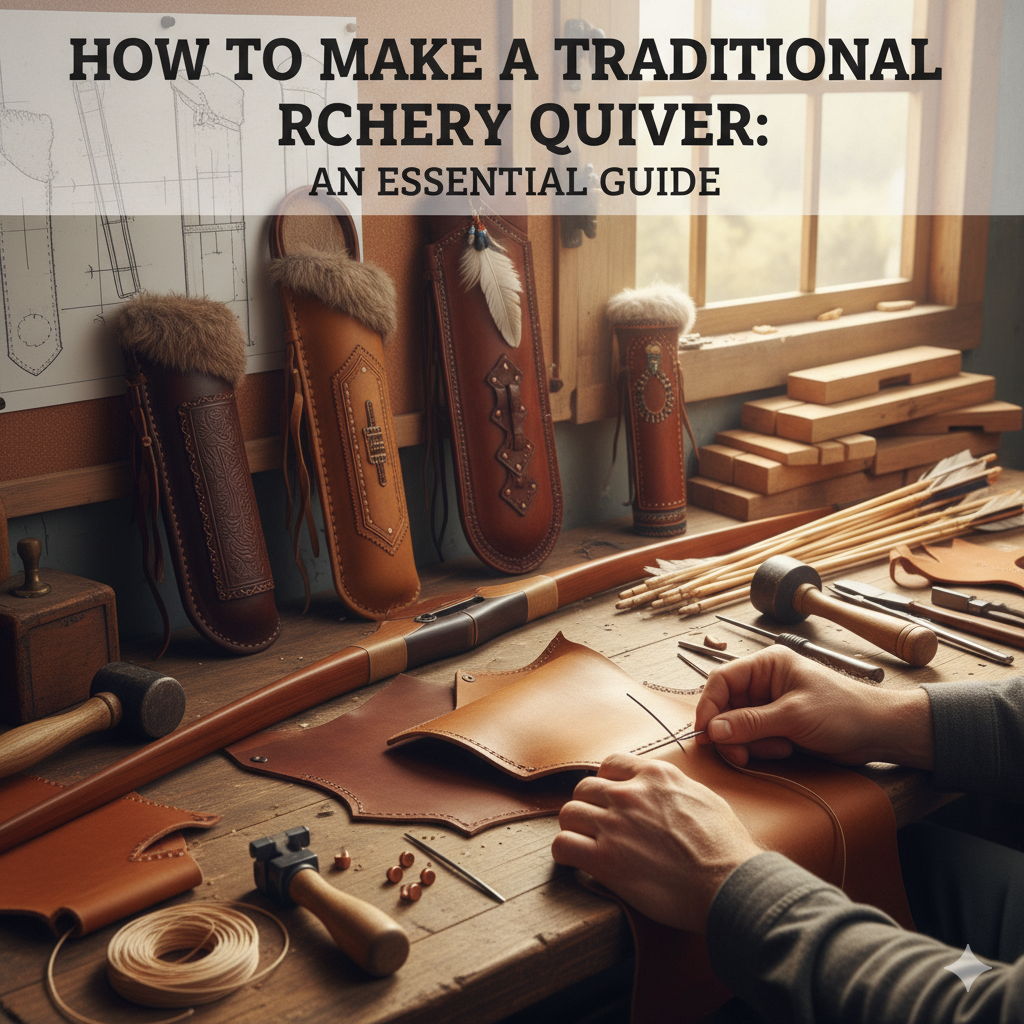
To make a traditional archery quiver, choose a durable material like leather or canvas, create a pattern based on your arrow length, and cut the pieces for the body and base. Punch stitching holes along the edges, sew the main body into a tube, and then attach the base. Finish by adding a sturdy shoulder strap.
Hello, fellow archers! Salman Arfeen here. There’s something truly special about traditional archery. It’s not just about hitting a target; it’s about connecting with an ancient craft. A big part of that feeling comes from your gear. While there are many great quivers you can buy, creating your own is an incredibly rewarding experience that deepens your connection to the sport.
Making a quiver might sound complicated, but it’s easier than you think. You don’t need to be an expert leatherworker to craft something beautiful and functional. This guide will walk you through every step, from choosing your materials to stitching the final piece. Let’s build something you can be proud to carry on your next trip to the range!
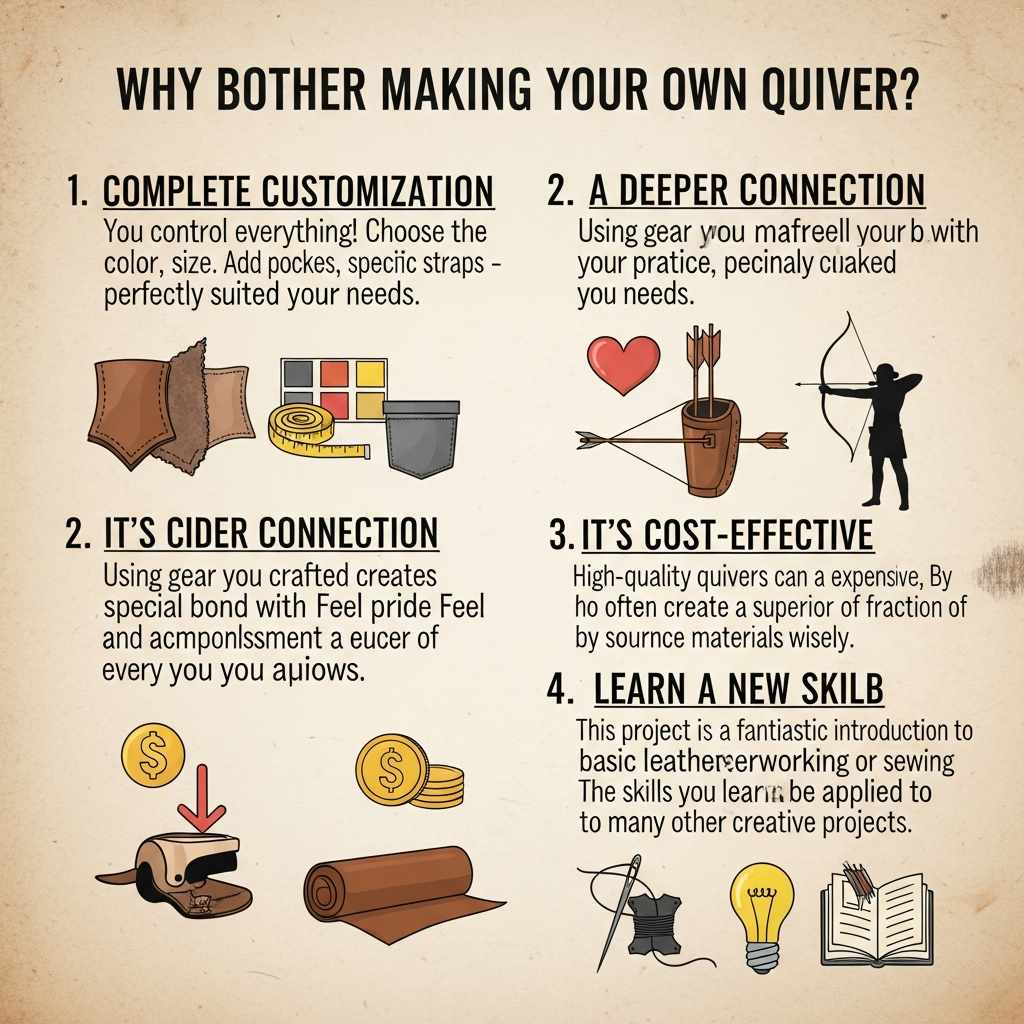
Why Bother Making Your Own Quiver?
In a world of mass-produced gear, taking the time to make something with your own hands is a powerful act. It’s more than just a project; it’s a way to personalize your archery journey. Here are a few great reasons to make your own traditional quiver:
- Complete Customization: You control everything! Choose the material, the color, the size, and the style. Want a pocket for your bow stringer? Add one. Prefer a specific type of strap? You can make it. Your quiver will be perfectly suited to you and your needs.
- A Deeper Connection: Using gear you crafted yourself creates a special bond with your archery practice. Every time you draw an arrow from your handmade quiver, you’ll feel a sense of pride and accomplishment.
- It’s Cost-Effective: High-quality leather quivers can be expensive. By making your own, you can often create a superior product for a fraction of the price, especially if you source your materials wisely.
- Learn a New Skill: This project is a fantastic introduction to basic leatherworking or sewing. The skills you learn making a quiver can be applied to many other creative projects down the road.
Choosing Your Style: Types of Traditional Quivers
Before you start cutting and stitching, you need to decide what kind of quiver you want to make. The three most common traditional styles each have their own pros and cons. Think about how you shoot and what feels most comfortable for you.
| Quiver Style | Description | Best For | Pros | Cons |
|---|---|---|---|---|
| Back Quiver | Worn over the shoulder, resting on your back. The classic “Robin Hood” style. | Roving, field archery, and hunting. |
|
|
| Hip/Side Quiver | Hangs from a belt at your hip. Arrows are easily accessible. | Target archery and competitions. |
|
|
| Bow Quiver | Attaches directly to the limbs of your bow. | Bowhunting where silence and speed are critical. |
|
|
For this guide, we will focus on making a simple yet beautiful leather back quiver. It’s a classic design and a perfect starting point for any aspiring craftsman.
Gathering Your Materials and Tools
Having the right supplies makes all the difference. You can find most of these items at a local craft store or online at a specialty leather supplier like Tandy Leather. Don’t feel you need the most expensive tools to start; basic, reliable tools will work just fine.
Essential Materials:
- Leather or Suede: A piece of 5-7 oz vegetable-tanned leather is ideal for the body. You’ll need a piece roughly 24 inches by 18 inches. A thicker, 8-9 oz piece is great for the base.
- Waxed Thread: This is strong, durable, and won’t rot. It’s essential for a long-lasting quiver.
- Leather Needles: You’ll need two blunt-tipped harness needles for saddle stitching.
- Rivets and a Setter: For attaching the strap securely.
- A Buckle: For making the strap adjustable. A simple 1-inch metal buckle works great.
- Paper or Cardboard: For creating your pattern before cutting the leather.
Essential Tools:
- Utility Knife or Round Knife: A very sharp blade is crucial for clean cuts.
- Cutting Mat: Protects your work surface and your blade.
- Metal Ruler or Straight Edge: For making straight cuts and measurements.
- Stitching Groover & Edge Beveler (Optional): These tools give your quiver a professional, finished look but aren’t strictly necessary for a functional piece.
- Hole Punch or Stitching Chisel: To create uniform holes for your thread. A multi-pronged stitching chisel is fastest, but a simple awl or rotary punch works too.
- Mallet: A rubber or rawhide mallet for setting rivets and using chisels.
Step-by-Step: Making Your Leather Back Quiver
Ready to get started? Take your time with each step. Remember the old saying: “measure twice, cut once.” This is especially true when working with leather!
Step 1: Create Your Quiver Pattern
First, we need a blueprint. A good pattern ensures your final quiver is the right size and shape.
- Determine the Length: Take one of your arrows. Measure from the throat of the nock to the back of the arrowhead. Subtract about 3-4 inches from this measurement. This will be the length of your quiver body, allowing the fletching to stick out for easy grabbing. For most people, this will be around 20-22 inches.
- Determine the Width: Decide how many arrows you want to carry. A good starting point is a quiver that is about 6-7 inches wide at the top and tapers to about 4-5 inches at the bottom. This slight cone shape helps keep arrows from rattling.
- Draw the Body Pattern: On a large piece of paper or cardboard, draw a trapezoid (a rectangle with a slanted side) using your measurements. The height should be your quiver length. The top edge should be your top width, and the bottom edge should be your bottom width.
- Draw the Base Pattern: The base will be a circle. The circumference of this circle needs to match the length of the bottom edge of your body pattern. You can calculate the diameter using the formula: Diameter = Circumference / π (3.14). Draw this circle on your pattern paper.
- Cut Out Your Paper Patterns: Carefully cut out the trapezoid and the circle. This is your template!
Step 2: Cut the Leather
Now we transfer your pattern to the leather. This is the point of no return, so be precise!
- Trace the Pattern: Lay your leather grain-side down on your work surface. Place your paper patterns onto the leather and trace around them with a pencil or a scratch awl.
- Make the Cuts: Place the leather on your cutting mat. Using your metal ruler as a guide, carefully cut out the pieces with your utility knife. Use long, steady strokes for the straight lines. For the circular base, go slowly and make multiple shallow passes if needed. Safety first: always cut away from your body and keep your fingers clear of the blade’s path.
Step 3: Prepare for Stitching
Proper preparation is the key to a strong and beautiful seam. We need to create the holes for our thread to pass through.
- Mark Your Stitching Line: Using a stitching groover or a wing divider, mark a line about 1/4 inch in from the two long edges of your quiver body piece. This groove will help your stitches sit flush with the leather, protecting them from wear. Do the same around the edge of the circular base piece.
- Punch the Holes: Align your stitching chisel or hole punch with the line you just marked. Use your mallet to strike the tool firmly, creating evenly spaced holes. If using a single punch or awl, use a ruler to mark your holes about 1/4 inch apart to keep them consistent. Punch holes along both long sides of the body and around the entire circumference of the base.
Step 4: Stitch the Main Seam
This is where your quiver starts to take shape! We’ll use a “saddle stitch,” which is incredibly strong because it uses two needles and creates a locking stitch. If one thread breaks, the seam won’t unravel.
- Measure Your Thread: Pull out a length of waxed thread that is about 3-4 times the length of the seam you’re about to sew.
- Thread Your Needles: Thread a needle onto each end of the thread.
- Start Stitching: Bring the two long edges of the quiver body together, lining up the holes. Push one needle through the first hole at the top. Pull the thread through until you have an equal length on both sides.
- Create the Saddle Stitch: Take the left needle and push it through the second hole. Now take the right needle and push it through the same hole from the opposite side. Pull both threads tight, seating the stitch firmly in the leather.
- Continue Down the Seam: Repeat this process for every hole—left needle through, right needle through the same hole, pull tight. Keep your tension consistent for a neat seam.
- Finish the Seam: When you reach the last hole, backstitch two or three holes to lock the seam. Snip the thread close to the leather and carefully melt the ends with a lighter to prevent fraying.
Step 5: Attach the Base
Attaching the base can be a bit tricky, but take it slow. You’ll be stitching a flat circle onto the end of a tube.
- Position the Base: Fit the circular base piece into the bottom opening of the quiver body. You may need to gently shape the tube with your hands to make it round.
- Start Stitching: Using the same saddle stitch method, begin stitching the base to the body, carefully lining up the pre-punched holes. This is a slower process, as you’ll be working at an awkward angle.
- Work Your Way Around: Stitch a few holes at a time, then rotate the quiver. Continue until you have stitched the entire base securely in place. Backstitch and finish the thread just as you did for the main seam.
Step 6: Craft and Attach the Strap
A good strap is essential. It should be comfortable and strong.
- Cut the Strap Pieces: Cut a long strip of leather about 1.5 inches wide for the main strap. The length will depend on your body size, but 50-60 inches is a good starting point. Cut a second, smaller piece about 6 inches long for the buckle.
- Attach the Buckle: Loop the short piece of leather through your buckle and fold it over. Punch two holes through both layers and secure it with two rivets.
- Attach the Strap to the Quiver: Decide where you want the strap to connect. A good placement is near the top and about two-thirds of the way down the quiver body, right on the seam for extra strength.
- Use Rivets for Strength: Place the end of the buckle piece against the top of the quiver. Punch holes through the strap and the quiver body, and set two or three rivets to hold it firmly. Do the same with the long strap piece at the bottom attachment point.
- Make it Adjustable: Punch a series of holes at the free end of the long strap so you can adjust the fit with the buckle.
And that’s it! You’ve successfully made your very own traditional leather archery quiver. Take a moment to admire your work before you move on to the final touches.
Alternative Materials for Your Quiver
Leather is classic, but it’s not the only option. If you’re on a budget or want a different look, consider these alternatives. The process is largely the same, though you may need to use glue (like a strong fabric cement) in addition to or instead of stitching.
| Material | Pros | Cons | Crafting Tips |
|---|---|---|---|
| Heavy Canvas or Denim |
|
| Use a heavy-duty sewing machine or hand-stitch with an upholstery needle and thread. Reinforce the bottom with an extra layer. |
| PVC Pipe |
|
| Cut a section of 4-inch PVC pipe, glue a cap on the bottom, and drill holes to attach a webbing strap. You can wrap it in fabric or paint it. |
| Birch Bark |
|
| This is an advanced project. The bark must be harvested carefully and shaped while pliable. It’s often stitched with spruce root, as detailed in resources from historical organizations like the National Park Service. |
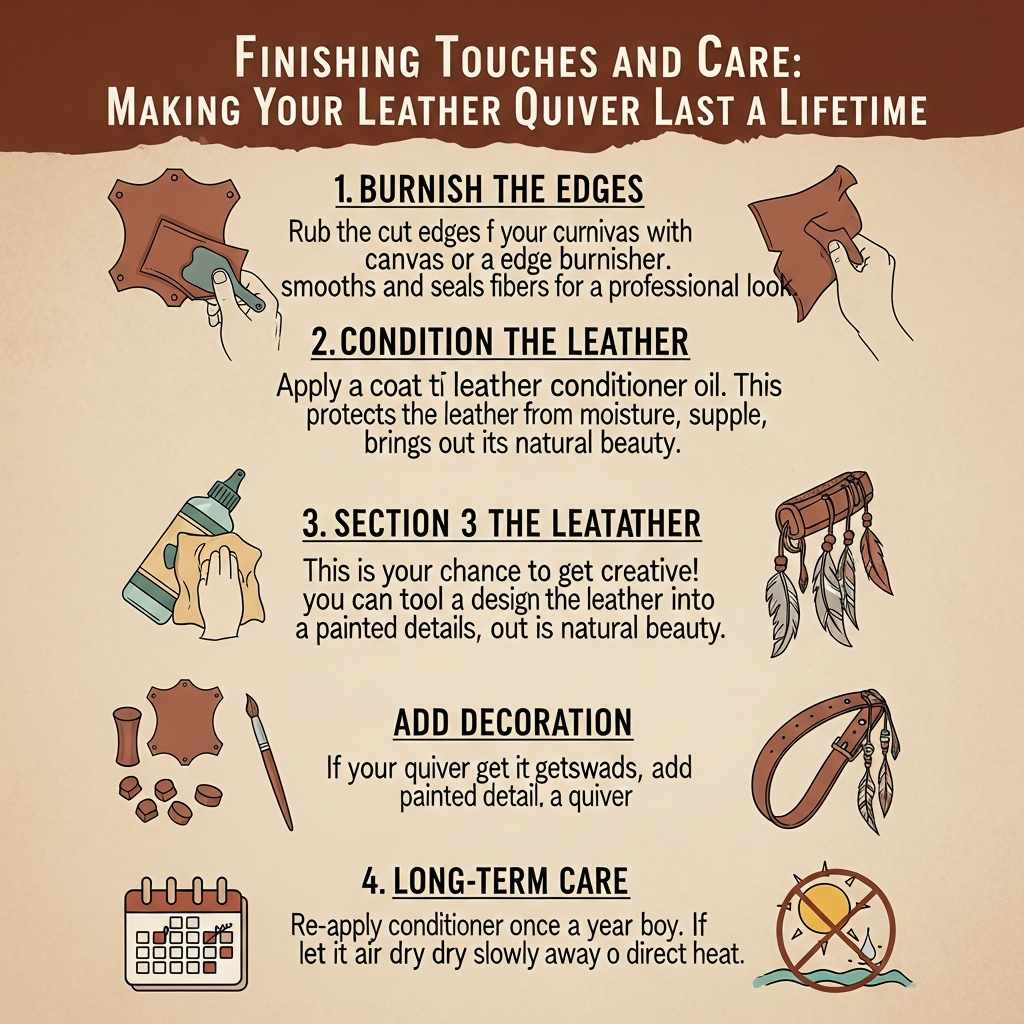
Finishing Touches and Care
A few final steps can take your quiver from good to great and ensure it lasts a lifetime.
- Burnish the Edges: Rub the cut edges of your leather with a piece of canvas or an edge burnisher. This smooths and seals the fibers for a professional look.
- Condition the Leather: Apply a coat of leather conditioner or oil, like Neatsfoot oil. This protects the leather from moisture, keeps it supple, and brings out its natural beauty.
- Add Decoration: This is your chance to get creative! You can tool a design into the leather, add painted details, or hang feathers or beads from the strap.
- Long-Term Care: Re-apply conditioner once a year or so. If your quiver gets wet, let it air dry slowly away from direct heat.
Frequently Asked Questions (FAQ)
What is the best material for a beginner quiver?
A medium-weight (5-7 oz) vegetable-tanned leather is perfect for a first project. It’s sturdy enough to hold its shape but not too difficult to cut and stitch by hand. If leather seems daunting, heavy canvas is a more forgiving and budget-friendly alternative.
How long should my archery quiver be?
Your quiver should be about 3 to 4 inches shorter than your arrows, measured from the nock to the back of the point. This keeps the arrowheads safely inside while leaving the fletching exposed so you can easily grab them.
Do I need special tools to make a leather quiver?
While specialized tools like stitching chisels make the job easier, you can get started with basic craft tools. A sharp utility knife, a ruler, an awl (or even a nail and hammer) to make holes, and two standard needles are enough to build a functional quiver.
How can I make my quiver waterproof?
The best way to waterproof a leather quiver is to treat it with a good quality leather conditioner or a beeswax-based sealant. This will help it repel water. For a canvas quiver, you can use a waterproofing spray designed for outdoor fabrics.
Can I make a quiver without any sewing?
Yes, you can! A “no-stitch” design can be made using rivets or leather laces. Instead of sewing the seam, you would punch holes down both sides and lace them together like a boot, or overlap the edges and secure them with a line of rivets.
How many arrows should a traditional quiver hold?
A typical back or hip quiver for field or target archery comfortably holds about a dozen arrows (12). A bow quiver for hunting usually holds much fewer, typically between 4 and 6 arrows, to keep the bow light and maneuverable.
How do I stop my arrows from rattling in the quiver?
To reduce noise, you can add a piece of sheepskin or thick felt to the bottom of the inside of your quiver. This cushions the arrow points and stops them from clattering against the leather base. The slightly tapered shape of the quiver body also helps hold them snugly.
Conclusion: Your Archery Journey, Your Way
Congratulations! You now have all the knowledge you need to craft a beautiful, functional, and deeply personal piece of archery equipment. Building your own quiver is more than just a weekend project; it’s about connecting with the timeless tradition of archery on a new level. It’s about slowing down, working with your hands, and creating something that is uniquely yours.
Don’t worry about making it perfect on your first try. Every mark and crooked stitch tells the story of your learning process. Embrace the journey, enjoy the craft, and carry your new quiver with pride. Happy shooting!