How to String a Composite Bow Safely and Correctly
Ready to string your composite bow safely and effectively? This essential guide provides clear, step-by-step instructions for beginners, ensuring you get your bow ready for the range with confidence. We cover the tools you’ll need, the process itself, and crucial safety tips to make sure you get it right the first time.
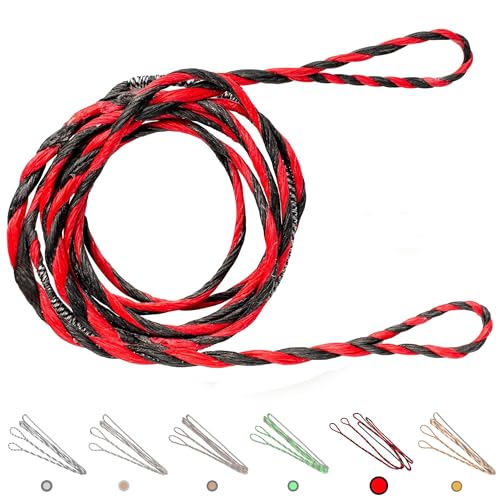
Deerseeker Outdoor
Deerseeker Flemish D97 Bow String Handmade Twist…
- D97 Original Materials-- The Deerseeker Flemish bowstring is made from one of the best D97 fibers. It's well known for its long-la…
- Hand-twisted string- The Flemish bowstring is hand-twisted, less stretching, and durable, compatible with the max draw weight from…
- Features-- Made from 16 strands, the thickness of the center serving place is 2.84mm, perfect for the arrow nocking—various colors…
As an Amazon Associate I earn from qualifying purchases.
Archery is a fantastic sport, and having your own bow is a big step! But when it’s time to put a new string on your composite bow, or re-string it after some practice, it can feel a bit daunting. Don’t worry! Many beginners find this process a little tricky at first, but it’s really about understanding a few key steps and prioritizing safety. With the right approach, you’ll have your bow ready for action in no time. This guide will walk you through everything you need to know, making it simple and stress-free.
Your Essential Checklist: What You’ll Need
Before we even think about touching the bow, let’s make sure you have the right gear. Having everything ready will make the whole process smoother and safer. Think of this as your pre-flight check for archery equipment!
Must-Have Tools for Stringing Your Bow
- Bow Stringer: This is non-negotiable! A proper bow stringer is specifically designed for your type of bow and is the safest way to alternate between the string being on and off. Using makeshift tools or your feet can damage your bow or cause serious injury. They are usually made of strong cord with a pouch for the bow’s lower limb tip and a loop for the string.
- Bow Square (Optional but Recommended): This tool helps you measure the brace height of your bow accurately. Brace height is the distance from the deepest part of the grip to the string. Getting this right ensures your bow performs optimally and safely.
- Gloves (Optional): Some archers find gloves helpful to protect their hands from any potential string pinch or rough materials.
- Soft Cloth: Keep a clean, soft cloth handy for wiping down your bow.
Choosing the Right Bow String
If you’re replacing your string, ensure you have the correct one for your specific bow model. Strings come in different lengths and materials. Using the wrong string can affect your bow’s performance and even damage it. Always check your bow manufacturer’s recommendations or consult with an archery professional if you’re unsure.
Safety First! Why Proper Stringing Matters
This is the most important part. A composite bow stores a lot of energy. If it’s strung incorrectly, that energy can be released unpredictably, which can lead to:
- Damage to your bow: Warped limbs, cracked cams, or other structural issues.
- Damage to the string or accessories: The string could fray or break, or cables could become misaligned.
- Serious injury to you or others: A mis-strung bow can snap, sending parts flying, or a bow that’s under too much tension can be dangerous to handle.
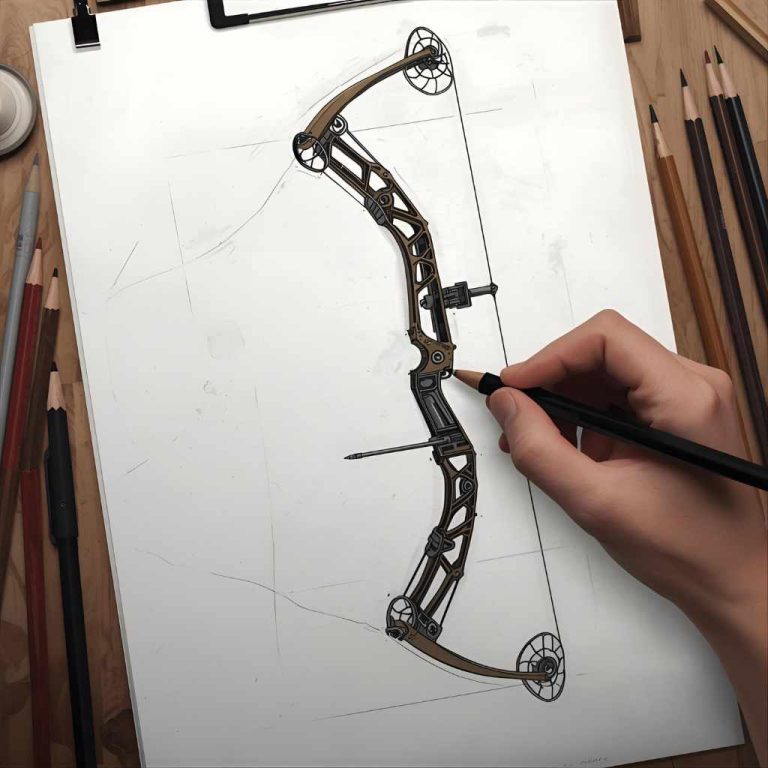
Always remember that composite bows, especially compound bows, use complex systems of limbs, cams, and cables. They require precise tension and alignment. For more detailed insights into bow mechanics and safety standards, the U.S. Fish & Wildlife Service offers valuable information on hunting safety that extends to general bow handling.
How to String Your Composite Bow: A Step-by-Step Guide
Let’s get down to business! We’ll be focusing on a universally applicable method for most composite bows, especially compound bows which are the most common type you’ll encounter needing this kind of stringing. Recurve bows usually have a simpler stringing process typically done with a bow stringer or by bending the limb against your thigh, but composite and compound bows have more intricate systems. Always consult your bow’s manual if you have one!
Step 1: Prepare Your Bow and Workspace
Find a clear, open space where you won’t be interrupted. Ensure there’s nothing valuable or breakable nearby. Lay out your bow stringer and any other tools you’ll be using. Take a moment to inspect your bow for any visible damage before you start.
Step 2: Attach the Bow Stringer
This is where the purpose-built bow stringer is crucial.
- Locate the Pouch: Find the pouch or cup on the stringer cord. This is designed to securely cup the tip of one of the bow’s limbs.
- Secure the Pouch to the Limb: Carefully place the pouch onto the end of the bow’s lower limb. Make sure it fits snugly and won’t slip off. It should firmly enclose the limb tip.
- Attach the String Loop: Take the other end of the stringer, the loop, and slide it over the bowstring’s loop at the opposite end of the bow. Ensure it’s firmly seated on the string.
Step 3: Apply Tension and Ease the String
Now, you’ll use the stringer to create tension, allowing you to work the string onto the cams or string grooves.
- Positioning: Stand with your feet apart, holding the bow firmly. The stringer should be taut, with the limb tip securely in its pouch and the string loop engaged.
- Applying Pressure: Using your body weight, press down on the stringer cord. You can do this by bracing the stringer against the ground or with your foot (ensure the stringer design allows for this and it’s stable). The goal is to bend the limbs slightly, increasing the space between the string and the cams/string grooves.
- Working the String: While holding tension, carefully guide the original bowstring off the cam groove or pulley at the top of the limb.
Step 4: Release Old String and Install New String
Once the old string is off the cam (or you’re ready to install a new one):
- Remove the Old String: If you’re replacing a broken string or doing maintenance, remove the old string completely.
- Position the New String: Take your new bowstring. Ensure you have the correct orientation – sometimes there are specific twists or power cables that need to align with the cams. For many single-cam or hybrid-cam systems, one end of the string attaches to one cam, and the other end attaches to the other cam. For dual/twin-cam systems, part of the string will attach to one cam and another part (or separate cables) to the other. This is where referencing your bow’s manual is vital.
- Guide the New String: Carefully seat each end of the new string into its correct groove or around the cam’s spindle.
Step 5: Transfer Tension to the New String
Now, you need to transfer the tension from the stringer to the new string.
- Maintain Stringer Tension: Keep the bow stringer under tension as you did before.
- Secure the New String: Ensure the new string is properly seated on both cams/string grooves.
- Release the Old String’s Position: With the new string now holding the tension on the cams, carefully slide the stringer’s loop off the old string (if applicable) and allow the stringer to disengage from the bowstring.
Step 6: Release the Bow Stringer
Once the new string is correctly seated on both cams and is holding the bow’s tension:
- Gradually Release Tension: Slowly release the pressure you were applying with the bow stringer.
- Remove the Stringer: Carefully disengage the stringer pouch from the lower limb tip and remove the stringer from the bow.
At this point, your bow should be strung, with the string properly fitted onto the cams. Always double-check that the string is seated correctly in all the grooves and around the cams.
Step 7: Check and Adjust Brace Height
This is a critical step for performance and safety. Slinging a string on is one thing; ensuring it’s correctly braced is another.
What is Brace Height? As mentioned before, it’s the distance from the deepest part of the grip to the string when the bow is strung. The ideal brace height is specified by the bow manufacturer and is crucial for the bow’s shooting characteristics. An incorrect brace height can make the bow loud, inaccurate, and even unsafe.
- Measure Brace Height: Use your bow square. Place the longer end of the square on the bow’s grip, perpendicular to the riser. Then, bring the shorter end up to where it touches the bowstring. Read the measurement at the string.
- Compare to Manufacturer Specs: Check your bow’s manual for the recommended brace height range.
- Adjusting Brace Height:
- Increase Brace Height: If your brace height is too low, you need to add twists to the bowstring. Remove the string (using the stringer again), add twists one by one (ensure you add the same number of twists to both ends if possible, or follow manufacturer guidelines), and then re-string the bow to measure again.
- Decrease Brace Height: If your brace height is too high, you need to remove twists from the bowstring. Again, remove the string, untwist it, and re-string to measure.
This process of adjusting twists and measuring can take a few tries to get just right. Be patient!
Step 8: Inspect and Test Fire (Safely!)
Before taking your first real shot, do a thorough visual inspection.
- String and Cable Alignment: Ensure the string and any cables are running smoothly through their guides and cams.
- Limb Integrity: Check the limbs for any cracks or delamination.
- Secure Accessories: Make sure any sights, rests, or stabilizers are still secure.
Safely Test Firing:
- Dry Fire Warning: NEVER dry fire a bow (draw and release without an arrow). This can cause catastrophic damage to the bow and is extremely dangerous.
- First Shot: Find a safe target and stand in a safe direction. Draw the bow slightly and release an arrow. Listen for any unusual sounds and feel for any odd vibrations.
- Full Draw and Shot: If the first shot seems okay, draw the bow to full draw and shoot an arrow. Listen and feel again. Your bow should feel smooth and sound relatively quiet.
Common Pitfalls and How to Avoid Them
Even with the best intentions, a few common mistakes can happen. Knowing about them beforehand helps you steer clear!
Table: Common Stringing Issues and Solutions
| Problem | Cause | Solution |
|---|---|---|
| String slips off cam | Improper seating, stringer not applying enough tension, worn string | Ensure string is in the deepest groove of the cam. Verify stringer tension. Inspect string for damage. |
| Excessive noise or vibration | Incorrect brace height, loose accessories, frayed string/cables | Adjust brace height to manufacturer’s specification. Tighten all accessories. Inspect string and cables for wear. |
| Bow feels “off” or shoots erratically | Incorrect tiller (limb balance), unbalanced cams, wrong string length | Check tiller (if applicable to your bow type). Ensure cams are timed correctly. Verify correct string length and type. |
| Damage to limbs or cams | Forced stringing, using incorrect tools, dry firing | Always use a proper bow stringer. Never dry fire. Handle bow with care. |
When to Seek Professional Help
While this guide aims to empower you, there are times when it’s best to turn to an expert.
- Complex Cam Systems: Some compound bows have very intricate cam systems that require specialized knowledge to time and set up correctly.
- Damage or Wear: If you notice any signs of damage to your bow, string, or cables, stop immediately and take it to a qualified archery pro shop.
- Nock Point and D-Loop Installation: While stringing, you might need to install or adjust the nock point and D-loop. This can require specific tools and precision.
- First-Time Stringing: If this is your very first time stringing any bow, it’s wise to have an experienced archer or pro shop technician guide you through it in person. Once you’ve seen it done and done it a couple of times with help, you’ll feel much more confident.
Archery shops often offer stringing services, which can be a great investment, especially when you’re getting started. For instance, many shops also offer services like bow tuning and accessory installation, ensuring your equipment is in peak condition. As mentioned on the Archery Trade Association website, pro shops are invaluable resources for maintaining your gear and improving your archery experience.

Frequently Asked Questions (FAQ)
Q1: Can I string my composite bow without a bow stringer?
While it might seem possible, it’s strongly advised against. Using your feet or makeshift tools can easily damage the bow’s limbs, riser, or cams, and it poses a significant risk of injury to yourself. Always use a bow stringer designed for your type of bow.
Q2: How many twists should be in my bowstring?
The number of twists in a bowstring affects the brace height. The correct number of twists is determined by your bow’s manufacturer to achieve the optimal brace height. You adjust the twists to fine-tune the brace height to the manufacturer’s specification.
Q3: What happens if I dry fire my bow?
Dry firing means drawing and releasing the string without an arrow nocked. This sends all the stored energy back into the bow’s limbs and riser, which can cause severe damage, including cracked limbs, tiller separation, or even a catastrophic failure of the bow. It’s extremely dangerous and should always be avoided.
Q4: How often should I replace my bowstring?
Bowstrings don’t last forever. They should be inspected regularly for wear, fraying, or damage. A general guideline is to replace them every 1-2 years for recreational shooters, or more frequently for those who shoot extensively. Always replace it immediately if you notice any signs of damage.
Q5: Is it normal for my bow to make noise after stringing?
Some minimal noise is normal, but excessive slapping, buzzing, or thumping is not. This can indicate an incorrect brace height, loose cables, or a worn string. Rechecking your brace height and inspecting all parts of the bow is essential.
Q6: What’s the difference between stringing a recurve and a compound bow?
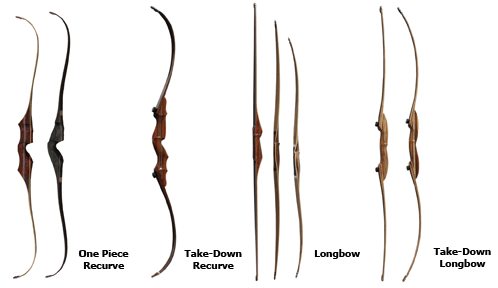
Recurve bows are generally simpler and can often be strung with a basic stringer or by bending the limbs against your thigh. Compound bows have complex cam and cable systems that require a specific type of stringer and a more methodical approach to ensure the cams are loaded correctly and safely.
Conclusion
Stringing a composite bow might seem like a complicated task at first, but by breaking it down into these clear, manageable steps and always prioritizing safety, you can confidently tackle it. Remember to use the right equipment – especially a proper bow stringer – and consult your bow’s manual whenever possible. Taking the time to ensure your bow is strung correctly will not only protect your investment but also enhance your shooting experience, leading to greater accuracy and enjoyment on the range. Happy shooting!
Related pick: Check today's price on Amazon