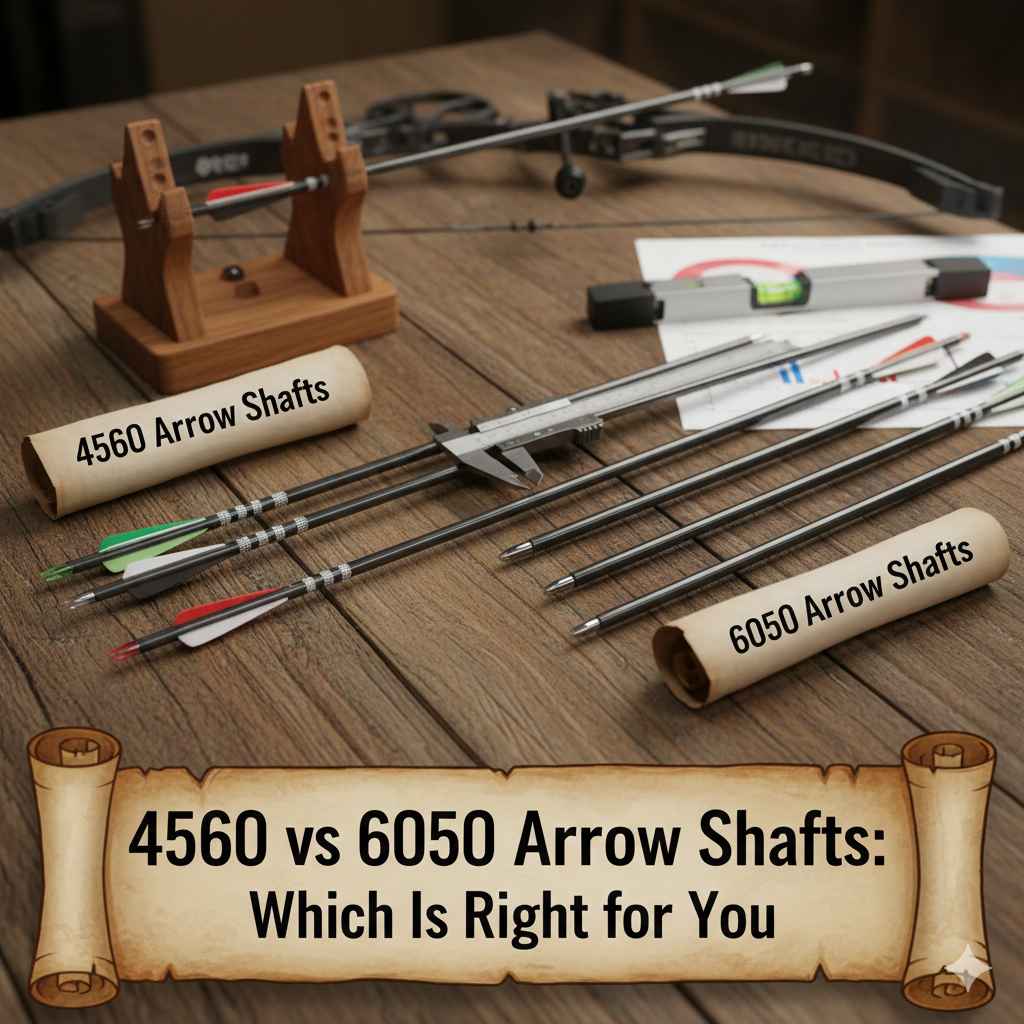
Choosing the right arrow shafts can feel tricky, especially when you’re just starting. The numbers like 4560 vs 6050 Arrow Shafts: Which Is Better? seem like a secret code! Don’t worry, this guide will break it all down in simple terms. We’ll explore what these numbers mean, what they affect, and how to pick the best shaft for your shooting style. Get ready for a straightforward explanation that will have you shooting with confidence in no time. We will explore the differences, making your choice easier.
What Do the Numbers Mean? Understanding Arrow Shaft Specs
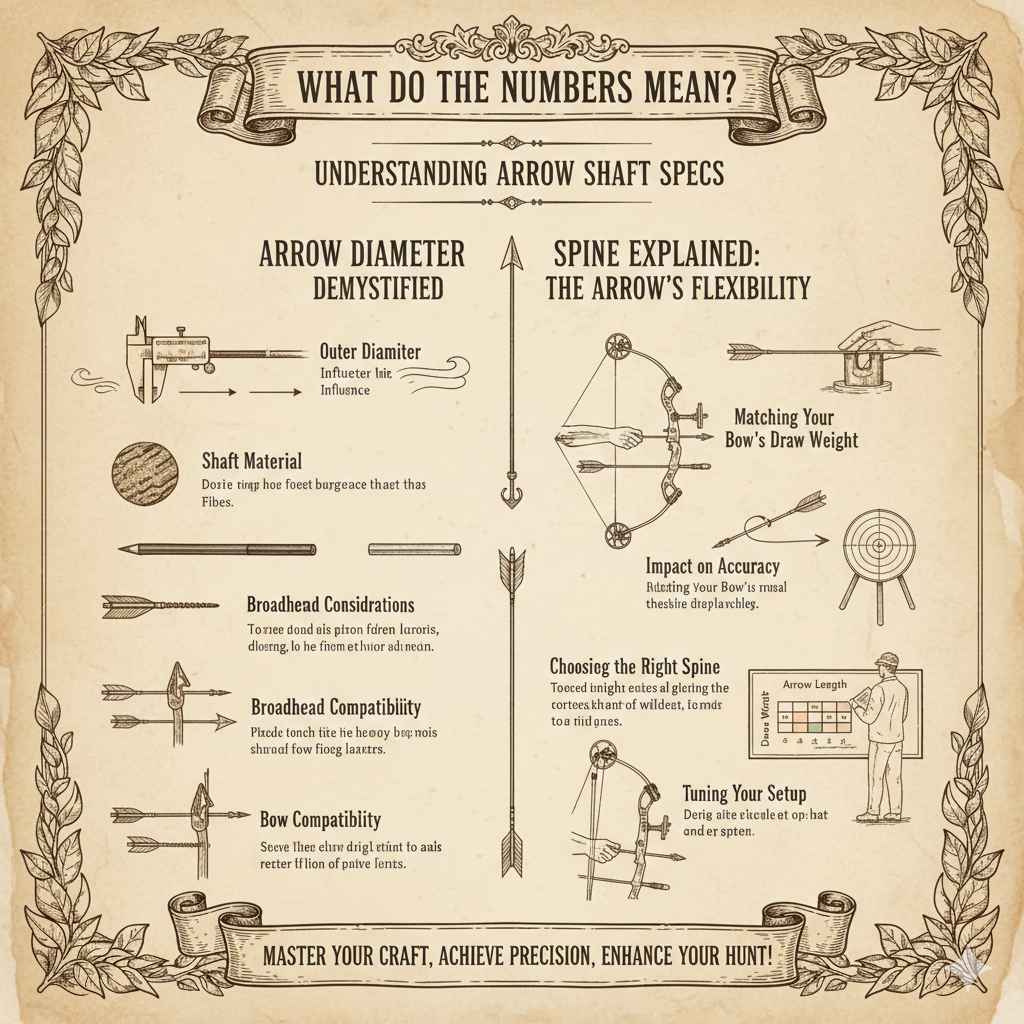
When you look at arrow shafts, you’ll see numbers like 4560 or 6050. These are not random; they tell you important things about the arrow’s size and how stiff it is. The first two digits usually refer to the outer diameter (OD) of the shaft in inches, although the numbers are not always a direct measurement. It gives you a general idea of how thick the arrow is.
The second two numbers refer to the wall thickness, which influences the arrow’s weight and spine. A thicker wall usually means a heavier arrow. A heavier arrow is less affected by wind and carries more energy. However, it also means a slower arrow. The spine is also critical. Essentially, it is how flexible or stiff the arrow is. Correct spine is important for consistent accuracy. Let’s explore how these values affect your shooting.
Arrow Diameter Demystified
The outer diameter is the measure of the arrow’s width. A larger diameter might make the arrow more durable, but it can also make it heavier. The diameter has an impact on the arrow’s flight, too. Wider arrows might be more affected by crosswinds. The diameter also impacts the compatibility with your bow’s rest, so be certain to confirm.
- Outer Diameter Influence: A wider diameter can boost the arrow’s overall weight, potentially affecting its flight characteristics, making it less susceptible to wind but reducing speed.
- Shaft Material Considerations: The material the shaft is made from (carbon, aluminum, etc.) impacts the diameter.
- Broadhead Compatibility: The outer diameter also affects compatibility with different broadheads, important for hunting.
- Bow Compatibility: The arrow’s diameter must match your bow setup.
Understanding the diameter helps you match the arrow to your shooting needs and gear. If you shoot target arrows, you may need a larger diameter arrow, which will make it more visible at longer distances. For hunting, a smaller diameter may be preferable, for better flight characteristics.
Spine Explained: The Arrow’s Flexibility
Spine is a key property of an arrow shaft. It determines how much the arrow bends when shot from a bow. A stiffer spine means less bending, while a weaker spine bends more. Selecting the proper spine for your bow is crucial for accurate shooting. If the spine isn’t correct, the arrow might fly sideways, or in an erratic trajectory.
- Matching Your Bow’s Draw Weight: Arrows with the correct spine straighten out quickly after leaving the bow.
- Impact on Accuracy: An arrow with too much or too little spine will not fly correctly, reducing accuracy and consistency.
- Choosing the Right Spine: Consult a spine chart based on your bow’s draw weight and arrow length.
- Tuning Your Setup: Even with the correct spine, you may need to fine-tune your bow and arrow setup.
Proper spine selection and tuning can dramatically improve the accuracy of your shots. Understanding spine and how it impacts arrow flight will lead to more success on the range or in the field.
Comparing 4560 and 6050 Arrow Shafts
Now, let’s get specific. When comparing 4560 vs 6050 Arrow Shafts: Which Is Better?, we’re looking at different sizes. The “4560” shaft is typically thinner and lighter. The “6050” is thicker and usually heavier. Each has pros and cons depending on what you’re doing. The 4560 will fly faster, but it will be affected more by wind. The 6050 shaft is more durable and carries more kinetic energy, making it better for hunting.
The choice between these shafts depends on your goals as an archer. Consider the kind of bow you have, the type of shooting you do, and the distance you typically shoot. If you are starting, you might not notice the differences between the two. However, as you gain experience, the shaft can impact your arrow’s flight.
4560 Arrow Shafts: Characteristics and Benefits
The 4560 arrow shaft, being thinner and lighter, often appeals to archers who prioritize speed and flat trajectories. The lighter weight results in a faster arrow, making it a good selection for target practice at longer distances. The lower weight can make the arrow less stable in windy conditions.
- Higher Arrow Speed: Its lighter weight offers a higher arrow velocity, beneficial for target practice.
- Reduced Wind Drift: While more susceptible, the higher speed can assist against the wind.
- Good for Target Shooting: Ideal for precision and longer distances on a range.
- Less Kinetic Energy: The lighter weight means it transfers less energy to the target or the animal.
The 4560 is a solid choice when speed and trajectory are important. This choice is usually the preferred option for target shooting or 3D archery, where minimizing the time of flight is useful.
6050 Arrow Shafts: Characteristics and Benefits
The 6050 shaft is thicker and heavier than a 4560 shaft. That additional weight provides advantages. A heavier arrow carries more momentum, making it less affected by wind. The extra weight gives it more penetrating power. The heavier arrow’s trajectory is going to be different, with more drop over distance.
- Greater Kinetic Energy: Delivers more power upon impact, enhancing penetration.
- Improved Wind Resistance: Higher mass makes it less susceptible to crosswinds.
- Robust and Durable: The thicker construction adds to the arrow’s resilience.
- Good for Hunting: The additional energy is key for taking down game.
For hunting, the 6050 shaft is often the preferred choice. The ability to cut through the wind and deliver a more powerful impact makes this shaft well-suited for taking down targets at a distance.
Practical Scenarios: When to Use Each Shaft
Let’s consider some real-life situations to show the difference between 4560 vs 6050 Arrow Shafts: Which Is Better?. Understanding where each shaft excels will help you make the right choice.
First, picture yourself on a range, shooting at targets. Accuracy is critical, but you also want to see your arrows hit the target quickly. Next, you are hunting, where you need to deliver a powerful shot to bring down an animal.
Target Archery: 4560 Arrow Shafts in Action
In target archery, the 4560 shaft really shines. Imagine you’re shooting at a 50-meter target. With a 4560 shaft, the arrow gets there faster. This reduces the effect of wind and makes it easier to correct your aim. This allows you to place more accurate shots and get the best scores.
- Scenario 1: You’re competing in a target tournament. The 4560’s speed allows you to respond to shifting wind conditions quickly, leading to more bullseyes.
- Scenario 2: You’re practicing for distance shooting. The flatter trajectory of the 4560 makes it easier to judge your sight picture at different distances.
Target shooting is more about consistency and reducing variables. The 4560 can provide a stable platform for precision shooting. This shaft is a great choice.
Hunting: 6050 Arrow Shafts in Action
In the hunting scenario, the 6050 is the better choice. Let’s say you’re hunting deer in a wooded area. The extra weight of the 6050 shaft ensures that the arrow has plenty of force to drive through the animal. Even if there’s a slight breeze, the heavier arrow will stay on course. This makes the 6050 a more dependable choice for taking down game.
- Scenario 1: You’re hunting in windy conditions. The 6050’s heavier weight helps it fight against the wind, increasing your chances of a successful shot.
- Scenario 2: You need to shoot through thick brush. The added kinetic energy of the 6050 helps the arrow penetrate tougher obstacles.
Hunting requires more energy and penetration. The 6050 is an asset for hunting, increasing the odds of a clean, effective shot.
Material Matters: Carbon Fiber vs. Aluminum
The materials that make up the arrow shaft, such as carbon fiber or aluminum, greatly impact performance. Carbon fiber shafts are very popular. They are known for being strong, lightweight, and precise. Aluminum shafts are an older choice. They are known for being durable and less expensive.
Choosing between carbon fiber and aluminum involves considering various factors. These include your budget, the kind of shooting you do, and the specific features you seek. Each material provides benefits for different archers and activities. Choosing the right material for your arrow shafts can greatly affect your experience and results.
Carbon Fiber Shafts: Advantages and Considerations
Carbon fiber arrow shafts have become a common choice for both target shooting and hunting. They are very strong but lightweight, allowing for more consistent arrow flight. This means that the arrow flexes less during launch. This results in greater accuracy and precision.
- Lightweight Construction: Carbon fiber’s lightness enables a higher arrow speed, leading to a flatter trajectory.
- Durability: Carbon fiber is very strong and resists damage.
- Spine Consistency: Carbon fiber shafts usually provide consistent spine measurements, boosting accuracy.
- Higher Cost: Carbon fiber shafts typically cost more than aluminum shafts.
Carbon fiber shafts are great for archers who want a high-performance arrow. They are especially suitable for competition or for those seeking top accuracy.
Aluminum Shafts: Advantages and Considerations
Aluminum arrow shafts have been a standard for years. They are known for their durability and good price. These shafts are durable, particularly when used in situations that might damage carbon shafts. They are usually more affordable than carbon fiber shafts.
- Cost-Effective: Aluminum shafts usually cost less, making them a good choice for beginners.
- Durability: They are more resistant to damage.
- Weight: Aluminum shafts are usually heavier.
- Limited Spine Options: Aluminum may have fewer spine options compared to carbon.
Aluminum arrow shafts are a good option for people just starting or looking for a durable, affordable option. While they may not offer the same performance as carbon fiber, aluminum arrows remain a practical choice for various archery activities.
Accessories and Customization: Perfecting Your Arrows
You can improve your arrow shaft choice with the right accessories. Components like fletchings, nocks, and inserts play a major part in an arrow’s flight. Also, customization lets you adjust your arrows to suit your bow and your shooting style.
Understanding the features and how they are used helps you to improve your arrows. Careful selection and proper assembly can improve your arrow’s flight and consistency. It will make your archery experience more satisfying.
Fletchings and Nocks: The Role in Arrow Flight
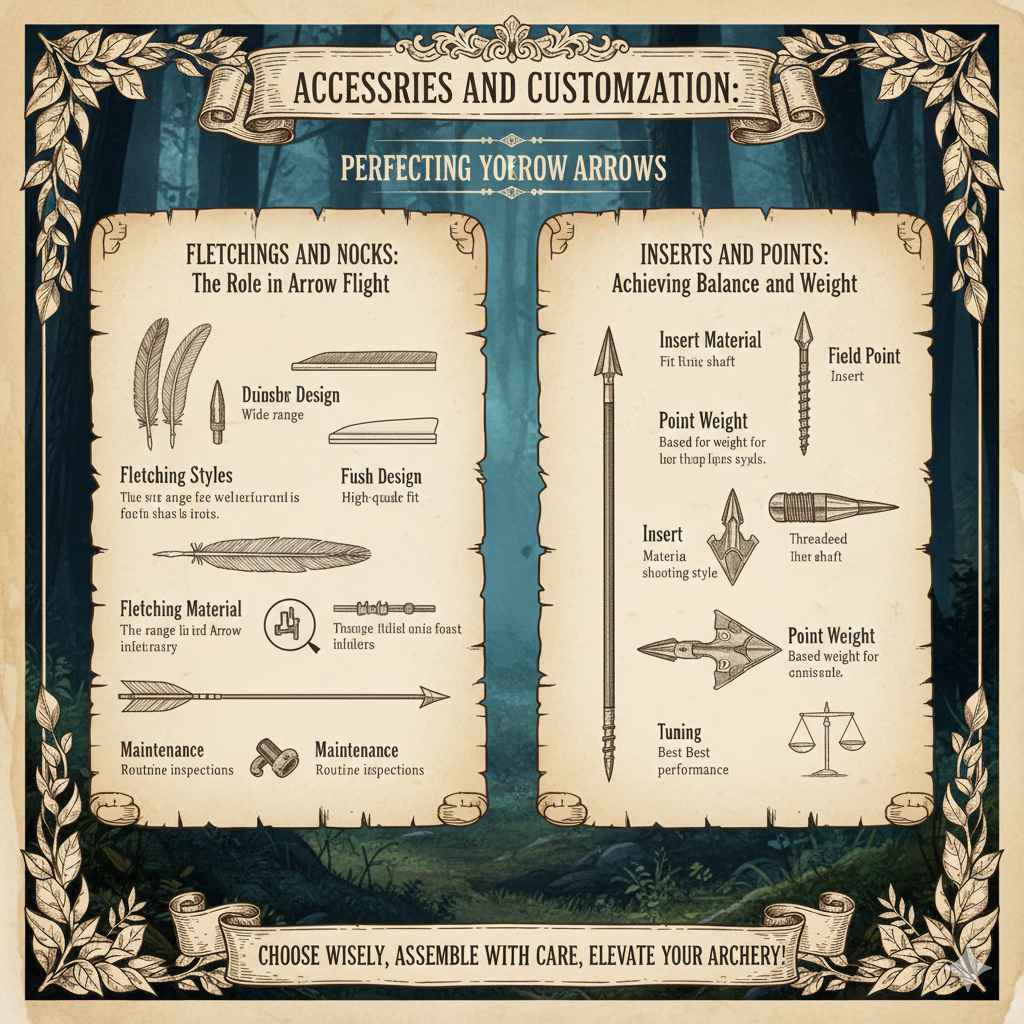
Fletchings, the vanes on the back of the arrow, and nocks, the groove that fits the bowstring, are important for arrow flight. Fletchings stabilize the arrow in flight, reducing wobble and steering it towards the target. Nocks keep the arrow attached to the string. The design and quality of these pieces directly impact the arrow’s accuracy and stability.
- Fletching Styles: You can select from a wide range of fletching styles.
- Nock Design: Proper nock fit is critical to get the correct arrow flight.
- Fletching Material: Choose high-quality materials for durability.
- Maintenance: Routine inspections and replacements as needed.
Choosing and taking care of fletchings and nocks will assist in consistent, accurate arrow flight. Good-quality parts are a worthy investment.
Inserts and Points: Achieving Balance and Weight
Inserts and points have a great effect on the weight and balance of your arrow. Inserts are placed into the shaft. They help with balancing the arrow and keeping the point connected. The choice of point weight directly influences the arrow’s flight, speed, and kinetic energy.
- Insert Material: Choose inserts that fit your shaft and needs.
- Point Weight: Select point weight based on your shooting style.
- Balance: Adjust the weight to make your arrows consistent.
- Tuning: You may need to tune your arrows to get the best performance.
Proper use of inserts and points is essential for optimizing your arrows. They influence balance, weight, and flight characteristics. These components will enhance your archery performance.
Frequently Asked Questions
Question: What is the main difference between 4560 and 6050 arrow shafts?
Answer: The primary difference is in the size and weight of the shafts. 4560 shafts are typically thinner and lighter, while 6050 shafts are thicker and heavier.
Question: Which arrow shaft is better for hunting?
Answer: 6050 shafts are often preferred for hunting because they have more kinetic energy and are less affected by wind.
Question: What do the numbers like “45” and “60” mean in the shaft designation?
Answer: These numbers describe the outer diameter of the shaft, although not as an exact measurement. They also indicate how the shaft’s characteristics impact its flight.
Question: How do I choose the correct spine for my arrows?
Answer: The correct spine is important for accuracy. Consult a spine chart based on your bow’s draw weight and arrow length.
Question: What are the benefits of carbon fiber arrow shafts?
Answer: Carbon fiber shafts are lightweight, strong, and offer consistent spine values. These factors result in better accuracy and performance.
Final Thoughts
So, which is the better choice for you: 4560 vs 6050 Arrow Shafts: Which Is Better? It really depends on your goals as an archer. The 4560 shafts are known for speed and better trajectories. The 6050 shafts are known for their enhanced kinetic energy and better wind resistance. Now that you’ve got the basics, experiment! Try both types of arrows to see which ones feel best for your shooting style. Remember that the right arrow is the one that shoots the most accurately and comfortably for you. With a little practice and testing, you’ll be hitting the bullseye in no time. Keep shooting and enjoy the process!