The Adepts Longbow typically offers better consistency and modern riser technology for easier aiming than the legendary, but often historical or less predictable, Bow of Badon, making the Adepts choice generally better for consistent beginner/hobbyist shooting today.
Hello there, aspiring archer! I’m Salman Arfeen, and I understand that choosing the right bow feels like a huge decision when you are just starting out. You hear terms like “Adepts Longbow” and “Bow of Badon,” and it can sound like ancient history mixed with modern gear. Which one should you pick up for your first weekend at the range? Don’t worry! It’s easy to get confused between classic legends and modern equipment. We are going to break down exactly what these terms mean, what they are good for, and why one might be a much better fit for your current goals than the other. Let’s demystify these bows so you can grab the right gear and enjoy hitting that target!
Understanding the Names: Legend vs. Modern Gear
When new archers hear these names, they often think they are comparing two modern bows found side-by-side at the shop. That is rarely the case! One is a modern product line, and the other is steeped in history and myth.
What is the Adepts Longbow? A Modern Marvel
The “Adepts Longbow” usually refers to a line of traditional or semi-traditional bows made by specific modern manufacturers, often emphasizing high-quality modern materials like laminated wood, fiberglass, or carbon. These bows are designed for today’s archer who loves the look and feel of a classic longbow but wants the performance and consistency of modern engineering.
When you see an Adepts model, you are usually looking at:
- Better Draw Weight Consistency: The materials help the bow perform the same way every time you pull it back.
- Resilience: Modern laminations are often less sensitive to humidity and temperature changes than pure historical wood bows.
- Availability: These are commercially available, ready to shoot, and often come with warranties.
The Mystery of the Bow of Badon
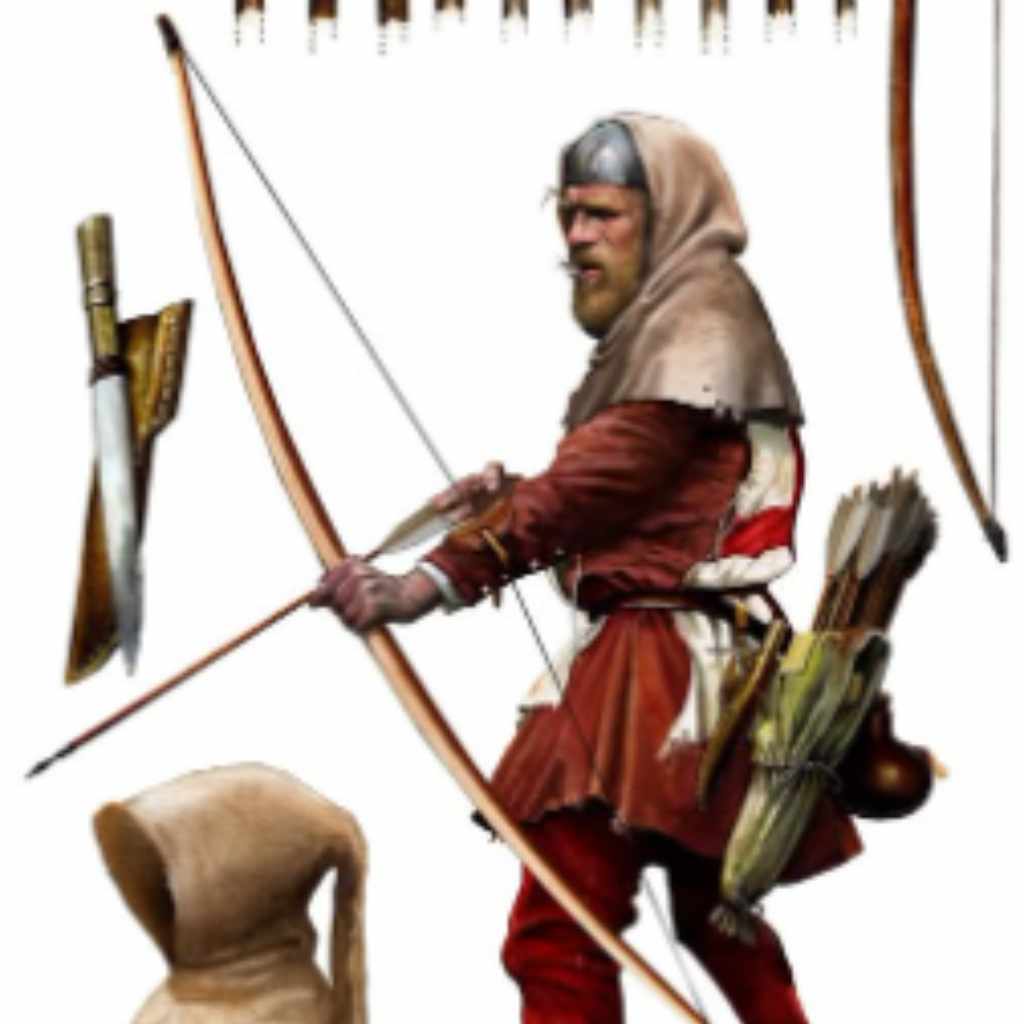
The Bow of Badon is not a brand you can just order online. This name is deeply rooted in Arthurian legend, often associated with the historical or mythical Battle of Mount Badon where King Arthur defended Britain. In archery terms, when people reference the “Bow of Badon,” they are usually discussing one of two things:
- A True Historical Reproduction: A bow built to mimic the likely style, wood, and construction methods of early medieval or ancient archery.
- Symbolism: It represents the pinnacle of traditional, raw archery skill needed before modern sights and stabilizers.
Because it’s tied to history, a “Bow of Badon” often implies:
- Pure Simplicity: Almost certainly a self-bow or simple laminated stick—no advanced limb tips or advanced geometry.
- Higher Learning Curve: If it’s a reproduction, it will demand excellent form because it lacks the forgiving nature of modern bows.
- Variable Quality: Unless a master historical bowyer made it, its quality can vary widely.
The Essential Showdown: Adepts Longbow vs. Bow of Badon
For the beginner or hobbyist, the actual comparison is less about “which legend is better” and more about “which tool is better suited for consistent learning and enjoyment.” Here is a direct comparison focusing on what matters when you are starting out.
Key Performance Factors for Beginners
When you are learning, three things matter most: forgiveness (how much it punishes a small mistake), consistency (how often the arrow flies the same), and accessibility (how easily you can get it and maintain it).
1. Consistency and Forgiveness
Modern bows, like those offered in the Adepts line, are usually designed with profiles that are more forgiving. This means if your elbow is slightly high one shot and slightly low the next, the arrow still flies reasonably straight.
Historical bows (like what a Badon representation would be) often have less taper and a straighter limb profile, which makes them extremely sensitive to your form. Small errors lead to big misses.
2. Materials and Maintenance
The Adepts Longbow likely uses modern glues and materials that resist warping or cracking if you leave it in the car for an afternoon (though we strongly advise against this!). They are built for the modern enthusiast.
A historical reproduction made entirely of natural wood, adhering strictly to ancient techniques, requires much more careful storage and maintenance. Wood is sensitive to moisture. You can learn more about wood care in traditional crafts by visiting resources discussing historical craft preservation.
3. Draw Weight Availability
For beginners, starting low (perhaps 25 lbs to 35 lbs draw weight) is crucial for building strength without risking injury. Modern manufacturers excel at offering a wide range of draw weights in their Adepts lines.
Historical reproductions are often made-to-order or focused on the weights used by experienced warriors, which might mean fewer easy options for a true novice.
Comparison Table: Adepts vs. Badon Style
This table highlights the likely differences you will encounter when trying to select an actual piece of equipment today.
| Feature | Adepts Longbow (Modern Traditional) | Bow of Badon (Historical Style) |
|---|---|---|
| Primary Goal | Consistent target shooting, traditional recreation. | Historical accuracy, deep tradition simulation. |
| Limb Stability | High (often fiberglass/carbon layered). | Medium to Low (often single wood stave). |
| Forgiveness | Good forgiveness for small form errors. | Low; highly sensitive to poor form. |
| Maintenance Needs | Low to moderate. | Moderate to high (wood care required). |
| Ease of Purchase | Easy; readily available from retailers. | Difficult; often custom order or niche market. |
Why Beginners Should Choose Modern Consistency: The Case for Adepts
As your coach, Salman, I always steer beginners toward equipment that lets them focus on form, not fighting the bow itself. This is where the Adepts Longbow style truly shines.
Focusing on Form, Not Frustration
Archery is about muscle memory. Muscle memory requires repetition. If your bow behaves differently every time you shoot it—perhaps because the humidity changed the wood slightly—your muscle memory never locks in.
Opting for a modern, consistent bow allows you to practice the fundamental steps of shooting repeatedly without variables interfering. This leads to faster, more satisfying progress.
The Steps to Consistent Shooting with a Modern Longbow
Follow these simple steps to start building that rock-solid foundation, using a reliable piece of gear like an Adepts model:
- Pre-Shot Check: Ensure your bowstring is waxed and your arrows are spined correctly for that bow’s draw weight. A mismatched arrow is as bad as a wobbly stance!
- Stance Setup ($approx$ 2 Feet Apart): Stand perpendicular to your target, like a capital ‘T.’ Keep your feet evenly weighted.
- The Nock: Place the arrow nock cleanly on the string, ensuring the odd-colored feather (the “cock feather”) points away from the bow limbs.
- The Grip (Loose is Key!): Hold the handle (riser) gently. Imagine you are holding a bird—firm enough not to drop it, soft enough not to crush it.
- The Draw Sequence: Use your back muscles (rhomboids and lats), not just your bicep, to pull the string straight back to your anchor point (usually beside your mouth or jaw).
- The Anchor Point: Find the exact spot where your index finger kisses your face or jawline. This spot must be the same every single time.
- The Release: Do not ‘pluck’ the string. Relax your drawing fingers slightly, letting them smoothly move away from the string. It should feel like the string is sliding off your fingers.
- Follow Through: Keep your bow arm pointed directly at the target until the arrow hits the target. Don’t drop your arm to see where it went!
Safety First: Modern Bows and Safe Practice
Even when using a traditional-style bow, modern safety standards must apply. Always inspect your equipment before every session.
If opting for a modern longbow, confirm the limb tips are sound. Even modern bows can chip or crack if dry-fired (shot without an arrow). Check out reputable sources on archery safety guidelines, such as those provided by safety organizations like the National Field Archery Association (NFAA) or local state wildlife departments.
When Might a ‘Badon’ Style Bow Be Appropriate?
If you are an experienced archer venturing into historical re-enactment or deep traditional shooting, a pure, historically styled bow becomes interesting.
The Appeal of Authenticity
Some archers simply love the romance and intellectual challenge of shooting a bow built the way they were built a thousand years ago. This path is about the journey and the historical craft, not competitive group sizes.
Who Should Consider This Path?
- The Experienced Craftsman: You already shoot well with a modern bow and understand how bow dynamics affect flight.
- The Re-enactor: Your primary goal is period accuracy for historical events or living history demonstrations.
- The Patient Student: You are ready to accept much smaller groups and higher frustration until your form becomes almost flawless.
If you decide to explore this route, seek out specific, reputable historical bowyers. Do not pick up a random wooden bow from a flea market expecting consistent performance. Reputable builders adhere to specific historical standards, which you can verify by looking at academic resources on ancient archery, such as museum studies available through university collections.
Tuning and Arrow Selection: The Unsung Heroes
Whether you choose the modern Adepts or the historic Badon style, your arrows are the critical link between the bow and the target. A great bow with the wrong arrows will shoot terribly.
Understanding Arrow Spine
The “spine” refers to the arrow’s stiffness. It is perhaps the most important selection you make after choosing the bow itself.
Too Stiff: The arrow will fly crookedly, often kicking right or left (depending on how it leaves the bow).
Too Flexible: The arrow will bend excessively around the bow handle, often causing severe erratic flight patterns.
How Spine Relates to Your Bow Choice:
| Bow Style & Draw Weight | Recommended Starting Arrow Spine (Approx.) |
|---|---|
| Adepts Longbow (30 lbs) | 500–600 spine |
| Adepts Longbow (45 lbs) | 400–500 spine |
| “Badon” Style (35 lbs) | 550–650 spine |
| “Badon” Style (55 lbs+) | 340–400 spine |
Always consult the manufacturer’s spine chart for the exact arrows you purchase. Many major sporting goods websites dedicated to archery offer comprehensive guides on spine selection based on bow weight and arrow length. For example, you can often find excellent spine calculators provided directly by arrow manufacturers online.
Tuning for Consistency (The Bare Bones Method)
For beginners, we focus on the “walk-back tuning” method, which is simple and effective for longbows:
- Set up two targets close together (maybe three yards apart).
- Shoot arrows from the closer target into the farther target.
- Observe where the arrow hits. If the arrows cluster to the right (for a right-handed shooter), your arrow might be too stiff, or your release needs adjustment (usually a slight correction in finger placement).
- Move back to five yards and shoot again. The process reveals if your arrow is stabilizing correctly after leaving the bow.
This simplicity is why modern, consistent bows make tuning easier—you are adjusting your form, not spending hours fighting the bow’s characteristics.
A Note on Comfort: The Riser vs. the Stave
One immediate difference you will feel is the grip.
The Adepts Longbow often features a modern riser section—the handle area. Even if it is wood, it is usually shaped ergonomically to fit the hand comfortably, reducing torque (twisting) when you shoot.
A true historical or minimalist longbow often has a very simple, rounded D-section or rectangular handle. While authentic, this shape can cause your hand to tense up, leading to grip torque which sends the arrow off-line. Comfort equals consistency in archery!

Frequently Asked Questions for New Archers
Q1: If I buy an Adepts Longbow, can I add a sight later?
A: Usually, no, not easily. Adepts Longbows are designed to be traditional or barebow. They typically lack mounting points (“sight windows”) on the riser needed to attach modern sights, scopes, or clickers. You aim instinctively or using simple gap shooting.
Q2: Is the Bow of Badon much harder to learn on than a modern recurve?
A: Yes, significantly. A historically styled longbow (like a Badon representation) demands much cleaner focus on form than a modern recurve bow, which often has cams, levers, and stabilizers to make aiming easier.
Q3: What is “dry-firing” a bow, and why is it so bad?
A: Dry-firing means shooting the bow without an arrow nocked. The energy that would normally be transferred to the arrow is violently absorbed by the limbs and the string itself, which can cause the limb tips to splinter or even snap the string. It is dangerous and damaging to the equipment.
Q4: Are traditional wooden bows okay to shoot in the rain?
A: They can be, but you must be extra careful. Wood absorbs moisture, causing the bow to change shape, potentially losing power or warping permanently. Always dry wooden equipment thoroughly and avoid prolonged exposure if you move toward the historical style.
Q5: Should a beginner start with a high draw weight just because they feel strong?
A: Absolutely not. Starting too heavy leads to straining, poor form development, and potential arm or shoulder injury. Aim for a weight where you can comfortably shoot 30 clean arrows without feeling completely exhausted by the last five shots. Safe strength building comes first.
Q6: Do I need a bow quiver or a back quiver for my longbow?
A: For beginners practicing in a field or range setting, a simple hip quiver or side quiver attached to the bow is often easiest. It keeps your arrows close and ready without needing to strain your shoulders reaching over your back constantly, which helps maintain your shooting posture.
Conclusion: Choosing Your Path Forward with Confidence
Deciding between the romantic ideal of the Bow of Badon and the reliable performance of an Adepts Longbow comes down to your goals. If your aim is to enjoy consistent practice, rapidly improve your muscle memory, and have a reliable tool for many years, the modern, consistently manufactured Adepts Longbow style is unequivocally the superior choice for the beginner and hobbyist archer today.
The legendary Bow of Badon represents historical archery excellence, but modern gear is engineered to help you achieve your personal excellence faster and more safely. Embrace modern consistency, master those fundamental form steps we talked about, and you will find the results far more rewarding. Pick up that Adepts bow, step up to the line, and remember: every great archer started exactly where you are now. Enjoy the journey, stay safe, and happy shooting!