
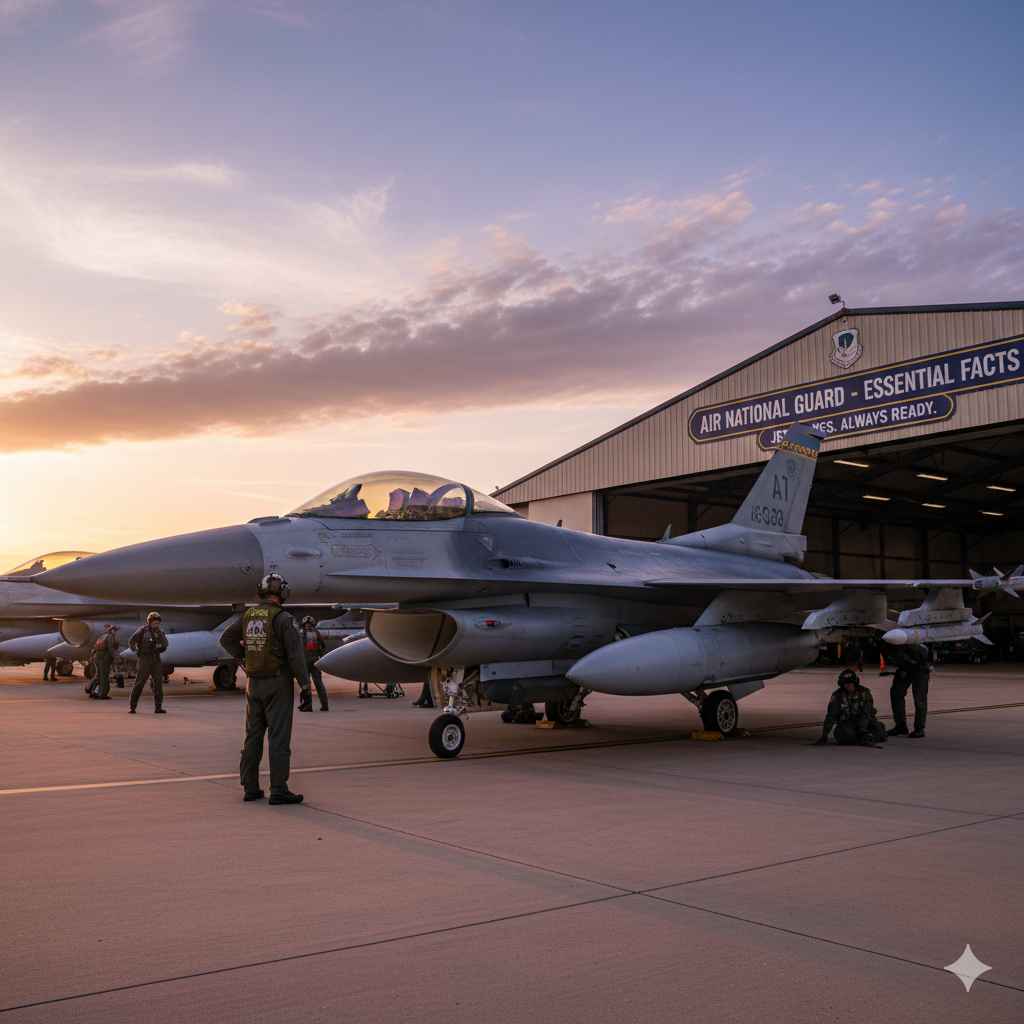
Yes, Air National Guard (ANG) jets are fully armed and combat-ready. They operate the same advanced fighter and support aircraft as the active-duty Air Force and perform critical national defense missions, often deploying alongside active forces.
It’s easy to wonder about the tools of modern defense, especially when you see powerful jets flying overhead. Are those Air National Guard (ANG) planes carrying weapons? This is a common question because the ANG often performs vital homeland missions, like running daily training flights. Knowing the real capability of these citizen-airmen can be confusing. But don’t worry! We are going to break down exactly what the ANG flies and why they are always mission-ready. We will clear up the mystery with easy-to-understand facts about their equipment and roles. Get ready to see how these pilots protect our skies.
Understanding the Air National Guard: More Than Just a Weekend Job
The Air National Guard (ANG) is a unique part of the U.S. military structure. It is composed of volunteer service members who usually maintain their civilian careers while serving part-time. However, when activated, they become fully integrated into the active-duty Air Force structure. They are not just for local emergencies; they are a crucial component of national defense.
The Dual Mission: State and Federal Responsibilities
The ANG operates under two primary commands, which often leads to confusion about their readiness levels:
- State Mission (Title 32 Status): Under the command of the state’s Governor, the ANG responds to domestic emergencies like natural disasters (hurricanes, floods) or civil unrest. In this role, their aircraft are often used for support, transport, or reconnaissance, and their armament status changes based on the immediate security need, though training weapons are always available.
- Federal Mission (Title 10 Status): When called upon by the President, the ANG becomes part of the active-duty Air Force, deploying overseas or preparing for national defense against foreign threats. In this federal capacity, they are fully armed and trained for combat operations.

Are Air National Guard Jets Armed? The Direct Answer
To put it simply: Yes, Air National Guard jets are armed.
The equipment flown by the ANG is often identical to that flown by active-duty units stationed at major bases. This standardization is key to ensuring seamless integration during conflicts or national emergencies. Whether they are flying F-16 Fighting Falcons or the new F-35 Lightning IIs, these aircraft are equipped and maintained to carry live ordnance.
The Role of Modernized Equipment
The ANG does not fly outdated, unarmed relics. They fly frontline tactical aircraft. This means their jets are capable of carrying a full spectrum of modern weaponry, including air-to-air missiles for self-defense and air superiority, and various air-to-ground munitions for precision strikes.
Consider the KC-135 Stratotankers, for instance. While they aren’t fighter jets, they are essential tankers. Even these support aircraft must maintain a state of readiness for combat zones, often practicing defensive maneuvers, though their primary “armament” is fuel.
| ANG Primary Fighter Aircraft | Typical Armament Capability | Primary Mission Context |
|---|---|---|
| F-15 Eagle (Select Units) | AIM-120 AMRAAM (Air-to-Air) | Air Superiority, Combat Alert |
| F-16 Fighting Falcon (Most Units) | JDAMs, Maverick Missiles (Air-to-Ground) | Close Air Support, Suppression of Enemy Air Defenses (SEAD) |
| F-35 Lightning II (Growing Numbers) | Internal/External Payload (Multi-role) | Advanced Strike, Stealth Missions |
Training and Certification: Ready to Fight
The key difference between an ANG jet being “armed” versus an active-duty jet being “armed” is often readiness posture, not capability. A unit’s training cycle determines how often they carry live ordnance versus inert training rounds.
The Weapons Qualification Cycle
Every Air National Guard unit that flies combat aircraft must adhere to strict readiness standards set by the Air Combat Command (ACC). These standards require regular weapons loading and live-fire training. If a unit cannot deploy with fully armed aircraft within a short timeframe, they do not meet their readiness goals.
- Training Loads: Most routine training sorties utilize inert missiles (like the AIM-9 Sidewinder training version, which lacks an explosive warhead) or “dummy” bombs (which replicate the weight and aerodynamics of live ordnance). This allows pilots to practice aiming, releasing, and maneuvering without expending costly, real weapons.
- Live Fire Exercises: Units must participate in regular exercises, often at places like the Nevada Test and Training Range (NTTR), where they physically drop live bombs or fire real missiles against targets. This proves their ability to employ the weapons systems effectively.
- Combat Readiness Evaluation (CRE): The ANG undergoes rigorous inspections where evaluators confirm that munitions storage, aircraft loading procedures, and pilot skills meet active-duty standards. If they pass, they are certified combat-ready.
To understand the process of how the Air Force manages these weapons, you can look at the official guidance from the Department of the Air Force regarding munitions handling, which applies equally to the ANG when operating in a federal capacity.
The QRA Mission: Always Ready
One of the clearest examples of armed ANG jets is their role in the Quick Reaction Alert (QRA) mission. Certain ANG units are tasked 24/7/365 to provide air defense over the continental United States (CONUS).
- These QRA alert aircraft are often physically stationed at their home base, ready to scramble within minutes of a threat detection.
- When on QRA duty, these specific jets are kept armed with air-to-air missiles because they are expected to intercept unauthorized or potentially hostile aircraft near U.S. airspace.
- This duty rotation ensures that whether it’s Tuesday morning or Christmas Day, an armed ANG interceptor is ready to launch.
Types of Armament Commonly Carried by ANG Jets
The specific weapons carried depend entirely on the airframe and the mission tasked. Since many ANG units fly multi-role fighters, their jets must be adaptable.
Air-to-Air Weapons (Self-Defense and Air Superiority)
These weapons are designed to shoot down other aircraft. An interceptor, regardless of whether it’s active duty or ANG, must have these to protect itself and the airspace it is defending.
- AIM-9 Sidewinder: A short-range, heat-seeking missile. Essential for close-in dogfighting practice or immediate defense.
- AIM-120 AMRAAM: A beyond-visual-range missile that uses radar guidance. Used for engaging threats from a distance.
Air-to-Ground Weapons (Strike Missions)
These munitions are used for attacking targets on the ground, such as enemy infrastructure, vehicles, or troop concentrations.
- Precision-Guided Munitions (PGMs): Like the Joint Direct Attack Munition (JDAM), which are “smart bombs” that use GPS guidance to hit targets accurately.
- Cluster Munitions (Historical/Phasing Out): While many older munitions are being retired, units train extensively on the delivery systems for their current ground attack loadout.
The Gun Pod
Every fighter jet, including those flown by the ANG, carries an internal cannon (like the M61 Vulcan 20mm cannon). Even if a pilot fires off all their missiles and bombs, the gun remains a reliable, close-range weapon. It is always “armed” in the sense that the ammunition is loaded and ready for use during training or combat.
The Differences: Capability vs. Posture
The most significant distinction when asking “Are Air National Guard jets armed?” comes down to posture rather than capability. The jets can carry weapons, but whether they are carrying live weapons on any given day depends on their current mission cycle.
Capability vs. Posture Comparison Table
| Factor | Capability (What the Jet Can Do) | Posture (What the Jet Has Today) |
|---|---|---|
| Weapons Availability | Full access to all DoD munitions inventories (live and inert). | Varies. QRA alert jets are armed; routine training jets use inert loads. |
| Pilot Qualification | Pilots must maintain proficiency with live weapons annually. | Pilots must prove qualification status before deploying on combat missions. |
| Maintenance Readiness | Aircraft are maintained to fly combat missions immediately upon deployment. | Maintenance crews practice loading and unloading live ordnance regularly. |
When an ANG fighter squadron deploys overseas to support operations like Operation Inherent Resolve or patrols in the Pacific, they transition to Title 10 status. At that point, they are functionally identical to an active-duty squadron, flying combat air patrols and escorting strike packages with fully armed aircraft.
Why the Confusion Exists: Homeland Defense vs. Combat Readiness
The public perception of the ANG often centers around their state-level duties. When you see an ANG C-130 flying supplies into a flood zone in Texas, it is fulfilling its state mission. In this role, the aircraft is unarmed, focusing solely on humanitarian aid or civil support.
This localized, helpful role sometimes overshadows their primary federal responsibility to be a ready, standing reserve force for global conflict. People often forget that the same personnel who clear roads after a blizzard are also the highly trained individuals who might be launching an F-16 strike package from a base thousands of miles away a few weeks later.
The Importance of Secure Munitions Areas
For security reasons, and because live weapons are not needed for local domestic support missions, the actual storage and handling of live armament are tightly controlled. When ANG aircraft are stateside and fulfilling non-combat support roles, the munitions are safely stored in specialized bunkers known as “armories” or magazines, awaiting the order to load them onto the jets for federal deployment or specific QRA duty.
This separation ensures safety and compliance with federal regulations. Only specific, certified personnel are authorized to handle these items, reinforcing the idea that armament is mission-dependent.
The KC-46 Pegasus and Other Support Aircraft
It’s not just fighter jets that are ready for combat environments. The ANG is rapidly absorbing new tanker and mobility aircraft that support armed operations.
The KC-46 Pegasus tanker, being integrated into several ANG units, is designed to refuel fighters that are carrying live munitions over combat zones. While the tanker itself does not carry offensive weapons, its mission depends entirely on the ability of the aircraft it supports to be armed and mission-capable.
Similarly, the C-17 Globemaster III units within the ANG provide strategic airlift. These aircraft transport troops, equipment, and supplies—including munitions—to forward operating bases where they are immediately loaded onto fighters or bombers. Their operational readiness is thus intrinsically linked to the armed nature of the entire system.
What Does This Mean for Future Training?
As the Air Force continues to modernize, the role of the ANG becomes even more vital. They are essential partners in integrating new fifth-generation technology like the F-35.
For beginners interested in joining or simply understanding the defense structure, remember that the capability is always present. The training programs ensure that Airmen and Guardians—from the crew chief who services the engine to the pilot who flies the jet—are proficient in procedures involving live weapons systems.
For those interested in learning more about the specific aircraft assignments within the ANG, the official U.S. Air Force Fact Sheets page provides up-to-date information on various units and their equipment inventories.

Frequently Asked Questions (FAQ) for Beginners
1. Do all Air National Guard jets fly combat missions?
No. Some ANG units fly purely support aircraft like large transport planes (C-130s) or administrative aircraft, which are generally unarmed unless specifically tasked for a combat zone deployment. However, the fighter and specialized reconnaissance units are always combat-ready.
2. How often do ANG pilots actually fly with real bombs?
Pilots must maintain qualification, which usually requires flying several live-fire exercises per year. However, for day-to-day local training flights, they use inert training rounds for safety and cost reasons.
3. Who decides when an ANG jet needs to be armed?
For federal missions (Title 10), the combatant commander or the President makes the decision to deploy or alert armed forces. For the QRA mission, being armed is a standing requirement dictated by continuous North American defense needs.
4. Is the maintenance crew the same for armed and unarmed missions?
Yes, the maintenance crews (crew chiefs, avionics technicians) are the same. They are trained and certified to handle and install both inert training devices and live munitions safely, regardless of whether the jet is flying a local training mission or deploying overseas.
5. If an ANG jet is on a local training flight, is it armed?
Almost certainly not with live weapons. It might carry dummy weights or inert missiles for flight testing and simulation, but live ordnance is typically stored securely on the ground unless the aircraft is performing a specific QRA alert duty.
6. Are Air National Guard bases secure like active-duty bases?
Yes. All ANG operational bases storing combat aircraft and munitions are heavily secured by Air Force Security Forces, often in conjunction with state military police forces, following the same strict protocols as active-duty installations.
7. Can an ANG unit refuse to deploy with armed aircraft?
Once an ANG unit is federalized (put on Title 10 orders), they operate under federal command and are subject to the same deployment mandates as active-duty units. Refusal to execute a lawful order involving armed status would result in severe military disciplinary action.
Conclusion: A Fully Integrated Force
When you look up and see an Air National Guard jet soaring overhead, it is essential to recognize that you are witnessing a highly capable, fully integrated component of the U.S. military. The answer to the question, “Are Air National Guard jets armed?” is a definitive yes, based on their capability and their required readiness posture.
The Air National Guard seamlessly blends civilian life with combat readiness. Their aircraft possess the full range of weaponry available to the active-duty Air Force, and their personnel—pilots, maintainers, and support staff—are rigorously trained to employ those systems in defense of the nation, whether operating under state emergency orders or deployed globally under federal command. Their readiness ensures that when the nation calls, these citizen-airmen are prepared to take to the skies with the necessary tools to accomplish the mission.