Figuring out if archery gear fits can be tricky, especially when you’re just starting. The question, Are All Stabilizers for Bows Universal? Truth Revealed, often pops up because getting the right parts matters for accuracy. It’s totally okay to feel a bit lost at first! Don’t worry, we’re going to explore this together. We’ll break it down step-by-step so you’ll know exactly what to look for when shopping for stabilizers. Keep reading to learn everything you need to know!
What Makes Stabilizers Work
Stabilizers are essential pieces of equipment for archers of all skill levels. Their primary function is to reduce bow movement during a shot. This is especially important during the crucial moment when the archer releases the arrow. They help to maintain stability and improve accuracy. Different designs and materials influence how effective a stabilizer is. The main goal is to minimize unwanted motion like vibration and torque, leading to more consistent groupings downrange. Selecting the right stabilizer depends on your bow type, shooting style, and what you want to accomplish with the shot. It’s a combination of science and practical application, resulting in better shooting.
Types of Stabilizers
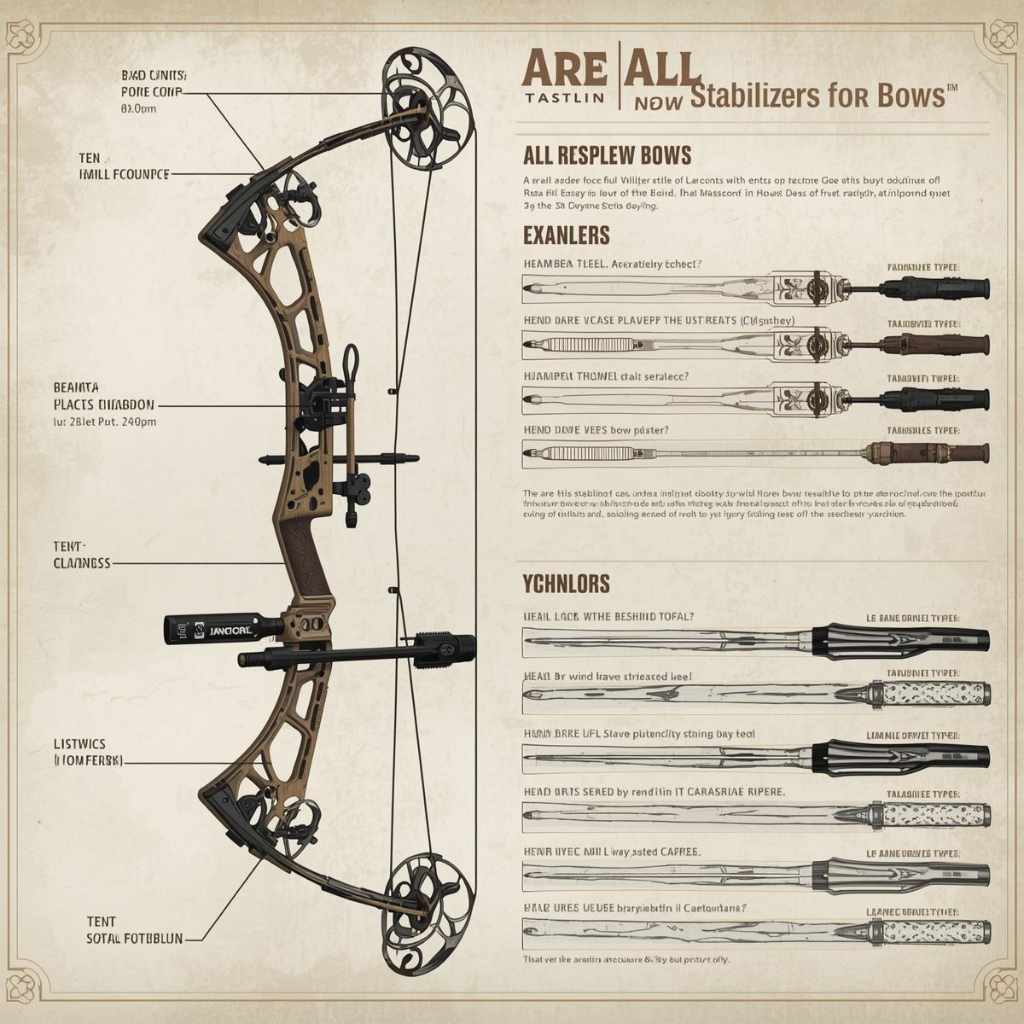
There are many kinds of stabilizers available for bows. Each type is made to solve specific problems related to bow shooting. This means there’s a stabilizer design for every archer and bow setup. From long rods to short ones, each type has its own set of advantages. Many stabilizers include weights that can be adjusted. These weights allow you to finely tune the balance of your bow. This makes the equipment work best for your unique style. Learning about these different types helps archers make informed decisions about what to buy.
Long Rods: These are the most common type, extending forward from the bow. They offer great stability, especially in outdoor conditions. The length adds significant mass weight. This absorbs vibration and reduces bow movement, making them ideal for target archery.
Long rods can range from 28 to 36 inches or longer and can be used with v-bars and side rods. The benefit of a long rod is its ability to counteract bow torque better than shorter options. They help create a smoother shot and are favored by archers aiming for high accuracy levels. Longer rods are more effective outdoors. They resist wind effects and other environmental impacts on shots.
Short Rods: Usually around 6 to 12 inches long, these are perfect for archers who prefer a more compact setup. They’re easier to handle. Often, archers use them on hunting bows. Short rods help to absorb vibration without dramatically increasing the overall length or weight of the bow.
Short rods work well for archers who want a balance of stability and maneuverability. They don’t offer as much vibration absorption as long rods, but they’re effective for close to medium range shots. They are commonly used when the archer needs to move through tight areas. The smaller size helps with this.
Side Rods (V-Bars): These are usually used in conjunction with a long rod. They are mounted on the sides of the bow riser. The placement of the side rods improves balance and lateral stability. This allows archers to fine-tune the bow’s feel for optimal results.
Side rods are often attached to the main stabilizer using a V-bar mount. They allow the archer to adjust the bow’s balance in both the vertical and horizontal planes. They are beneficial for target archery where precision is a priority. Using side rods gives the archer more control over how the bow feels during aiming and follow-through.
Dampeners: These are not technically stabilizers, but they serve a similar purpose. Dampeners are designed to absorb vibration and noise from the bow. They’re often made of rubber or other materials that reduce the effects of shot recoil.
Dampeners typically come in the form of rubber or polymer sleeves or weights. They are placed on the limbs or other parts of the bow. They don’t greatly impact stability, but they can improve shooting comfort and reduce the bow’s noise. This can be important for hunters or archers concerned about noise.

Understanding Compatibility
One of the biggest questions is about compatibility. “Are All Stabilizers for Bows Universal? Truth Revealed” The truth is, it depends. Stabilizers come in various sizes and with different threads, primarily designed for different bows and their intended uses. While many stabilizers will fit certain bows, it’s not a guarantee. Some bows may have specific thread sizes or mounting systems. Knowing the right measurements is essential for the best fit. Always review your bow’s specifications. Doing so assures you’re selecting the right stabilizer. That will help optimize performance. We will explore each factor below.
Threading and Dimensions
The threads on a stabilizer must match the threaded insert on your bow’s riser. This is the most important factor in compatibility. The most common thread size is 5/16″-24. This is a standard size that fits most modern bows. But, some bows may use different sizes or require adaptors. Knowing your bow’s specific thread size avoids problems during mounting. Always check the bow’s manual or ask your local archery shop if you are unsure.
5/16″-24 Threads: This is a standard thread size used for the majority of bows and stabilizers. It is the most common and versatile option. If your bow uses this thread size, you’ll have a wide variety of stabilizers to choose from.
The 5/16″-24 thread size is a standard for many reasons. Manufacturers have agreed upon these specifications, making it simple to find stabilizers that fit your bow. It also offers a great balance between strength and size. This makes it an effective choice for a range of stabilizer designs and materials. This is the best option for most archers.
Metric Threads: Although less common, some bows, particularly those manufactured outside the United States, might use metric threads. Always verify your bow’s thread specifications.
When dealing with metric threads, precise measurements are critical. Mismatched threads can damage the bow’s riser or the stabilizer. If your bow uses metric threads, it’s best to use a stabilizer specifically designed for that size. The local archery shop can help confirm the thread size, ensuring you get the correct match.
Stabilizer Length: While thread size is the most important, length is also important. The stabilizer length you choose impacts how well it performs. Shorter stabilizers are good for maneuverability, while longer ones are better for stability.
Choosing the correct length depends on the archery style and bow type. For hunters, a shorter stabilizer might be preferred because it’s easier to handle in tight spaces. For target archers, longer stabilizers are often chosen because they enhance stability during longer aiming sequences. The correct length will depend on the archer’s shooting style and what they want from the stabilizer.
Bow Type Considerations
The type of bow also influences stabilizer compatibility. Compound bows, recurve bows, and crossbows each have different designs and needs. Compound bows often benefit from longer stabilizers, while recurve bows may need a different approach. Crossbows may require specialized stabilizers to reduce vibration. Knowing the specific requirements of your bow type is critical to the selection process.
Compound Bows: Compound bows are the most common type for target shooting and hunting. They typically use a 5/16″-24 thread size. Compound bows benefit from longer stabilizers because these rods help with balance and reduce vibration, making them very stable.
When selecting a stabilizer for a compound bow, consider its overall weight, draw weight, and the type of shooting you’ll be doing. Hunters might want a stabilizer that balances stability with maneuverability, while target archers can prioritize maximum stabilization. Most compound bows will work with many stabilizer options. It’s often easy to find one that enhances the bow’s performance and feel.
Recurve Bows: Recurve bows often have different stabilizer mounting setups. Many recurve bows have a standardized bushing system. These systems help the archer to adjust the stabilizer’s angle. This is very important for balancing the bow.
Recurve bows may require adaptors or different thread sizes, so make sure to check the specifications. Recurve archers usually use a combination of front and side stabilizers. This allows for a more customized balance and improved accuracy. These setups are made to meet the demands of target archery, where precise adjustments are critical.
Crossbows: Crossbows often require stabilizers specifically designed for them. Crossbows have very high levels of vibration that need special mitigation. These stabilizers will assist in dampening the shock from the shot. They should be chosen specifically for crossbow use.
Because of the high forces involved in shooting a crossbow, the stabilizers are often designed to be very strong and effective. These stabilizers are made to reduce noise and vibration and make the shot feel smoother. Selecting the correct stabilizer for a crossbow improves shooting accuracy. It will also protect the bow’s components from damage.
Choosing the Right Stabilizer
To pick the perfect stabilizer, you should consider a few things. These factors help ensure a good match for your bow and shooting style. This way, you can improve your accuracy. You must consider the thread size, the bow type, and the shooting conditions. Taking these things into account will help you choose the best stabilizer for you.
Material and Construction
The materials used to make stabilizers greatly affect their performance. Each material type brings its own features and advantages to the archery experience. Carbon fiber stabilizers are generally favored for their light weight and high stiffness. Aluminum options offer a budget-friendly and durable choice. The specific build of the stabilizer also matters. Some stabilizers include vibration-dampening technology to reduce noise and improve the shot experience. The construction choices influence how well the stabilizer does its job. The choice you make impacts the feel and performance of the bow during use.
Carbon Fiber: Carbon fiber is very popular because it’s both light and stiff. This makes it an ideal material for stabilizers. Carbon fiber stabilizes reduce bow vibration and improve accuracy. It provides great balance and has very good vibration-dampening properties.
The light weight of carbon fiber is particularly helpful, making the bow easier to handle. Carbon fiber stabilizers are favored by competitive archers because they offer high performance without adding much weight. This material helps with accuracy and is very helpful for shooting.
Aluminum: Aluminum stabilizers are a strong, durable, and affordable option. Aluminum is more resilient than carbon fiber. It does a good job of absorbing vibration. However, aluminum is heavier than carbon fiber.
Aluminum stabilizers are an excellent option for beginners. They are a good balance of durability, performance, and price. They provide a stable platform for shooting. The selection of weights with an aluminum stabilizer allows for precise balance and adjustment.
Hybrid Designs: Some stabilizers use a combination of materials. For example, a stabilizer may include a carbon fiber rod with aluminum components. These designs combine the advantages of different materials. This improves performance.
These designs use each material’s strengths, improving the stabilizer’s ability to dampen vibration. Hybrid designs often allow for better tuning and adjustment. They can offer a good balance of performance, durability, and cost. This allows archers to pick the best features.
Dampening Technology: Many stabilizers contain built-in dampening materials. This helps in absorbing shot vibration. This is very important for a smoother shot experience and improved accuracy. These systems vary from simple rubber dampeners to more sophisticated designs.
Vibration dampeners can be a significant addition. They reduce shock and noise. They also improve the shooter’s experience and can help increase accuracy. Some dampeners can be adjusted to tune the stabilizer to the bow. They offer an even more refined shooting experience.
Matching Your Shooting Style
The choice of stabilizer should align with your archery goals and the way you shoot. Consider whether you are hunting, competing in target archery, or just shooting for fun. Each of these styles has special requirements. Choosing the right stabilizer helps you reach your goals. Understanding your shooting style influences the decision-making process. Then, you can pick a stabilizer that boosts your performance and meets your needs.
Hunting: For hunters, a stabilizer must balance stability and maneuverability. Short stabilizers are popular because they don’t get in the way. Hunters typically prioritize a compact setup that’s easy to handle in the field.
Hunters often choose stabilizers that absorb vibration while minimizing added weight. This helps in maintaining stability during shots while being able to move around. Considerations often include ease of use and durability. The stabilizer should function well in varied conditions.
Target Archery: Target archers often use longer stabilizers. This improves accuracy at longer ranges. Balance is very important in this case. They prioritize stabilizers that provide the maximum amount of stability.
These archers will fine-tune the stabilizer system, with different weights and configurations. These adjustments enhance balance and reduce any movement during the shot. The focus is to get the best performance, to achieve tight groups. They will often use a v-bar setup for more refined adjustments.
3D Archery: 3D archery is a combination of hunting and target styles. The archer must be ready for various shooting conditions. This means versatility is key.
3D archers often choose stabilizers that provide a good balance between stability and maneuverability. They typically choose a length that works well in a variety of situations. They should be able to make quick adjustments. This helps in different conditions.
Recreational Shooting: For those who shoot for enjoyment, comfort and ease of use are crucial. There is no specific setup requirement. Choose a stabilizer that feels right for you and improves your enjoyment of the sport.
Recreational archers have many choices when it comes to stabilizers. They may choose based on comfort, ease of use, and the way the bow feels in their hands. The main goal is to improve the enjoyment of the shooting experience. A shorter, lighter stabilizer might be preferred.
Adjustability
The ability to adjust a stabilizer can be a real game-changer. Adjustability lets you fine-tune the equipment. This ensures it’s perfectly balanced for your setup and shooting style. Many stabilizers come with adjustable weights or the option to change the configuration. This means you can adjust the stabilizer until your bow feels perfect in your hands. This also increases your accuracy. The ability to make changes based on the shooting environment or personal preferences is a significant benefit.
Weight Systems: Many stabilizers have adjustable weight systems. This lets archers change the bow’s balance. This can be done by moving weights or adding new ones. These small adjustments can dramatically affect the feeling of the shot.
Weight systems enable the archer to fine-tune the bow to their preferences. Archers can try different configurations to discover the perfect balance. This helps to improve the bow’s overall performance. Weight systems give archers great control. They can adapt their setup to suit different conditions or personal preferences.
Length and Configuration: Some stabilizers come with options to adjust their length or configuration. This makes it possible to adjust the stabilizer for best performance in different situations. This adds to the flexibility of the equipment.
The ability to customize the length or configuration lets archers adapt to various shooting conditions. If you’re shooting in an area that’s very windy, you might want a longer stabilizer. This would increase stability. The option to adjust the setup adds to the versatility of the equipment. It ensures that the archer can adapt their gear to the shooting conditions.
V-Bar Systems: V-bar systems give archers a high degree of control over bow balance. Side rods can be added to the stabilizer setup. This allows for adjustments on both the horizontal and vertical planes. This is crucial for precise tuning.
V-bar systems let archers perfectly tune their bows. The ability to adjust the angle and position of the side rods allows for very fine control over bow balance. This setup is common in target archery. Archers who want high accuracy will often use a V-bar system.
How to Install and Tune Your Stabilizer
Once you’ve picked the right stabilizer, the next step is installation and tuning. Taking these steps is important. They help maximize the stabilizer’s performance. Knowing how to install the stabilizer properly is the start. Then, you can make adjustments to suit your shooting style. When done right, this process improves accuracy and enhances your shooting experience. This section helps you with easy-to-follow steps.
Installation Steps
Installing a stabilizer is a straightforward process. But there are a few important steps to follow. These steps assure that the stabilizer is mounted correctly and ready for use. Always refer to the stabilizer manufacturer’s instructions for the best results. Here are the steps.
- Inspect Your Bow: Before installation, examine the threaded insert on your bow’s riser. Make sure it’s clean and in good condition. Look for any damage or obstructions that could impact the installation.
Cleaning the threads helps ensure a secure fit and prevents potential damage to the threads. If you see any signs of wear or damage, you may want to consult your local archery shop. Addressing these issues beforehand ensures a stable and secure mount for your stabilizer.
- Thread the Stabilizer: Carefully thread the stabilizer into the threaded insert on your bow. Turn the stabilizer clockwise by hand until it’s snug. Don’t overtighten it.
It’s important to screw the stabilizer in slowly. That will ensure that the threads line up correctly. Overtightening can cause damage to the bow’s riser or the stabilizer itself. Hand-tightening is usually enough to secure the stabilizer. Then check to be sure it’s secure.
- Adjust the Weights (if applicable): If your stabilizer has adjustable weights, now is the time to add or remove them. The goal is to balance the bow. Start with a balanced setup and make adjustments as needed.
The weight setup of your stabilizer is a personal choice. Your preferences will vary depending on your shooting style. Start with a base configuration. Experiment with the weight placement and quantity. This will help you find the best balance for your bow.
- Check for Alignment: Once the stabilizer is installed, check to make sure it’s aligned properly with the bow. It should be straight and secure. Misalignment can impact your accuracy.
Proper alignment is key for stability. A stabilizer that’s not aligned properly may not reduce vibration effectively. Ensure that the stabilizer is positioned so that the rod extends straight forward. Check that the side rods, if used, are positioned symmetrically for the best results.
- Test and Fine-Tune: After installation, take a few shots to assess how the bow feels. Make any adjustments needed to the weight or length until you achieve the desired balance and feel.
Testing your setup after installation is crucial for optimizing performance. Observe how the bow feels during the shot. Pay attention to any vibrations. Adjust the weights or configuration to improve balance and stability. This part involves trial and error. The goal is a feel that lets you shoot accurately and consistently.
Tuning for Optimal Performance
Tuning the stabilizer allows you to get the best performance from your bow. The process involves making subtle adjustments. The objective is to fine-tune the bow’s balance and feel. You’ll make adjustments to the weights and configurations. This allows the stabilizer to work perfectly with your shooting style. The process is often a trial and error one. The goal is to improve accuracy and consistency.
Weight Distribution: Experiment with the weight distribution. Changing the weight on your stabilizer can affect your shot.
The goal is to move the bow’s center of gravity. You can fine-tune the balance of your setup. Moving the weights around will affect the bow’s balance. This will help reduce vibration and increase stability. Small changes can have big effects on your shooting.
Length Adjustments: Adjusting the stabilizer’s length helps you find the right balance for your shooting style. Longer stabilizers are useful in windy conditions.
You can adjust the stabilizer’s length to meet the specific requirements of your style. A longer stabilizer will give you more stability. This is good for target shooting, where maximum stability is needed. A shorter stabilizer can enhance maneuverability. This helps hunters who need to move easily. You can find the ideal length with experimentation.
Shot Analysis: Watch your arrows to see how they’re behaving. This offers valuable information on how to fine-tune the stabilizer.
Analyzing arrow flight is very important. Watch where your arrows hit the target. Pay attention to how the arrows fly. This provides helpful clues. Adjusting the stabilizer based on arrow flight is a great approach. This enables you to find the perfect stabilizer configuration for the best performance.
Environmental Considerations: Consider environmental factors such as wind and terrain. These factors may require adjustments.
Adjust the stabilizer based on the conditions you are shooting in. Wind can impact your arrow flight. Adjusting the setup can improve your accuracy in challenging environments. This adaptability helps you to get consistent results in different conditions.
Frequently Asked Questions
Question: Can I use any stabilizer on my bow?
Answer: Not necessarily. The thread size and type of bow (compound, recurve, crossbow) are important. You must choose a stabilizer that matches your bow’s specifications.
Question: What’s the main function of a stabilizer?
Answer: Stabilizers help reduce bow movement and vibration during the shot. This improves accuracy by making the bow more stable.
Question: How do I know the correct length for a stabilizer?
Answer: It depends on your shooting style and the type of bow. Hunters might prefer shorter stabilizers. Target archers often use longer ones for maximum stability. Try different lengths to find what works best.
Question: How can I improve my bow’s balance with a stabilizer?
Answer: Many stabilizers come with adjustable weights. You can change the bow’s balance. You can also move weight around on the stabilizer. Doing so, you can refine the setup to match your needs.
Question: What materials are common for stabilizers?
Answer: Carbon fiber and aluminum are the most common. Carbon fiber is lightweight and stiff. Aluminum is durable and budget-friendly. Each material has different properties.
Final Thoughts
So, Are All Stabilizers for Bows Universal? Truth Revealed, as we’ve explored, the answer isn’t a simple yes or no. You’ve learned the different types, the importance of thread sizes, and how to match a stabilizer to your bow type. Compatibility goes beyond just screwing it on. We explored how materials and construction play a role in your accuracy. Remember, the right choice depends on your shooting style, whether you’re a hunter, a target archer, or just enjoy recreational shooting. The good news is, by understanding these factors, you can make the best choice. This will enhance your shooting. Don’t be afraid to experiment with your setup. Keep trying different configurations until you find what feels perfect. The journey to becoming a better archer starts with the right equipment. Now, get out there and enjoy the sport!