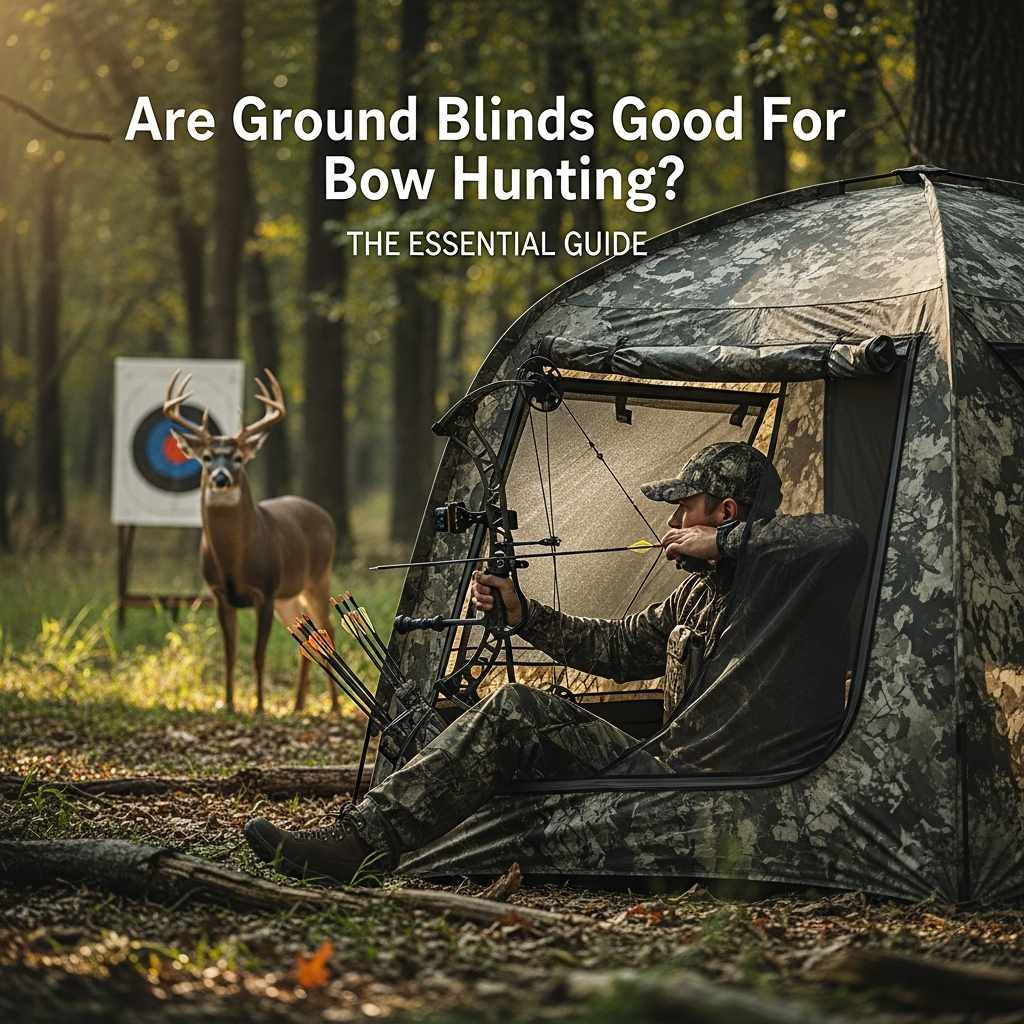
Yes, ground blinds are excellent for bow hunting, especially for beginners. They provide outstanding concealment to hide your movement when drawing a bow, offer protection from weather, and create a comfortable space for long sits. Success depends on choosing the right size blind and setting it up properly to ensure you have enough room and clear shooting lanes.
Have you ever wondered if you could get closer to game without being spotted? Sitting still in the open can be tough, especially when you need to draw your bow. It’s a common challenge for every bow hunter. You see a deer approaching, your heart pounds, but you know the slightest movement could send it running. This is where a ground blind can change everything.
Don’t worry, figuring out if a blind is right for you isn’t complicated. This guide will walk you through everything you need to know. We’ll cover the good, the bad, and how to pick the perfect blind for your needs. Let’s get you set up for a comfortable and successful hunt.
What is a Ground Blind, Anyway?
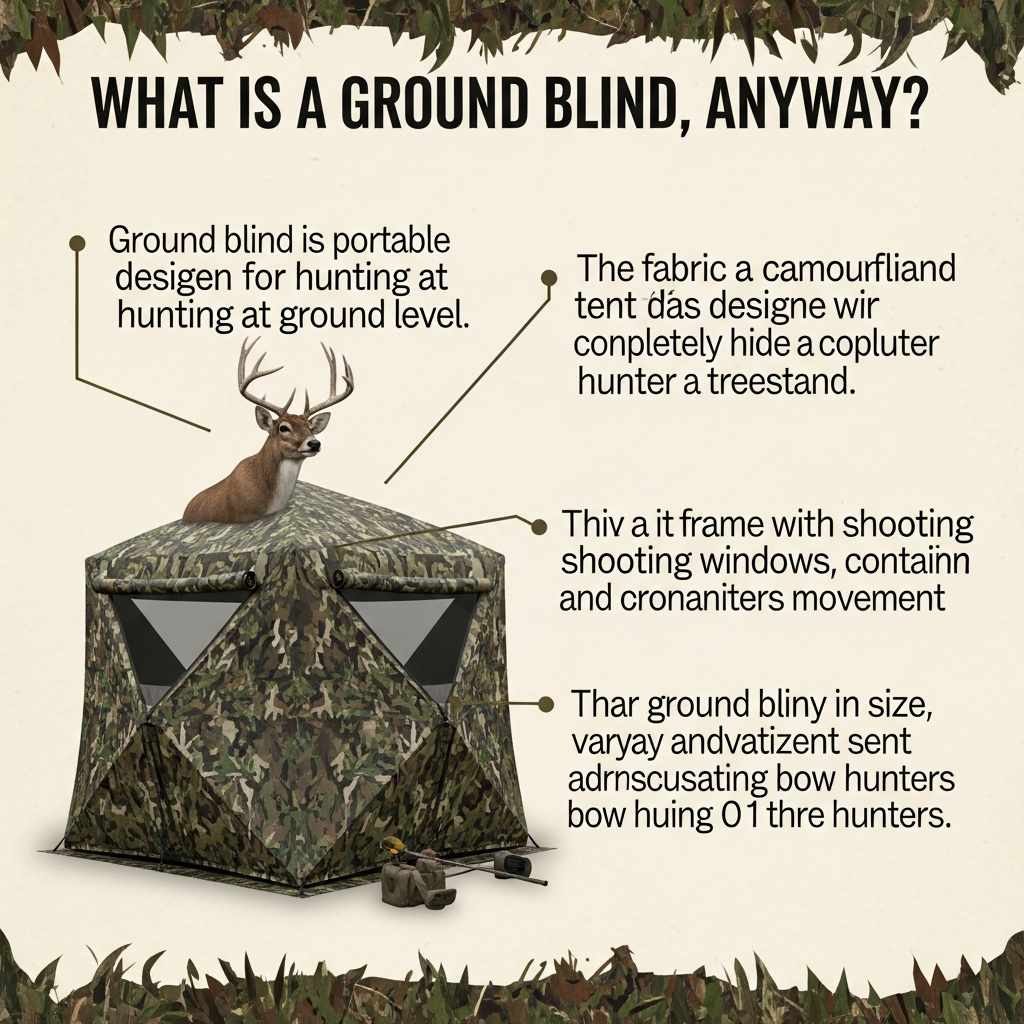
Think of a ground blind as a portable, camouflaged tent designed specifically for hunting. Unlike a treestand that puts you high up in the air, a ground blind keeps you at eye level with the animals. It’s made of fabric stretched over a frame, with windows you can shoot through. The main job of a ground blind is to hide you completely.
Inside, you are a shadow. Your scent is contained, and your movements are hidden. This is a huge advantage for bow hunters because drawing a bow is a big, noticeable motion. A ground blind conceals that critical movement, letting you prepare for your shot without spooking your target. They come in various shapes and sizes, from small one-person blinds to larger ones that can fit two or three hunters comfortably.
The Big Answer: Are Ground Blinds a Game-Changer for Bow Hunting?
So, let’s get straight to the point. Are ground blinds good for bow hunting? The answer is a big, resounding yes! They solve one of the biggest challenges in bow hunting: staying concealed while making a large movement. For many hunters, especially those new to the sport, a ground blind is the key to getting that first successful harvest.
However, it’s not as simple as just buying any blind and setting it in a field. To be truly effective, you need to understand their strengths and weaknesses. A blind used correctly is a powerful tool. A blind used incorrectly can be a frustrating experience. The rest of this guide will break down exactly what you need to know to make your ground blind your best hunting partner.
The Advantages: Why You’ll Love a Ground Blind
Using a ground blind offers some amazing benefits that can make your hunt more comfortable, enjoyable, and successful.
- Unmatched Concealment: This is the number one reason to use a blind. The dark interior hides your silhouette and masks the movement of drawing your bow. Animals have a hard time seeing into the “black hole” of a blind window, giving you a massive advantage.
- Protection from the Elements: Hunting often means facing wind, rain, or even snow. A ground blind acts as your personal shelter. It keeps you dry, blocks the wind, and can make a cold day much more bearable. A comfortable hunter is a patient hunter.
- Freedom of Movement: Inside a blind, you can stretch your legs, sip some coffee, or check your phone without worrying about being seen. This freedom makes it easier to sit for longer periods, increasing your chances of seeing game.
- Great for Beginners and Youth Hunters: Blinds are fantastic for teaching new hunters. They help contain small, fidgety movements and allow a mentor to whisper instructions without being heard from a distance. It’s a controlled, safe environment to learn in.
- Portability and Flexibility: Modern pop-up blinds are lightweight and can be set up in minutes. This allows you to be mobile. If a spot isn’t working out, you can pack up and move to a new location with relative ease. You aren’t tied to a specific tree like you are with a treestand.
The Challenges: What to Watch Out For
While ground blinds are great, they aren’t perfect. Being aware of the potential drawbacks will help you overcome them.
- Limited Shooting Angles: Unlike a treestand with a 360-degree view, a blind limits your shots to its window openings. You need to position your blind carefully to cover the specific trails or areas you expect animals to appear.
- Potential for Obstructions: The window frames and shoot-through mesh can sometimes get in the way of your arrow or broadhead. It’s crucial to practice shooting from your blind to make sure you have proper clearance.
- Drawing Your Bow Undetected: Even inside a blind, sound matters. The sound of your clothes brushing against the blind’s fabric or your arrow scraping against the rest can be enough to alert a close animal. You must practice drawing slowly and silently.
- The “Black Hole” Effect: While the dark interior hides you, a big, black, boxy shape can look unnatural to deer if not placed well. You need to “brush in” your blind using natural vegetation to break up its outline.
- Proper Sizing is Crucial: A blind that is too short will not allow you to draw your bow comfortably, especially if you are tall. We’ll cover how to pick the right size next.
How to Choose the Perfect Ground Blind for Bow Hunting
Not all ground blinds are created equal, especially for bow hunting. Your bow needs more room to operate than a rifle does. Here’s what to look for when you’re shopping.
Size: Your Most Important Decision
When it comes to bow hunting, size is everything. You need enough vertical and horizontal space to draw your bow without hitting the ceiling or walls.
- Height: Look for a blind that is at least 65 inches tall, but 70 inches or more is even better. Sit in your hunting chair and practice drawing your bow. Make sure your cams (the wheels on your bow) don’t hit the roof. A taller blind gives you more flexibility and comfort.
- Footprint: The footprint is the square footage on the ground. A larger footprint (like 60×60 inches or more) gives you more elbow room. This is important for turning in your chair and drawing without bumping into the side walls.
Window Design and Shoot-Through Mesh
The windows are your portals to the outside world. Their design heavily impacts your hunt.
- Window Configuration: Many blinds have horizontal windows, which are fine for rifle hunting but can be tricky for bow hunting. Look for blinds with tall, vertical windows. They better accommodate the range of motion when aiming a bow.
- Shoot-Through Mesh: This is a special mesh that covers the windows. It provides extra concealment, yet you can shoot your arrow right through it. If you use it, you must practice with it! It can slightly alter your arrow’s flight, and you need to use fixed-blade broadheads, as mechanical broadheads can deploy prematurely when hitting the mesh.
Shape and Portability
Most modern blinds are “hub-style,” which means they have a frame that pops out from central hubs. They are incredibly easy to set up and take down.
- Hub-Style Blinds: These are the most popular for a reason. They are generally lightweight, pack down into a carrying bag, and can be set up in under a minute once you get the hang of it.
- Weight: Consider how far you plan to carry your blind. If you’re hiking deep into the woods, every pound matters. Check the packed weight before you buy.
Here’s a quick table to help you compare features when you’re looking at different blinds.
| Feature | What to Look For (Beginner Bow Hunter) | Why It Matters |
|---|---|---|
| Center Height | 70+ inches | Allows you to draw your bow without the top cam hitting the roof. Essential for comfort and a clean shot. |
| Footprint | 60 x 60 inches or larger | Gives you enough elbow room to draw and maneuver without bumping the walls. More space for gear. |
| Window Style | Tall, vertical windows | Better accommodates the vertical orientation of a bow and allows for more varied shot angles. |
| Shoot-Through Mesh | Included, but optional to use | Offers maximum concealment, but requires practice and specific broadheads (fixed-blade). |
| Portability (Weight) | Under 20 lbs | Makes it easier to carry to and from your hunting spot, especially on longer walks. |
Your Step-by-Step Guide to a Perfect Blind Setup
Buying the right blind is only half the battle. Setting it up correctly is what leads to success. Follow these steps to make your blind disappear into the landscape.
- Scout Your Location First: Before you even bring your blind out, know where you want to put it. Look for game trails, food sources, or water. Find a spot that puts you downwind of where you expect deer to be. The principles of hunter safety and scouting are your foundation.
- Set It Up Early (If Possible): Animals are wary of new things in their environment. If you can, set up your blind a week or two before you plan to hunt. This gives them time to get used to it and accept it as part of the scenery.
- “Brush In” Your Blind: This is the most critical step. A blind sitting in an open field looks like a big, scary cube. Use surrounding natural vegetation—branches, leaves, tall grass—to break up its outline. Tuck it into a line of trees or against a thick bush. The goal is to make it look like it grew there.
- Position It for the Perfect Shot: Think about where the sun will be. You don’t want the sun shining directly into your open windows, as it will illuminate you. Face your main shooting windows toward the area you expect to shoot. Clear any small branches or twigs that could deflect your arrow.
- Get Comfortable Inside: Your setup inside the blind is just as important. Use a comfortable chair that puts you at the right height for the windows. Arrange your gear—bow, arrows, rangefinder, backpack—so you can reach everything silently without much movement.
- Practice Drawing and Shooting: Before your hunt, sit in your blind and practice drawing your bow. Make sure you have clearance. If you have a target, take a few practice shots from the exact position you’ll be in. This builds muscle memory and confidence.
Pro Tips for a Successful Hunt from Your Blind
You’ve chosen your blind and set it up perfectly. Now, let’s cover the little details that make a big difference.
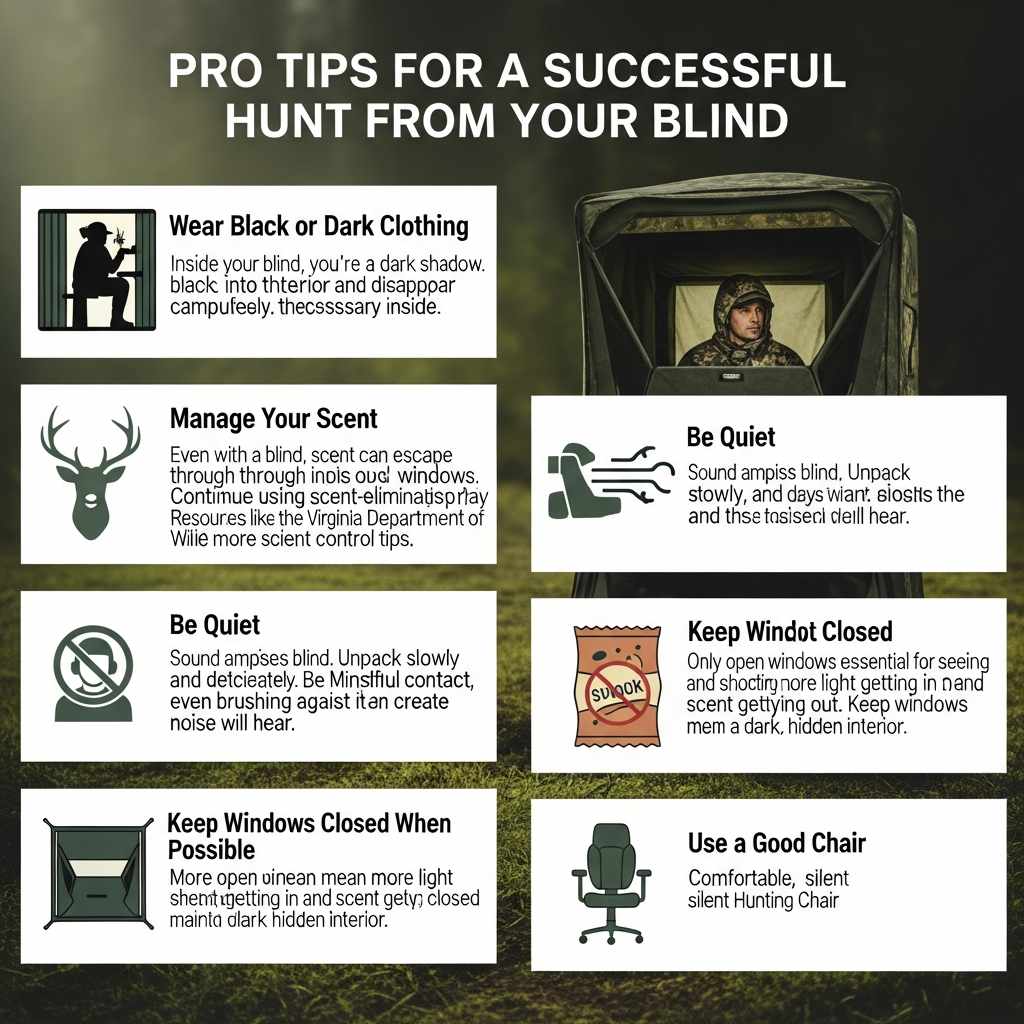
- Wear Black or Dark Clothing: The inside of your blind is a dark shadow. Wearing camouflage inside is unnecessary. Instead, wear black or dark gray clothing to blend in with the interior and disappear completely.
- Manage Your Scent: While a blind helps contain your scent, it doesn’t eliminate it. Air currents can still carry your smell out the windows. Continue to use scent-eliminating sprays and play the wind, just as you would without a blind. For more details on scent control, many state wildlife agencies, like the Virginia Department of Wildlife Resources, offer great tips.
- Be Quiet: Sound is amplified inside a blind. The rustle of a snack bag or the clank of a thermos can sound very loud. Unpack your gear slowly and deliberately. Be mindful of the fabric—brushing against it can create a scratching sound that deer will hear.
- Keep Windows Closed When Possible: Only open the windows you absolutely need to see and shoot from. The more windows you open, the more light gets in and the more scent gets out. Keeping the back windows closed will maintain the dark interior that keeps you hidden.
- Use a Good Chair: You might be sitting for hours. A cheap, squeaky stool will ruin your hunt. Invest in a comfortable, silent hunting chair. It’s one of the best investments you can make for blind hunting.
Even with the best preparation, it’s easy to make small mistakes. Here’s a table of common slip-ups and how to avoid them.
| Common Mistake | Why It’s a Problem | How to Fix It |
|---|---|---|
| Setting up in the open | The blind sticks out and looks unnatural, spooking game. | Tuck your blind into natural cover like a treeline or brush pile. Use local vegetation to brush it in thoroughly. |
| Wearing camouflage inside | Light-colored camo can make you stand out against the dark interior. | Wear solid black or dark-colored clothing to blend in with the shadows of the blind. |
| Not practicing from the blind | You might discover you don’t have enough room to draw or that your arrow hits the window frame. | Always take practice shots from your blind, using the same chair and gear you’ll hunt with. |
| Forgetting about the wind | A blind contains scent, but doesn’t eliminate it. The wind can still carry your scent out the windows. | Always set up so the wind is blowing from the direction you expect game to appear towards you. |
| Making too much noise | Fabric walls can amplify small sounds like rustling clothes or dropping gear. | Move slowly and deliberately. Set up all your gear before game arrives so you can remain still and silent. |
Frequently Asked Questions (FAQ)
How tall should a ground blind be for bow hunting?
For bow hunting, you should look for a ground blind with a center height of at least 65 inches, but 70 inches or more is ideal. This gives you enough vertical room to draw your bow to full draw without your top cam hitting the roof of the blind, which is crucial for a smooth and accurate shot.
Can deer see ground blinds?
Yes, deer can see ground blinds, especially if they are new to the area or not blended in well. A blind appears as a large, unnatural object. This is why it’s so important to “brush in” your blind with natural vegetation and set it up well in advance of your hunt to allow deer to get used to it.
Do I need to use shoot-through mesh?
You do not need to use shoot-through mesh, but it offers the best concealment. If you choose to use it, you must practice shooting through it with your hunting broadheads. It’s best to use fixed-blade broadheads, as mechanical ones can open prematurely. If you prefer not to use it, just be extra careful about your movements behind the open window.
How far should I set up my blind from a trail?
For bow hunting, you want to be close. A good distance is typically 15 to 25 yards from the trail or area you expect to shoot. This range provides a high-percentage shot while still being far enough away that you don’t spook the animal with small sounds or movements inside the blind. Always use a rangefinder to know your distances.
What is the best chair for a ground blind?
The best chair is one that is silent, comfortable, and the correct height. Look for a chair with three or four legs for stability, a comfortable backrest, and no squeaky joints. It should position you high enough to shoot comfortably out of the windows without having to stand up or slouch.
How do I keep my ground blind from smelling like a human?
First, set your blind up outside for a few days before your hunt to air out any factory smells. When you set it up in the field, spray it down with a scent-eliminating spray. Store it in a scent-free bag or container when not in use. Always practice good personal scent control yourself by using scent-free soap and deodorant before heading out.
The Final Verdict: Are Ground Blinds Right for You?
So, are ground blinds good for bow hunting? Absolutely. They are a fantastic tool that can level the playing field, giving you the concealment needed to draw your bow undetected. They make hunting more comfortable, accessible, and enjoyable, especially for those just starting out or for hunters who can no longer use a treestand.
Like any piece of hunting equipment, success comes from knowing how to use it properly. By choosing the right size blind, setting it up with care, and practicing from it, you can turn a simple fabric shelter into your secret weapon. It allows you to get up close and personal with wildlife, providing an experience that is both thrilling and rewarding. Give one a try—you might just find it’s the key to your most successful season yet.