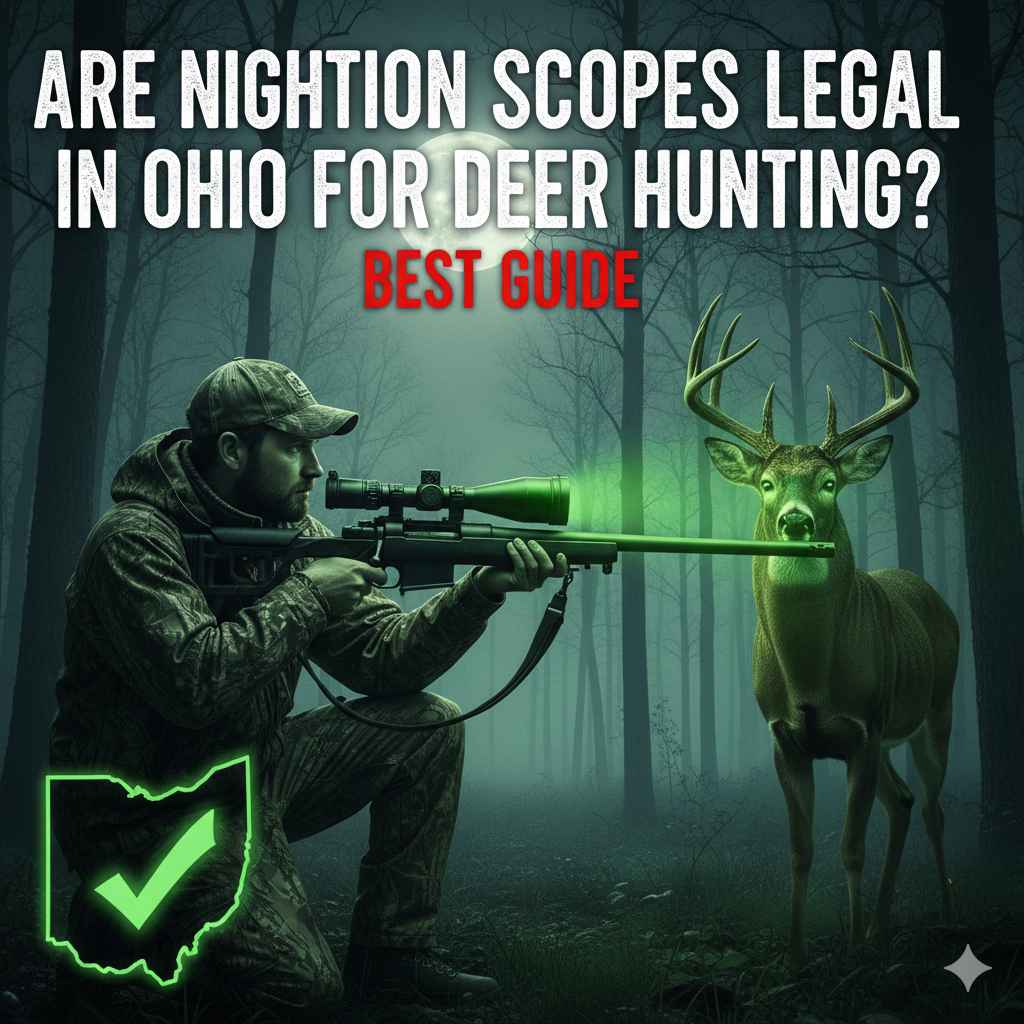
Are Night Vision Scopes Legal In Ohio For Deer Hunting: Best
No, you cannot legally use night vision or thermal scopes for deer hunting in Ohio. State regulations prohibit the use of any infrared, thermal, or night vision equipment for hunting game animals like deer. However, you can use these devices for hunting non-game animals like coyotes and for nuisance animal control, where permitted. For more on this, see our related guide on Is a 3 9X40 Scope Good for Hunting Coyote? Find Out Now.
Hello, fellow hunters! Salman Arfeen here. If you’re getting into hunting, you’ve probably seen some incredible gear out there. Night vision scopes look like something out of a video game, and it’s easy to wonder if they can give you an edge in the field. But when it comes to hunting, especially for an animal as revered as the white-tailed deer, knowing the rules is just as important as knowing how to aim.
Many new hunters get confused about technology and regulations. It’s a common question: “Can I use this cool gadget to hunt deer in Ohio?” The laws can seem complicated, but they are there for a good reason. Don’t worry, I’m here to clear things up for you. We’ll walk through exactly what Ohio law says, why these rules exist, and what your best legal options are for those dusky, low-light conditions. Let’s make sure your hunt is not only successful but also 100% legal and ethical.
Understanding Ohio’s Core Hunting Regulations
Before we dive deep into night vision, let’s talk about the foundation of Ohio’s hunting laws. The Ohio Department of Natural Resources (ODNR) Division of Wildlife sets the rules to ensure hunting is safe, ethical, and sustainable. Their goal is to manage wildlife populations so that we can all enjoy this tradition for generations to come.
One of the key principles behind these rules is the concept of “fair chase.” This idea means that the hunter does not have an improper or unfair advantage over the animal. It’s about respecting the animal and relying on skill, patience, and knowledge of the outdoors rather than just technology. This principle is why there are specific rules about legal hunting hours, the types of firearms you can use, and, you guessed it, the kinds of optics that are permitted.
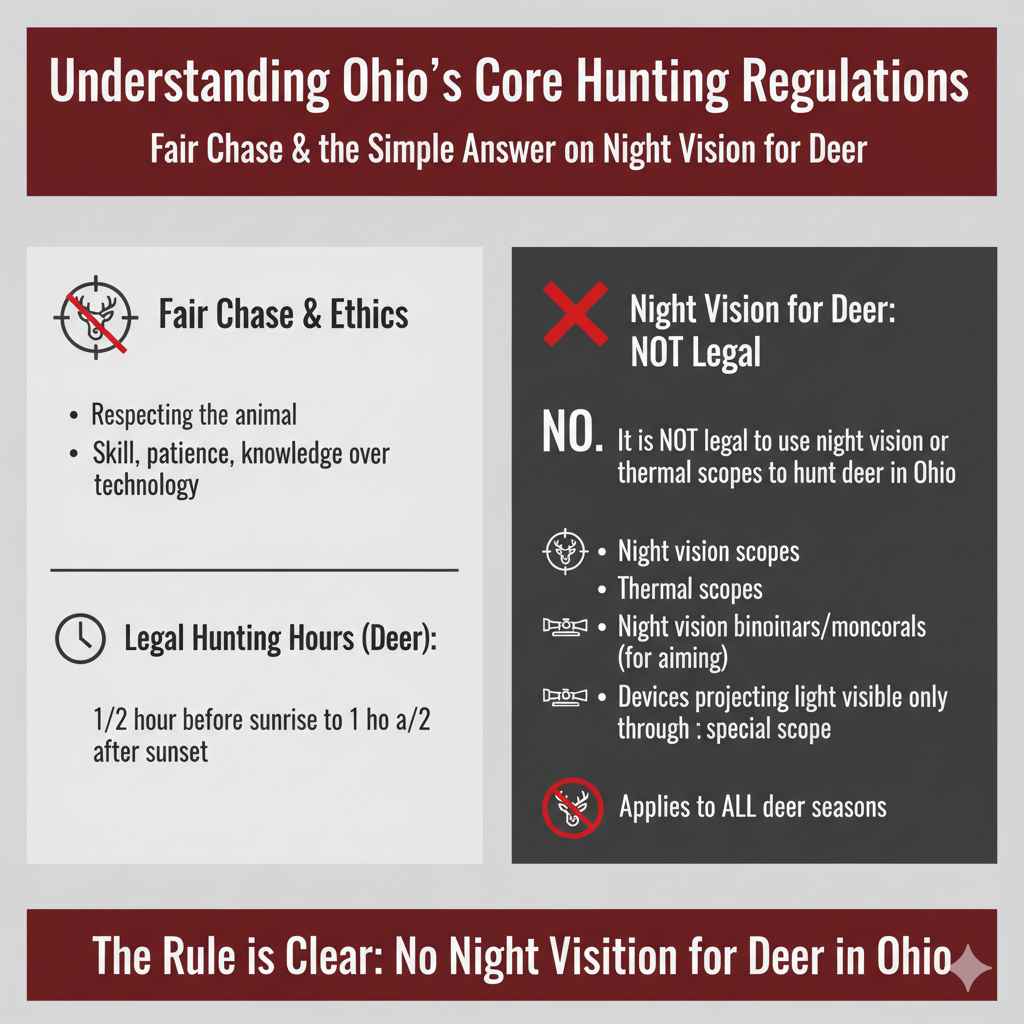
For deer hunting, the rules are very specific. Legal hunting hours are generally from one-half hour before sunrise to one-half hour after sunset. This timeframe is designed to ensure visibility for a safe and ethical shot, and it naturally limits the need for technology that sees in the dark.
The Simple Answer: Are Night Vision Scopes Legal for Deer Hunting in Ohio?
Let’s get straight to the point. No, it is not legal to use a night vision or thermal imaging scope to hunt deer in Ohio. This rule is very clear in the Ohio hunting regulations.
The regulations state that it is unlawful to hunt or take deer with any equipment that uses infrared, thermal, or other light-gathering technology designed for night use. This includes:
- Night vision scopes
- Thermal scopes
- Night vision binoculars or monoculars used for aiming
- Any device attached to your firearm or bow that projects a light beam visible only through a special scope
This prohibition applies to all deer hunting seasons in Ohio, including archery, firearms, and muzzleloader seasons. The rule is simple and absolute: if it’s designed to help you see and target an animal in the dark, you cannot use it for deer hunting.
What About Thermal Scopes? Is There a Difference?
This is another excellent question that often comes up. While night vision and thermal imaging are different technologies, Ohio law treats them the same for the purpose of deer hunting. Both are illegal.
To help you understand, here’s a quick breakdown of how they work:
- Night Vision: This technology takes in tiny amounts of available ambient light (like from the moon or stars) and amplifies it thousands of times. It needs some light to work. It creates the classic green-hued image you see in movies.
- Thermal Imaging: This technology doesn’t need any light at all. It detects heat signatures given off by objects. Animals, being warmer than their surroundings, show up as bright shapes against a cooler background.
Even though they operate differently, the ODNR considers both to give hunters an unfair advantage by allowing them to see and target deer in total darkness, well outside of legal hunting hours. Therefore, the ban covers both types of devices for hunting deer and other game animals.
Here’s a simple table to compare them:
| Feature | Night Vision | Thermal Imaging |
|---|---|---|
| How it Works | Amplifies existing light | Detects heat signatures |
| Needs Light? | Yes, a small amount | No, works in total darkness |
| Image | Typically green and detailed | Shows heat map, less detail |
| Legal for Deer in Ohio? | No | No |
Why Ohio Restricts Night Vision for Deer Hunting
Understanding the “why” behind a rule can make it much easier to remember and respect. The restriction on night vision and thermal optics for deer hunting is rooted in wildlife conservation and hunting ethics.
Here are the main reasons for the ban:
- Promoting Fair Chase: As we mentioned, fair chase is a cornerstone of modern hunting ethics. Hunting deer at night with technology that pierces the darkness removes the animal’s natural ability to use the cover of night for safety. It tips the scales too far in the hunter’s favor.
- Preventing Poaching: Legal hunting hours are a key tool for wildlife officers to enforce laws and prevent illegal hunting, or poaching. Allowing night-hunting equipment for deer would make it much harder to distinguish between legal hunters and poachers operating under the cover of darkness.
- Ensuring Safe Hunting Practices: Hunting in low or no light is inherently more dangerous. It’s harder to identify your target and, crucially, what is behind it. The risk of accidentally shooting livestock, property, or another person increases dramatically in the dark. Restricting hunting to daylight hours is a fundamental safety rule.
- Managing the Deer Population: The ODNR carefully manages Ohio’s deer herd through regulated hunting seasons, bag limits, and specific hours. Allowing night hunting would significantly increase the deer harvest, potentially harming the long-term health and stability of the population.
Legal Alternatives: The Best Gear for Low-Light Deer Hunting
Just because you can’t use night vision doesn’t mean you’re out of luck during those crucial first and last minutes of legal light. Modern optics have come a long way! Investing in high-quality legal equipment can make a huge difference at dawn and dusk. This is where you can legally and ethically gain an advantage.
1. High-Quality Scopes with Great Light Transmission
The single most important factor for low-light hunting is your scope’s ability to gather light. Look for scopes with:
- Large Objective Lenses: The objective lens is the one at the front of the scope, farthest from your eye. A larger lens (e.g., 50mm or 56mm) lets in more light than a smaller one (e.g., 40mm).
- Fully Multi-Coated Lenses: This means all glass surfaces have multiple layers of anti-reflective coatings. These coatings reduce glare and maximize the amount of light that travels through the scope to your eye. A scope with fully multi-coated lenses can have a light transmission of 95% or higher!
- Thick Reticles or Illuminated Reticles: In low light, a thin black crosshair can disappear against a dark target. A thicker reticle or, even better, an illuminated reticle (a glowing dot or crosshair) remains highly visible, allowing for a precise and confident shot. Illuminated reticles are legal for deer hunting in Ohio.
2. Quality Binoculars are Your Best Friend
Before you ever raise your rifle or bow, you should be scanning the woods with binoculars. A good pair of binoculars will help you spot deer moving in the shadows long before you could see them with the naked eye. Look for binoculars with the same features as a good scope: fully multi-coated lenses and large objective lenses (e.g., 8×42 or 10×50). Using binoculars saves you from pointing your firearm at something you haven’t identified, which is a critical safety rule.
3. Understanding and Maximizing Legal Shooting Hours
Knowing the exact legal shooting hours is key. Remember, it’s from 30 minutes before sunrise to 30 minutes after sunset. Use a reliable weather app or the official ODNR website to know the exact times for your location each day. Be in your stand and ready before the legal time starts, and stay until the very end. Those few minutes can be the most productive of the entire day.
For official sunrise and sunset times, you can always check a reliable source like the Time and Date website for your specific location in Ohio.
When Can You Legally Use Night Vision in Ohio?
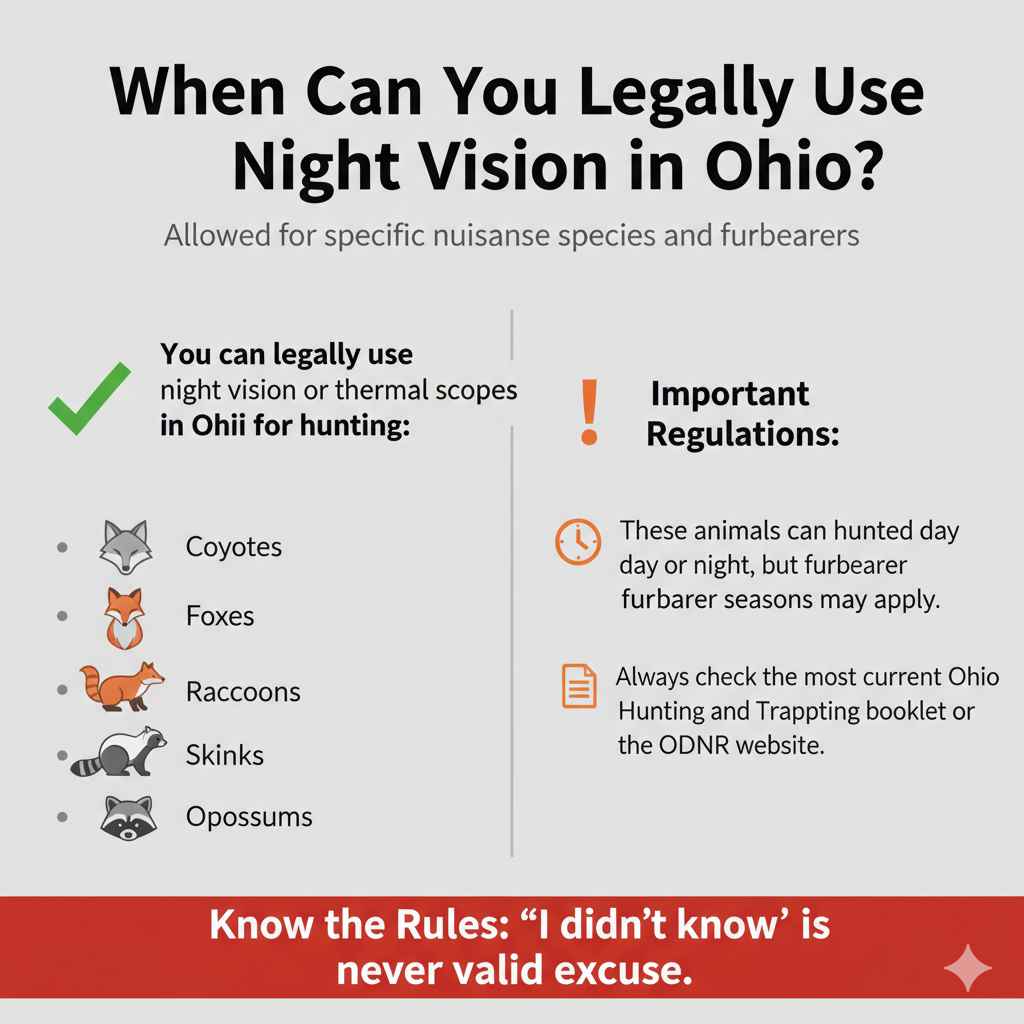
While night vision is a no-go for deer, it’s not banned for everything. Ohio law does permit the use of night vision and thermal equipment for hunting certain animals, primarily because they are considered nuisance species or furbearers that are more active at night.
You can legally use night vision or thermal scopes in Ohio for hunting:
- Coyotes
- Foxes
- Raccoons
- Skunks
- Opossums
These animals can be hunted day or night. However, regulations for furbearers can be complex and may have specific season dates. It is absolutely essential to read the most current Ohio Hunting and Trapping Regulations booklet or visit the ODNR website before you go. Rules can change, and “I didn’t know” is never a valid excuse.
How to Choose the Best Legal Scope for Low-Light Deer Hunting
Now that we know what’s legal, let’s focus on picking the best possible gear for those dim conditions. A great low-light scope is a worthy investment that will serve you for many seasons. Here are the features to prioritize.
This table breaks down what you should look for in a great low-light scope:
| Feature | Why It Matters for Low-Light Hunting | What to Look For |
|---|---|---|
| Objective Lens Diameter | A larger lens gathers more light, resulting in a brighter image at dawn and dusk. | 50mm or larger is ideal. 42mm or 44mm can work if the glass quality is excellent. |
| Lens Coatings | Reduces glare and maximizes the light that reaches your eye. This is crucial for clarity. | “Fully Multi-Coated” is the best. Avoid scopes that are only “Coated” or “Multi-Coated.” |
| Glass Quality | Higher quality glass (like ED or HD glass) provides better color, contrast, and brightness. | Look for brands known for their glass quality. You often get what you pay for. |
| Exit Pupil | This is the size of the beam of light that leaves the eyepiece. A larger exit pupil is easier for your eye to see through in the dark. | Calculate it by dividing the objective lens diameter by the magnification. An exit pupil of 5mm or more is great. |
| Reticle Type | The reticle needs to be visible against a dark target in low light. | An illuminated reticle is the top choice. A thick, bold reticle like a German #4 is a good non-illuminated option. |
When you’re shopping, don’t just look at the numbers. If possible, test the scope by looking into a dark corner of the store. A good low-light scope will provide a surprisingly bright and clear image even in poor lighting.
FAQs: Your Night Vision Questions Answered
Let’s tackle some more common questions I hear from fellow hunters. Here are quick and simple answers to help you stay on the right side of the law.
1. Can I use a night vision scope for coyote hunting in Ohio?
Yes, you can. It is legal to use night vision, thermal imaging, and other light-gathering optics for hunting coyotes and other furbearers in Ohio, as they are not classified as game animals in the same way deer are. Always check the current regulations for season dates.
2. What is the difference between night vision and thermal?
Night vision amplifies existing light to help you see in the dark, creating a green-tinted image. Thermal imaging detects heat signatures and creates an image based on temperature differences. Both are illegal for deer hunting in Ohio but legal for coyote hunting.
3. Are illuminated reticles legal for deer hunting in Ohio?
Yes, absolutely! An illuminated reticle—a scope with a small, battery-powered glowing dot or crosshair—is perfectly legal for deer hunting in Ohio. It is one of the best legal tools for improving your accuracy in low-light conditions.
4. What are the legal hunting hours for deer in Ohio?
Legal hunting hours for deer are from one-half hour before sunrise to one-half hour after sunset. It is illegal to hunt deer outside of these hours.
5. Can I legally own a night vision scope in Ohio?
Yes, it is perfectly legal to own night vision or thermal scopes in Ohio. The restrictions are only on their use for hunting specific animals, like deer. You can use them for other activities like wildlife observation, home security, or hunting legal species like coyotes.
6. What happens if I get caught using night vision for deer hunting?
The penalties can be severe. You could face heavy fines, the confiscation of your firearm and equipment, the loss of your hunting license for several years, and even jail time. It is a serious offense that wildlife officers do not take lightly.
7. Is it legal to use night vision for scouting deer at night?
This is a gray area, and it’s best to avoid it. While you are not actively hunting, using night vision to pattern deer from a vehicle or while on foot could be interpreted as an attempt to poach. To be safe, do your scouting during daylight hours and leave the night vision gear at home when you’re focused on deer.
Conclusion: Hunt Smart, Hunt Safe, Hunt Legally
So, there you have it. The answer to whether you can use night vision scopes for deer hunting in Ohio is a clear and simple “no.” While the technology is amazing, it falls outside the rules of fair chase and ethical hunting that we all cherish. The ODNR has put these regulations in place to protect our deer herds and ensure that hunting remains a safe and respected tradition.
But that doesn’t mean your hunt has to end when the light gets low. By investing in a high-quality scope with excellent light-gathering capabilities and an illuminated reticle, you can legally and effectively extend your time in the field. Paired with a great set of binoculars and a deep understanding of legal shooting hours, you have all the tools you need for a successful hunt at dawn or dusk.
Remember, being a good hunter is about more than just filling a tag. It’s about respecting the animal, knowing the law, and embracing the challenge. Happy hunting, and be safe out there!