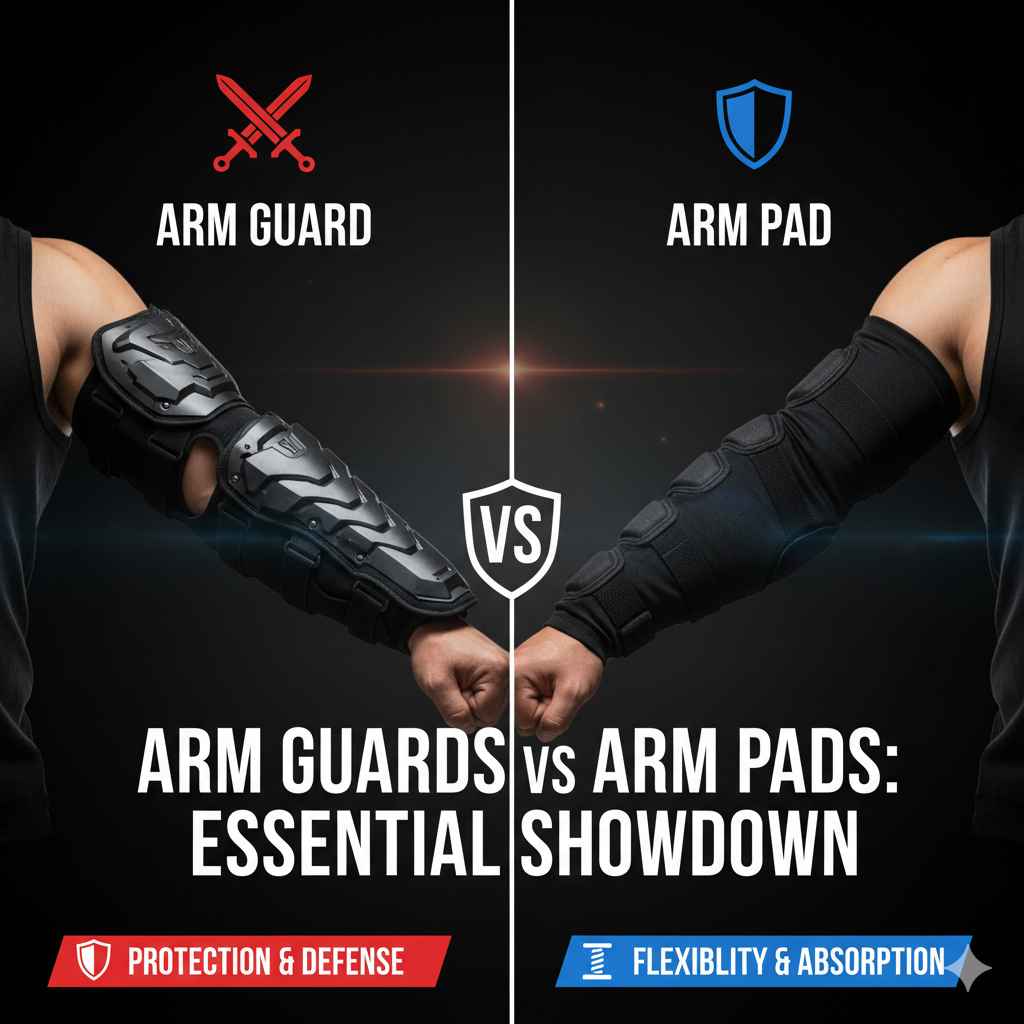
Arm Guards vs Arm pads: The essential showdown comes down to protection preference. Arm guards offer streamlined defense against string slap for bare arms, while arm pads provide broader, often padded coverage suitable for beginners or those wearing bulkier clothing. Choose based on your comfort, draw style, and the level of protection you need.
Welcome to the archery range! As a beginner, you’re focused on your stance, your draw, and that satisfying thwack when your arrow hits the target. But there’s one piece of gear that often causes confusion: what goes on your bow arm? You’ll hear people talk about “arm guards” and “arm pads.” Does it matter which one you choose? Not really, as long as your arm stays safe! This simple choice can feel like a big decision when you are starting out. Don’t worry; we’re going to break down the difference between arm guards and arm pads in a way that makes perfect sense. By the end of this guide, you will know exactly which piece of safety gear is right for your journey into archery.
The Most Important Rule: Protecting Your Bow Arm
Before we dive into the specifics of guards versus pads, let’s talk about why we need anything on our bow arm in the first place. This is critical for safety and comfort, especially when shooting recurve or traditional bows.
When you draw your bowstring back, your string needs a clear path to travel forward upon release. If your sleeve, loose clothing, or bare skin touches the string as it moves, two things happen:
- String Slap: The string hits your forearm sharply. This hurts, it can cause bruising, and it will definitely make you flinch on your next shot.
- Inconsistent Shot: Any contact with the string pulls it slightly off course, causing your arrow to fly inaccurately.
Both arm guards and arm pads solve this problem by creating a solid barrier between your arm and the path of the bowstring. Safety first, fun second!

Arm Guards: The Streamlined Choice
Arm guards are the classic, minimalist solution for arm protection in archery. They are straightforward, effective, and incredibly popular among experienced shooters.
What is an Arm Guard?
An arm guard is typically a flat, rigid piece of material—often leather, thick plastic, or sometimes reinforced composite—that straps snugly around your forearm (the arm holding the bow). It extends from just below your elbow down toward your wrist.
Key Features of Arm Guards
Think of an arm guard as a shield. Its main job is to deflect, not absorb large impacts.
- Material: Usually leather or hard plastic.
- Coverage: Narrow coverage focused purely on the area where the string crosses the arm.
- Weight: Very lightweight, barely noticeable once strapped on.
- Attachment: Secured with elastic straps or Velcro.
Pros and Cons of Arm Guards
When deciding between arm guards vs arm pads, consider what matters most for your shooting style.
| Pros of Arm Guards | Cons of Arm Guards |
|---|---|
| Minimal obstruction; feels very light. | Offers little protection for loose sleeves or bulkier clothing. |
| Very easy to put on and take off quickly. | Requires precise fit; slips can cause problems. |
| Durable and long-lasting, especially leather models. | If the string contacts the edges, it can still deflect the shot slightly. |
| Excellent for warm weather as they cover less skin. | Less padding means you feel string contact more acutely if you miss the guard. |
Arm Pads: The Comfort and Coverage Option
Arm pads, sometimes called shooting sleeves or full arm sleeves, offer a different approach to protection. They prioritize surface area coverage and often include built-in padding.
What is an Arm Pad (Shooting Sleeve)?
An arm pad is typically a fabric sleeve, sometimes made of neoprene, spandex, or thick cotton, that you slide over your entire forearm. While some might just be simple sleeves, true “arm pads” usually feature extra cushioning or thicker material directly over the impact zone.
Key Features of Arm Pads
Arm pads are designed to cushion and cover, often working well with casual clothing.
- Material: Fabric-based, often with internal foam or thick weave.
- Coverage: Wider surface area, covering the elbow area down to the wrist.
- Weight: Slightly heavier than basic guards, but usually comfortable.
- Attachment: Usually just slipped on, though some have adjustable cuffs.
Pros and Cons of Arm Pads
Arm pads shine when you need comprehensive protection or are wearing clothing that might interfere with a simple guard.
| Pros of Arm Pads | Cons of Arm Pads |
|---|---|
| Excellent for beginners who flinch or need significant cushioning. | Can feel warmer in hot weather due to more coverage. |
| Great at keeping baggy sleeves tucked in and away from the string. | May require readjustment more often than a strapped guard. |
| Offers good general protection against bumps and scrapes on the arm. | Less “traditional” look, if that matters to you. |
| Simple to use—just slide them on. | If the fabric stretches over time, protection efficacy can decrease. |
Arm Guards vs Arm Pads: The Essential Showdown
To help you make your final choice, let’s look directly at the key differences in a head-to-head comparison focusing on beginner needs.
1. Protection Style
Arm Guard: Focused deflection. It’s rigid. If the string hits it, it bounces off the guard, not your arm.
Arm Pad: Focused absorption. It’s soft. If the string hits it, the padding absorbs some of the shock.
2. Ease of Use for Beginners
For someone brand new, slipping on a pad might feel less fiddly than getting the straps of a guard just right. However, a poorly fitted guard is worse than no protection, so mastering the fit is important.
If you struggle with fiddly gear, start with a simple, well-reviewed arm pad.
3. Clothing Compatibility
Are you shooting in a T-shirt or a thick winter jacket? This matters significantly.
- If you wear bulky sleeves (like a sweatshirt), an arm guard might not cover enough area, or the sleeve fabric might bunch up and still touch the string inside the guard area. An arm pad covers the entire surface, pushing stray fabric away or absorbing contact with it.
- If you wear short sleeves, a slim arm guard is often perfect, offering minimal restriction.
4. Draw Weight Consideration
As you progress and increase your draw weight (how hard you have to pull the string back), the impact of string slap increases dramatically. Heavy draw weights (over 40 lbs) usually benefit from the solid, unmoving barrier of a quality leather or composite arm guard.
For low draw weights (under 25 lbs), the cushioning of an arm pad is usually more than sufficient.
How to Choose the Right Gear: A Step-by-Step Guide
Follow these steps to determine whether an arm guard or an arm pad fits your current needs and archery goals. Remember, you can always switch later!
Step 1: Assess Your Current Clothing
What will you usually wear while shooting? Be honest about loose fabric.
- If you always wear short sleeves or tight-fitting athletic wear: Consider an Arm Guard.
- If you frequently shoot in sweatshirts, hoodies, or loose long sleeves: Lean toward an Arm Pad/Sleeve.
Step 2: Determine Your Comfort Level with Gear
How do you feel about having something strapped tightly to your arm?
- If you hate feeling restricted or need something fast: Choose a simple, lightweight Arm Guard.
- If you prioritize comfort and soft padding over absolute minimalism: Choose an Arm Pad.
Step 3: Check Your Draw Weight (If Known)
Referencing safety standards is always a good idea. While this varies by manufacturer, generally:
- Low Draw Weight (Under 30 lbs): Both options are excellent.
- Medium/High Draw Weight (Over 30 lbs): Opt for the structural rigidity of an Arm Guard, ensuring it covers the primary strike zone from just under the elbow to the brace height point.
Step 4: Trial Period (The Best Advice)
If you are purchasing your first set of gear, consider borrowing a friend’s arm guard and trying an inexpensive sleeve. See which one you forget you are even wearing during your session. That’s the winner for you right now.
Tips for Proper Fitting and Use (Crucial for Both Types)
The best piece of equipment is useless if it’s not worn correctly. An improperly fitted guard is a safety hazard!
Fitting an Arm Guard
The goal is a snug fit that won’t twist or slide down your arm.
- Positioning: Place the guard on the inside (the side facing the bow) of your bow arm. It should cover the area from about two finger-widths below your elbow crease down to your wrist cuff.
- Strap Tightness: The straps should be tight enough that the guard does not slide when you move your arm, but loose enough that you can still feel your pulse easily. If your arm turns purple, it’s too tight!
- Check the String Path: Draw your bow (safely, aiming at your target butt) to full anchor. Watch the string path closely. If the string is still capable of hitting the area next to the guard, the guard is too narrow or positioned incorrectly.
Fitting an Arm Pad/Sleeve
Fitting a pad is easier, but sliding is still a concern.
- Ensure the pad is pulled all the way up toward the elbow. The top edge should sit just below the bulk of your bicep muscle.
- If the pad has a wrist cuff, ensure that cuff is snug so the pad doesn’t creep down toward your hand as you shoot repeatedly.
Understanding Archery Safety Standards
While arm guards and pads are personal equipment choices, the overall safety framework of archery is consistent. Understanding best practices ensures you enjoy the sport long-term. For established safety guidelines, organizations like the National Archery in the Schools Program (NASP) often emphasize checking equipment integrity regularly. You can explore general safety principles endorsed by organizations, which strongly recommend covering the bow arm to prevent injury, no matter the gear type chosen.
When you are setting up your gear, always remember the importance of your anchor point and follow-through, which are just as crucial as having the right arm protection. Improper follow-through can lead to arm brushing even with the best gear on.
When Beginners Should Definitely Choose Arm Pads
While many coaches recommend starting with a traditional guard for simplicity, there are specific scenarios where an arm pad is the superior starting point for a new archer:
- Sensitivity to Impact: If you bruise easily or are very nervous about string contact, the superior cushioning of a pad will build confidence faster by completely eliminating the sting of light contact.
- Shooting Indoors/Long Sessions: If you are spending hours shooting in a climate-controlled indoor range, the slight bulk of a pad won’t bother you, and the consistent cushioning is a comfort factor.
- Inconsistent Stance Development: As a beginner, your form might change slightly shot-to-shot. An arm pad provides a larger “safety net” area, reducing errors caused by slight positional changes while you are still learning muscle memory.
- Youth Archers: Younger archers often find sleeves easier to manage than tricky Velcro straps, making the pad a practical choice for parents or instructors managing multiple pieces of gear.
When Beginners Should Definitely Choose Arm Guards
Conversely, the streamlined approach of the arm guard suits archers who prioritize feel and future progression.
- Immediate Goal is Target Shooting: If your primary goal is pure target accuracy, the lighter weight and rigidity of a guard provide less interference with the subtle mechanics of your bow hand.
- High Draw Weight Practice: If you are jumping straight to a higher poundage bow (perhaps inherited or borrowed gear), the superior rigidity of a guard handles the higher force better than thin fabric pads.
- Traditional Archery Focus: If you are starting with a traditional recurve or longbow and want the classic feel from day one, the arm guard is the standard choice.
- Warm Weather Shooting: If you are shooting outdoors in the summer heat, minimizing coverage on your arm with a guard is far more comfortable than wearing a full sleeve.
Maintaining Your Archery Arm Protection
Regardless of whether you pick a pad or a guard, keeping it clean and in good repair is key to consistent shooting.
Caring for Leather Arm Guards
- Wipe off dirt with a slightly damp cloth.
- If the leather becomes stiff, use a small amount of leather conditioner (like those used for boots or saddles) to keep it supple. Do not over-condition, as this can make it too soft.
- Check straps monthly for fraying or stretching. If the straps are loose, the guard will spin on your arm, which is useless.
Caring for Fabric Arm Pads/Sleeves
- Most fabric pads can be hand-washed in cool water with mild soap.
- Allow them to air dry completely. Never put neoprene or synthetic sleeves in a hot dryer, as this can cause the fabric to shrink or the internal padding to clump.
- Check for small tears or holes where padding might be exposed. Patch these immediately, as an exposed edge can still catch the string.

Frequently Asked Questions (FAQ)
Q1: Do I need protection if I am shooting a compound bow?
A: Generally, no. Compound bows use cams (wheels) that manage the string path very consistently, and the string usually stays further away from the forearm. However, if you shoot a compound with a very low brace height or use a release aid that causes a slightly different hand position, you might still benefit from a lightweight guard.
Q2: Can I use a thick wristband instead of an arm guard?
A: A wristband alone is usually not enough. While a very thick leather cuff might protect your wrist joint, it rarely covers the crucial area of the forearm where the string travels during the release. You need coverage extending several inches up your forearm.
Q3: How tight should my arm guard be?
A: It should be snug enough not to rotate or slide when you draw back your bow, but loose enough that it doesn’t restrict your circulation. You should be able to comfortably slide one finger between the strap and your skin.
Q4: If I choose a pad, will it slow down my arrow speed?
A: Negligibly. Any drag or friction will slightly slow the arrow, but the drag caused by a light fabric arm pad is so minimal (often less than 0.5% speed reduction) that it is completely unnoticeable in practice, especially for beginners focusing on form.
Q5: What is the ideal material for a leather arm guard?
A: Look for three-layered construction if possible: a firm outer layer (like thick cowhide), a softer inner layer (like suede) to prevent slippage against the skin, and perhaps a thin plastic or composite core for rigidity. Avoid very thin fashion leather.
Q6: Can I just tuck my sleeve in really tightly?
A: While tucking is better than nothing, relying on tucking is unreliable. Muscle tension changes, movement, and slight errors in your draw can cause the sleeve to come loose right at the moment of release, resulting in painful string slap. Always use dedicated protection.
Conclusion: Finding Your Perfect Fit on the Range
The comparison between arm guards vs arm pads is not about declaring one universally better than the other. It’s about finding the best tool to keep your bow arm safe and confident so you can focus on hitting that gold center. If you are a beginner seeking maximum forgiveness and comfort against the string, start with a simple, well-padded arm pad. If you prefer a lighter, more traditional feel and are conscious of bulky gear, a properly fitted arm guard is your answer.
The most important step you can take right now is equipping yourself with protection. Once you’ve made that choice—whether it’s the streamlined shield of the guard or the gentle cushion of the pad—wear it consistently, check its fit before every session, and then forget it’s there.