
Choosing the right equipment can feel tricky, especially if you’re new to archery. One common question is: Is a Bow Single Rear Stabilizer vs Dual: Which Is Better? It’s a question that archers of all skill levels grapple with. Don’t worry, though! We’ll explore the main differences and help you figure out what suits you best. We’ll break it down step-by-step so you can make an informed decision. Let’s get started!
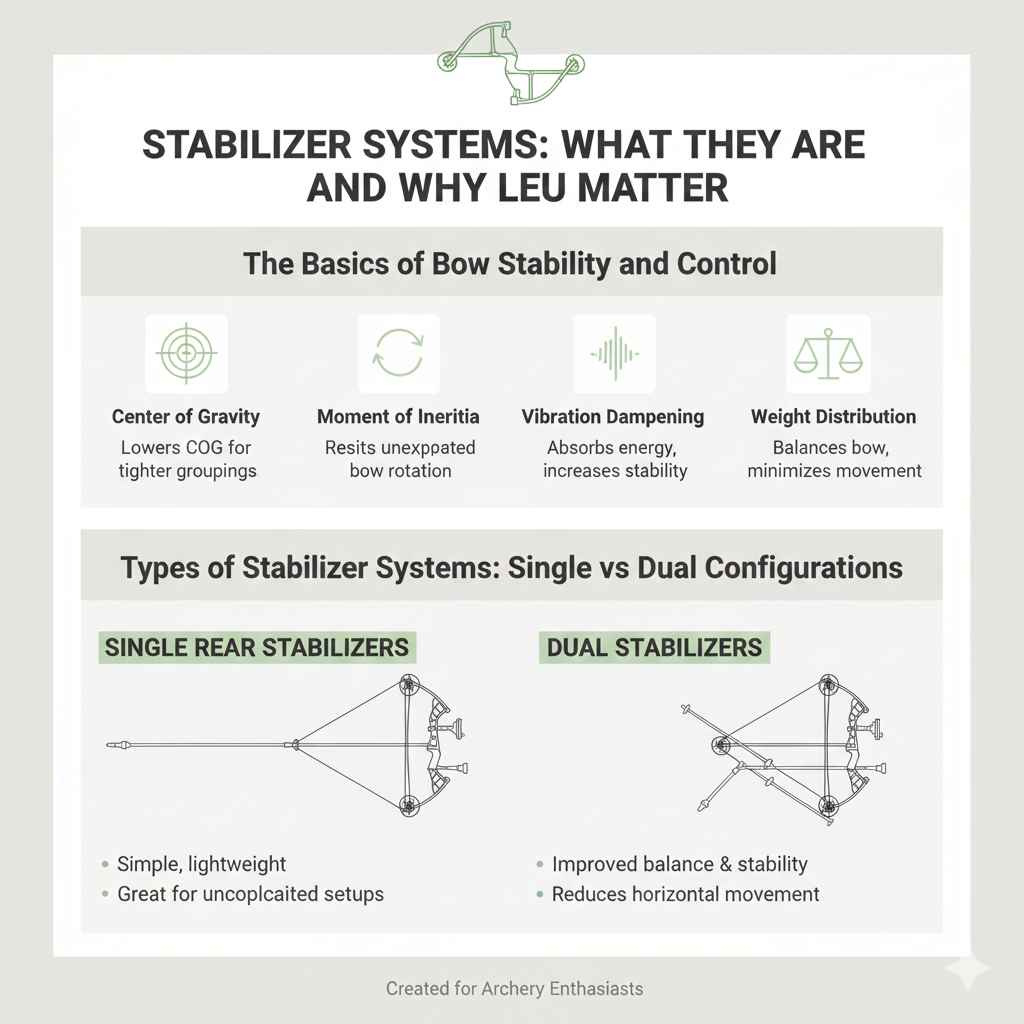
Stabilizer Systems: What They Are and Why They Matter
Stabilizers are essential pieces of equipment in archery. Their main job is to reduce unwanted movement of the bow during the shot. They work by increasing the mass weight of the bow, which can improve stability. This stability then helps the archer maintain a steady aim and release. There are several types of stabilizers, with the two primary configurations being single rear and dual rear setups. Each configuration has its pros and cons, which we will examine closely. By exploring the differences, archers can choose the setup that complements their shooting style and equipment.
The Basics of Bow Stability and Control
Bow stability is a core element in achieving accurate shots. A stable bow is less likely to move during the draw, hold, and release phases of the shot cycle. This steadiness helps to reduce the chances of aiming errors and improves overall consistency. Control refers to the archer’s ability to manage the bow’s movement, including any natural wobble or vibration. Effective control ensures the arrow leaves the bow in a predictable and consistent path.
- Center of Gravity: The center of gravity (COG) of a bow significantly affects its stability. A stabilizer system can lower the COG, which makes the bow less likely to tip or move during the shot. This improved stability often results in tighter groupings.
- Moment of Inertia: Moment of inertia (MOI) describes the resistance of an object to changes in its rotation. Stabilizers increase the bow’s MOI, making it harder for the bow to rotate unexpectedly.
- Vibration Dampening: Stabilizers often incorporate materials that absorb vibrations caused by the bowstring’s release. These materials, such as rubber or specialized polymers, dampen unwanted energy and increase stability.
- Weight Distribution: Proper weight distribution helps balance the bow and minimize the bow’s movement. By adjusting the weight of the stabilizer system, archers can fine-tune the bow’s balance.
The benefits of a more stable bow include more accurate aiming, improved shot consistency, and increased archer confidence. The right stabilizer system is an investment in your accuracy.
Types of Stabilizer Systems: Single vs. Dual Configurations
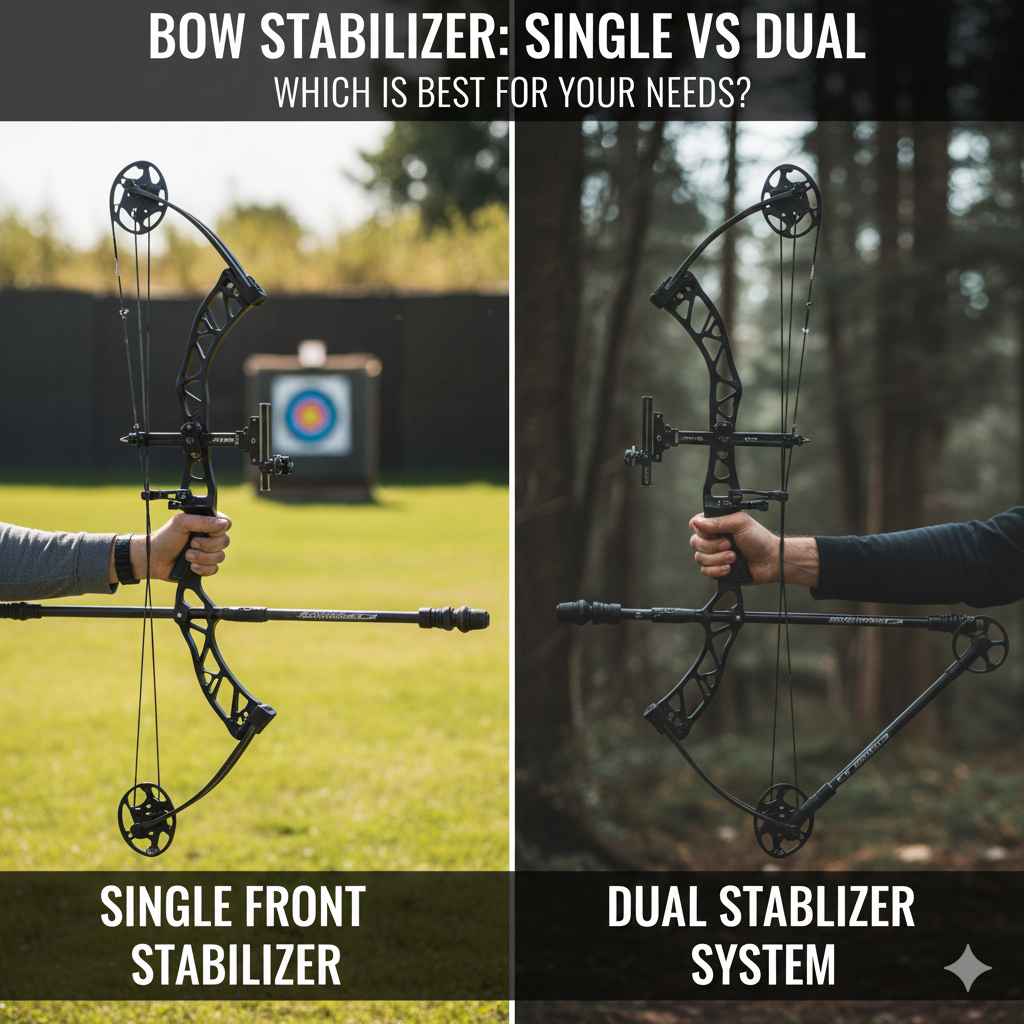
The primary choice in stabilizers often comes down to the configuration: single rear or dual rear systems. Single rear stabilizers are usually mounted at the back of the bow, extending directly behind the grip. Dual stabilizers involve two rods, often placed on the sides or top and bottom of the bow. They offer different benefits for controlling the bow. The choice depends on the specific needs of the archer, their style of shooting, and the type of archery they pursue. Each setup offers advantages in different conditions, which can be explored to increase performance.
- Single Rear Stabilizers: Typically extend straight back from the bow’s grip. They are often simpler and lighter. This configuration can be a great option for archers who want to keep their setup uncomplicated and lightweight.
- Dual Stabilizers: Can include two stabilizers. They provide improved balance and stability. This setup is particularly effective for reducing horizontal movement. Archers find this useful in windy conditions.
- Material and Construction: Both single and dual stabilizers can vary widely in materials and construction, impacting their effectiveness. They’re often made of carbon fiber or aluminum. Carbon fiber is known for its light weight and vibration-dampening capabilities.
- Weight and Balance: The weight and distribution of the stabilizer system are key. Archery equipment can be customized to the archer’s liking.
Understanding these differences lets archers make informed decisions about their equipment, optimizing their shooting experience.
Exploring the Advantages of the Bow Single Rear Stabilizer
The single rear stabilizer has several advantages that make it a favorite for many archers. This configuration is known for its simplicity, ease of use, and ability to improve shot consistency. The design often allows for a more natural feel in the archer’s hand, which is helpful. Let’s delve deeper into the specific advantages it brings to an archer’s shooting form.
Simplicity, Weight, and Balance in a Single Rear Setup
Simplicity is one of the key strengths of a single rear stabilizer. With just one rod extending from the back of the bow, the setup is often straightforward to configure and adjust. This easy setup reduces complexity, making it a favorite for beginners and those who like a minimalist approach. The single rod contributes less weight. Single stabilizers are lightweight, which can be helpful if the archer desires a setup that is easy to manage. Balance is critical in archery. The single rear stabilizer often allows for a centered weight distribution. The weight is placed behind the grip, which helps with overall bow stability and accuracy. This balance can also feel more natural for the archer.
- Ease of Setup: A single stabilizer is typically easier and quicker to set up. There is only one point of attachment, so it takes less time to adjust and get ready.
- Lightweight Design: Single rear stabilizers often weigh less than dual systems, which is helpful for archers who want to maintain a light overall bow weight.
- Natural Feel: The single rear design can give the archer a more natural and balanced feel in the hand. The single point of contact reduces any complicated adjustments.
- Cost-Effective: Usually less expensive than a dual stabilizer setup. This makes the single rear stabilizer an accessible option for beginners or archers on a budget.
These features make the single rear setup a good choice for archers seeking a simple, balanced, and affordable way to improve their shooting accuracy.
Shot Consistency and Reduced Wobble
Shot consistency is a critical metric for archery performance. A well-designed single rear stabilizer can significantly reduce wobble, a common issue during the aiming and release phases. The placement of the stabilizer, typically extending backward from the bow, can act as a counterweight. This counterweight helps balance the bow, which improves the archer’s stability. When wobble is reduced, the arrows tend to hit closer to the center, improving groups and overall shot consistency. This steadiness helps the archer maintain the shot. A single rear stabilizer is an effective solution for archers looking to improve their consistency.
- Improved Aiming: The reduced wobble gives the archer a clearer sight picture. This helps the archer to keep the sight pin steady on the target.
- Better Grouping: Stabilized bows generally produce tighter groupings. This improved accuracy shows up in better scores.
- Faster Recovery: If any movement does occur during the shot, a single rear stabilizer can help the bow recover faster and keep the shot on target.
- Confidence Building: The consistent performance and accuracy that come with a good stabilizer system build confidence in the archer.
The outcome is higher scores, and a more enjoyable shooting experience.
Exploring the Advantages of the Dual Stabilizer System
Dual stabilizer systems bring their own unique set of benefits, particularly when it comes to managing bow balance and handling external factors like wind. This configuration can provide a heightened level of stability and control over the bow. The dual setup is an attractive choice for archers who compete in various conditions. These stabilizers allow for a deeper level of customization, which can be useful when fine-tuning the feel of the bow.
Enhanced Bow Balance and Wind Resistance
Dual stabilizers excel in improving the balance of the bow and enhancing its ability to withstand wind conditions. This configuration usually involves a front stabilizer and one or two side stabilizers. They distribute weight more evenly, reducing unwanted movement. The dual system provides greater surface area, which is helpful for resisting wind gusts. This steadiness is beneficial on outdoor ranges where wind can affect arrow flight. With better balance and wind resistance, archers can maintain control even when conditions change.
- Improved Horizontal Balance: Dual stabilizers help to balance the bow horizontally. This can prevent the bow from tilting or rotating during the shot.
- Increased Inertia: The added weight from the dual stabilizer system increases the bow’s inertia. This inertia makes it harder for the bow to be moved by external factors, such as wind.
- Wind Compensation: With the right setup, the bow can be made more resistant to crosswinds. This allows archers to maintain a straighter arrow trajectory.
- Customization: Archers can adjust the length and weight of each stabilizer to find the perfect balance. This customization is helpful when trying to improve performance.
The dual stabilizer system is a reliable choice for any archer who is looking for a way to improve their balance.
Advanced Vibration Dampening and Target Acquisition
The dual stabilizer system excels at reducing vibrations that occur during the release. These vibrations can cause subtle changes to arrow flight. Many dual stabilizer systems use advanced materials that absorb these vibrations. This reduces the energy that can affect the arrow. Improved stabilization is beneficial during target acquisition. This can make the process faster and more accurate. With better control of the bow, archers can concentrate on other aspects of their shot cycle. This system is a reliable tool for any archer wanting to improve their shot.
- Reduced Unwanted Movement: The dual setup reduces unwanted movement and promotes a more stable sight picture. This allows the archer to focus.
- Enhanced Accuracy: By absorbing vibrations, dual stabilizers help to improve arrow groupings.
- Quick Target Acquisition: The additional balance from the dual setup helps the archer find the target quickly.
- More Confident Release: The overall stability of the bow can lead to a more confident and relaxed release. This results in consistent results.
The benefits of advanced vibration dampening and fast target acquisition can be noticed, leading to improved performance.
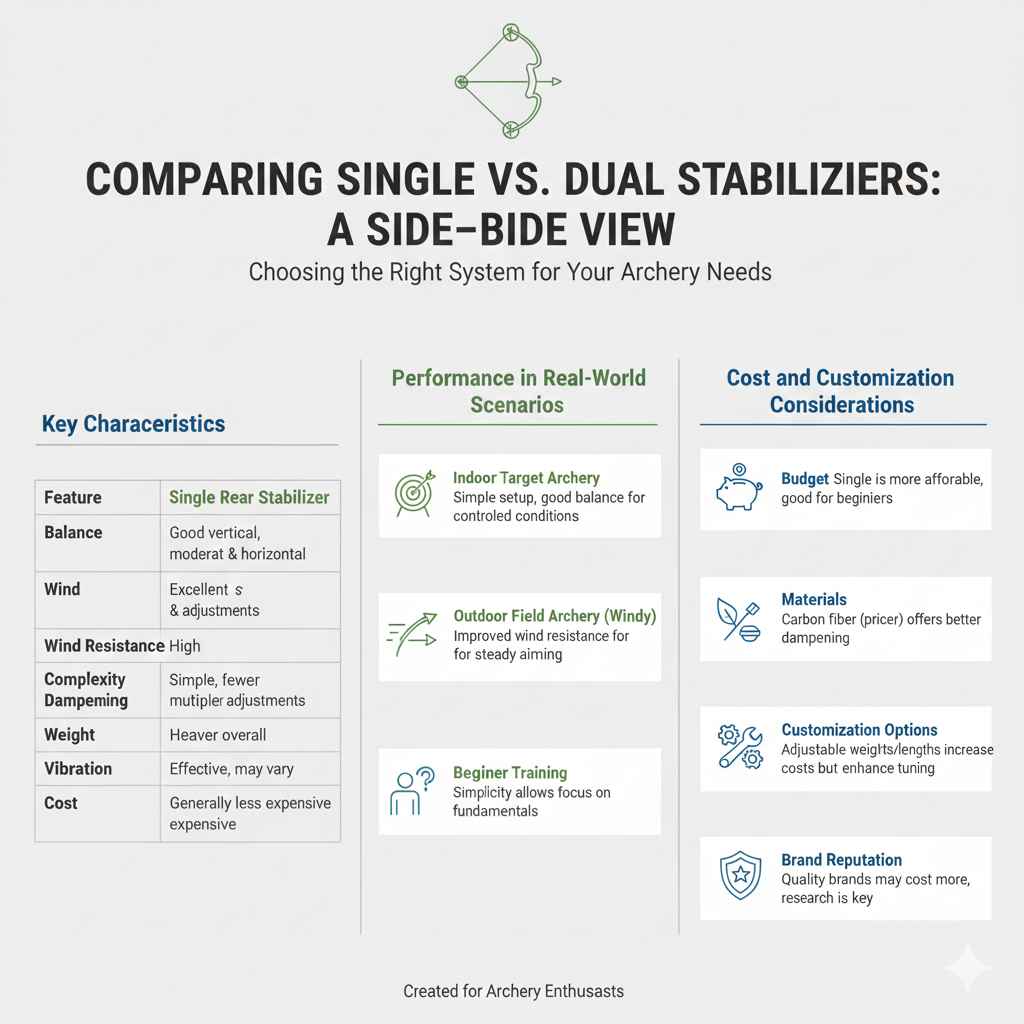
Comparing Single vs. Dual Stabilizers: A Side-by-Side View
When considering the choice between a Bow Single Rear Stabilizer vs Dual: Which Is Better?, it helps to make direct comparisons. Let’s explore the key characteristics of both systems. This way, archers can evaluate their needs. This evaluation ensures a good decision.
| Feature | Single Rear Stabilizer | Dual Stabilizer |
|---|---|---|
| Balance | Good for vertical balance, some horizontal | Excellent horizontal and vertical balance |
| Wind Resistance | Moderate | High |
| Complexity | Simple, fewer adjustments | More complex, multiple adjustments |
| Weight | Lighter overall | Heavier overall |
| Vibration Dampening | Effective, but may vary | Superior vibration reduction |
| Cost | Generally less expensive | Generally more expensive |
By comparing these characteristics, archers can see where the strengths of each system lie. Then, they can see which option is more helpful for their shooting style and environment.
Performance in Real-World Scenarios
Here are a few real-world examples showing how these systems perform. These examples are helpful to better grasp the differences. They provide insights into the practical benefits of each setup.
- Scenario 1: Indoor Target Archery. An archer is shooting indoors. The weather is stable, and there is no wind. The archer with the single rear stabilizer system may have the edge. This setup offers easy setup and good balance, which is very helpful in controlled conditions.
- Scenario 2: Outdoor Field Archery in Windy Conditions. Another archer is participating in an outdoor field archery tournament. The archer with the dual stabilizer system would likely have a performance boost. The dual stabilizer’s improved wind resistance will allow them to remain steady.
- Scenario 3: Beginner Training. An archery beginner is beginning their training. The single rear stabilizer could be preferred. Simplicity allows the archer to concentrate on the fundamentals of the shot. This is a helpful attribute when learning the basics.
These real-world examples show how different conditions might benefit different equipment choices.
Cost and Customization Considerations
Cost and customization are essential factors when selecting a stabilizer system. Single rear stabilizers are usually more affordable. This makes them good for beginners or archers who need to stick to a budget. Dual systems tend to be more expensive. They frequently include advanced features. Customization options also impact the final price and performance. Some stabilizers come with adjustable weights or dampers, which enable archers to fine-tune the balance of their bow. This customization can improve results. Understanding these factors will help archers make smart decisions.
- Budget: Single rear stabilizers offer a more budget-friendly approach to improving stability. This can be important for anyone starting in archery.
- Materials: Stabilizers made from high-end materials, like carbon fiber, are often pricier. They can provide better vibration dampening.
- Customization Options: The ability to add or remove weights, or change the stabilizer length, increases costs. This is helpful for an archer.
- Brand Reputation: Quality brands may cost more. It is helpful to research the brand before buying.
Cost and the level of customization are key parts of the decision.
Frequently Asked Questions
Question: Is a single rear stabilizer good for beginners?
Answer: Yes, a single rear stabilizer is a great choice for beginners. Its simplicity makes it easy to set up and use, allowing beginners to focus on their shooting technique. It also helps improve balance and shot consistency.
Question: Are dual stabilizers only for competitive archers?
Answer: Not necessarily. Dual stabilizers are beneficial for any archer looking for improved balance and control, particularly in windy conditions. While they are common in competitive archery, they can also be used by recreational archers.
Question: How do I know which stabilizer length to choose?
Answer: The stabilizer length depends on several factors, including your bow’s setup and personal preferences. Longer stabilizers often provide more stability, while shorter ones might be easier to manage. Experimenting with different lengths is often the best way to determine the best fit.
Question: Can I use both single and dual stabilizers?
Answer: The majority of the time, no, you will choose one or the other. You can’t use both simultaneously. You will have to decide which one is most helpful for your archery style.
Question: What materials are best for stabilizers?
Answer: Carbon fiber and high-quality aluminum are common choices. Carbon fiber is generally lighter and provides excellent vibration dampening. Aluminum is more affordable and still offers good performance.
Final Thoughts
So, which setup is better when considering a Bow Single Rear Stabilizer vs Dual: Which Is Better? It really depends on your needs! A single rear stabilizer is a solid choice for its simplicity, ease of use, and budget-friendly design. It’s excellent for improving shot consistency. The dual stabilizer system excels in wind resistance and provides excellent balance. It is also a reliable choice for reducing vibrations. If you’re a beginner, a single rear stabilizer is a great place to start. If you’re shooting outdoors in unpredictable conditions or looking for high performance, a dual system might be the right answer.
The ideal stabilizer system should complement your shooting style. Experimenting with both types of stabilizers is a smart step to fine-tune your archery game. Good luck, and happy shooting!