Compare Hunting Scopes: Features and How They Work
Choosing the right hunting scope can seem tricky. It’s common to feel a little lost when you first start to Compare Hunting Scopes: Features & Uses because there are so many options. Don’t worry, many people feel the same! This guide will break down everything you need to know in a clear, easy-to-follow way. We’ll explore the different parts of a scope, what they do, and how to pick the best one for your needs. Get ready to become a scope expert!
CVLIFE
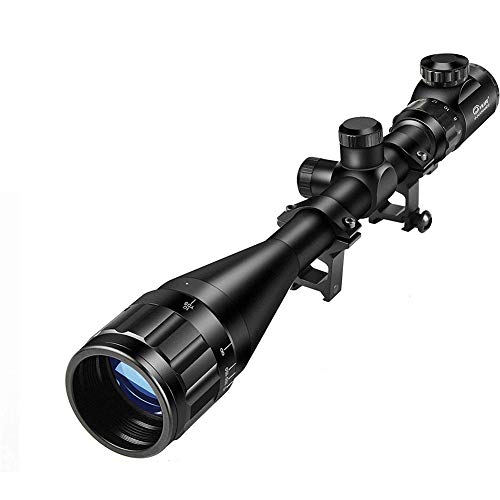
CVLIFE Hunting Rifle Scope 6-24x50 AOE Red…
- Magnification: 6-24x
- Objective Diameter: 50mm
- Field Of View: 28 ft @ 100 yards
As an Amazon Associate I earn from qualifying purchases.
What Are Hunting Scopes? A Quick Look
Hunting scopes are optical instruments that help you see your target more clearly and accurately at a distance. They are mounted on a rifle and work by magnifying the image of the target, making it appear closer and easier to aim at. Think of them as high-powered binoculars that are fixed to your rifle. The main job of a scope is to improve your vision, allowing you to identify your target and make a precise shot, especially in challenging conditions such as low light or long distances.
The performance of the scope has a direct impact on your hunting success, as well as the safety of yourself and others. Using a hunting scope allows for more precise shot placement.
The Key Parts of a Hunting Scope
Hunting scopes are composed of several parts that work together to provide a clear and magnified image. Each part plays a specific role in enhancing your view. Knowing what each part does will help you when you Compare Hunting Scopes: Features & Uses. Here’s a quick look at the main components:
Objective Lens: This is the lens at the front of the scope that gathers light from your target. The size of the objective lens affects how much light enters the scope, impacting the brightness of the image, especially in low-light conditions. Larger objective lenses let in more light, but can also make the scope heavier. For example, a scope marked “3-9×40” has a 40mm objective lens.
The objective lens is the first part of the scope that light interacts with. The size of this lens (measured in millimeters) has a direct impact on the scope’s ability to gather light. Bigger lenses mean more light, which means a brighter view, especially important during dawn or dusk. However, bigger lenses also mean a bulkier scope, potentially changing the balance of your rifle.
Eyepiece: This lens is what you look through to see the magnified image. The eyepiece is adjustable, allowing you to focus the image and match the scope to your eye. It’s located at the rear of the scope. The eyepiece design is critical for eye relief and exit pupil.
The eyepiece is where your eye meets the scope. It’s adjustable to help you focus the image, making sure it’s clear and sharp. The eyepiece’s design also influences how comfortable it is to use the scope, affecting your ability to see the full image without straining your eye, as well as how far away your eye needs to be from the scope to see a full field of view (eye relief).
Magnification Ring: This ring allows you to change the power of the scope, zooming in on your target. The numbers on the ring (like 3-9x) indicate the range of magnification. For instance, a 3-9x scope can zoom in from three times to nine times the normal view.
This is where you adjust the zoom! The magnification ring lets you change how close your target appears. If the scope is marked 3-9x, you can see things three to nine times closer than with your naked eye. This adjustment helps you see the detail you need at different distances. Adjusting the magnification is essential for adapting to various hunting scenarios and distances.
Reticle: The reticle is the aiming point you see when you look through the scope. It can be a simple crosshair, or it can have additional features like markings for windage and bullet drop compensation. The reticle helps you aim accurately.
The reticle is the pattern, often a crosshair, that you see inside the scope. It’s your aiming guide. Some reticles have extra lines or dots that help you adjust for things like wind or the bullet dropping over distance, boosting shot accuracy. They make it easier to place your shots exactly where you need them.
Turrets: These are the dials on the scope used to adjust the reticle for windage (left/right) and elevation (up/down). By turning the turrets, you can “zero” your scope, aligning the reticle with your point of impact at a specific range.
The turrets are the adjustable knobs on your scope that help you zero it – align the crosshairs with where your bullet hits. There are separate turrets for windage (left to right) and elevation (up and down). Turning these dials moves the reticle, allowing you to adjust your aim to compensate for wind or bullet drop over distance. Getting familiar with these is a major step in becoming a more accurate hunter.

Understanding Magnification and Objective Lens Size
Two of the most important specifications when you Compare Hunting Scopes: Features & Uses are magnification and objective lens size. These specs work together to determine how well you can see your target. Knowing what these numbers mean is essential for choosing the correct scope for your hunting needs.
Deciphering Magnification
Magnification tells you how much closer the scope makes your target appear. A scope with 4x magnification makes the target appear four times closer than what your eye sees without a scope. Variable scopes, such as those with a range like 3-9x, provide different magnification levels. Higher magnification is useful for long-distance shots, but it also reduces the field of view. Lower magnification offers a wider field of view, making it easier to track moving targets at closer ranges. The suitable magnification will depend on the type of hunting you do and the distances you typically shoot.
Fixed Magnification: These scopes have a single magnification setting. They are typically more straightforward and can be more rugged due to fewer moving parts. They’re often preferred for specific hunting scenarios where the distance to the target is relatively consistent.
Fixed magnification scopes offer a single power setting. This means the magnification is always the same, like 4x or 6x. These scopes tend to be simple and sturdy, often favored for hunting situations where shot distances are usually similar. Their simplicity can also mean they are less likely to have issues.
Variable Magnification: These scopes have an adjustable magnification range. For example, a 3-9x scope allows you to adjust the magnification from 3x to 9x. This flexibility is great for different hunting situations and distances.
Variable magnification scopes offer a range of magnification settings, making them incredibly versatile. You can adjust the zoom to see your target at various distances. A scope marked 3-9x can zoom from three to nine times the normal view. This flexibility is excellent for hunters who may encounter a range of shot distances.
Examples: Common magnification ranges include 2-7x, 3-9x, and 4-12x. The numbers indicate the minimum and maximum magnification.
Scopes are often labeled with a pair of numbers, like 3-9×40. The first set of numbers (3-9 in the example) shows the magnification range. This is the range the zoom is able to cover. The second number represents the diameter of the objective lens in millimeters.
Objective Lens Size Demystified
The objective lens size, measured in millimeters (mm), impacts the brightness and clarity of the image. A larger objective lens lets in more light, which results in a brighter image, particularly useful in low-light conditions like dawn or dusk. However, a larger lens also makes the scope heavier and potentially bulkier. The right size balances light gathering with ease of handling and balance on your rifle. When you Compare Hunting Scopes: Features & Uses, consider the conditions you usually hunt in.
Light Gathering: A larger objective lens captures more light, resulting in a brighter image. This can be critical when hunting in low-light environments.
The objective lens’ size determines how much light enters the scope. A larger lens gathers more light, making the image brighter and clearer, especially at dawn or dusk when light is low. This feature is especially important if you plan on hunting during low-light conditions.
Weight and Size: Larger lenses add weight and bulk to the scope.
While a bigger objective lens helps with light gathering, it also makes the scope heavier and larger. This can affect the balance and feel of your rifle. You’ll need to think about what you are willing to trade off for a brighter image.
Common Sizes: Common objective lens sizes include 40mm, 42mm, and 50mm. The size is often included in the scope’s description, like “3-9×40” (3-9x magnification with a 40mm objective lens).
Objective lens sizes are usually noted at the end of the scope’s description. The numbers on the end represent the objective lens diameter. For example, a scope might be a “3-9×40”. This means the scope has 3-9x magnification and a 40mm objective lens.
Choosing the Right Reticle Type
The reticle is the aiming point inside your scope. Different types of reticles are available, and the best choice depends on your hunting style and the distances you typically shoot. As you Compare Hunting Scopes: Features & Uses, keep the reticle type at the forefront. The reticle is the part of the scope that allows you to see the exact point where the bullet will hit your target, so the type of reticle is a major factor in improving your accuracy.
Basic Reticle Types
Several types of reticles are common, each offering different advantages for various hunting scenarios. Some are very simple, while others include additional features to help with more complex shooting situations. Here are a few:
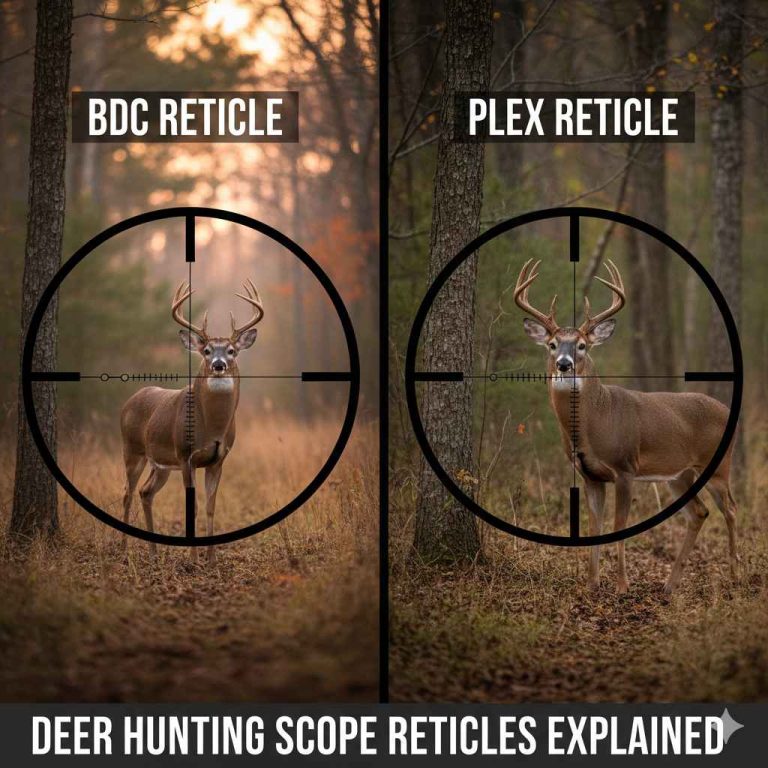
Duplex Reticle: This reticle has thick outer posts that taper into a fine crosshair at the center. It’s simple and easy to use, making it a good choice for general hunting. The thick outer posts help draw your eye to the center.
The Duplex reticle is one of the most common and easiest to use. It features thick lines on the outside that taper to a fine crosshair in the center. The thick lines draw your eye to the center, making target acquisition quick. This reticle is versatile, suitable for most hunting situations.
BDC (Bullet Drop Compensation) Reticle: BDC reticles have additional markings below the main crosshair to compensate for bullet drop at various distances. These markings are designed for specific bullet trajectories and are very useful for long-range shooting.
BDC reticles have marks below the main crosshair that help compensate for bullet drop at different distances. These marks vary based on the bullet’s trajectory, allowing you to make more accurate shots at longer ranges. This is a very helpful feature for long-distance shooting.
Mil-Dot Reticle: Mil-Dot reticles have dots or hash marks that are used for estimating range and compensating for bullet drop and windage. They are more complex and often used by experienced shooters who need precise adjustments.
Mil-Dot reticles include dots or hash marks that can be used to estimate range and make adjustments for bullet drop and wind. These reticles are very helpful for calculating the best shooting strategy. They’re more complex, so they’re often used by shooters who are comfortable with making precise calculations.
Factors to Consider
When selecting a reticle, consider the type of hunting you do, the distances you usually shoot, and the conditions you hunt in. The right reticle will make it easier and more accurate to make your shots. Think about the style of shooting you enjoy, and then you’ll know what kind of reticle will be the best choice for you.
Hunting Style: For general hunting at shorter distances, a Duplex reticle is often sufficient.
For standard hunting, such as shooting at close to medium range, a Duplex reticle is often suitable. This simple reticle helps you acquire targets quickly.
Shooting Distances: For long-range shooting, a BDC or Mil-Dot reticle can provide the precision needed to account for bullet drop.
When you are shooting at long distances, a BDC or Mil-Dot reticle is extremely helpful. These types of reticles have additional markings to assist with bullet drop and can make hitting your target much more accurate.
Lighting Conditions: In low-light environments, a reticle with an illuminated center can be a significant advantage.
Illuminated reticles can be a real game changer in low-light situations. When there isn’t much light, these reticles help make the crosshairs visible, improving accuracy and target acquisition.
Windage and Elevation Adjustments: Zeroing Your Scope
Windage and elevation adjustments are critical for getting your scope to shoot accurately. These adjustments allow you to correct for bullet drop and wind drift, ensuring your shots hit where you aim. Getting these adjustments right is often referred to as “zeroing” your scope. After zeroing, you will be able to hit your target more consistently. Understanding these adjustments is a fundamental part of learning to effectively Compare Hunting Scopes: Features & Uses.
Understanding Turrets
Turrets are the dials on your scope that you use to make windage and elevation adjustments. They are usually marked with numbers that indicate how much the reticle will move with each click of the turret. Learning how to use the turrets is essential for getting your scope properly zeroed. The turrets on your scope are the key to precision.
Elevation Turret: This turret adjusts the reticle up and down. It compensates for bullet drop over distance. Turning the elevation turret will adjust your point of impact vertically.
The elevation turret adjusts your aim up and down. As the bullet travels, gravity causes it to drop. The elevation turret allows you to compensate for this drop by moving the reticle upwards. Turning this dial adjusts where your shot will land vertically.
Windage Turret: This turret adjusts the reticle left and right. It compensates for wind drift. Turning the windage turret will adjust your point of impact horizontally.
The windage turret adjusts your aim from side to side. Wind can push the bullet off course, and this turret lets you adjust the reticle horizontally to counteract this. Adjusting the windage turret will make sure your shot lands on target in windy conditions.
MOA vs. Mils: Turrets are often calibrated in MOA (Minute of Angle) or Mils (milliradians). MOA adjustments move the reticle about 1 inch at 100 yards, while Mils move it about 3.6 inches at 100 yards.
Turrets use either MOA or Mils to measure the adjustment. MOA is about 1 inch at 100 yards, while Mils is roughly 3.6 inches at 100 yards. When you compare scopes, knowing how these measurement systems work will make it simpler to fine-tune your scope for the perfect shot.
Zeroing Your Scope: A Step-by-Step Guide
Zeroing your scope involves aligning the reticle with your rifle’s point of impact at a specific range. This process ensures that when you aim at a target, your shot hits where you expect it to. The specific process can vary slightly depending on your scope, but the basic steps are usually the same. With a little practice, zeroing your scope is straightforward.
Choose a Target Distance: Select a suitable distance for zeroing (e.g., 100 yards). This distance should be appropriate for your hunting style and the typical ranges you’ll be shooting at.
Pick a distance for zeroing the scope, such as 100 yards, and make sure that it’s ideal for the kind of hunting you do.
Set Up Your Rifle: Secure your rifle in a stable shooting position, such as a bench rest. This will help you make precise adjustments.
Place your rifle securely on a bench or a stand to hold it still for the most accurate adjustments possible.
Fire a Group of Shots: Aim at the center of your target and fire a group of three to five shots. Note where the shots hit relative to your aiming point.
Fire several shots at the target. Watch how your shots land on the target and note how far off your shots are from your target’s center.
Adjust the Turrets: Use the turrets to adjust the reticle to match your point of impact. If your shots are low and to the right, adjust the elevation turret up and the windage turret left.
Make adjustments based on where your shots hit. If your shots are high or to the right, adjust the turrets until your shots begin to land directly on your point of aim.
Repeat and Refine: Fire another group of shots and repeat the adjustment process until your shots consistently hit your target at the chosen distance.
Take several more shots at your target. Fine-tune your adjustments after each set of shots until you’re satisfied with how the scope performs.
Special Features and Technology
Many modern hunting scopes come with extra features that improve their performance and ease of use. These advanced features can make a big difference in the field. When you Compare Hunting Scopes: Features & Uses, these advanced features should be kept in mind. They can enhance your experience.
Illumination
Illumination refers to the ability of the reticle to light up, making it easier to see the aiming point in low-light conditions. Illuminated reticles are particularly useful during dawn, dusk, or in heavily wooded areas. They can significantly improve your accuracy and target acquisition when visibility is poor. They come in different colors, but red and green are common.
Brightness Settings: Most illuminated scopes offer multiple brightness settings to adjust the reticle’s visibility to match the ambient lighting.
These scopes let you control the brightness of the reticle, so you can adjust it to suit the lighting conditions and easily spot the aiming point.
Battery Life: Be mindful of battery life. Some scopes automatically shut off the illumination after a period of inactivity to conserve power.
Be aware of how long the battery lasts and keep extra batteries with you in case you need them. Some scopes have an auto-off feature to save power.
Color Options: While red and green are the most common colors, some scopes offer other color choices.
You have a choice of colors when selecting a hunting scope, which can assist in seeing your target in different lighting conditions.
Parallax Adjustment
Parallax refers to the apparent movement of the reticle in relation to the target when you move your eye. Parallax adjustment helps correct for this, ensuring that the reticle remains precisely on target regardless of your eye position. This is especially important at longer distances, where parallax error can significantly affect accuracy. Parallax adjustment is useful to get your shots on target at any distance. There are two main methods to eliminate parallax error:
Adjustable Objective (AO): The AO feature lets you adjust the objective lens to eliminate parallax at various distances. You’ll find a dial on the objective bell of the scope.
Scopes with AO allow you to adjust the front objective lens. As you change the focus, the parallax is corrected, improving the clarity of the image. This method is often used for hunting at varying distances.
Side Focus (SF): This feature uses a dial on the side of the scope to adjust the parallax. SF is more convenient, especially if the scope is mounted on a rifle with high magnification.
SF scopes use a dial on the side of the scope to adjust for parallax. Side focus is easier to adjust than AO, especially when your scope has high magnification.
Other Advanced Technologies
More sophisticated features are available in many modern hunting scopes.
First Focal Plane (FFP): With FFP scopes, the reticle’s size changes as you zoom. This allows the reticle’s holdovers and ranging marks to remain accurate at all magnification levels.
FFP scopes adjust the size of the reticle when you zoom. As a result, the holdover marks on the reticle stay accurate, regardless of the magnification you have selected.
Second Focal Plane (SFP): In SFP scopes, the reticle remains the same size, regardless of the magnification setting. The holdover marks are accurate only at a specific magnification level.
With SFP scopes, the reticle remains the same size. The holdover marks on the reticle are only accurate at a single magnification setting.
Built-in Rangefinders: Some scopes have integrated rangefinders that measure the distance to your target. This provides immediate information for bullet drop compensation.
Some scopes have built-in rangefinders to measure the distance to your target. This can offer instant information to assist you in making accurate shots.
Materials and Durability
The materials used to construct a hunting scope are important factors for durability and performance. Scopes are subjected to harsh conditions, so it’s critical to select one that is built to withstand these conditions. When you Compare Hunting Scopes: Features & Uses, keep the materials and the construction in mind. Choose a scope that can endure a beating.
Scope Body Construction
The scope body is usually made from strong materials designed to protect the internal components. These materials also affect the scope’s overall weight and resistance to the elements.
Aluminum: Aircraft-grade aluminum is a common material for scope bodies due to its strength, light weight, and resistance to corrosion. It can withstand impacts and rough handling.
Aluminum is the most common material because of its strength, light weight, and resistance to corrosion. Aircraft-grade aluminum is excellent for rugged use.
Steel: Steel can be even stronger than aluminum and is often used for high-recoil rifles. However, steel scopes are usually heavier.
Steel offers superior strength and is often used for high-recoil rifles, but steel scopes tend to be heavier than aluminum ones.
Titanium: Titanium is extremely strong and lightweight, and it is also resistant to corrosion. It is an excellent choice, but titanium scopes can be more expensive.
Titanium scopes are extremely durable, strong, lightweight, and resistant to corrosion. Although they are expensive, they are a great choice for hunters.
Lens Coatings and Protection
Lens coatings and other protective features are crucial for protecting the scope’s optical components. These coatings improve light transmission, prevent scratches, and protect against the elements. These details ensure that the lens remains clear and that your view is not compromised.
Lens Coatings: Multi-coated lenses improve light transmission, enhance image clarity, and reduce glare. The quality of the coatings can significantly affect the scope’s performance in low-light conditions.
Lens coatings are essential to increase the amount of light that passes through the lenses, enhancing image clarity. They also reduce glare, improving your view in various lighting conditions.
Waterproofing: Scopes are usually filled with inert gas (like nitrogen or argon) to prevent fogging and are sealed to be waterproof. This is a must-have feature for hunting in wet or humid environments.
Waterproof scopes are filled with inert gas, like nitrogen or argon, to prevent fogging and protect the internal components, making it ideal for use in humid or wet conditions.
Fog-Proofing: Fog-proof scopes are typically purged with nitrogen or argon gas to prevent internal fogging, keeping the view clear in changing temperatures.
Fog-proofing uses inert gas to ensure that the internal parts don’t fog up, even with big temperature changes. This feature allows you to maintain a clear view in different conditions.
Mounting Your Scope Correctly
Proper mounting is as important as the scope itself. A well-mounted scope will hold zero and perform reliably. Poor mounting can lead to inaccuracies and damage to the scope. It is important to know the proper mounting techniques for the type of rifle and scope you have. Knowing how to mount a scope correctly is key to ensuring that you get the most out of it.
Choosing the Right Mounts and Rings
Mounts and rings connect the scope to your rifle. There are various types available, each with its own advantages. The right choice depends on your rifle type, scope size, and hunting style. The perfect mounts and rings will make sure your scope is secure.
One-Piece Mounts: These mounts are integrated units that attach directly to the rifle’s receiver. They are usually very strong and provide a solid platform.
One-piece mounts are durable and attach directly to the receiver, providing a reliable, secure connection.
Two-Piece Mounts: These mounts consist of two separate rings that attach to the rifle’s receiver. They can offer more flexibility in terms of positioning the scope.
Two-piece mounts provide more flexibility for positioning the scope on your rifle.
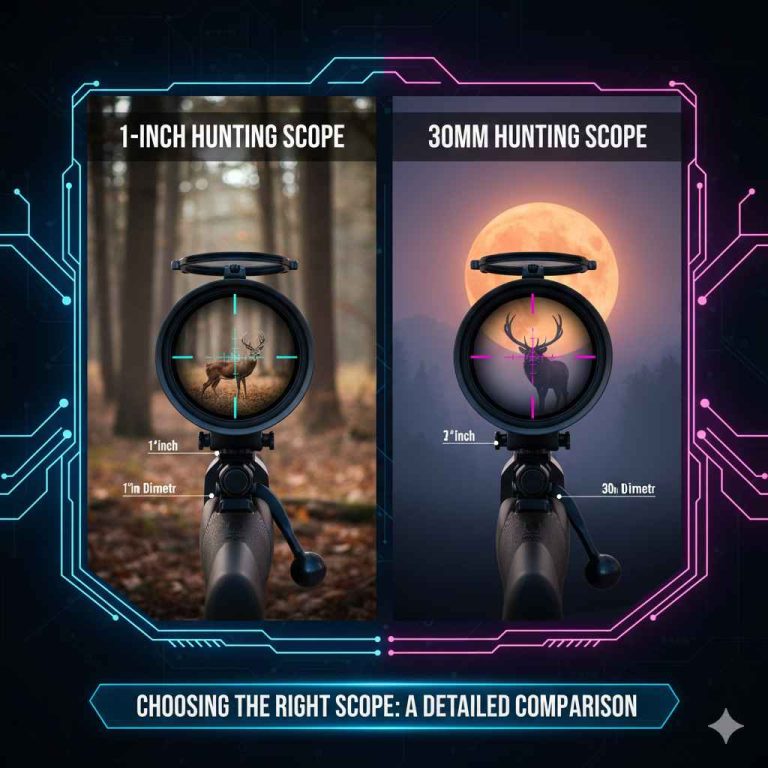
Ring Size: Ensure the rings are the correct size to match the scope’s tube diameter (1 inch, 30mm, etc.). Too small or too large, and the scope won’t fit properly.
Make sure the rings you choose match the diameter of the scope’s tube. Incorrectly sized rings will cause an improper fit.
Mounting Steps
Proper scope mounting requires following specific steps to ensure your scope is correctly aligned and secure. It requires patience and care, but the results are worth it. These are general steps to help you install the scope correctly:
Prepare the Rifle: Ensure the rifle is unloaded and the chamber is empty. Clean the receiver and scope rings if necessary.
Before you begin, make sure your rifle is unloaded and clean, so that nothing interferes with mounting.
Install the Base (if applicable): Attach the scope base to your rifle’s receiver. Follow the manufacturer’s instructions for torque specifications.
If your rifle needs a base, attach it according to the manufacturer’s instructions, taking care to properly tighten it.
Install the Rings: Attach the rings to the base or directly to the receiver, leaving the top ring halves loose.
Install the rings, but leave the top halves loose, so that you can adjust and secure the scope later.
Place the Scope: Place the scope in the rings, ensuring it’s at the correct eye relief distance (the distance your eye should be from the eyepiece).
Set the scope inside the rings and position it to the appropriate distance from your eye.
Level the Scope: Use a scope-leveling tool or a bubble level to ensure the scope is perfectly level with the rifle.
Level the scope with the rifle, either with a tool or a bubble level, to ensure accurate aiming.
Tighten the Rings: Tighten the top ring halves, alternating between screws to evenly distribute the pressure. Follow the manufacturer’s recommended torque specifications.
Tighten the ring screws, being careful to use the manufacturer’s recommendations for torque. This step makes sure the scope is securely attached.
How To Pick a Scope: Tips for Beginners
Picking your first hunting scope can be overwhelming. There are many options, but the key is to focus on your specific needs and hunting style. Do some homework and make an informed decision. The proper scope will make your hunts more fun and more effective. When you Compare Hunting Scopes: Features & Uses, start with what you need.
Know Your Hunting Style and Needs
Your hunting style will have a large effect on the best choice. Think about the types of game you hunt, the terrain, and the average shooting distances. The kind of hunting you do will shape the decisions you make.
Type of Game: Different game requires different magnifications. For example, close-range hunting of deer may require a lower magnification, while long-range hunting for prairie dogs may need more magnification.
Think about the animals you are hunting. Different game requires different types of scopes. Knowing what you hunt will make it easier to decide the proper scope.
Terrain: Hunting in dense forests calls for a scope with a wider field of view. Open plains may require higher magnification.
The terrain matters, too! In open fields, you may need a scope with higher magnification to get a clear view. In a forest, where shots are closer and faster, you might need a scope with a wider field of view.
Shooting Distances: Consider the typical distances you shoot. For close-range hunting, lower magnification is appropriate. For longer ranges, you will want more magnification.
Consider the distances you usually shoot. Closer shots might mean lower magnification, while longer shots need higher magnification. Knowing the distance will help you pick the best scope for your hunting.
Set a Budget
Hunting scopes can range in price. Setting a budget helps you narrow your choices and make sure you do not spend too much. When you Compare Hunting Scopes: Features & Uses, it is helpful to set a price that works for you. Quality scopes often have a higher price tag. Setting a budget means you can better compare scopes.
Determine Your Limit: Decide how much you are willing to spend. This is the first step in setting a budget.
Start by deciding how much you are comfortable spending. This gives you a clear understanding of your choices.
Research Options: Research scopes within your price range. See what features and quality you can get for your budget.
Research the scopes that fit within your budget. This helps you narrow your choices and find a scope that meets your needs.
Consider Value: Balance cost with features and quality. A slightly more expensive scope may offer better performance and durability.
Compare cost with the features and quality of each scope. A slightly more expensive option can often be worth the extra money.
Testing and Reviews
Reading reviews and, if possible, testing scopes before you buy is essential. Reviews offer information about real-world performance. You can get feedback from other hunters to make sure the scope is a good fit. Get feedback from others. This will help you find the right scope.
Read Reviews: Look at reviews from other hunters. Focus on the scope’s performance in real hunting situations.
Read what other hunters say. This feedback provides information about how the scope performs in different conditions.
Compare Brands: Compare different brands and models. Look at how they handle various lighting conditions.
Compare different scopes, look at the features, and see how well each one performs.
Test If Possible: If you can, try the scope on your rifle. This helps you see how it feels and performs before purchasing.
If possible, test the scope on your rifle. You can make sure it feels right, and it is the proper fit.
According to recent market research, the hunting scope market is valued at over $1.5 billion globally, and is continuing to increase at an average rate of 4% annually. This growth is driven by a greater interest in hunting and the development of more advanced, user-friendly scopes. The market also shows an increase in demand for scopes that offer features like longer battery life, integrated rangefinders, and enhanced low-light performance.
| Feature | Description | Benefit |
|---|---|---|
| Magnification | The ability of a scope to magnify the image of a target. | Allows for easier target identification and more precise shots at longer distances. |
| Objective Lens Size | The diameter of the front lens, measured in millimeters. | Affects the brightness of the image; larger lenses gather more light. |
| Reticle | The aiming point (crosshairs, dots, etc.) you see when looking through the scope. | Aids in precise aiming and shot placement, especially at varying distances. |
| Turrets | Dials used to adjust the reticle for windage and elevation. | Allows for zeroing the scope and compensating for wind and bullet drop. |

Frequently Asked Questions
Question: What does “3-9×40” mean in a scope description?
Answer: “3-9×40” means the scope has a magnification range of 3x to 9x (zoom) and an objective lens diameter of 40mm.
Question: What is eye relief, and why is it important?
Answer: Eye relief is the distance your eye must be from the eyepiece to see the full image. It’s important for preventing injury from recoil and ensuring you can see the target.
Question: What is the difference between MOA and Mils?
Answer: MOA (Minute of Angle) and Mils (milliradians) are units used to measure adjustments on your scope’s turrets. MOA is about 1 inch at 100 yards, while Mils is about 3.6 inches at 100 yards.
Question: Should I use a one-piece or two-piece mount?
Answer: One-piece mounts are generally stronger and more stable, making them suitable for rifles with heavy recoil. Two-piece mounts offer more flexibility in positioning the scope.
Question: How do I know if my scope is waterproof?
Answer: Look for terms like “waterproof” or “water-resistant” in the product description. Check the product’s specifications to confirm its water resistance.
Final Thoughts
Choosing the right hunting scope involves considering your hunting style, environment, and budget. Knowing the key parts of a scope and how they function, from the objective lens to the reticle, is vital. Remember the importance of understanding magnification and objective lens size
Related pick: Check today's price on Amazon