Burris Nikon Vortex Hunting Scopes: A Detailed Comparison
Choosing a hunting scope can feel tough! Trying to figure out the differences between Burris vs Nikon vs Vortex Hunting Scopes Compared can be tricky for anyone just starting out. There are so many options, features, and specs to consider. Don’t worry, this guide will break down everything in a simple way, step by step. We’ll explore the main things you need to know to make the right choice for your hunting style. Let’s get started!

Vortex
Vortex Crossfire II 3-12x56 Hog Hunter -…
- The 3-12x56 Adjustable Objective Hog Hunter Crossfire II riflescope excels hunting in the lowest light. The V-Brite reticle and ov…
- The adjustable objective provides image focus and parallax removal. Anti-reflective, fully multi-coated lenses provide bright and…
- With long eye relief and an ultra-forgiving eye box, you'll be able to quickly get a sight picture and acquire your target. The fa…
As an Amazon Associate I earn from qualifying purchases.
What to Consider When Choosing a Hunting Scope
Picking the perfect hunting scope involves a lot more than just looking at the price tag. You need to think about how you’ll use it, the environment you’ll be hunting in, and your budget. Things like magnification, objective lens size, reticle type, and build quality all play a role. These features impact how well you can see your target, especially in low-light conditions. Understanding these elements is important because they contribute to accuracy and success in the field.
Magnification Power
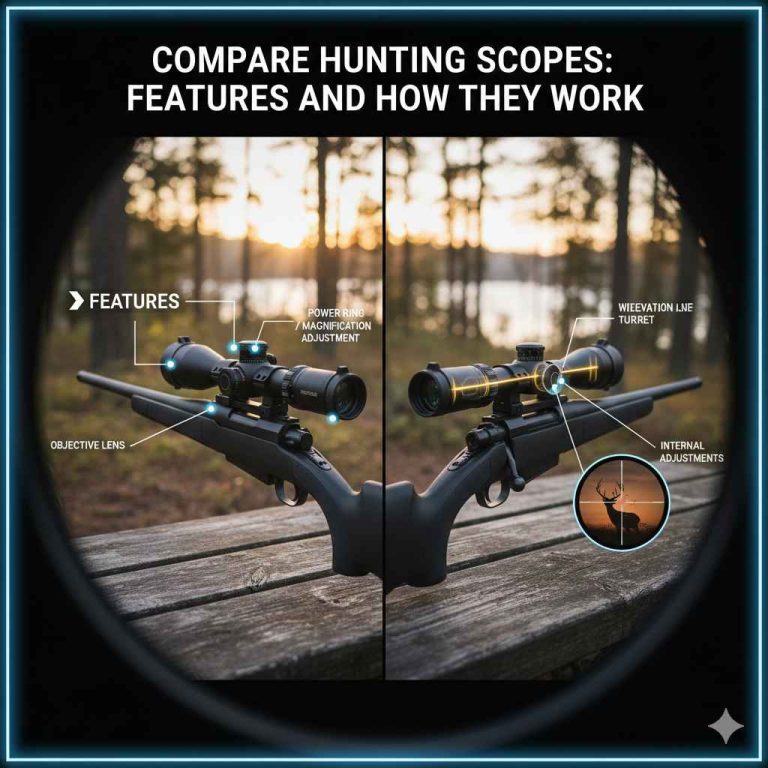
Magnification power is a scope’s ability to make distant objects appear closer. It’s usually shown as two numbers, like 3-9×40. The first number is the minimum magnification (3x in this example), and the second is the maximum (9x). A scope with a range of 3-9x means you can zoom in from three times to nine times the normal size. Higher magnification lets you see farther, but it also reduces the field of view. Lower magnification gives you a wider view, which is better for close-range hunting.
- Low Magnification (e.g., 1-4x): Great for close-range shooting like in brushy areas or for moving targets. It offers a wide field of view.
- Mid-Range Magnification (e.g., 3-9x): Versatile, and it is a solid choice for general hunting situations. It works well for medium distances, such as in fields or open woods.
- High Magnification (e.g., 4-16x, 6-24x): Better for long-range shooting where you need to see a target clearly from a long way away. They are often used for varmint hunting.
Choosing the right magnification depends on the hunting you will do. For instance, in areas with dense trees, a lower magnification scope with a wider field of view is ideal. Conversely, when shooting across open fields, a higher magnification power is preferred for better target identification.
Objective Lens Diameter
The objective lens is the lens at the front of your scope. Its size, measured in millimeters, impacts how much light enters the scope. A larger objective lens lets in more light, which improves clarity and brightness, particularly in low-light situations like dawn and dusk. The bigger the lens, the better you can see. The objective lens diameter affects the scope’s overall size and weight.
- Small Objective Lenses (e.g., 32mm, 40mm): Compact and lightweight, these scopes are good for general hunting.
- Medium Objective Lenses (e.g., 44mm, 50mm): Offer a good balance between light gathering and size.
- Large Objective Lenses (e.g., 56mm+): Let in the most light, perfect for hunting in very low-light conditions. These scopes are usually larger and heavier.
A larger objective lens is more helpful in low light, such as at dawn or dusk when animals are most active. However, larger lenses add weight, which may be a consideration if you’re hiking a long way. Think about the type of terrain and time of day you typically hunt to make the best choice. For example, deer hunters often use scopes with 40mm to 50mm objective lenses, providing a good balance of brightness and size.
Reticle Types
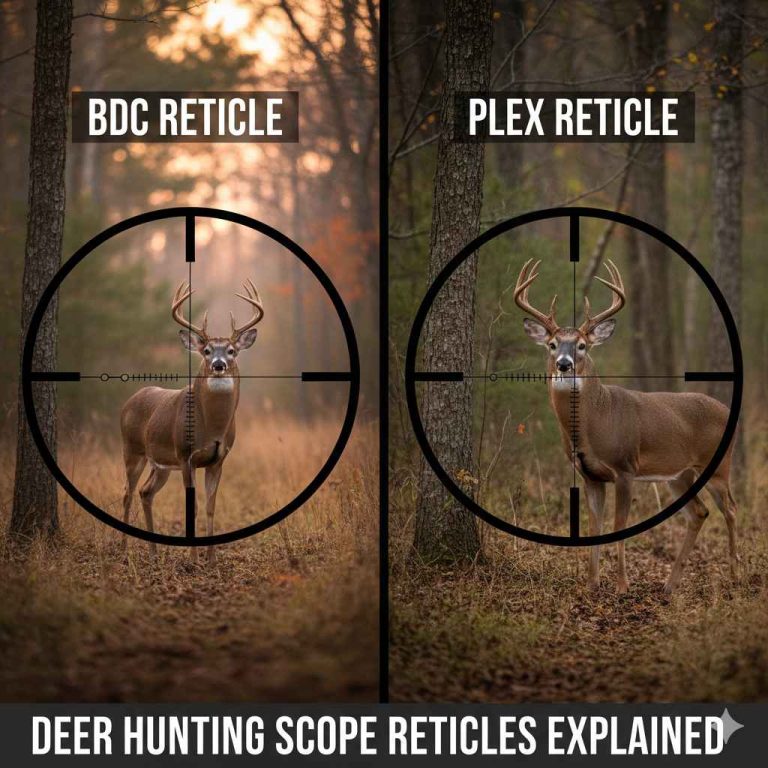
A reticle is the aiming pattern you see when you look through your scope. It can be a simple crosshair, or it can have complex markings for windage and elevation adjustments. The right reticle makes it easier to aim at your target, especially at different distances. Different reticles have different uses, so consider the kind of shooting you’ll be doing. Some reticles, like the BDC (Bullet Drop Compensation), allow for adjustments to compensate for bullet drop over long distances. It’s about finding one that works for your type of hunting.
- Duplex Reticle: This is a simple, common reticle with thick outer lines that taper to a thin crosshair in the center. It’s easy to use and good for general hunting.
- BDC Reticle: These reticles have extra aiming points to compensate for bullet drop at different ranges. Very useful for longer-range shooting.
- Mil-Dot Reticle: Uses dots or lines called mils to estimate distance and make windage adjustments. Often used by more experienced shooters.
The reticle you select has a big impact on your shooting accuracy. Simple reticles are perfect for beginners, while more advanced types are for those needing to make precise long-range shots. For instance, a hunter shooting at varying distances in open fields might favor a BDC reticle. On the other hand, if you often hunt in thick woods at closer ranges, a simple duplex reticle can suffice.

Burris Hunting Scopes: An Overview
Burris scopes are known for their value and quality. They offer a good range of scopes for different budgets and hunting situations. The company provides features often found in more expensive scopes. Burris is a name you can trust for clarity and durability. Their products are made to withstand the bumps and shakes of field use.
Key Features of Burris Scopes
Burris scopes often include features designed to improve your shooting experience. These features help with accuracy and ease of use in the field. They aim to make your hunts more effective and fun.
- High-Quality Lenses: Burris uses good lenses to give you a clear view, even in low light. This means you can see your target better at dawn or dusk.
- Durable Construction: Made to handle tough conditions, Burris scopes resist water, fog, and impact. This rugged build means the scope lasts longer and can handle various weather conditions.
- Various Reticle Options: Burris offers a range of reticles to suit different shooting preferences and distances. You can choose the one that works best for your type of hunting.
- Warranty: Most Burris scopes come with a warranty, giving you peace of mind with your purchase. The warranty often covers any issues with the scope, demonstrating their confidence in the products.
Burris scopes are built with a focus on delivering clear optics and reliable performance. Their designs combine usability with a high level of craftsmanship. For example, a hunter might prefer a Burris scope with a BDC reticle for its quick adjustments for long-range shots. The rugged build is also important for hunters who frequently encounter rough terrain.
Burris Scope Series
Burris offers different scope lines to fit various needs and price points. Each series has a unique set of features and is aimed at certain types of hunting. This variety makes it easier to find a Burris scope that matches your specific hunting needs. It’s about finding the scope series that fits your style and budget.
- Fullfield E1 Series: These scopes are a solid choice for general hunting. They offer clear optics and are good for the price. The E1 models usually have a simple design, making them easy to use.
- Droptine Series: The Droptine scopes are another great value. They are known for their durability and good image quality, making them popular for different hunting environments.
- Eliminator Series: These scopes come with built-in laser rangefinders and ballistic calculators. This is useful for long-range shooting where you need to make quick adjustments.
Choosing the right Burris series depends on your specific hunting needs and budget. For example, a beginner might start with a Fullfield E1. Those who hunt in challenging conditions might prefer the rugged Droptine series. Hunters looking for advanced features and long-range accuracy might choose the Eliminator.
Nikon Hunting Scopes: A Look
Nikon hunting scopes were highly regarded for their clear optics and value. They were well-liked by hunters. Nikon scopes were made for various hunting types. They often had features that were ahead of their time. Nikon stopped making hunting scopes a while back, but their products remain popular.
Features of Nikon Scopes (Past Models)
Although Nikon no longer produces scopes, their legacy continues. Nikon scopes were known for key features that set them apart. Many hunters remember these scopes fondly.
- High-Quality Glass: Nikon scopes were known for their clear glass, providing bright and sharp images. This made them great for low-light situations.
- Durable Design: Built to handle tough conditions, Nikon scopes could withstand recoil and harsh weather. This durability was essential for hunting.
- Easy-to-Use Adjustments: Nikon scopes often had user-friendly turrets and adjustments. These features made it easier for hunters to make quick changes in the field.
- Wide Range of Models: Nikon offered various scope models. This allowed hunters to find a scope that met their specific needs and budget.
Nikon scopes were designed to improve your hunting experience. The combination of clear optics, durability, and user-friendly features made them a top choice for hunters. For example, a hunter using a Nikon scope could rely on its clarity to make an accurate shot. The rugged design meant the scope would last even in tough conditions.
Nikon Scope Series (Past Models)
The variety in Nikon’s product line gave hunters options. Each series was designed with specific hunting styles in mind. The different series helped hunters find the perfect fit for their needs. Many hunters still seek out used Nikon scopes.
- ProStaff Series: A popular choice for beginners and those looking for a good value. They offered clear images and were durable enough for everyday use.
- Monarch Series: This series provided higher-end optics and features. They were ideal for hunters who wanted the best possible image quality.
- Buckmasters Series: Built for hunters seeking reliability, they featured easy-to-use adjustments. They were a great option for various shooting conditions.
The differences between the Nikon series allowed hunters to select a scope that fit their requirements. For example, a hunter new to the sport might start with a ProStaff. Those wanting the best optics could pick a Monarch scope. The Buckmasters series was the choice for dependable performance in diverse hunting situations.
Vortex Hunting Scopes: Detailed Explanation
Vortex Optics has gained popularity in the hunting world. They are known for their warranty and the quality they offer for the price. Vortex aims to make excellent scopes available. This is how they have grown. Their success reflects their commitment to quality.
Key Features of Vortex Scopes
Vortex scopes have features designed to help hunters. These features emphasize clarity, accuracy, and dependability. Vortex puts a lot of effort into making quality products that last.
- Clear Optics: Vortex scopes often have high-quality glass. This allows for bright, sharp images, even in low-light situations. Good image quality is a priority.
- Durable Construction: Vortex builds scopes tough to withstand tough conditions. They are made to endure bumps, water, and varying temperatures. Durability helps extend the life of the scopes.
- Variety of Reticle Options: Vortex provides a wide selection of reticles to suit various hunting styles. This allows hunters to match the scope to their needs.
- Warranty: Vortex offers a lifetime warranty on most of their scopes. This provides customers peace of mind with their purchase.
Vortex scopes are designed to deliver a great hunting experience, from their clear optics to their rugged builds. A hunter might use a Vortex scope with a BDC reticle to compensate for bullet drop. The scope’s durable construction helps it withstand rough hunting conditions.
Vortex Scope Series
Vortex has several scope lines. These lines provide different features and pricing. The variety makes it easier for hunters to find a scope that fits their style. You will be able to select a scope that suits your requirements.
- Crossfire Series: This series provides excellent value and clear optics. It is a good option for beginners and casual hunters.
- Diamondback Series: Known for their solid performance and features, they provide a step up in quality. They work well for various hunting situations.
- Viper Series: These scopes offer higher-end features and superior image quality. They are often a top choice for serious hunters.
- Razor Series: The Razor series is Vortex’s premium line. These scopes offer the best optical performance, durability, and advanced features. These are best for those who want the finest optics and features.
Vortex’s series offer a scope for everyone. For example, a new hunter might choose the Crossfire series. Those wanting more features could pick the Diamondback series. The Viper or Razor series is a top choice for serious hunters who prioritize top-of-the-line performance. These varied options let hunters pick what works best for their specific hunting needs.
Comparing the Brands: Burris, Nikon, and Vortex
Choosing between Burris, Nikon, and Vortex hunting scopes can depend on a variety of things. Each brand offers pros and cons. Understanding these differences can help you make a smart decision. Several key aspects help you decide which brand best matches your needs.
Optical Clarity and Performance
The glass and coatings used in a scope greatly affect optical clarity and brightness. This will help you see your target clearly. High-quality glass means clearer images, especially in low light. This is an important factor when you are shooting at dusk or dawn.
- Burris: Known for good clarity, especially for the price. They use quality glass and coatings.
- Nikon (Legacy): Previously known for exceptional clarity and brightness. Their scopes provided clear images.
- Vortex: Offers good clarity, with excellent image quality in some models. Their higher-end scopes perform very well in low light.
When you’re trying to choose a scope, the clarity of the image is vital. For example, a hunter in a heavily wooded area might need a scope that offers excellent low-light performance. This will help them see their target in the dim conditions. If clarity is key, consider scopes from Nikon (if you can find a used one) or Vortex’s higher-end series. Burris scopes often offer good clarity for their price point.
Durability and Build Quality
A hunting scope needs to be able to handle rough conditions. Durable scopes can withstand bumps, weather, and recoil. This ensures the scope lasts longer and stays accurate. Build quality directly affects the scope’s ability to withstand the challenges of field use.
- Burris: Known for sturdy construction. They are built to endure harsh conditions.
- Nikon (Legacy): Historically recognized for sturdy, reliable builds. They could handle harsh weather and recoil.
- Vortex: Known for a durable build. They are water- and fog-proof. They also stand up to heavy use.
The durability of your scope is very important if you hunt in challenging environments. A hunter who hunts in rugged terrain or harsh weather should pick a scope that’s built tough. Both Burris and Vortex scopes are made to endure the bumps of field use. Remember to check online reviews before you make a decision.
Features and Technology
Modern hunting scopes come with many features that make shooting easier. Features such as reticles and adjustment options improve accuracy. These features can significantly improve your hunting experience. The right features can make a big difference in the field.
- Burris: Offers various reticle options, including BDC reticles. They also include features that are useful for long-range shooting.
- Nikon (Legacy): Famous for clear optics and user-friendly adjustments. Their reticles were often easy to use.
- Vortex: Offers a range of features. Includes a wide variety of reticles. They are known for their precise adjustments.
The features in a scope help make hunting easier and more accurate. For instance, a hunter shooting at varying distances benefits from a BDC reticle. Vortex scopes provide many features that hunters often look for. The proper features can improve your shooting skills.
Warranty and Customer Service
A good warranty gives peace of mind. It shows the manufacturer stands behind its product. Customer service can also help if you run into problems. A strong warranty can show the manufacturer’s trust in their products. It also means the company is ready to assist you.
- Burris: Provides a warranty on their scopes. They also have customer support to help with any issues.
- Nikon (Legacy): Nikon has a strong reputation for customer support. Nikon stopped making scopes, so warranty support will depend on the terms of the original sale.
- Vortex: Offers a lifetime, no-fault warranty on most scopes. Their service is well-regarded in the hunting community.
A solid warranty and good customer service are helpful. A lifetime warranty can be a significant benefit. Vortex’s warranty demonstrates their confidence in their scopes. A good warranty provides security and helps maintain your hunting gear.
Price and Value
The price of a scope is an important consideration for many hunters. You also want to look at value. The value means how much you get for the cost. Knowing how the brands compare in price can help you decide. Balancing price with features and quality is important.
| Brand | Price Range | Value Proposition |
|---|---|---|
| Burris | Generally mid-range | Good balance of features and quality for the price. |
| Nikon (Legacy) | Varied, depends on the model and condition | Often excellent value, especially for used scopes. Known for high optical performance. |
| Vortex | Wide range, from entry-level to high-end | Offers very good value. Many models provide a great mix of features, performance, and warranty. |
You need to balance your budget and the features you want. Burris provides a strong balance of quality and cost. Vortex offers excellent value, particularly in their higher-end series. Consider the cost against the features you need. This will help you find the best value for your money.
Sample Hunting Scenarios
To help you understand how these scopes perform in real-world scenarios, here are a few examples. These examples will show you how to select a scope for different situations.
- Scenario 1: Whitetail Deer Hunting in a Wooded Area: You’re hunting in a forest with thick trees. Shots are typically at short to medium range (50-150 yards). You need a scope that provides a wide field of view and quick target acquisition. Consider a Burris Fullfield E1 3-9×40. Its magnification range is good for these distances. The duplex reticle makes it easy to quickly aim at the target.
- Scenario 2: Long-Range Coyote Hunting in Open Fields: You are hunting coyotes in an open field, with shots that can reach out to 300-400 yards. The scope needs higher magnification and precise adjustments. A Vortex Viper HS 4-16×50 would be a good selection. The higher magnification helps with accurate shots at a distance. The adjustable turrets allow for precise adjustments.
- Scenario 3: Elk Hunting in Low-Light Conditions: You hunt elk at dawn and dusk when light is low. The scope must have great low-light performance. A Vortex Razor HD 3-15×50 is the best choice here. The larger objective lens will gather more light. Its superior glass delivers exceptional clarity, even at the lowest light.
Choosing the best scope relies on the specific hunting scenario you face. Each scenario has unique requirements for magnification, reticle type, and low-light performance. A good match between the scope’s features and the hunting environment is the key to shooting success. These examples will help you match the right scope with the environment.

Frequently Asked Questions
Question: What does “MOA” mean in scopes?
Answer: MOA stands for Minute of Angle. It’s a unit of measurement used to describe a scope’s adjustment. One MOA equals roughly one inch at 100 yards.
Question: What is a BDC reticle?
Answer: A BDC (Bullet Drop Compensation) reticle has aiming points for different distances. These points help you account for bullet drop over long distances, making it easier to hit your target.
Question: How do I know what magnification is right for me?
Answer: The right magnification depends on your hunting situation. Lower magnification (e.g., 1-4x) is good for close ranges and moving targets. Higher magnification (e.g., 6-24x) is better for long-range shooting.
Question: What’s the main benefit of a larger objective lens?
Answer: A larger objective lens lets in more light. This improves the brightness and clarity of the image, especially in low-light conditions like dawn and dusk.
Question: What do the numbers like 3-9×40 mean?
Answer: These numbers describe the scope’s magnification and objective lens size. The first two numbers (3-9) show the magnification range (3x to 9x). The last number (40) is the diameter of the objective lens in millimeters.
Final Thoughts
Choosing the right hunting scope is key to your hunting success. When comparing Burris vs Nikon vs Vortex Hunting Scopes Compared, each brand has strengths. Burris scopes offer excellent value for the money, known for their clarity and durability. Nikon, while no longer producing scopes, provides exceptional value if you can find a used model. Vortex stands out for its clarity, warranty, and wide range of scopes for all levels of experience. Consider the magnification, lens size, reticle type, and build quality when making your selection. Also, think about the hunting environment and type of shooting you’ll do. By understanding these features and considering your budget, you can find the perfect scope.
Do some research and compare the specs of different models before you decide. Read reviews from other hunters. Think about your unique needs and hunting style. You’ll make a great choice that improves your hunting experience. Happy hunting!
Related pick: Check today's price on Amazon