What to Do When a Deer Has No Blood Trail After a Bow Shot
Use a 30-minute waiting rule: if a deer was hit with a bow and you see no blood, back out, mark the last sighting, and sort the shot by impact sound, hit location, arrow sign, and deer reaction before you search. Rushing can turn a recoverable deer into a lost one. This guide gives a step-by-step no-blood triage for missed, poor-hit, and likely fatal hits.
This guide is part of our Bowhunting the Whitetail Rut: Timing, Tactics and Late-Season Adjustments series.
What you’ll need


- Headlamp and flashlight
- Spare batteries
- Flagging tape
- Tissue paper for marking sign
- Mapping app
- Rangefinder
- Hydrogen peroxide for tough trails
- Gloves
- Local tracker contact or drone recovery backup where legal
What should you do first?
Stay put long enough to watch the deer’s reaction and exact line of travel, then mark the last visible point before you leave the stand or blind. If the deer clearly acted untouched, a short wait and a careful reset beat a rushed search. onX advises asking three questions immediately after the shot.
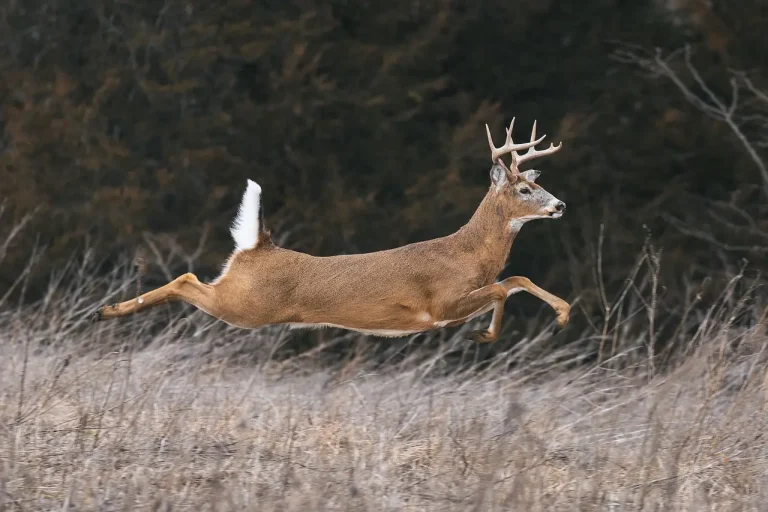
Use those first minutes to note the angle, whether the deer mule-kicked, hunkered, tucked its tail, sprinted hard, bedded nearby, or crashed. A deer that bolts cleanly with no reaction gets handled differently from one that hunches and disappears.
Mark the shot site and last sighting
- Range the deer’s standing spot before you move.
- Mark where the deer was standing, the direction of travel, and the last visible point with flagging tape.
- Drop a waypoint in a mapping app and note nearby landmarks.
- Record the range to the hit site so you can return on the same line.
Does no blood mean a miss?
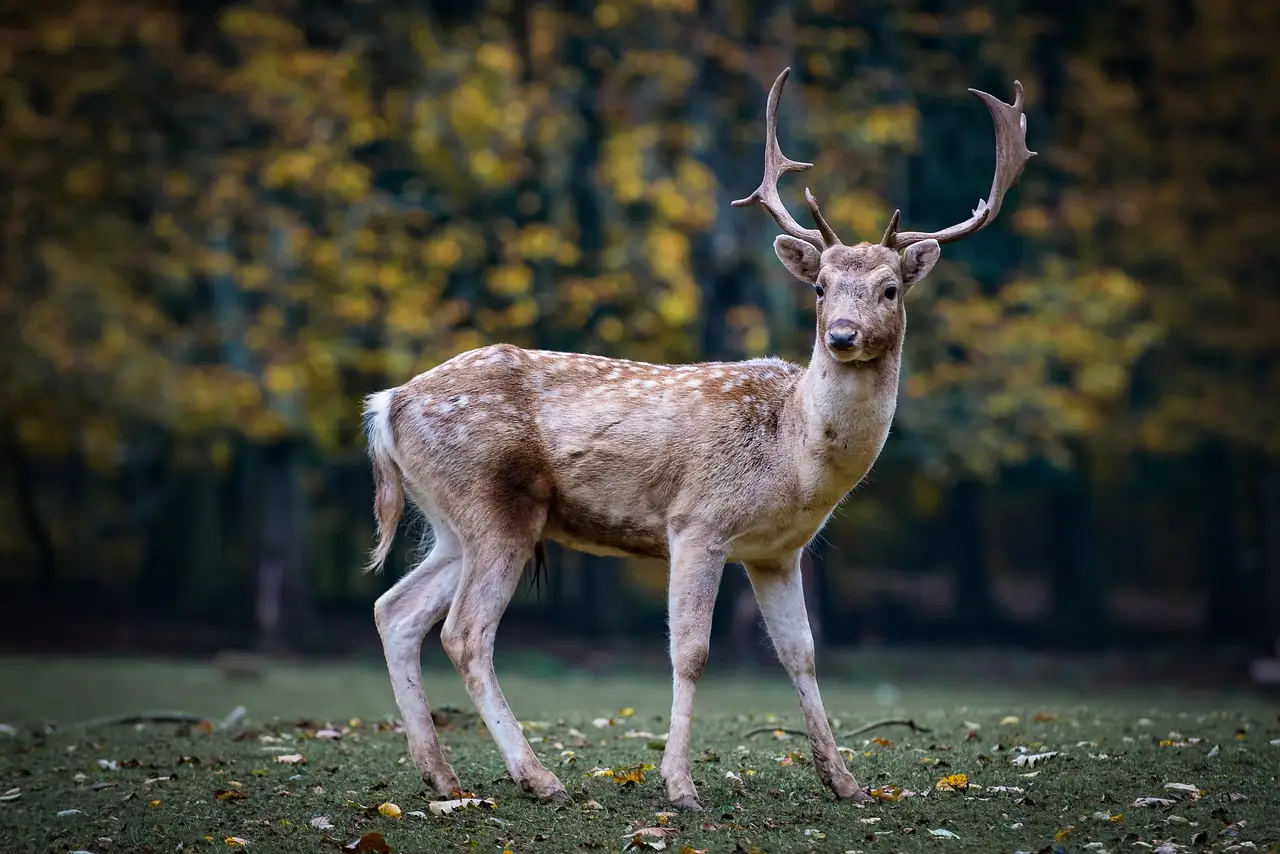
No. No blood can mean a clean miss, a clipped non-vital hit, a pass-through with sparse blood, or a lethal hit that has not opened a trail yet. Read the deer’s reaction first, then inspect the arrow and impact area before you decide what kind of search to start.
Blood-trail diagnostics use blood color to identify hit location, but the absence of blood narrows the field more slowly. A fast, hard sprint can fit a lethal heart hit, while a hunched back points toward gut sign. Some double-lung deer do not act hit until they keel over.
Check the arrow and impact site first
- Bright red blood: often from a lung or heart hit.
- Dark red blood: more often liver or deeper muscle sign.
- Watery or diluted blood: can show up on wet leaves, snow, or after a pass-through.
- Froth or bubbles: often points to a lung hit.
- Hair and bone fragments: can point to shoulder contact or a hard impact.
- Green or brown gut matter: treat as a gut hit and back out.
Look for blood volume, not only color. A tiny smear on the arrow can still matter, especially in leaf litter or dark timber where bright sign disappears fast.
No blood trail checklist
This table separates clean misses, marginal hits, and lethal-but-sparse hits before the search starts. Match what you saw at the shot, what you found at the impact site, and the next move.
| What you saw at the shot | What you found at the impact site | Recommended next move |
|---|---|---|
| No reaction, fast sprint away, no obvious hunch | No blood, no hair, no bone, clean arrow | Wait 10 to 15 minutes, then re-check the site and grid search the exit line |
| Quick jump, stiff run, uncertain angle | Single drop or light smear, little froth | Wait 30 minutes minimum, then follow slowly and mark every sign |
| Quartering-away shot, deer slows then beds | Dark red blood, sparse drops, little froth | Wait 6 to 8 hours and start from the bed side if found |
| Hunched back, tucked tail, slow departure | Dark blood, watery blood, or green/brown gut matter | Back out 8 to 10 hours or overnight if sign is weak |
| Quartering-to or steep angle, deer leaves stiffly | Hair, bone, or a short blood splash with no trail | Assume shoulder or high-hit risk; wait overnight unless recovery is obvious |
| Pass-through with a brief sprint | Entry and exit sign, but only a few drops | Use a grid search, then widen the line with a headlamp and mapping app |
| Deer ran through standing water or a creek | Blood ends at water’s edge | Search both banks, then pick up the line on the far side or wait for help |
| Deer disappeared into thick cover after the shot | One bed, little blood, or clipped hair only | Mark the bed, back out, and return after 8 to 12 hours or overnight |
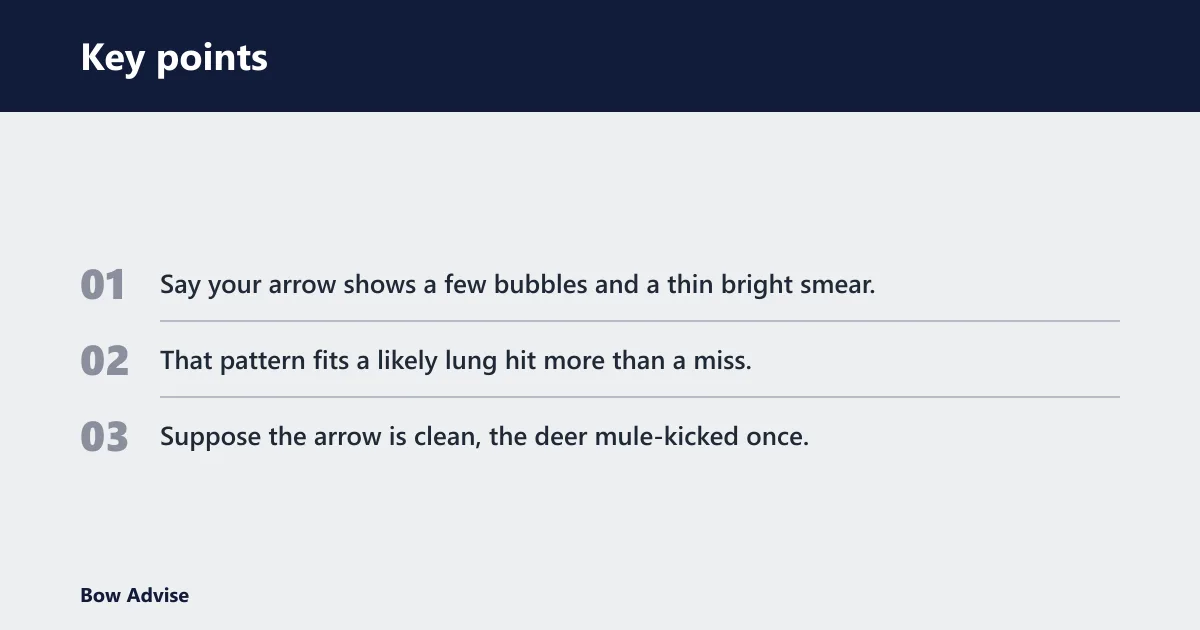
Say your arrow shows a few bubbles and a thin bright smear, and the deer made a fast sprint before slowing. That pattern fits a likely lung hit more than a miss, so a short wait and a careful trail start are safer than a full push. Suppose the arrow is clean, the deer mule-kicked once, and then vanished into thick leaves; that calls for a longer wait and a tight grid search, not a loud follow-up.
How long should you wait?
Use a wait time that matches the sign, not wishful thinking. Use about 10 to 15 minutes only for a clean miss or a clear non-hit. Wait 30 minutes minimum for uncertain sign or a possible one-lung hit. Back out for about 6 to 8 hours, about 8 to 10 hours, or overnight when gut, liver, or a high hit is suspected.
onX recommends a heart-shot deer may expire in five to 10 seconds and to track a heart-shot deer in 10 to 15 minutes. onX says a double-lung deer may expire in as little as 30 seconds, while a single-lung deer could live for hours. onX recommends waiting six to eight hours after a liver shot and 10 to 12 hours after a gut shot.
Use the shot angle to narrow the wait
- Broadside: easiest for lung or heart recovery, but still treat weak sign carefully.
- Quartering-away: can reach lungs or liver; wait longer if the arrow rides back.
- Quartering-to: shoulder, brisket, or high hit risk rises; wait longer when sign is thin.
Outdoor Life says a hunched back is a classic sign of a gut shot. It also says a fast, hard sprint often indicates a lethal heart hit. Those two clues point in opposite directions, so the arrow and impact site still matter most.
How should you search when the trail is faint?
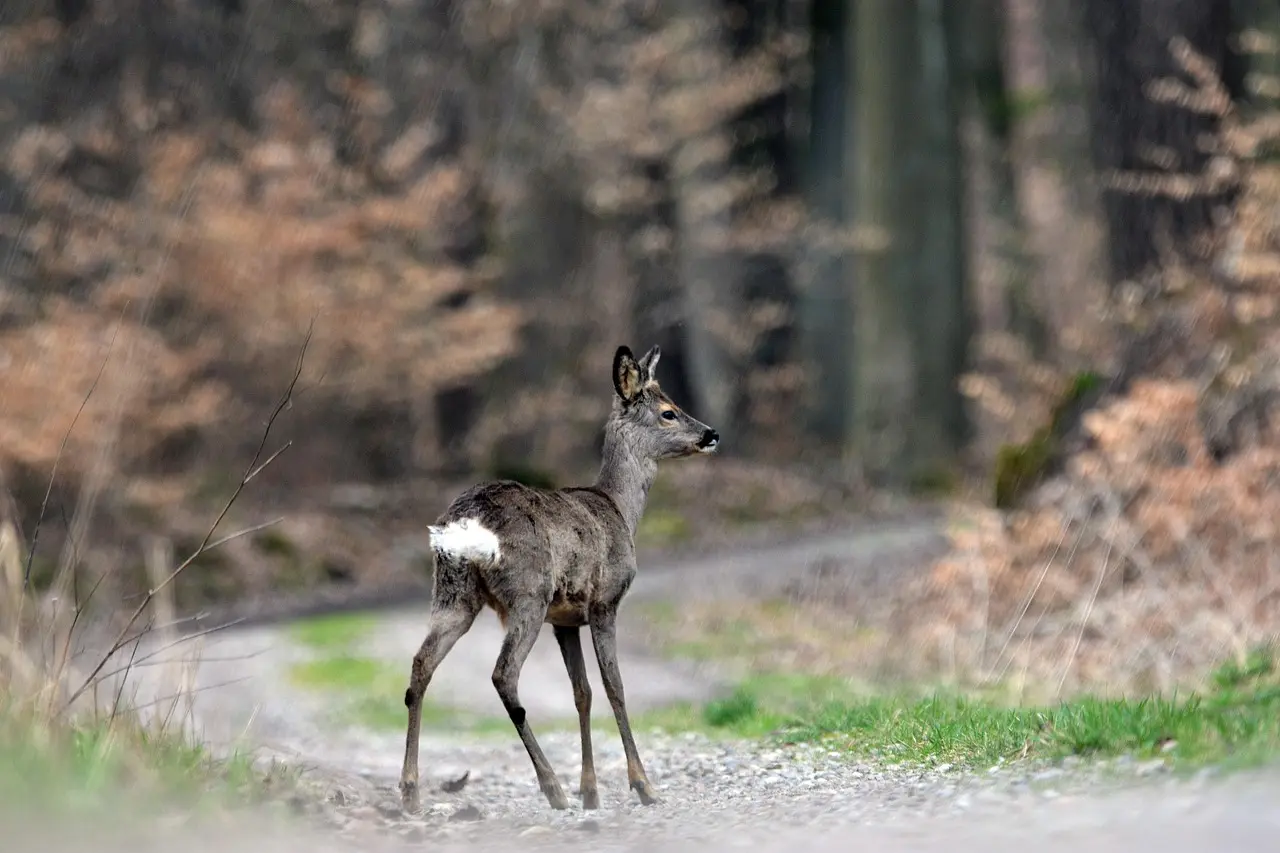
Start from the shot site, then move to the last known location and work outward in a controlled line. Use a headlamp, flashlight, spare batteries, and tissue paper to mark every clue. If blood is sparse, switch from a straight follow to a grid search and keep one person on the marked line.
Step-by-step recovery plan
- Mark the shot site, last known location, and travel direction.
- Inspect the impact area for blood color, froth, hair, bone, or gut matter.
- Use a mapping app to log waypoints and the range to the hit site.
- Follow the clearest line first, then widen into a grid if the trail weakens.
- Use hydrogen peroxide on suspected blood on leaves or grass when sign is hard to read.
- Back out and wait longer if you hit gut, liver, or heavy shoulder sign.
- Call a tracker, blood dog, or legal drone support if the trail goes cold.
The same source recommends a headlamp for blood trailing, and hydrogen peroxide for tough trails. It also recommends a handheld thermal where legal. In marginal cell service, save a local tracker contact before dark so help is ready if the trail stalls.
Common mistakes
- Leaving too soon after a poor hit.
- Searching without marking landmarks and waypoints.
- Overreading a tiny amount of blood in leaf litter.
- Pushing a wounded deer across a water crossing or into thicker cover.
- Ignoring clipped hair only and assuming the trail is done.
A common first-timer mistake is chasing the first drop of blood into a creek bottom and losing the line at the water’s edge. Mark both banks, back out, and return with light, tape, and a second look at the deer’s direction of travel.
When should you back out and wait overnight after a bad bow shot?
Back out right away when the sign points to gut, liver, high shoulder, or a hit that left only hair, bone, or a short splash. Overnight or 12+ hours is the safer choice when the deer bedded close, when blood is watery and thin, or when the trail crosses water and then disappears.
Shoulder hits often leave little blood if the arrow does not exit. High hits can also produce a short trail that looks weak at first, then opens later. In those cases, a fresh search can push the deer farther than a later search would.
When to bring in backup
If the trail goes cold, a local tracker, blood dog, or drone recovery option can save time. That matters most when cell coverage is weak, the ground is thick with leaves, or the impact sign is small and hard to read. Use legal recovery help where allowed, and keep the last waypoint ready.
Frequently asked questions
What should I do if a deer runs off after my bow shot and there’s no blood?
Mark the last sighting, wait at least 30 minutes unless the deer clearly acted untouched, and inspect the arrow plus impact site before moving out. Use the deer’s reaction, arrow sign, and the shot angle to decide whether to grid search, back out for hours, or return at daylight.
How long should I wait before tracking a deer after a bow shot?
Use 10 to 15 minutes for a clean miss, 30 minutes minimum for uncertain sign, 6 to 8 hours for a liver hit, 8 to 10 hours for a strong but unclear hit, and 10 to 12 hours or longer for gut sign. Overnight is safer when the trail is weak.
Does no blood mean I missed the deer or hit non-lethal?
No. A clean miss is only one possibility. A deer can be hit in the shoulder, liver, one lung, or through-and-through with very little visible sign, especially in wet grass, leaves, or water. Check the arrow, the impact site, and the deer’s reaction before calling it a miss.
What if the deer hunched up and disappeared with no blood trail?
A hunched back is a classic gut-shot clue, so back out and wait 8 to 10 hours, or overnight if the sign is thin. Return with a headlamp, tissue paper, and flagging tape, then search from the last known point and any bedding cover first.
How far can a deer go after a lung shot with a bow?
A double-lung deer can go down very fast, and onX says some may expire in as little as 30 seconds. A single-lung deer may live for hours, so no visible blood does not rule out a long run. Use the deer’s reaction and arrow sign to sort the hit type.
Can a single-lung or liver hit leave almost no blood trail?
Yes. onX says a single-lung deer could live for hours, and liver hits often bleed slowly at first. Thin blood, watery sign, or a short trail that fades quickly should push the search toward a longer wait, a careful grid search, and backup help if the line disappears.