How Long Does It Take a Deer to Die After a Lung Shot with a Bow?
A true double-lung hit can kill a deer quickly, often within 30 to 90 minutes, though the practical wait before trailing is usually longer. A possible one-lung hit calls for more patience, often about 4 to 6 hours or overnight, unless blood loss, weather, or a bad shot angle changes the call. Move in too soon and you can bump a wounded deer. Wait too long on a marginal hit and the trail can dry out, which makes recovery harder. This guide shows how to read blood, sign, shot angle, and behavior to separate a true double-lung hit from a one-lung or non-vital hit.
Lung shot wait times
A true double-lung hit can kill a deer quickly, but the right trail time is still longer than the likely death window. The practical wait is usually 30 to 90 minutes before trailing, with longer delays when the shot is uncertain, the deer is alert, or the ground will wipe out sign fast.
Double-lung hit
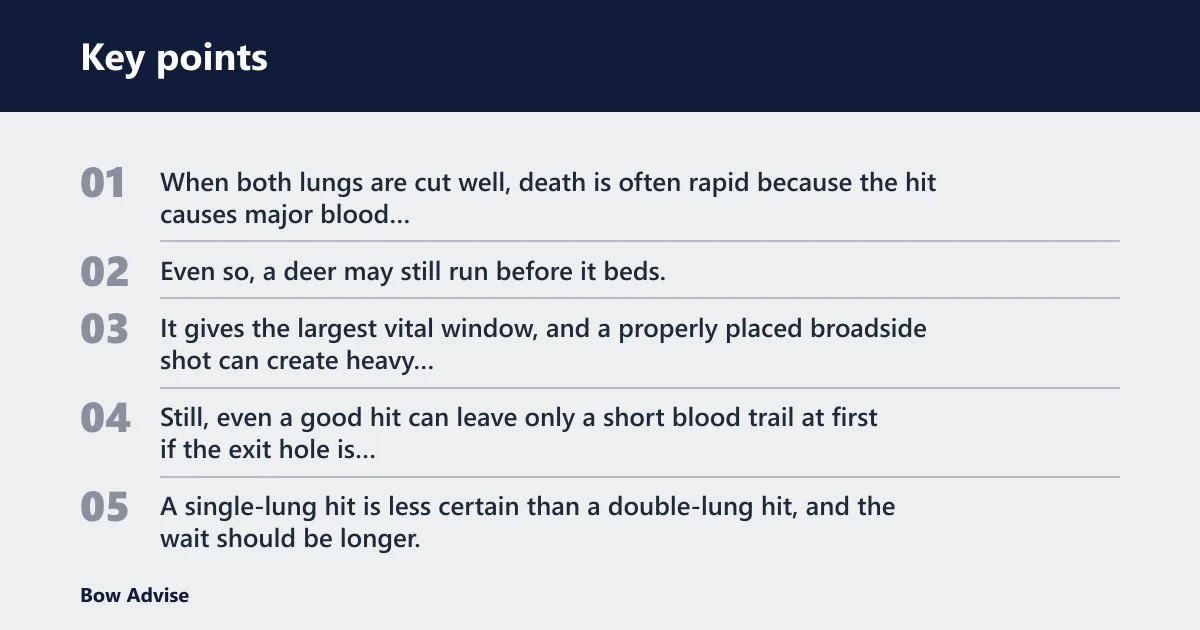
When both lungs are cut well, death is often rapid because the hit causes major blood loss and stops normal breathing. Even so, a deer may still run before it beds, so the hunter should not treat “likely fatal” as “safe to follow right away.”
A broadside hit just behind the shoulder is the cleanest bow presentation for this result. It gives the largest vital window, and a properly placed broadside shot can create heavy blood loss. Still, even a good hit can leave only a short blood trail at first if the exit hole is small or the arrow stays inside.
Single-lung hit
A single-lung hit is less certain than a double-lung hit, and the wait should be longer. Closer to 4 to 6 hours is the safer call, because the deer may stay on its feet longer, move farther, and leave less obvious sign than on a clean double-lung hit.
This is where many hunters make the wrong call. A deer may look badly hit, yet still carry enough function to travel a long way before bedding. That is why the recommended wait is not based only on how dramatic the hit looked at the shot.
Why death time and tracking time are not the same
Death time is the time until the deer dies. Tracking time is when it makes sense to start trailing. Those are not the same thing. A deer can be fatally hit and still run, bed, and leave weak sign for a while, especially if the arrow clips only one lung or passes through with a small exit hole.
That split matters most in bowhunting, where arrow path, angle, and hole size can change the trail more than the hit itself. A good hit can still produce a weak trail if the arrow does not exit, while a marginal hit can create confusing sign that tempts a hunter to move too early.
Deer anatomy behind the shoulder
The heart-lung area just behind the front shoulder is the best bow target. The heart sits directly in line with the middle of the front leg, and the lungs fill most of the chest cavity, which gives more room for error than the heart alone. Small deer leave less room for error than larger-bodied deer.
Why broadside gives the best bow angle
Broadside and quartering-away are the best bowhunting shot angles. Broadside gives the cleanest access to the vitals because the chest is open to the arrow path, though ribs and shoulder structure can still affect what the arrow does after impact. A quartering-to shot is not recommended with a bow.
Aiming just behind the shoulder is the practical hold for most bowhunters. It keeps the arrow centered on the chest cavity instead of drifting too far forward into heavy bone or too far back into the paunch. That shot window is narrow enough that patience matters more than distance.
Why quartering-away is preferred
Quartering-away is preferred because it can give a cleaner lane through the chest and a better chance of reaching both lungs. Quartering-to is a poor choice because the arrow must fight more bone and angle, and a mistake there often turns a good opportunity into a long recovery job.
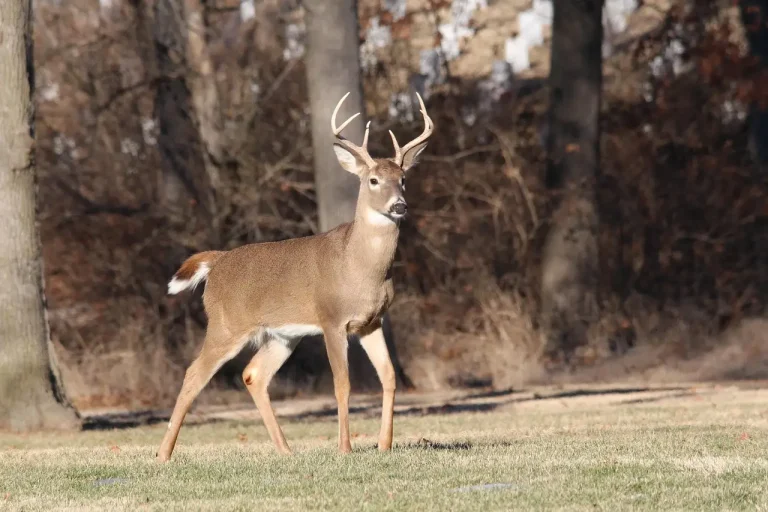
Suppose a whitetail is standing with its near shoulder slightly forward and the far-side leg visible. That is a better bow angle than a head-on turn toward the hunter. The latter raises the chance of a non-vital hit or a clipped lung hit that looks good for a second and then turns messy.
How to read the blood trail
Blood sign can help separate a lung hit from a liver or gut hit, but it should be read with arrow sign and deer behavior, not alone. Bright, frothy blood often points toward the lungs. Dark red or maroon blood points more toward the liver. Sparse sign does not always mean a clean miss.
Bright frothy blood
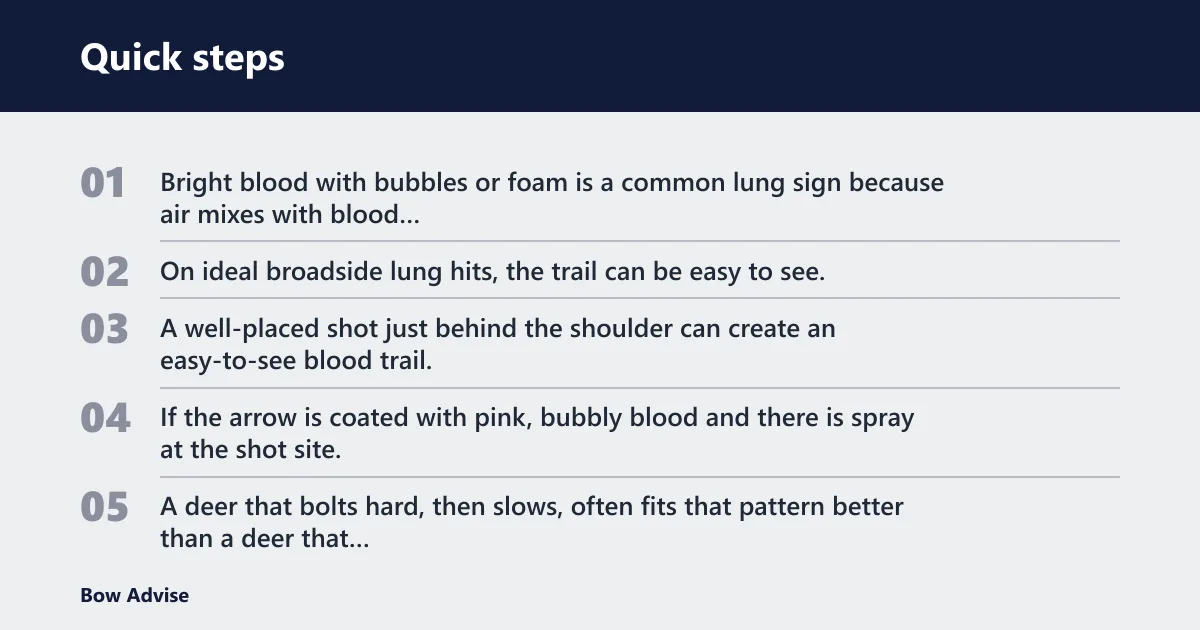
Bright blood with bubbles or foam is a common lung sign because air mixes with blood from the chest cavity. On ideal broadside lung hits, the trail can be easy to see. A well-placed shot just behind the shoulder can create an easy-to-see blood trail, but an exit hole still matters a lot.
If the arrow is coated with pink, bubbly blood and there is spray at the shot site, a true lung hit becomes more likely. A deer that bolts hard, then slows, often fits that pattern better than a deer that hunches low and moves off stiffly.
Dark red or maroon blood
Dark red or maroon blood points more toward liver tissue. Liver blood is dark red or maroon and watery, and a liver shot can take around two hours because blood loss is slower. That is why the trail may look cleaner than a lung hit at first, yet recovery still needs patience.
If the deer walks away with a tucked-up belly, a stiff gait, or a short, careful exit, the hit may be lower or farther back than first thought. That is not a cue to rush. It is a cue to slow down and read the sign more carefully.
Sparse sign, bubbles, and arrow findings
Sparse sign can happen on a fatal shot, especially if the entry hole is small, the exit hole plugs, or the deer runs on dry ground. Arrow findings help. Hair length, tissue type, and odor can point toward chest, liver, or gut hits, but they should be matched with the deer’s reaction and the ground sign.
A common first-timer mistake is to assume a low blood trail means a bad hit. Sometimes it means a good lung hit with a small exit. Other times it means the arrow passed through one lung and stayed in the body, which is why the wait needs to be longer than the blood sign alone suggests.
When to back out
Back out when the sign suggests gut or liver involvement, or when the hit is uncertain enough that moving in would likely push the deer farther. For bowhunters, patience is part of recovery. A quiet retreat after the shot often improves the odds more than a quick search does.
Suspected gut shot
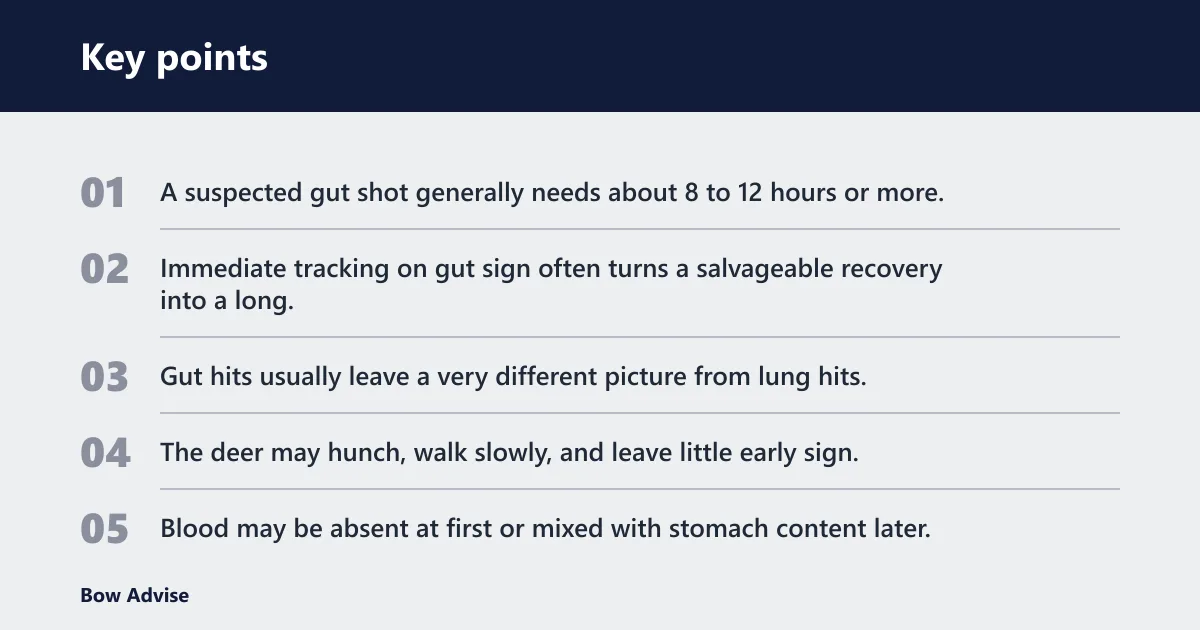
A suspected gut shot generally needs about 8 to 12 hours or more, and some deer may live more than 24 hours if they are not disturbed. Backing out quietly is the right move. Immediate tracking on gut sign often turns a salvageable recovery into a long, broken trail with little usable blood.
Gut hits usually leave a very different picture from lung hits. The deer may hunch, walk slowly, and leave little early sign. Blood may be absent at first or mixed with stomach content later. That is a strong signal to wait, not to push.
Liver-adjacent hit
A liver-adjacent hit should be handled as a slower, more uncertain recovery. A common delay is about 2 hours or more before tracking, and dark red or maroon blood supports that call. If the deer is bedded nearby, leave it alone and give the sign time to develop.
Do not treat a liver-adjacent hit like a lung hit. The difference in recovery timing is large enough that starting too early can drive the deer into heavier cover or onto ground where the trail becomes almost impossible to follow.
Cold weather, rain, and steep ground
Weather can change the plan. Rain washes blood from leaves and grass. Cold weather can preserve sign longer, but it also makes the deer easier to bump if the hunter pushes too soon. Steep ground can hide tracks, and ravines can make a short run look much longer than it is.
When conditions threaten the trail, the hunter should still avoid rushing. Mark the shot spot, mark the last known deer location, and wait long enough that the next step is based on sign, not guesswork. Follow local laws and recovery rules.
Lung shot recovery table
This table separates death time from tracking time and keeps the decision tied to the kind of hit, not just the blood on the ground. Use it as a field guide after the shot, then adjust for weather, terrain, and what the deer actually did.
| Hit type | Likely deer behavior | Blood sign | Minimum wait time | When to back out | What to confirm next |
|---|---|---|---|---|---|
| Double-lung | Fast run, then beds quickly or crashes soon after | Bright, frothy blood; often an easy-to-see trail on a good exit | 30 to 90 minutes before trailing | Back out if the deer is still standing, moving, or the shot angle was poor | Heavy lung sign, bubbles, and a strong hit reaction at the shot site |
| Single-lung | Longer run, more variable bedding, less predictable recovery | May be lighter or inconsistent; blood can look less dramatic than expected | 4 to 6 hours | Back out if sign is weak and the deer left under its own power | Arrow sign plus repeated lung-type blood, not just one splash of blood |
| Liver-adjacent | Slower walk or short run, then bedded and reluctant to move | Dark red or maroon blood, often watery | About 2 hours | Back out if the deer beds and the trail looks dark and sparse | Maroon blood, low-energy departure, and a bed with limited disturbance |
| Uncertain hit | Any pattern, including a hard run with no clear sign | Mixed, scant, or confusing | At least 4 to 6 hours unless the sign clearly points to gut | Back out if the trail is weak, the deer vanished silently, or the angle was questionable | More than one clue: blood color, arrow findings, hair, and the deer’s body language |
Should you track right away?
No. Mark the shot spot and the last known deer location first, then judge the hit before you take the next step. Immediate tracking is the wrong move on uncertain, one-lung, liver-adjacent, or gut sign because it can push the deer farther and make recovery harder.
- Mark the exact shot location before moving the deer’s line of travel in your mind.
- Note the last place the deer was clearly seen or heard.
- Check the arrow, if recovered, for blood color, foam, hair, and odor.
- Match the deer’s reaction with the sign on the ground.
- Wait according to the most likely hit, not the most hopeful one.
If the deer crashed hard and is clearly down, follow local laws and recovery rules before approaching. If it beds or leaves only light sign, stop and wait. Bring a second observer or a dog only if local law allows it and only if that extra help will not disturb the trail.
Picture a 140-pound doe that jumps at the shot, runs 60 yards, then slows and beds in thick grass. If the arrow is bright and frothy, that still fits a lung hit. If the arrow is dark red and watery, the better call is to wait longer and treat it as liver-adjacent until more sign appears.
How long can a deer run?
A good lung hit can still carry a deer a surprising distance before it beds or falls. A marginal lung hit can travel farther than a clean double-lung hit because the deer still has more breathing capacity and better function left. Terrain can make that distance look larger or smaller than it really is.
Open ground often makes a deer look as if it ran forever, while thick cover may hide a short run. Steep cuts, creek bottoms, and brush can also break the trail into pieces. The hunter should judge distance with caution and avoid overreading a single burst of speed.
How long a deer runs is not the same as how long it lives. A deer with a true double-lung hit may still cover ground before it expires. A deer with one lung hit can travel farther, bed longer, and leave less obvious sign, which is why the wait is longer and the search must be more careful.
Frequently asked questions
How long should you wait after a double-lung shot on a deer with a bow?
A true double-lung hit is often ready to track after 30 to 90 minutes, while a suspected one-lung hit needs at least 4 to 6 hours. The key is to separate likely death time from tracking time. Mark the shot site first, then follow the sign only when the hit type is clear.
How long can a deer run after a lung shot?
A deer can still run after a lung shot, even a fatal one. A true double-lung hit may still produce a short run before the deer beds or dies, while a single-lung hit can send the deer farther and make recovery less certain. Terrain and cover can make that run seem longer.
How do you know if a bow shot was a lung shot or gut shot?
Use the deer’s body language, the arrow, and the blood together. Bright, frothy blood points toward lungs. Dark, watery maroon blood points more toward liver. Gut sign is slower and dirtier, often with less blood at first. A tucked belly, slow walk, or long delay before bedding can support a gut hit.
What blood sign indicates a lung shot on a deer?
Bright, frothy blood is the classic lung sign. A well-placed shot just behind the shoulder can also create a strong trail, especially on a broadside deer. Still, the exit hole matters. A small exit or an arrow that stays in the deer can make a lung hit look weaker than it really is.
Should you track a deer immediately after a lung shot?
No. Immediate tracking can push a wounded deer and reduce recovery odds. A true double-lung hit still needs a short wait, and a possible one-lung hit needs a much longer one. Mark the shot spot, note the last known deer location, and let the sign tell the story before moving in.
How long does a deer live after a liver shot compared with a lung shot?
A liver shot can take around two hours because blood loss is slower, while a true double-lung hit often kills faster and may be ready to trail after 30 to 90 minutes.