How to Stay Warm in a Tree Stand in Freezing Weather
Stay warm in a tree stand by arriving dry, dressing in removable layers, and starting the sit slightly cool. If you sweat on the hike in, you’ll chill fast once you stop moving. That mistake hurts focus, trigger control, and often the whole morning or evening. This guide covers clothing, hand and foot warmth, and a simple heat-management plan for freezing-weather hunts.
Why tree-stand cold feels worse


Cold feels harsher in a tree stand because the body loses heat while it is still. Wind pulls warmth from exposed fabric, metal parts, and skin. Cold ground draws heat from the feet and seat. If the climb in left you damp, that moisture speeds the chill once movement stops.
Why stillness drains heat fast
Movement helps boost circulation and keep you warm. A bowhunter in a stand does the opposite for long stretches. The less you move, the less heat you make. That is why a system built around heat management matters more than simply piling on more clothing.
How wind and cold ground compound the chill
Wind drives heat away from the outer layer and from any gap at the collar, cuffs, or waist. Below you, a metal or thin fabric seat can draw heat out by contact. A tree stand pad helps here because it insulates the seat and cuts conductive heat loss during long sits.
Why the hike in matters as much as the sit
The biggest failure case is easy to spot: the hunter hurries in, overheats, then sits down wet. Sweat on the hike in becomes a liability because damp base layers pull heat away once the body stops moving. For cold hunts, the right goal is dry skin, not a hot face at the tree.
Picture a hunter hiking 400 yards in insulated coveralls at dawn. The body warms fast, the back gets damp, and ten minutes after settling in the wind starts. The stand feels colder because the sweat trapped under the outer layer now works against every minute of stillness.
Cold-weather stand setup
This table turns forecast, wind, sit length, and activity into a practical clothing plan. Start a little cool, then add only what the sit requires. The right setup keeps sweat down on the walk in and keeps heat from leaking once you stop moving.
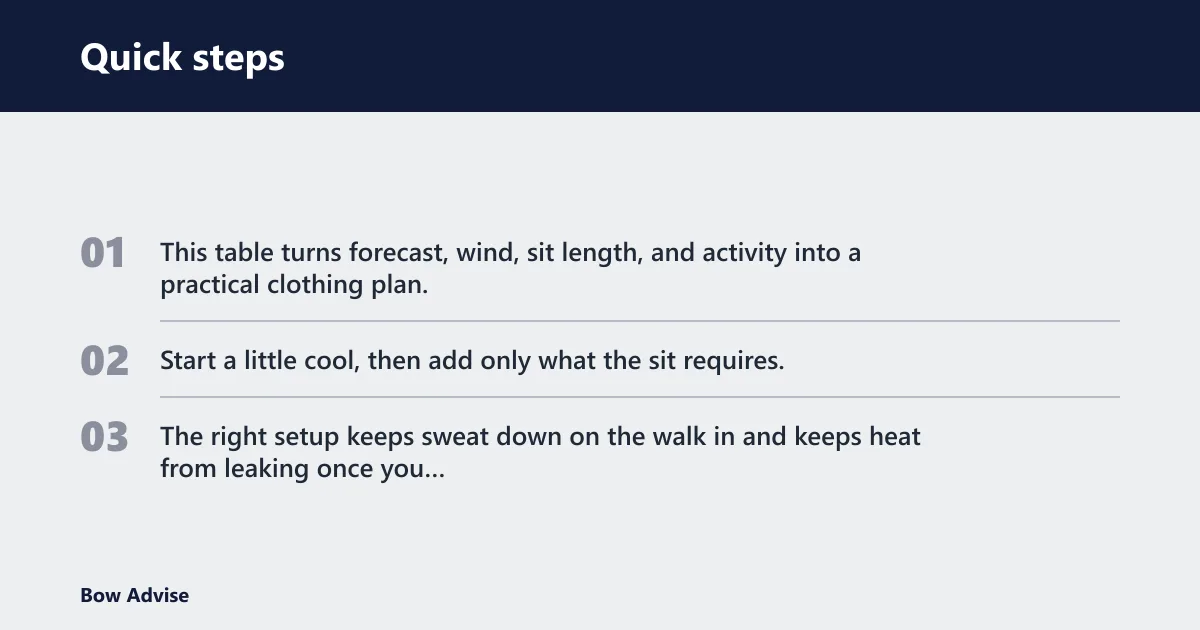
| Forecast and sit conditions | Layering system | Boot and sock choice | Hand warmer placement | Pre-hunt warming routine | What not to wear |
|---|---|---|---|---|---|
| 28 to 35F, light wind, 1 to 3 hour sit, moderate movement on entry | Moisture-wicking base layer, light fleece mid layer, quiet shell for wind | Waterproof insulated boots with enough room for a midweight wool sock | One warmer in each glove or a pocket for the trigger hand | 5 minutes of light movement, then stop before sweating | Cotton base layer, tight socks, heavy parka worn on the hike in |
| 18 to 28F, steady wind, 3 to 5 hour sit, short climb | Moisture-wicking base, heavier fleece or wool mid layer, windproof outer layer | Waterproof insulated boots with thick-but-not-tight wool socks | Warmer in the back of each glove or inside an outer pocket | Short warm-up, then walk slowly and remove outer shell if needed | Tight boots, thin fashion gloves, overdressing for the climb |
| Below 18F, gusty wind, 5 hour or longer sit, low activity | Close-fitting base layer top and bottom, insulating mid layer, quiet roomy shell | Highly insulated waterproof boots with circulation room and spare dry socks in pack | Warmer in gloves, one spare in pocket, and another ready for the sit | Minimal warm-up, controlled pace, arrive slightly cool and dry | Cotton anything, compressed socks, stiff noisy fabric, heavy sweat on the walk in |
What should you wear in freezing weather?
Wear three working layers: a moisture-wicking base layer, an insulating mid layer, and a windproof outer layer quiet enough for bowhunting. The base layer should cover top and bottom, fit close, and move sweat away from the skin. The rest of the system should trap heat without blocking draw or release.
Base layer: moisture control first
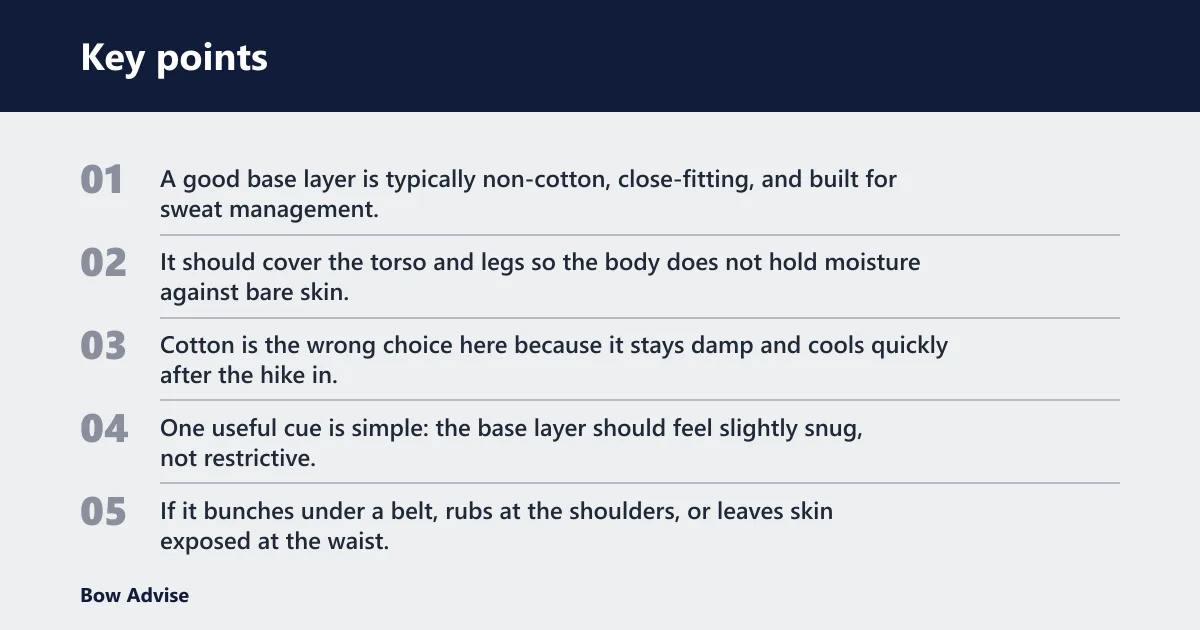
A good base layer is typically non-cotton, close-fitting, and built for sweat management. It should cover the torso and legs so the body does not hold moisture against bare skin. Cotton is the wrong choice here because it stays damp and cools quickly after the hike in.
One useful cue is simple: the base layer should feel slightly snug, not restrictive. If it bunches under a belt, rubs at the shoulders, or leaves skin exposed at the waist, it fails the job. Coverage matters because exposed skin leaks heat fast in still air.
Mid layer: insulation without bulk
The mid layer should trap body heat without turning the upper body into a rigid block. Fleece or wool works well because both insulate while still letting moisture move outward. A removable pullover or jacket is useful when the approach warms up more than expected.
Outer layer: windproof, quiet, and roomy
The outer layer should block wind, breathe well enough to release excess moisture, and stay quiet at the shot. Room matters. A shell that fits too tightly compresses the mid layer and cuts warmth, while also making a drawn bow feel cramped in the stand.
Use layers instead of one thick coat. That matters because a hunter may need to strip off the outer shell before the climb, then put it back on once settled. The ability to adapt keeps the system dry, quiet, and warm.
How do you keep your feet warm?
Keep your feet warm by protecting them from cold ground, preserving circulation, and giving them enough room. Waterproof insulated boots are the starting point, but fit matters just as much. If the boot or sock compresses the foot, warmth drops fast because circulation slows.
Boot fit and circulation
Choose insulated boots with enough room for thick socks without squeezing the toes. Tight boots may feel secure in the truck, then become cold in the stand because blood flow drops. The goal is a loose fit that preserves circulation while still holding the boot in place.
Sock choice and thickness
Use wool socks or another insulating sock material that stays warm when the air gets damp. One thick pair often works better than several tight layers that pinch the foot. If the boots feel tight at the laces or across the instep, the sock system is too bulky.
Cold-ground protection in the stand
A seat pad helps, but foot insulation matters too. A boot sole sitting on frozen metal or a cold platform loses heat quickly. A common first-timer mistake is over-tightening boots to “lock in” warmth, then wondering why the toes go numb before legal shooting light ends.
How do you keep your hands warm?
Keep hands warm by using gloves that insulate, adding hand warmers at the right time, and protecting the trigger hand before the shot window opens. Warm fingers matter for release control, but too much bulk can slow the draw or make the string hand clumsy.
Hand warmer placement for fingers and trigger hand
Hand warmers help most when tucked into gloves or clothing close to the fingers. Put one near the back of each glove or in a pocket that the hands can slip into between setups. For the trigger hand, placement should keep warmth available without forcing bulky movement at the shot.
Gloves, mitts, and pocket strategy
Insulating gloves made of wool or leather are a solid starting point. In colder weather, a hand warmer in a muff, chest pocket, or oversized hand pocket can keep fingers ready without exposing them to wind. Keep the system quiet, since noisy fabric can cost a shot in a close-in stand.
When to warm hands before the shot
Warm hands before the deer appears, not after. If the fingers go cold, warm them while the woods are still empty enough for small movements. Once the shot window opens, hands should already be ready. Waiting until the deer is in range is too late.
Suppose a bowhunter keeps one warmer in the pocket of a glove liner and another in an outer coat pocket. That setup gives warm hands during the dull parts of the sit, then keeps the trigger hand ready without forcing a big, noisy movement when an animal steps out.
How do you stay warm without sweating?
Stay warm without sweating by arriving slightly cool, warming up lightly before the hike, and moving at a controlled pace. The point is not to feel hot. The point is to start the sit dry, then keep heat from leaking away once the body goes still.
Pre-hunt warm-up without overheating
Do a short warm-up that raises core temperature without making the skin damp. Light movement is enough: a few minutes of walking, gentle mobility work, and then a stop before sweat starts. Feeling slightly cold at the start is acceptable because body heat rises once the walk begins.
Managing the hike
Keep the hike in slow enough that breathing stays calm. If the climb is long or steep, strip the outer shell early and carry it quietly. That keeps sweat out of the base layer and helps scent control too, because sweat and moisture carry odor more strongly than dry clothing.
Climbing, settling, and cooling down quietly
Once in the stand, finish dressing only after settling. Put on the outer layer, secure the hat, and place hand warmers before full cooling starts. The first 10 to 15 minutes often matter most, because that is when damp clothing and open vents can turn a warm hike into a cold sit.
Keeping the body hydrated also helps retain heat in winter. A thermos of hot drink can help before the climb, but keep it closed when not in use so it does not lose heat. Repeated opening wastes the warmth you just packed in.
Cold-weather rut sit setup
All-day rut sits need more planning than short morning hunts. Long periods of stillness, bathroom timing, and the chance of changing weather mean the sit should be built around insulation, simple food, and a dry, quiet return to stillness after every break.
All-day sit comfort
For an all-day rut sit, start with the warmest dry system that still allows movement in the bow. Bring spare gloves, a spare hand warmer, and a backup sock layer if the walk is long. The longer the sit, the more important it becomes to prevent chill before it starts.
Tree stand pad and seat insulation
A tree stand pad matters more on an all-day sit than on a short hunt. It blocks cold transfer from the seat and gives the hips a warmer surface to rest on. That one piece can delay the deep chill that arrives after hours of pressure and stillness.
Thermos, snacks, and bathroom timing
Bring a thermos of hot drink and keep it sealed until needed. Eat before you are cold, not after the body has already slowed down. Plan bathroom timing before the long still section begins, because climbing down and back up can undo the warmth built into the sit.
For scent control, dry clothing helps as much as scent-free detergent or spray routines. Wet layers hold odor longer and create more smell in the stand. Cold-weather layering should reduce sweat first, because a dry hunter usually smells less than a damp one.
Frequently asked questions
How do I stay warm in a tree stand without moving too much?
Use layers that hold heat while you stay still: a moisture-wicking base layer, an insulating mid layer, and a quiet windproof outer layer. Add a seat pad, gloves with hand warmers, and a warm hat. The goal is to reduce heat loss rather than rely on movement.
What should I wear in a tree stand when it’s freezing?
Wear a close-fitting non-cotton base layer, a fleece or wool mid layer, and a roomy outer shell that blocks wind and stays quiet. Add insulated waterproof boots, warm gloves, and headwear that covers ears and scalp. The exact setup should match wind, sit length, and how much you must hike.
Do hand warmers help in a tree stand?
Yes, especially when they are placed correctly. Tuck them into gloves or clothing near the fingers, or keep them in a pocket for quick use before the shot. They work best as part of a larger heat plan, not as the only source of warmth.
How do I keep my feet warm in a tree stand?
Choose waterproof insulated boots with enough room for warm socks and good circulation. Avoid tight footwear that compresses the foot. Add a seat or foot insulation strategy so the boot is not sitting directly against a cold platform or freezing metal.
How many layers should I wear for bowhunting in cold weather?
Three layers are a practical starting point for many cold bowhunts: base, mid, and outer. The exact thickness changes with forecast and wind. Short sits may need lighter layers, while long all-day rut sits usually need a warmer mid layer and more careful hand and foot insulation.
How do I stay warm without sweating in a tree stand?
Start slightly cool, walk in at a controlled pace, and avoid overdressing for the hike. Use layers that can be added after the climb, not before it. If the back or chest gets damp before the sit, that moisture will pull heat away once stillness begins.