Is Scent Control Worth It for Bowhunting in Cold Weather?
Yes, scent control still matters in freezing weather, but the biggest gains come from stopping sweat, keeping the walk-in clean, and hunting the right wind. If those break down, deer can catch you long before a spray bottle helps. Cold air changes how odor moves. It does not erase odor.
Verdict
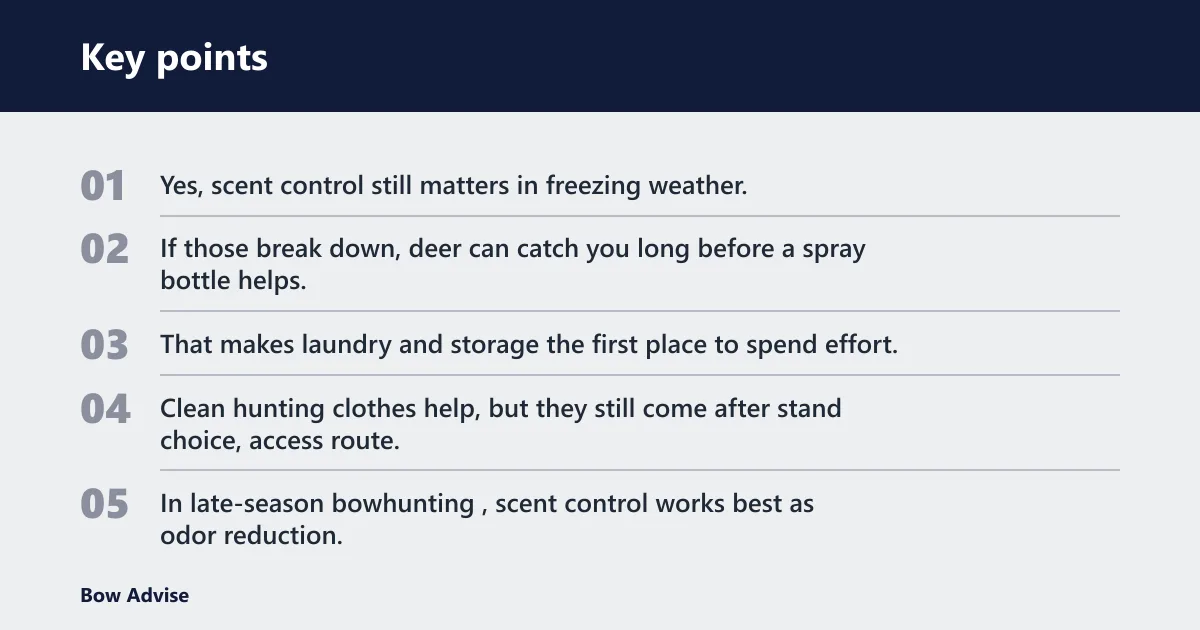

That makes laundry and storage the first place to spend effort. Clean hunting clothes help, but they still come after stand choice, access route, and thermal movement. In late-season bowhunting, scent control works best as odor reduction, not as a replacement for wind management.
Specs at a glance
| Item | What matters in cold weather | Why it matters |
|---|---|---|
| DEAD DOWN WIND Unscented Laundry Detergent Combo | 40oz liquid detergent + 1-30ct dryer sheet | Useful for washing hunting clothes before storage and before the next hunt |
| Odor control role | Clothing prep, not field cover | Helps reduce odor absorbed into garments, but does not fix wind or a hot walk-in |
| Best use case | Outer layers, base layers, and storage rotation | Works best when clothes stay separated from household odors |
| Cold-weather fit | Good for late-season prep | Cold weather still loads clothing with odor from sweat, breath, and vehicle exposure |
Who it
This approach fits late-season bowhunters who sit longer and hike less, especially those using pre-hung stands or blinds. It also fits hunters who keep a separate clothing system and want the easiest, most repeatable part of scent control handled before they leave home.
Hunters planning hang-and-hunt setups in cold weather need a tighter level of discipline. If the setup demands a long, sweaty walk or a climb with a full pack, scent control becomes a support tool rather than the main answer. Wind and access still decide the hunt.
Picture a 22°F morning with crusted snow, one mile of access, and a stand already in place. Clean clothing helps. But if the route crosses a swirl near a creek bend, the deer may still catch the hunter by the time the stand is reached.
What works in cold weather
Low-exertion access and slow entry
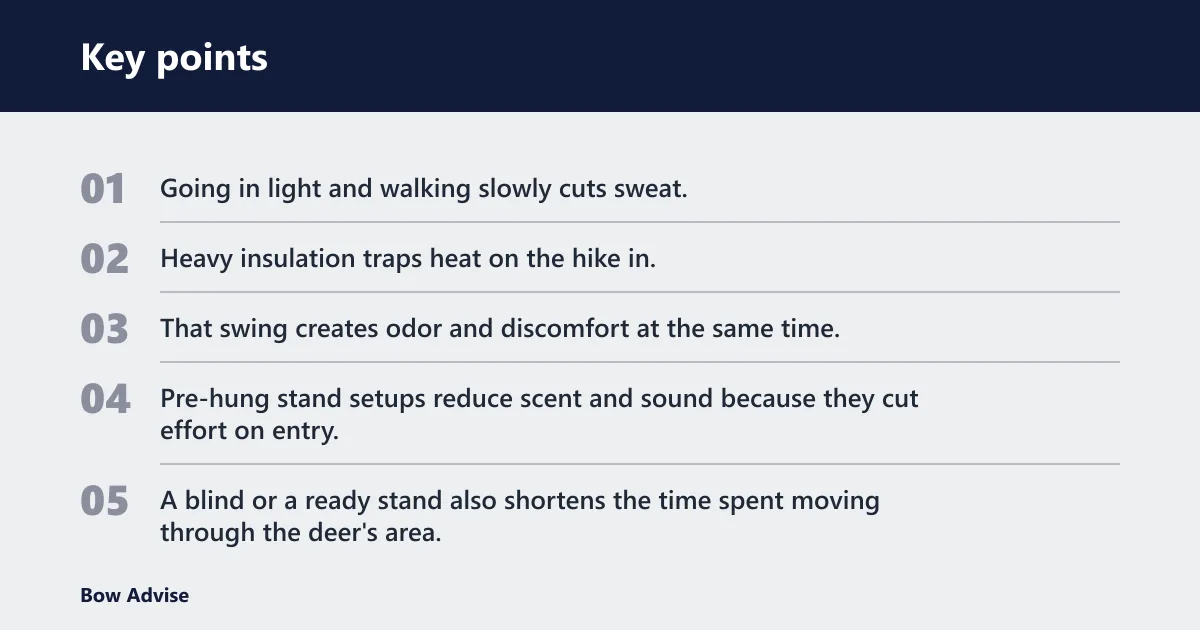
Going in light and walking slowly cuts sweat, which is the biggest cold-weather failure point. Heavy insulation traps heat on the hike in, then moisture cools fast once the hunter stops moving. That swing creates odor and discomfort at the same time.
Pre-hung stand setups reduce scent and sound because they cut effort on entry. A blind or a ready stand also shortens the time spent moving through the deer’s area. Less movement means less body heat, less breath pluming, and less chance of leaving a strong trail.
Laundry, storage, and separation
Wash hunting clothes with scent-free detergent and keep them stored away from household odors. Outer layers should stay separate from everyday laundry, kitchen smells, pets, fuel, and garage air. That separation matters in freezing weather just as much as it does in early season.
Storage matters because clothing can pick up odor long before the first step to the stand.
Wind checks before the walk-in
Wind direction is the main detection risk. Scent particles ride the air with the breeze, so the approach should start from upwind of the target whenever possible. Terrain can create eddies, so a straight-line wind check at the truck is not enough.
Wind also changes with ridges, draws, cut fields, and tree lines. A deer may never need to see the hunter if the scent stream bends into the bedding area. That is why stand selection should follow the wind first, not the product list.
Thermal planning at dawn and dusk
Thermals can shift scent movement before sunrise and after sunset, but their effect can still move scent in a meaningful way. On cold mornings, air movement can shift as the sun rises. In the evening, cooling ground can pull scent downhill.
Humid air can hold more moisture, and water vapor can change how scent behaves. Frost, condensed breath, and icy ground do not stop deer from smelling; they change how the odor cloud forms and travels. That matters most near valleys, creek bottoms, and steep benches.
What does not?
Extra products cannot fix a bad wind. If a deer is downwind of the route, no spray bottle or carbon layer will reliably save the setup. Scent control is odor reduction, not a shield against airflow.
Cold air also does not remove scent from clothing or gear. Sweat, breath, and fuel odors can still build up under layered clothing. A hunter who overdresses for a long walk may create more odor than a hunter who uses fewer, lighter layers and moves slowly.
Scent-blocking clothing and ozone bags can be part of a broader routine, but they should be paired with a wind-smart plan. They are support gear, not stand-alone fixes. The same is true for scent-eliminating spray.
Say your access route is 400 yards through dry timber at 18°F, and you wear a heavy insulated jacket for the whole walk. The jacket traps heat, the back of the neck gets damp, and the hunter reaches the stand smelling stronger than expected. The problem was exertion, not the temperature itself.
Cold-weather scent-control decision table
| Temperature band | Highest-risk scent source | Best action |
|---|---|---|
| 20–32°F | Sweat from layered clothing on the walk in | Go in light, walk slowly, and keep hunting clothes clean and separate |
| 0–20°F | Trapped moisture from insulation, breath, and condensed fabric odor | Protect the walk-in route, use pre-hung setups when possible, and check wind before leaving |
| Below 0°F | Overheating on the approach, then cooling moisture and scent on outer layers | Minimize exertion first, then use scent tools only after wind and access are solved |
Should you skip extra scent products?
Yes, sometimes. If the stand is already well placed, the access is short, and the wind is favorable, the best return often comes from simple clothing prep and disciplined entry. In that case, extra spray or ozone steps may add little compared with staying quiet and dry.
Skip extra scent products when the real problem is a bad wind, a long sweaty walk, or a poor approach route. Use them when they support a clean system that is already working. The value drops fast when the plan depends on products to rescue a compromised setup.
Yes/no checklist for extra products
- Yes: clothes are washed, dried, and stored away from household odors.
- Yes: the walk-in is short enough to keep sweat under control.
- Yes: the wind favors the stand and the terrain is checked for eddies.
- Yes: the stand or blind is already in place, or access is simple.
- No: the route requires hard climbing, rushing, or repeated layer changes.
- No: the wind is wrong and the setup depends on luck.
- No: clothing storage is sloppy and the odor source is still unresolved.
Alternatives

NO SCENT HUNT UNDETECTED Field Spray is best treated as an adjunct to laundry and storage. It can help clean gear, clothing, and storage surfaces, and the spray format makes it easy to apply right before a hunt. The drawback is simple: it cannot compensate for sweat, a bad wind, or poor access.

Merino.tech 100% Merino Wool Base Layer Men Set is the clothing option in this group. The main appeal is warmth and comfort for cold-weather layering. The drawback is cost, and merino still needs smart layering so the hunter does not overheat on the hike in.
An ozone bag is a storage tool, not a hunting plan. It can help isolate clothes from vehicle odors, but it does nothing for a bad wind or a sweaty approach.
Should you buy it?
Buy the laundry bundle if the weak point is clothing prep. For cold-weather bowhunting, that is often the right place to start because washed, separated, field-ready clothes reduce one part of the odor problem without adding another layer of complexity.
Do not buy it expecting a field cure. Scent control pays off most when it protects clean clothes, dry storage, and a low-exertion entry. If those are already handled, additional product use has a much smaller return.
Frequently asked questions
Is scent control still worth it when temperatures are below freezing?
Yes. Below freezing, human odor does not disappear; it changes how it is produced and carried. Sweat, breath, and clothing odors still matter, so scent control remains useful, especially when it supports a short, quiet, low-exertion approach and a wind-smart stand choice.
Does cold weather reduce human odor enough to skip scent control?
No. Cold air can slow some odor movement, but it does not make a hunter scentless. Layering, warm vehicle cabins, and a hard walk can still create odor. Laundry, storage, and route discipline still matter because deer can catch the scent trail.
What matters more in cold weather: scent control or wind direction?
Wind direction matters more. Scent control reduces odor load, but wind decides where that odor goes. A favorable wind with basic scent discipline is far better than a wrong wind with expensive products. Terrain and thermals can still bend the airflow, so the approach must be checked carefully.
Do deer smell better in cold weather?
Deer do not lose their nose in cold weather. What changes is the way scent moves through the air, especially around thermals, draws, and evening cooling. Frost and humidity can change scent behavior, but they do not make deer unable to smell a hunter.
What scent-control steps still work when you are sweating on the hike in?
Slow the pace, remove unnecessary layers before moving, and keep the load light. A pre-hung stand or blind helps because it shortens exertion and limits odor on entry. Once sweat starts, the goal shifts to preventing more heat buildup and keeping the approach controlled.
Can scent control compensate for a bad wind on a cold day?
No. Scent control cannot fix a bad wind in cold weather. It may reduce how much odor reaches the deer, but it cannot change the direction of airflow. If the stand is wrong for the wind, the better move is to change the setup, not add more products.