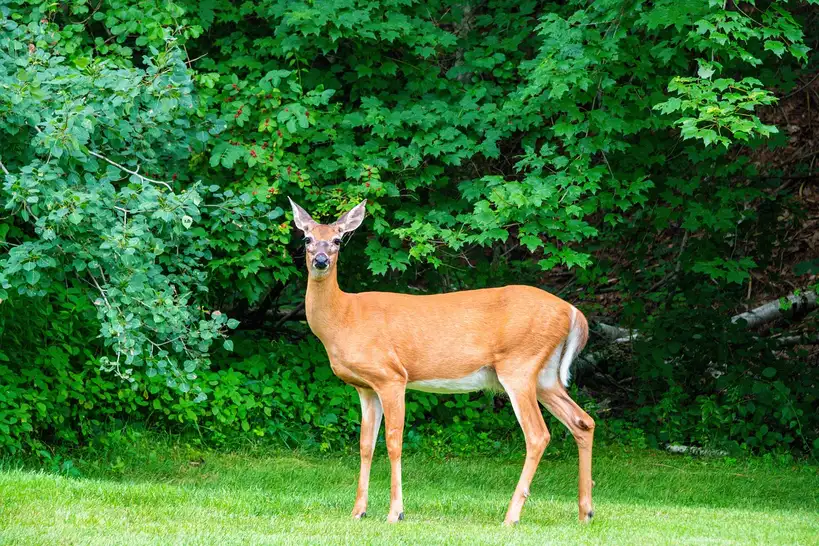
Bowhunting the Whitetail Rut: Timing and Tactics
Hunt food-to-bed edges before peak, doe bedding during peak, and evening food after peak; call only when fresh sign and daylight buck movement match the phase. Miss the phase, and even good sign turns into all-day sits outside bow range. This guide maps each rut stage to setup location, sit timing, calling choices, and the late-season shifts worth hunting or abandoning.
What actually triggers the whitetail rut?


The rut is triggered mainly by shortening day length. As nights lengthen after the fall equinox, the changing light-to-dark cycle shifts hormone production, bringing bucks and does into breeding on a fairly stable yearly schedule, while weather and moon phase mostly change how visible deer are in daylight rather than setting actual breeding dates.
Photoperiod sets the breeding clock
Photoperiod is the main driver. That matters because it keeps the breeding window more consistent than daily weather talk suggests. Outdoor Benchmark says the whitetail rut is driven by photoperiod, and that same point holds across most whitetail country.
For the bowhunter, the useful takeaway is simple: plan around the calendar first, then refine around current movement. In northern regions, peak estrus typically falls around 10 to 20 November. In the South, rut timing can run from October to February, so local confirmation matters more than any national “rut week” claim.
What shortening daylight changes in behavior
Bowhunters commonly break the rut into five field-usable stages: pre-rut, when bucks open fresh scrapes and add new rubs; seeking, when they cruise between doe family groups and check funnels; chasing, when they actively push receptive does; tending, when a buck stays close to one hot doe; and post-rut, when movement falls back toward food and recovery. In practice, many hunters use “lockdown” for the tending or peak-breeding window, when a buck stays with one hot doe and visible movement seems to vanish.
Pre-rut usually shows up first through increased scraping and rubbing. The same source describes pre-rut as late October to early November. Then movement opens up as bucks begin seeking. The same source says the seeking phase is the first week of November in most regions. ProHunt lists rut timing as Nov 1 – Nov 25, which fits the broad northern bowhunting window many hunters plan around.
Weather and moon change movement, not breeding dates
Cold fronts, barometric swings, hunting pressure, and moon position can change when deer move. They do not set breeding dates. A warm spell can mute daylight activity during the same breeding window that would look electric in colder weather.
That distinction saves wasted sits. If sign is fresh but daylight traffic disappears, the phase may still be right while the setup is wrong. That is when a hunter shifts from open travel routes to tighter cover, downwind bedding edges, or evening food, depending on the phase.
Which rut phase should you hunt right now?
Read the current phase from movement pattern first, sign second. Scrapes and regular bed-to-food travel point to pre-rut, cruising bucks on structure point to seeking, chaotic doe-focused encounters point to chasing, and fresh sign with suddenly poor daylight movement often points to lockdown rather than a dead property.
Field clues that separate pre-rut from seeking
Pre-rut bucks are still relatively predictable. Scraping and rubbing increase, but many mature deer continue to use bedding-to-food routes with enough regularity for evening bow setups. Scrapes matter most when they connect cover, not when they sit in open areas that look good but carry weak daylight use.
Seeking looks different. Bucks travel farther during the breeding season, and daylight movement usually shifts from simple feed patterns to terrain and cover features that compress travel, such as saddles between ridges, creek and ditch crossings with firm footing, inside corners that pinch timber, and the downwind side of known doe bedding where a buck can scent-check does without walking straight through the beds. When several bucks appear in one day without staying long on food, that usually signals cruising rather than routine feeding.
How to tell chasing from lockdown when movement suddenly drops
Chasing has obvious energy. Bucks cut does, push groups, cross openings fast, and may respond to calling if the timing is right. It is often the most dramatic rut movement, but it can be hard to bowhunt cleanly because deer cover ground quickly and angles go bad in seconds.
Lockdown is quieter. Archery Insider says lockdown bucks stay with does in thick cover, and peak breeding is widely treated as that lockdown phase. A buck may stay with one receptive doe for roughly 24 to 48 hours. If cameras still show mature bucks at odd times, fresh sign keeps appearing, but daylight funnel traffic collapses, assume lockdown before assuming the deer left.
Post-rut versus second rut
Post-rut and second rut can look similar because overall movement is lower than the main breeding window. The difference is priority. Post-rut starts to swing back toward food and recovery. The second rut is a later breeding window when unbred does cycle again, so isolated doe groups can briefly pull cruising bucks back onto travel routes.
Say your scrape line lit up for four days, then the same oaks hold fresh tracks but no daylight buck sightings. If nearby doe cover is thick and food sits 150 yards farther out, that points more to lockdown than to a true post-rut food shift. Move tighter to doe bedding instead of forcing the funnel another day.
Rut setup decision table
Phase-to-setup decisions
Use the table as a switch rule, not a calendar decoration. Start with observed phase, then match location, sit timing, and calling level. If two columns conflict with what the woods are showing, trust the movement pattern and move to the phase that better fits it.
| Rut phase | Best stand location | Best time of day | Calling level | Scent/wind priority | What not to do |
|---|---|---|---|---|---|
| Pre-rut | Bedding-to-food routes, scrape lines near cover, inside corners with controlled access | Evening first; mornings only with safe entry near known exit trails | Low; occasional grunt, light sparring if bucks are visible in daylight | Very high; do not burn the route before the pattern develops | Do not sit open-field scrapes just because sign is fresh |
| Seeking | Funnels, pinch points, saddles, creek crossings, downwind edges of doe bedding | Morning through midday; all-day sits can pay on prime structure | Moderate; short grunt sequences, rattling when bucks are cruising | High; wind must let bucks scent-check doe cover without crossing your entry | Do not stay on food-only patterns once daylight cruising starts |
| Chasing | Doe bedding fringes, tight travel between bedding pockets, cover breaks near doe groups | All day, with strong midday value | Moderate to high on lower-pressure ground; rattling can work, grunts kept brief | High; approach from the side or back of bedding, never through it | Do not expect deer to pause in the open for a clean bow shot |
| Lockdown / peak breeding | Thick cover near doe bedding, hidden staging cover, secluded pockets between bedding and food | Late morning to afternoon, plus last-light exits toward food | Very low; occasional soft grunt at most | Extreme; one bad intrusion can empty the pocket for days | Do not keep grinding dead funnels or aggressive rattling sets |
| Post-rut | Food-linked travel, sheltered food edges, downwind side of late food sources | Evening first; cold mornings near food can improve | Low; isolated grunt only if a buck is already committed | Very high; deer are wary and pattern back toward food | Do not hunt scrapes as if the main rut is still rolling |
| Second rut | Funnels near doe groups, edges of security cover close to food, repeat breeding pockets | Morning and midday on travel, evening near food | Low to moderate; brief calling only where buck activity confirms it | High; pressured deer punish sloppy access now | Do not assume peak-level cruising just because a doe may cycle again |
Late-season adjustment box
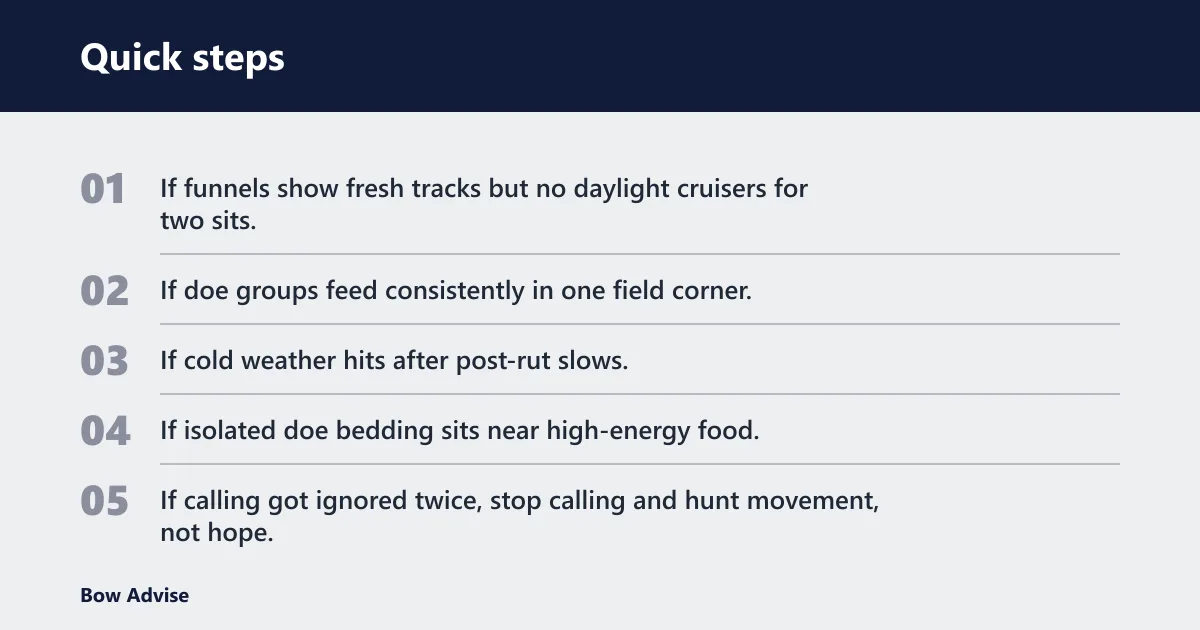
After lockdown, the plan needs a separate reset. Bucks are worn down, hunting pressure is stacked, and food starts to outrank random rut sign unless a true second-rut pocket shows up.
- If funnels show fresh tracks but no daylight cruisers for two sits, move to evening food-linked travel.
- If doe groups feed consistently in one field corner, hunt the downwind side of the nearest secure entry trail instead of the center of the food source.
- If cold weather hits after post-rut slows, give the best late food the first sit with the cleanest wind.
- If isolated doe bedding sits near high-energy food, watch for a second-rut buck checking that pocket rather than covering the whole property.
- If calling got ignored twice, stop calling and hunt movement, not hope.
Where should you set up in each rut phase?
The best setup shifts from routes, to cruising structure, to doe-centered cover, then back toward food. Pre-rut favors controlled bedding-to-food travel, seeking and chasing favor funnels and doe-bedding fringes, lockdown favors thick cover near does, and post-rut shifts back to food-linked movement.
Pre-rut setups: routes, scrapes, and access
Pre-rut is the cleanest bowhunting phase for patterning. Bucks still work familiar routes often enough that a stand on the cover side of a scrape line or inside a bedding-to-food corner can produce a high-odds evening shot.
Scrapes are best treated as location clues, not automatic stand sites. The right scrape is near security cover, connected to daylight travel, and huntable with quiet access. The wrong scrape is the biggest one in the field edge that every deer visits after dark.
Seeking and chasing: funnels, crossings, and bedding fringes
Funnels and pinch points shine when bucks are cruising. Saddles, creek crossings, hedgerow necks, marsh corners, ditch crossings, and any strip of cover that compresses movement can put multiple bucks in bow range during seeking. This is the classic all-day sit window because movement can happen at any hour.
Doe bedding areas rise fast in value here. The highest-value setups are usually fringes and downwind edges, not the center of the bedding cover. Bucks often scent-check these zones without entering every thicket, and a bowhunter can intercept that movement without blowing out the doe group.
Picture a narrow willow edge between a CRP block and a standing corn pocket. Does bed in the thick grass, and a creek bend forces deer through a 20-yard strip of dry ground. In seeking, that strip can beat a prettier funnel 300 yards away because it sits on the downwind edge of live doe cover.
Lockdown, post-rut, and second-rut setups
Once lockdown hits, obvious travel corridors can go flat because bucks stop cruising and start tending. Hidden doe cover becomes the better bet. Small cover pockets, brush-choked ditches, overgrown clearcuts, cedar points, and secluded staging cover deserve more attention than long travel lines.
After peak breeding, food-linked travel regains value. Evening food is often better than random midday wandering. The second rut can briefly pull bucks back to repeat breeding pockets, but the movement is usually narrower than the main event. Hunt the small area where a late-cycling doe is likely to be, not the entire property as if it were early November again.
When do doe bedding areas beat funnels and pinch points?
Doe bedding areas beat funnels when bucks stop covering broad ground and start checking specific doe groups. That usually happens in late seeking, chasing, and especially lockdown. Funnels still win when cruising is widespread, but once daylight travel fades, the downwind fringe of doe bedding often holds the better bow setup.
Why downwind bedding edges can outproduce classic travel corridors
Travel corridors need cruisers. If bucks are no longer ranging widely, the funnel loses volume even if old sign remains good. Doe bedding edges, by contrast, keep their value because does remain the center of the action throughout the main breeding period.
The bowhunting version of this matters. A funnel may show more total tracks. A bedding fringe may offer fewer deer but a better shot opportunity, because movement there is slower, more deliberate, and closer to cover.
When cruising structure still wins
During seeking, structure often wins outright. Bucks are covering ground, and the best funnels let a hunter see multiple travel lines or reach a saddle, creek crossing, or necked-down timber strip without crossing core deer use.
If several bucks are appearing on one sit, if does are spread out, and if midday movement is visible, stay on the travel structure. That is not the time to push into bedding cover unless the travel line dies.
The day-by-day switch rule
Use this four-step checklist before each sit:
- If bucks are still using food-to-bed routes in daylight, hunt pre-rut routes or cover-side scrapes.
- If daylight sightings shift to mobile bucks on terrain features, hunt funnels and pinch points.
- If fresh sign stays high but funnel movement drops for two sits, move to doe-bedding fringes.
- If breeding activity fades and deer refocus on calories, shift to evening food-linked travel and late food sources.
A common first-timer mistake is clinging to the same funnel through lockdown because it was hot three days earlier. Fresh rubs and tracks keep confidence high, but the movement pattern changed. The right adjustment is not “hunt harder.” It is “hunt closer to the does, or later, hunt closer to the food.”
Should you rattle and grunt during the rut?
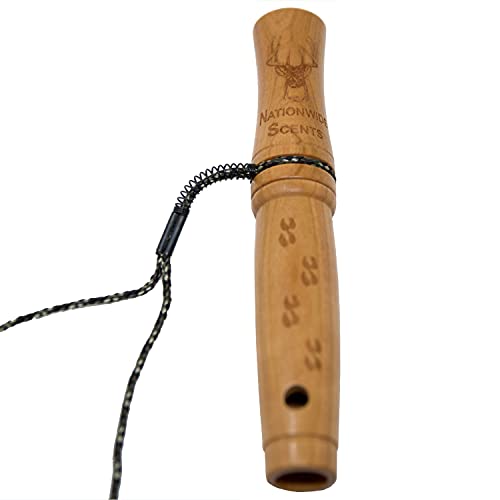
Use rattling and grunting when active bucks are cruising or chasing, and cut way back once lockdown or late-season caution sets in. Calling works best when deer are already moving with intent. When movement slows or pressure rises, aggressive calling often educates deer faster than it pulls them in.
Best calling windows
Rattling has its best window in seeking and chasing. That is when bucks are covering ground, looking for rivals, and willing to investigate commotion. Some hunters get aggressive here, especially on lower-pressure ground, but the stand still needs a realistic shooting lane because response deer can appear fast and quartering.
Grunt calls are usually better in short bursts. They pair well with rattling during active windows, but a single grunt or two often fits bow range better than a long calling routine. Most useful situations involve a visible buck that needs a reason to turn, pause, or check a lane.
How much is too much?
On pressured ground, overcalling is common. Deer hear the same sequence from the same access points and start hanging up downwind. That is one of the main failure cases many competitors gloss over: calling did not fail because the sound is wrong; it failed because the phase, pressure, and wind made the setup predictable.
If two sits pass with no response, or bucks circle out of range downwind, reduce intensity fast. Save calling for windows with visible activity, fresh buck sign, and room for a deer to approach without busting the setup.
Why calling fades in lockdown and late season
A buck locked with a doe already has what he wants. He is less likely to leave her to investigate a fight. In late season, tired bucks and pressured deer often favor survival and food over confrontation. That is why calling often falls apart after peak breeding, even when sign still looks good.
How should your sit times and access change as the rut shifts?
Long sits make the most sense in seeking and chasing on high-value structure or doe-centered cover. Pre-rut leans toward evening route hunts, lockdown rewards selective late-morning and afternoon cover sits, and post-rut often returns to evening food patterns. Access stays strict in every phase, but mistakes cost more near bedding.
When all-day sits make sense
All-day sits are worth it when bucks can move at any hour and the location collects movement from multiple directions. That usually means funnels in seeking and chasing, or a high-confidence doe-bedding edge when breeding activity is active across the property.
They are less compelling on weak field-edge scrapes or random signposts. “All day” is not a tactic by itself. The location has to justify the lost flexibility.
Morning, midday, and evening priorities
Pre-rut often gives the cleanest evening route hunts. Seeking and chasing expand the useful window into mornings and midday. Lockdown can surprise hunters during late morning through afternoon near thick doe cover, then again near evening exits. Post-rut shifts more weight back to evening food and sheltered travel.
Entry, exit, and wind discipline
Wind discipline does not loosen during the rut. It gets harsher. Bucks may cover more ground, but does still police the area, especially around bedding. One bad entry through a bedding fringe can sour the best rut setup on the farm.
Use routes that keep scent off likely deer lines, even if the walk is longer. When the spot only works with a perfect wind, wait for it. That restraint matters more than squeezing in an extra sit.
How to stay effective in freezing-weather sits
Cold weather changes how long you can stay sharp in a tree stand, because numb hands, cold feet, and hidden sweat quickly start to affect focus and shot execution. The supporting guide explains how to dress in removable layers, arrive dry, and manage heat before you get chilled, so you can stay comfortable without overheating on the walk in. It also breaks down the basics of hand and foot warmth and how to build a simple temperature plan for long sits. If you hunt late-season cold snaps or frigid mornings, tree-stand warmth can be the difference between cutting a sit short and staying ready when deer finally move.
Does scent control still matter in cold weather?
Yes—cold weather does not make human odor disappear, and it can still cost you a close encounter. The practical priority is not piling on more products; it is reducing sweat on the walk-in, keeping clothing and gear clean, and setting up with a wind that does not carry your odor toward bedding or travel routes. That makes scent control a discipline, not a spray bottle fix.
This cold-weather scent control article breaks down what actually helps, what adds little value, and when it is smarter to skip extra products altogether. Use it to tighten your pre-hunt routine and avoid wasting money on tactics that do not move the needle.
How do regional timing and late-season conditions change the plan?
Regional timing changes when each phase matters, not the fact that photoperiod drives it. Northern hunters can plan hard around a tighter November peak, while southern hunters need more local evidence. After peak breeding, late-season success turns on food, pressure, and security cover, with second-rut opportunities around remaining receptive does.
Northern versus southern hunt windows
In northern regions, peak estrus typically falls around 10 to 20 November, and northern peak breeding generally occurs during November. That makes vacation planning easier: prioritize the seeking and chasing lead-in, then keep a backup plan for lockdown cover and post-rut food.
Southern timing is broader. Rut timing can run from October to February. That means a bowhunter should not import a northern funnel plan into a southern property without local sign, camera data, or recent sightings. The phase still dictates the setup, but the calendar window can be far different.
After peak breeding: food, pressure, and hierarchy
After peak breeding, calories matter. Bucks are run down, gun pressure may be heavier, and movement compresses toward secure food. Hunt the downwind side of the best late food source that deer can reach before dark without crossing open ground too early.
Weather can improve this movement sharply. A cold snap may increase feeding activity, while warm or pressured conditions can delay it to the last light. Again, that changes visible movement, not the breeding calendar.
Second rut priorities
The second rut is real enough to matter, but it is easy to overrate. Unbred does can cycle again, creating small windows of renewed buck travel. Focus on places where a late doe would live: secure cover near food, small doe family groups, and tucked-away travel between bedding and groceries.
What bow-range mistakes cost deer during the rut?
The rut creates more shot chances, but also more bad shots. Moving deer, distracted bucks, and sudden angle changes push archers into rushed decisions. The fix is short-range setup realism: tighter lanes, better stand placement, and a firm rule to pass quartering-to, fast-walking, or screened shots.
Shot discipline on moving or distracted deer
A rutting buck can look killable and still be a poor shot. If he is dogging a doe, weaving through brush, or trotting with his head pinned to scent, the opportunity is not clean just because he is excited. Passing those shots is part of serious rut bowhunting.
Most manufacturers list effective hunting range in broad terms, but the practical rule is stricter during the rut: keep shots inside the distance where that specific lane, angle, and deer behavior still allow a calm release and clear arrow path. Shorter is better when movement is fast.
Lane control and stand placement
Stand placement should force a broadside or slightly quartering-away pause at a known opening. That matters more than maximum visibility. One trimmed lane at a likely check point is worth more than five long windows that invite rushed shots.
Suppose a buck uses a creek crossing and then angles up a bank under the stand. Moving the stand 12 yards off the crossing may shorten the total viewing distance, but it can turn a steep, close, quartering mess into a flat broadside lane where the deer naturally slows to climb.
When to pass
Pass when the deer is quartering to, screened by twigs, walking fast through the only lane, or focused on another deer in a way that prevents a stop. The rut does not improve those angles. It often makes them worse.
Set your personal deer range
The right maximum deer range is the farthest distance where you can keep every shot inside a deer’s vital zone, not the farthest distance your bow can reach. The supporting article on compound bow deer range shows how to set that limit using group size, bow setup, and practice standards, so you can make a cleaner, more ethical decision before you ever climb into the stand.
It also explains why “I can hit it once” is not the same as a dependable hunting range, and how weather, posture, and tuning can shorten that distance fast. That matters because an honest max range helps you pass risky shots, avoid wounded deer, and stay consistent when the buck finally steps out.
Frequently asked questions
When is the best time to bowhunt the whitetail rut?
The best time is usually the lead-up to peak breeding, when bucks are seeking and then chasing in daylight. In northern regions, peak estrus typically falls around 10 to 20 November, so the surrounding days are prime. In southern areas, local timing matters far more because rut dates can stretch from October to February.
What rut phase should I hunt right now?
Hunt the phase that matches current movement, not only the calendar. Predictable bedding-to-food routes suggest pre-rut, mobile daylight bucks on funnels suggest seeking, chaotic doe-focused activity suggests chasing, and fresh sign with weak daylight travel often points to lockdown. Post-rut shifts back toward food, while second rut revives smaller breeding pockets.
Should I use rattling and grunting during the rut?
Yes, but only when buck movement matches the phase. Rattling and short grunt sequences fit seeking and chasing best, especially where bucks are cruising in daylight. During lockdown, post-rut, or on pressured ground, aggressive calling often loses value fast and can teach deer to circle downwind.
Where do bucks go during lockdown?
Bucks often stay with does in thick cover during lockdown or peak breeding. They may remain with one receptive doe for roughly 24 to 48 hours, which makes travel funnels seem empty. The better adjustment is to hunt secluded doe cover, staging pockets, and quiet exits toward evening food rather than broad cruising structure.
Do weather and moon phases affect rut timing?
They affect visible movement more than actual breeding dates. The rut is triggered mainly by shortening day length, so weather fronts and moon phase do not set the breeding clock. What they can change is when deer move in daylight, how long they stay on food, and whether travel compresses into cover.
What changes in late-season rut hunting after peak breeding?
After peak breeding, food becomes a stronger driver and random cruising fades. Evening food-linked travel, secure late food sources, and sheltered approaches beat dead funnels. A second rut can create localized action around unbred does, but it usually pays to hunt small breeding pockets near food rather than expect full-scale November movement again.