Early Season vs Late Season Bowhunting Tactics for Deer
Early season deer key on dependable food and cool-evening movement. Late season deer narrow their travel to security, lower energy use, and the best calories close to cover. Miss that shift and you waste sits on stale sign, pressure deer off the pattern, and miss the short windows when mature bucks move. This guide spells out what to keep, change, and stop doing for food, bedding, access, and setup choices.
This guide is part of our Bow hunting laws and regulations series.
| Decision factor | Early Season | Late Season Bowhunting | Winner |
|---|---|---|---|
| Primary target | Predictable food sources with low pressure | Best calorie source near secure cover | Tie |
| Best stand location | Downwind edge of food, staging cover, travel edges | Bedding-to-food route, thermal cover edge, tight pinch | Late Season Bowhunting |
| Access priority | Stay hidden from feeding deer and avoid contaminating plots | Reduce repeated pressure; protect routes with even more care | Late Season Bowhunting |
| Shot window | Longer feeding windows, often near dusk | Shorter, more cautious movement windows | Early Season |
| Wind rule | Wind must keep scent out of food and staging cover | Wind must protect bedding edge, route, and food entry | Tie |
| Deer priority | Food with enough safety to feed in daylight | Security first, then the easiest calories | Late Season Bowhunting |
Early season vs late season bowhunting: the core trade-off
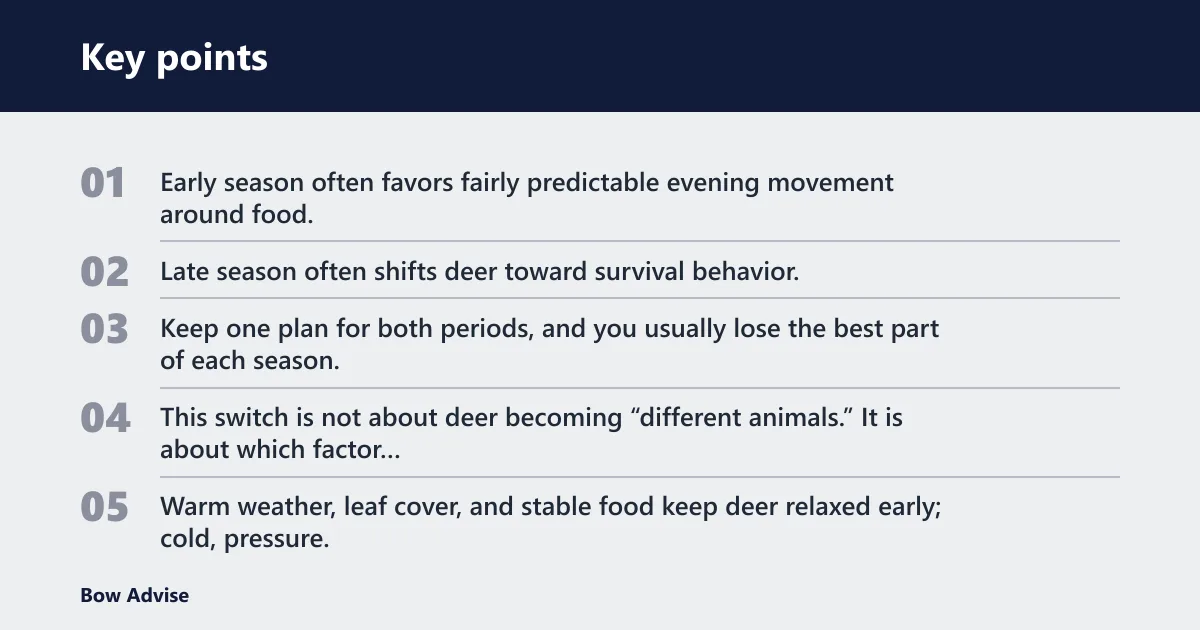


Early season often favors fairly predictable evening movement around food. Late season often shifts deer toward survival behavior, with shorter movement to the safest route that gives them enough calories with less risk. Keep one plan for both periods, and you usually lose the best part of each season.
This switch is not about deer becoming “different animals.” It is about which factor controls movement. Warm weather, leaf cover, and stable food keep deer relaxed early; cold, pressure, and food scarcity push them tighter to security later.
What stays constant across both seasons
Wind direction still strongly affects whether a stand can work. Entry and exit discipline still matter. Fresh sign still outranks old history, and deer still punish repeated pressure fast enough to wreck a good spot.
What changes first when deer behavior shifts
The first change is usually stand value, not deer biology. A field edge that drew relaxed deer in September can become poor in November once crops shorten, leaves drop, and the same approach route starts burning the spot. The second change is shot timing, since late-season movement often compresses into shorter windows.
The simple rule for deciding when to switch tactics
Switch when food becomes less stable, cover thins, or pressure rises enough to change daylight movement. If deer are still using a food source in calm, low-pressure conditions, early-season logic still applies. If they are arriving later, using tighter cover, or abandoning open edges, it is time to move toward late-season thinking.
How should bowhunting tactics change from early season to late season?
Early season tactics should center on food, visibility, and low disturbance. Late season tactics should center on security, thermal cover, and access that keeps deer from learning your pattern. The biggest mistake is hunting late season as if a September setup still works.
Early season: where food, cover, and low pressure still matter most
In early season, deer often trade some daylight risk for reliable food. Standing soybeans, clover, alfalfa, acorns, and mast edges can all draw daylight use when temperatures stay mild and pressure stays light. Leaf cover also helps deer move more openly, which makes staging areas and field edges stronger.
Set up on the downwind edge, not in the middle of the food. A 20- to 40-yard shot lane along cover is more useful than a wide-open view across the plot. That keeps the stand practical without forcing deer to cross open ground longer than they want to.
Late season: why bedding, thermal cover, and survival feeding take over
Late season deer often tighten movement between bedding and food. Sheltered slopes, thick bedding cover, cedar pockets, creek bottoms, and downwind edges become much more important because deer want to reduce energy loss and exposure.
Destination food still matters, but only if deer can reach it safely. Standing corn, waste grain, brassicas after cold weather, and the best remaining browse matter most when they sit close to secure cover. If the setup forces a long exposed walk, daylight movement usually drops.
What to stop doing as the season shifts
Stop assuming the same field edge should stay hot all season. Stop overhunting the easiest food source. Stop using the same route and stand access once deer have started noticing pressure, because late season punishes repeat mistakes faster than early season does.
What is the best time of day to bowhunt early season versus late season?
Early season usually favors the evening, especially on predictable food sources. Late season often narrows the useful window even more, with deer moving just before dark, just after first light, or during brief weather-driven periods when they must feed. The later the season gets, the less forgiving a poor all-day setup becomes.
Early season timing
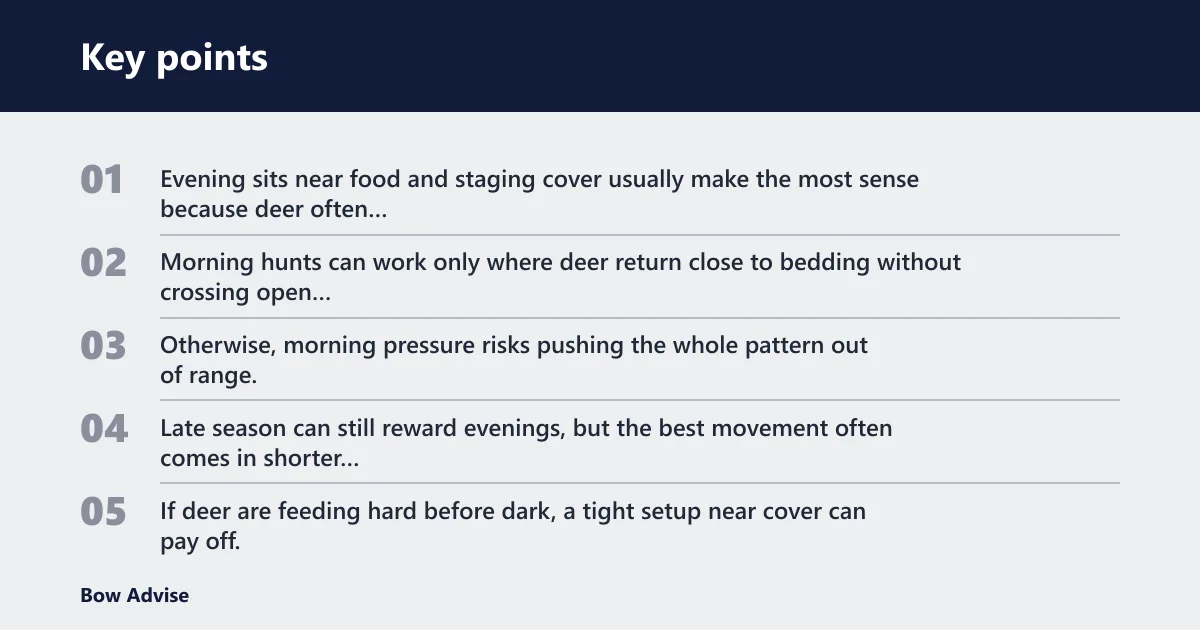
Evening sits near food and staging cover usually make the most sense because deer often bed first and feed last. Morning hunts can work only where deer return close to bedding without crossing open danger. Otherwise, morning pressure risks pushing the whole pattern out of range.
Late season timing
Late season can still reward evenings, but the best movement often comes in shorter bursts tied to temperature, snow cover, or a new food source. If deer are feeding hard before dark, a tight setup near cover can pay off. If not, the stand may be dead until a cold front or fresh snow changes movement.
Do deer behave differently in early season compared with late season?
Yes. Early season deer behave like animals with options: food is available, cover is leafy, and movement can stay predictable. Late season deer behave like animals conserving energy: they compress travel, use safer routes, and spend less daylight in exposed ground.
Early season behavior
Low-pressure deer often move later in the day and use more open feeding areas because the risk is manageable. Natural browse, agricultural crops, and mast can spread deer out. That spread makes patterning easier, but it also means you need clean access and a stand that does not contaminate the area.
Late season behavior
Reduced daylight movement is common when temperatures fall and food becomes less available. Deer often shift from broad field use to the safest route between bed and feed. Public land pressure can push this even harder, since deer quickly learn where hunters enter and exit.
What scent control matters most in warm early season weather?
In warm early season weather, the most important scent control is reducing human odor at the access point and near the stand. Heat, sweat, and humidity make odor stronger, but a bad entry route usually ruins more hunts than clothing scent alone. Wind and route choice still matter most.
Warm-weather scent priorities
Keep the walk to the stand clean, then keep the stand location honest with the wind. Use access that avoids crossing feeding areas or bedding edges. If the route carries scent into the food source, the setup can fail even if the rest of the plan looks good.
Why clothing matters less than access
Clothing treatment helps, but it cannot fix a route that dumps odor into a deer’s core movement area. Early season deer often tolerate more than late-season deer, yet they still react to repeated intrusion. Good scent control starts with stand placement, not with a spray bottle.
How should my stand setup change as the season progresses?
Early season stands should sit to catch relaxed deer feeding or staging near food. Late season stands should move tighter to cover, bedding edges, and the narrow corridors deer use to reach the best remaining food. The setup should get more focused, not more complicated.
Early season setup changes
Favor stands that overlook field edges, inside corners, narrow travel lines, or staging cover near food. Leaf cover can hide movement and let you hunt a broader area. Use that advantage without crowding the food source itself.
Late season setup changes
Move closer to thermal cover, thick bedding, and the route deer trust in cold weather. A stand that was perfect when foliage was full may become too open after leaf drop. In late season, the highest-value stand is often the one with the best concealment and the shortest safe route to the target area.
When repeated access starts killing the spot
Repeated intrusion can ruin a good setup even if the food source remains strong. If tracks, droppings, and camera photos go stale after a few sits, the stand may already be compromised. That is especially true on public land, where deer see more human traffic and adapt faster.
Should I switch from food source hunting to travel route hunting late season?
Often yes, but only when the food source is no longer enough by itself. Late season food still matters, yet deer may use a route that keeps them closer to bedding and safer cover. That makes travel-route hunting stronger when open-field feeding becomes too exposed.
When food-source hunting still works late
Destination food still wins when it is the best calorie source within secure cover and the pressure stays low. Standing crops, cut corn, and protected food plots can remain excellent if deer can reach them without crossing too much open ground. If the route to the food is exposed, that advantage fades.
When travel-route hunting becomes better
Switch to travel routes when deer feed briefly and return to cover fast. Hinge cuts, creek crossings, narrow benches, fence gaps, and edges of thermal cover can become better than sitting the field itself. This is common when deer feed in short windows and avoid lingering in the open.
What wind or weather conditions matter more early season and late season?
Wind matters in both seasons, but the reason changes. Early season wind mostly protects a food setup. Late season wind must also protect bedding edges, thermal cover, and narrow movement routes. Weather matters more late because cold, snow, and wind can shift movement faster than sign can predict.
Early season wind rules
Pick a wind that keeps scent out of food and staging cover. If the wind blows into the field, a deer approaching from cover can catch danger before it reaches the open. Calm or light, consistent winds often help, but only if the route still protects the setup.
Late season wind rules
Late season wind should protect both approach and target. Deer bed where wind and thermal cover help them survive, so a cold north wind can change where they lie and how they exit. A good stand on one day can become a bad stand on the next if the wind flips the scent cone into the bedding edge.
How do pressure and food availability change deer movement late season?
Late season pressure and limited food both tend to shrink deer movement. When pressure rises, deer shift to safer pockets and move later. When food becomes scarce, they focus on the best calories available and often commit to only a few secure routes. The result is fewer daylight chances and a tighter pattern.
Pressure effects
Hunter traffic, parking areas, and repeated access pressure can push deer to thicker cover or neighboring properties. On public land, that shift can happen quickly because deer learn where people travel. On private land, poor field access or repeated disturbance can create the same result.
Food availability effects
Natural browse, agricultural crops, and mast availability all change through the season. Once those sources thin out, deer stop spreading across the property and concentrate near what remains. That concentration helps a good setup, but only if access and wind still hold the spot together.
Two-column tactical switch table: early season vs late season
Use this switch table as a field decision tool. If the early-season column matches what deer are doing now, stay on that plan. If the late-season column fits better, stop treating the hunt like a warm-weather food sit.
| Factor | Early Season | Late Season Bowhunting | Winner |
|---|---|---|---|
| Setup | Food-source edge, staging area, light pressure | Bedding-to-food route, thermal cover edge, secure calories | Depends on season stage |
| Access | Use concealed entry that avoids contaminating food | Use the cleanest possible route and avoid repeated intrusion | Late Season Bowhunting |
| Stand location | Downwind of food with leaf cover and a clear staging lane | Near thick cover, sheltered edges, and narrow travel lines | Late Season Bowhunting |
| Shot windows | More forgiving evening movement | Short, weather-linked movement windows | Early Season |
| Wind rules | Wind must miss the food and entry trail | Wind must protect bedding, route, and exit as well | Late Season Bowhunting |
| Deer priorities | Food with low pressure and enough cover to feel safe | Security first, then calories that are easy to reach | Late Season Bowhunting |
Setup, access, and stand location
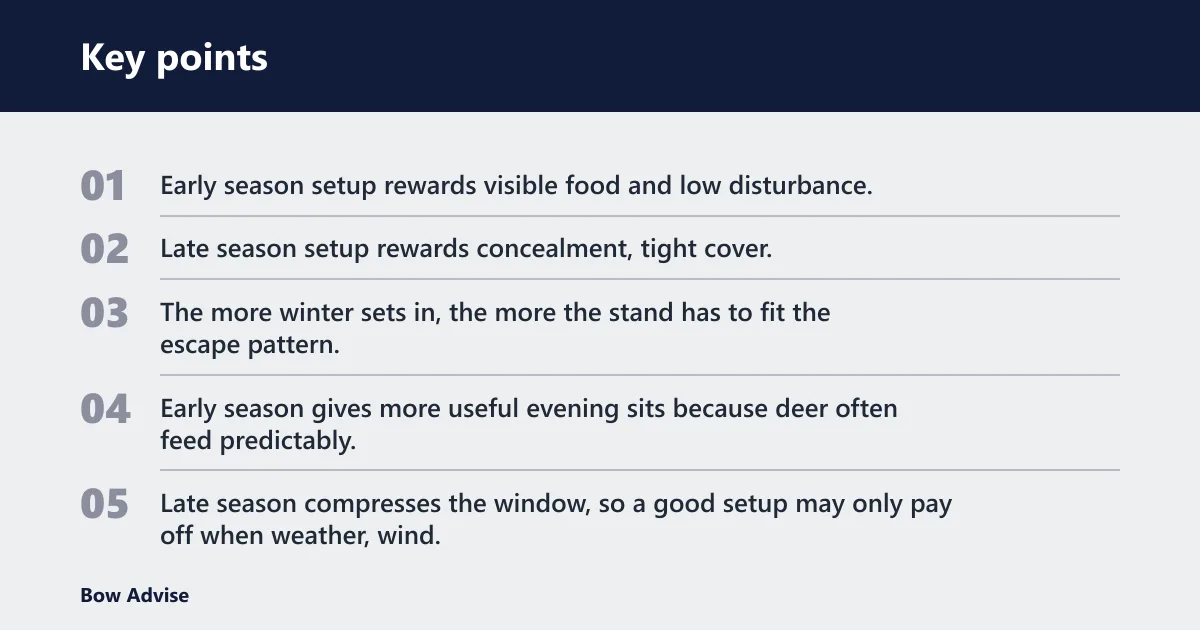
Early season setup rewards visible food and low disturbance. Late season setup rewards concealment, tight cover, and a route deer can trust under pressure. The more winter sets in, the more the stand has to fit the escape pattern, not just the food.
Shot windows and time of day
Early season gives more useful evening sits because deer often feed predictably. Late season compresses the window, so a good setup may only pay off when weather, wind, and movement all line up. That makes patience and selective sit timing more valuable.
Wind rules and deer priorities
Wind protects a food setup early and protects a bedding-edge ambush late. Deer prioritize calories all season, but late season they will trade calories for safety faster. That is why a bigger field can be worse than a smaller, safer source.
Choose early season if… / Choose late season bowhunting if…
Choose early season if deer are still feeding in open or semi-open areas with low pressure, stable crops, and enough leaf cover to keep movement predictable. Choose late season bowhunting if deer have shifted to thick cover, daylight movement has tightened, and the best food is now tied to a secure route rather than a broad field.
Choose early season if…
You have a reliable food source, clean downwind access, and low hunting pressure. You also have better odds when deer are still moving in the evening and the cover is thick enough to keep them comfortable. If the pattern is stable, stay with food-first logic.
Choose late season bowhunting if…
You can reach a bedding edge, thermal cover pocket, or destination food source without alerting deer. Pick this side when food is scarce, pressure has increased, and daylight movement is short. The cleaner the access and the tighter the setup, the better late season gets.
When this spot stops working checklist
- Deer photos shift from daylight to dark or disappear entirely.
- Fresh tracks and droppings stop appearing on the expected route.
- The wind forces scent into bedding, food, or the approach trail.
- Boot traffic, parking, or vehicle noise starts changing movement.
- The food source thins out, gets cut, or no longer draws calm deer.