Bow Hunting Gear Checklist for Beginners
Start with the legal bow, a matched arrow setup, a sight, a rest, a release aid, and practice field points; add broadheads only after groups are tight at about 20–30 yards. Bad sequencing wastes money, creates poor arrow flight, and can ruin an entire first season. This checklist ranks beginner gear in buy order, separates essential from optional items, and flags the setup mistakes that most often cause missed shots.
Must-have gear
The first hunt starts with a bow that fits the hunter, arrows matched to that bow, and a repeatable way to aim and launch them. For a compound setup, that usually means a beginner-friendly adjustable bow package, a properly matched release, and practice points before any hunting broadheads go on.
Compound bow matched to the hunter
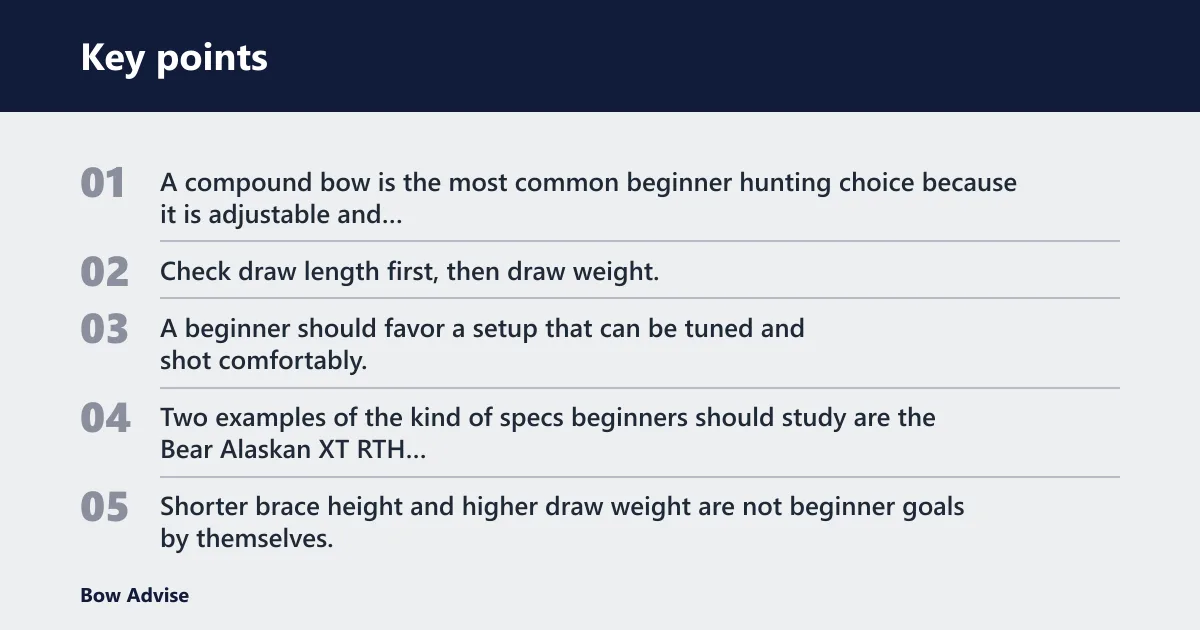
A compound bow is the most common beginner hunting choice because it is adjustable and usually sold in ready-to-hunt packages. Check draw length first, then draw weight, because both must fit the shooter instead of being forced upward for speed. A beginner should favor a setup that can be tuned and shot comfortably, not one that looks fast on paper.
Two examples of the kind of specs beginners should study are the Bear Alaskan XT RTH Package, which adjusts from 25 to 30 inches of draw length and lists a 33-inch axle-to-axle length with a 6.25-inch brace height, and the Mathews ARC 30, which lists an axle-to-axle length of 30 inches, a 6-inch brace height, and draw weights from 55 to 80. Shorter brace height and higher draw weight are not beginner goals by themselves; fit and forgiveness matter more.
For a traditional setup, the October Mountain Adventure 2.0 is a 48-inch recurve with 20 pounds draw weight, the Ascent is a 58-inch three-piece take-down recurve bow, and the Mountaineer 2.0 is listed at 62 inches and 50 pounds. Those numbers show why traditional bows need even more attention to fit. A wrong draw weight makes practice inconsistent fast.
Arrows matched to bow spine and draw length
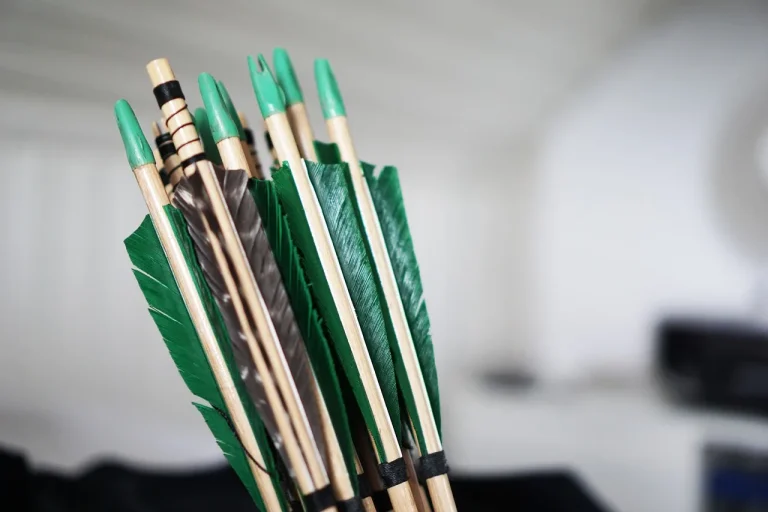
Arrows must match the bow’s draw length and draw weight range, or broadhead flight can turn erratic. Beginners also need enough arrows for practice, tuning, and the one that gets damaged or lost. A safe starting point is a full dozen matched arrows, not a tiny three-pack.
The BOWSOUL carbon arrows are listed as spine 400 and described as suitable for bows in the roughly 35–60 lb range, with replaceable 100-grain field points. That sort of match matters because spine that is too weak or too stiff can leave broadheads planing badly. Field points belong on practice arrows first; broadheads are for the hunting setup after tuning is sorted.
Release aid for compound bows
A release aid belongs in the first compound setup because it helps the shot stay consistent, but it is not required for every bow type. Wrist-strap and handheld styles both work, as long as the fit is correct and the trigger travel is adjusted so it breaks cleanly instead of punching the shot. Missing the release on opening morning is a hunt-ender for a compound hunter.
Traditional bows can be shot with fingers or a tab, so beginners should not treat a release as universal gear. For a compound hunter, though, this is one of the first items to buy and practice with before the season starts.
What do you need before the first hunt?
Before the first hunt, the bow should be sighted in, the rest should be set, the arrows should be secure, and the legal paperwork should be current. A first hunt falls apart quickly if any of those are left for the morning of the outing.
Bow sight and rest setup
A sight and rest are part of how the bow shoots where it looks. Multi-pin and single-pin sights both work, but yardage marks matter more than brand names. The key is to sight in before season and confirm the pins at the distances the hunt is likely to use.
Rest choice matters because it changes arrow support and tuning. A beginner should keep the rest simple enough to tune cleanly and quiet enough for hunting. If the bow is a ready-to-hunt package, the rest still needs inspection, because a factory setup can be close without being finished.
Quiver and arrow transport
A quiver holds hunting arrows on the bow or pack, and it needs to be quiet and secure. It is easy to misplace in the field, so it should be checked along with the arrows it carries. A loose quiver rattles, shifts balance, and can even let arrows work free while walking in.

LWANO 5 Arrow Quiver
Based on the published details, this quiver’s quick detach bracket and soft rubber arrow grippers fit a hunting role well, and the lightweight composite build helps keep bulk down. The drawback is that quick-release hardware can still loosen if it is not checked, and five-arrow capacity may be limiting for some broadhead and practice combinations.
License, tags, and legal checks
Hunting license and tags belong in the pack before anything else leaves the house. State rules can also require orange clothing, blaze panels, weapon-season limits, or specific broadhead rules, so the legal check should happen before the first hunt rather than after the bow is assembled. A legal setup is part of the gear list.
For a beginner, the simplest habit is to keep the license, tags, and any required documentation in the same pocket every time. No shot matters if the hunt is illegal.
Bow gear priority table
| Product | Badge | Best for | Price | ||
|---|---|---|---|---|---|
 | BOWSOUL 30inch Hunting Carbon Archery Arrows with 2.75”BOWSOUL | Our pick | Carbon fiber · Spine 400 · 12 pack | $40.99 Price as of 20 Oct 2026 | View |
 | Swhacker #207 Mechanical Broadheads 100 Grain, 2-BladeSwhacker | Also great | 100 Grain · 2-Blade · 3 pack | $31.99 Price as of 20 Oct 2026 | View |
| LWANO 5 Arrow Quiver,Archery Compound Bow Quiver with QuickLWANO | Budget pick | 5 Arrow · Quick Release · Black | $18.99 Price as of 20 Oct 2026 | View |
 | REVASRI Hunting Laser Rangefinder with Rechargeable BatteryREVASRI | Upgrade pick | 1000 Yards · Rechargeable · 6.5X | $38.24 Price as of 20 Oct 2026 | View |
 | Kalkal Tree Stand Harness, Adjustable Hunter Safety SystemKalkal | Pair with it | Adjustable · Lightweight · Camouflage | $52.99 Price as of 20 Oct 2026 | View |
| buy now | buy after first range session | optional later |
|---|---|---|
|
Compound bow Purpose: the main platform for the first season. Spec to check: draw length and draw weight must fit the hunter; a ready-to-hunt package is fine if it can be tuned. Mistake to avoid: buying too much draw weight because it looks faster. |
Compound bow Purpose: final tune and fit check after a few sessions. Spec to check: cam timing, paper tune, and anchor consistency. Mistake to avoid: assuming the factory setup is finished. |
Compound bow upgrade parts Purpose: refinements after the basics are working. Spec to check: only change parts if the current bow is already shooting well. Mistake to avoid: chasing parts before form is stable. |
|
Arrows Purpose: practice and hunting arrows that match the bow. Spec to check: spine, length, and enough quantity for practice plus spares. Mistake to avoid: buying only a few arrows or the wrong spine. |
Broadheads Purpose: hunting points for the field. Spec to check: fixed-blade or mechanical type must match the bow’s tuned setup and fly like the field points as closely as possible. Mistake to avoid: installing broadheads before the bow is tuned. |
Extra arrow shafts Purpose: backup for damage or loss. Spec to check: same spine and length as the current setup. Mistake to avoid: mixing random replacements into the hunting quiver. |
|
Release aid Purpose: consistent shot execution on a compound bow. Spec to check: wrist-strap or handheld fit, with trigger travel adjusted to break cleanly. Mistake to avoid: forgetting it on hunt day or setting it too hot. |
Bow sight Purpose: aiming reference for practice and hunting. Spec to check: yardage marks and pin spacing that fit expected shot distances. Mistake to avoid: sighting in once and never confirming the marks again. |
Peep, kisser, or extra aiming accessories Purpose: small aim and repeatability aids. Spec to check: only if they help the current anchor and sight picture. Mistake to avoid: adding gear that changes anchor or string picture. |
|
Rest Purpose: holds the arrow in the right launch position. Spec to check: quiet operation and reliable center-shot alignment. Mistake to avoid: leaving the rest unverified after transport. |
Quiver Purpose: carry hunting arrows securely in the field. Spec to check: quiet attachment and solid retention. Mistake to avoid: using a noisy or loose mount. |
Bow-mounted accessories Purpose: only the extras the hunt truly needs. Spec to check: no interference with arrows, string, or balance. Mistake to avoid: hanging too many add-ons on a beginner bow. |
|
Safety gear Purpose: legal and physical protection for the hunt style. Spec to check: full-body safety setup for treestand hunts; current license and tags; any required orange where applicable. Mistake to avoid: packing safety gear after the weapon setup. |
Rangefinder Purpose: confirm actual yardage before the shot. Spec to check: bow mode or angle compensation if shooting from height. Mistake to avoid: trusting guessed yardage from a treestand. |
Scent control items Purpose: reduce odor, not replace wind awareness. Spec to check: scent-free clothing, spray, and wind-check tools. Mistake to avoid: treating scent control as a cure for bad wind. |
What can wait until later?
Some items improve confidence, but they are not the first purchase. Rangefinders, scent control gear, and comfort add-ons help after the bow is already tuned, legal, and sighted in. Beginners should buy those only after the core setup is shooting correctly.
Rangefinder and angle compensation
A rangefinder is valuable because close shots look farther from a stand and downhill shots change the real distance. Bow mode or angle compensation matters most when the hunter is elevated. That said, it only helps if the bow is already sighted and the hunter already knows the maximum ethical range.
REVASRI Hunting Laser Rangefinder
The published details point to useful hunting features such as mode memory, continuous scan mode, and clear magnification. The drawback is simple: a rangefinder still cannot fix poor yard judgment or a rushed shot choice, and beginners can lean on it too much instead of learning distance awareness.
Scent control items
Scent-free clothing, spray, and wind-check tools belong on the list, but they do not replace wind awareness. A beginner should treat scent control as a helper, not a shield. If the wind is wrong, the best clothing in the world will not save the setup.
Backup accessories and comfort add-ons
Extra peep inserts, wrist slings, bow hangers, extra batteries, and small pack organizers are useful later. They keep a hunt smoother, but they do not matter if the bow is not tuned, the broadheads do not fly with the field points, or the license is still in the truck.
Picture a beginner on a 12-foot ladder stand with a bow that is already sighted at 20 and 30 yards. A rangefinder helps confirm the shot distance, but only if the hunter has already confirmed the wind and the bow is quiet. The accessory does not replace the core setup.
How do you avoid beginner setup mistakes?
The fastest way to ruin a first season is to overbow, mismatch arrows, or skip tuning before opening day. A beginner should think in order: fit the bow, match the arrows, confirm the sight, then build out the rest of the kit. That sequence prevents most first-season failures.
Too much draw weight
Too much draw weight causes shaky form, poor anchor, and rushed shots. A comfortable poundage that can be held at full draw with control is better than a heavy setup that looks impressive on a spec sheet. If the bow cannot be drawn smoothly ten times in a row, it is too much for a first season.
Wrong arrow spine or length
Arrow spine must match the bow, and the arrow must be the right length for the draw. If the arrow is too weak or too stiff for the setup, broadheads can leave the bow with poor flight and make sighting harder. That is one reason the arrow order belongs early in the list.
No tune or sight-in before season
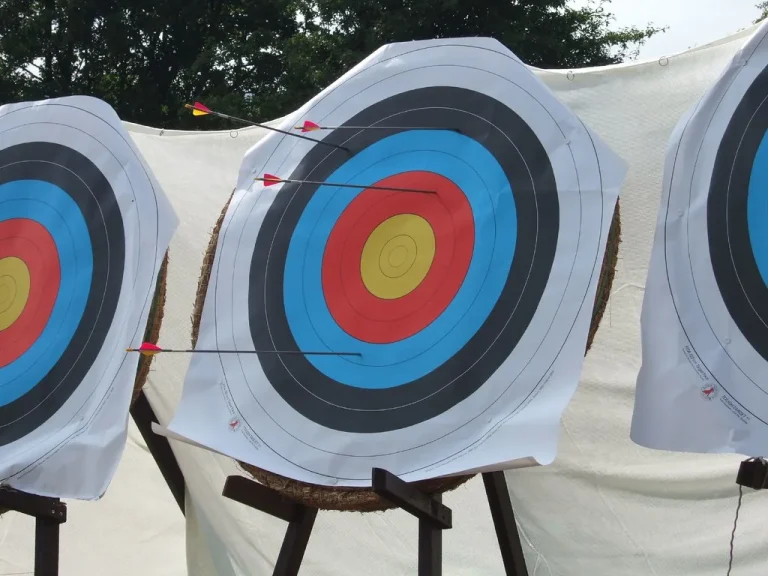
A common first-timer mistake is putting broadheads on a bow that has never been properly sighted and tuned. The fix is simple: shoot field points first, confirm impact, then introduce broadheads only after the bow groups well at the intended range. Say your arrows group tightly at 20 yards but open up at 30; that tells the hunter to work on tune and form before buying more gear.
- Set the bow to a draw weight the hunter can control.
- Match arrow spine and length to that draw setup.
- Install the sight, rest, and quiver with no contact issues.
- Practice with field points until the groups stay tight.
- Only then switch to broadheads and confirm impact.
- Check the license, tags, and hunt-specific rules before leaving.
Suppose a compound hunter buys broadheads first and sees a 4-inch left shift at 20 yards. That does not mean the broadheads are bad; it usually means the setup still needs tuning, or the bow is not holding a clean release. Fix the base first.
Budget setups
Budget should control the order of purchase, not the quality of the fit. A low-cost setup can still be hunt-ready if the bow matches the hunter and the rest of the list supports that bow. What should be skipped first is extra gear, not fit or safety.
| Setup level | What to buy first | What to leave for later |
|---|---|---|
| Starter | Adjustable compound bow, matched arrows, release aid, basic sight, rest, license and tags | Rangefinder, scent control extras, spare accessories |
| Mid-range | Better package bow with more tuning margin, quiver, broadheads after tuning, full-body safety setup for treestand use | Extra comfort add-ons and backup optics |
| Serious beginner | Bow with stronger fit window, more arrow spares, tuned broadheads, rangefinder with bow mode, better pack organization | Specialty accessories that do not change field readiness |
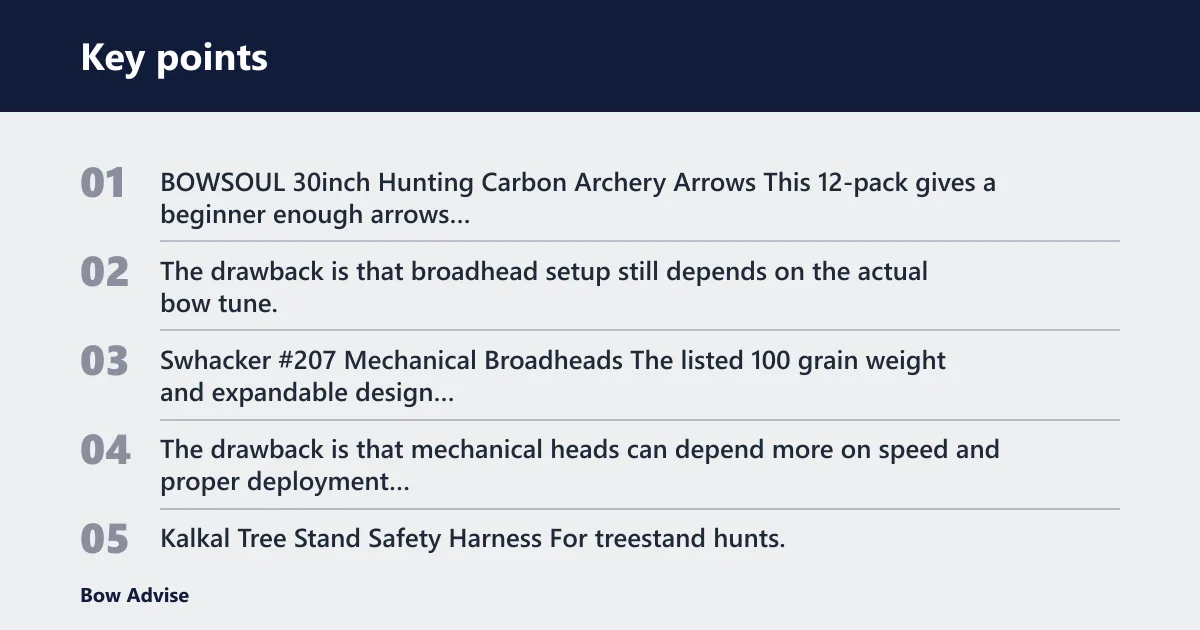
BOWSOUL 30inch Hunting Carbon Archery Arrows
This 12-pack gives a beginner enough arrows for practice, tuning, and a few spares, and the stated spine 400 suits 35-60lbs bows. The drawback is that broadhead setup still depends on the actual bow tune, and carbon shafts need careful inspection for cracks after hard hits.
Swhacker #207 Mechanical Broadheads
The listed 100 grain weight and expandable design make these a hunting-only purchase after field-point tuning is done. The drawback is that mechanical heads can depend more on speed and proper deployment conditions than a simple practice point, so they should not be the first item in a beginner cart.
Kalkal Tree Stand Safety Harness
For treestand hunts, a full-body safety setup is the right safety buy, and this one includes a suspension relief strap. The drawback is that any setup like this must be checked for fit, wear, and attachment before each season, and it is unnecessary for some ground-blind or saddle-only plans unless that hunt style still requires it.
Frequently asked questions
What bow hunting gear do I actually need as a beginner?
Start with a legal bow that fits, matched arrows, a sight, a rest, a release aid for a compound bow, and practice field points. Add a quiver, license, tags, and safety gear for the actual hunt. Broadheads come after the bow is already tuned and grouping well.
Which bow hunting gear is essential and which is optional?
Essential gear includes the bow, arrows, sight, rest, release for compound setups, license, tags, and the safety gear required by the hunt style. Optional gear includes a rangefinder, scent control extras, and comfort add-ons. Optional gear helps, but it should never outrank fit, legality, or tuning.
What gear do I need for bow hunting for beginners?
A beginner needs a bow that matches draw length and draw weight, arrows that match spine and length, and a sighted-in setup with a quiet rest. A quiver, broadheads, rangefinder, and scent control items can follow, but only after the base setup is ready for practice and legal use.
What should be in a beginner bow hunting pack?
A pack should hold license, tags, extra arrows, broadheads in a safe container, release aid if the hunter uses one, a rangefinder if needed, and field-dressing tools for after the shot. Keep knife, gloves, saw, rope, and other recovery tools separate from clean clothing and hunting arrows.
Do I need a rangefinder, release, and scent control gear for bow hunting?
A release is important for most compound bows, but not every bow type needs one. A rangefinder is strongly useful for real hunting distances, especially from height. Scent control helps, but wind awareness matters more, so it should be treated as support gear rather than a substitute for smart setup.
How do I avoid forgetting gear on my first bow hunt?
Use the same packing order every time. Put license and tags in one pocket, arrows and broadheads in one secure place, and safety gear in a separate section. Then check the release, sight, quiver, and batteries before leaving. A written checklist catches more mistakes than memory does.