Bow Hunting Safety Tips for First-Time Hunters
First-time bowhunters should follow three safety rules: keep the bow aimed at ground or target space you are ready to shoot, keep an arrow off the string until you are on target, and confirm the target, backstop, and backdrop before every shot. Skipping those steps can cause severe injury, property damage, or a missed shot at a deer-sized mistake. This article covers range habits, field habits, and public-land awareness in a safety-first checklist for bow hunting safety tips for first-time hunters.
Bow hunting safety checklist
Start with three parts: range safety, field safety, and public-land awareness. That split matters because the mistakes are different. On the range, beginners usually rush commands, lane rules, or backstops. In the field, they are more likely to mishandle a loaded bow, rush a shot, or ignore what is beyond the target.
| Checklist stage | Yes/no | Exact item to check | Consequence if skipped | Ready-to-hunt threshold for beginners |
|---|---|---|---|---|
| Pre-shoot inspection | Yes / No | Bow limbs, cams or riser, and string for visible damage; bowstring for fraying; arrows for cracks or splinters; nock fit for secure engagement | A damaged bow or arrow can fail under draw or release and send the shot off line. | All visible parts pass inspection, the string is waxed, and every arrow seats cleanly |
| In-the-field safety | Yes / No | Arm guard worn, finger tab or mechanical release ready, quiver carried the same way used in practice, and target area checked for what is beyond it | String slap, finger injury, loose arrow handling, or a shot at an unsafe backdrop | Gear is worn the same way every time, and the shot is taken only after a clear lane check |
| Post-shot actions | Yes / No | Watch the arrow path, mark the impact, stay quiet, and do not rush after a hit; recover only when the area is safe | Poor follow-up, lost sign, or unsafe tracking near other hunters or property lines | Arrow impact is marked, the area is clear, and recovery begins only with a safe plan |
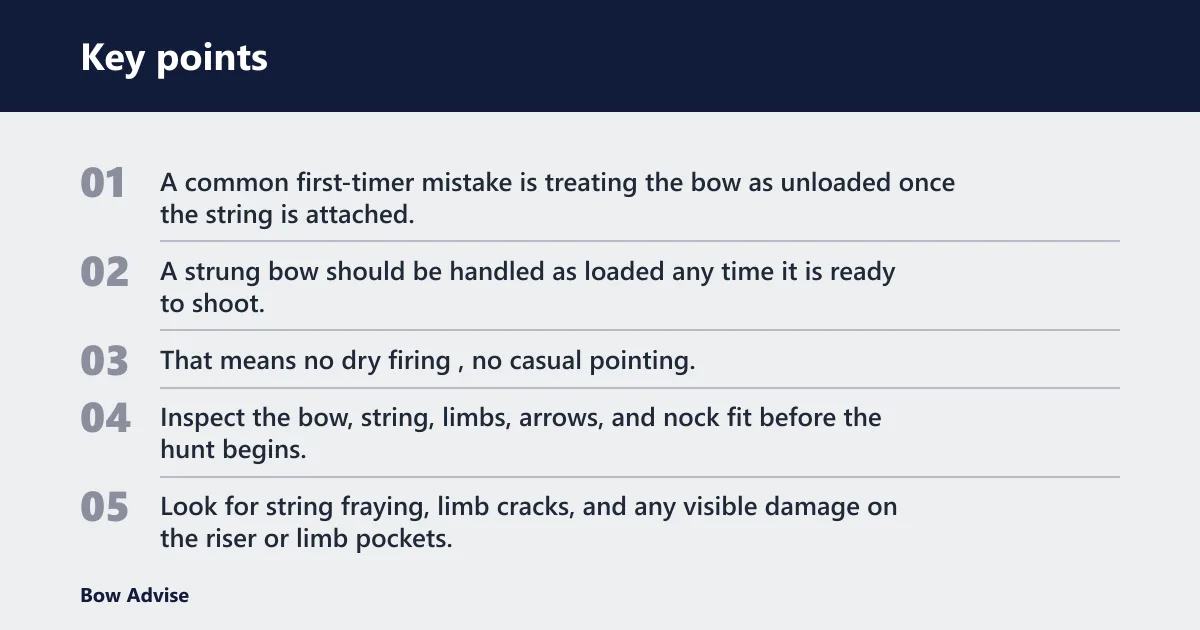
A common first-timer mistake is treating the bow as unloaded once the string is attached. A strung bow should be handled as loaded any time it is ready to shoot. That means no dry firing, no casual pointing, and no nocking an arrow until the lane or field shot is actually clear.
What should you inspect before hunting?
Inspect the bow, string, limbs, arrows, and nock fit before the hunt begins. Look for string fraying, limb cracks, and any visible damage on the riser or limb pockets. Check each arrow shaft for cracks or splinters, then confirm that the nock seats firmly without wobble or binding.
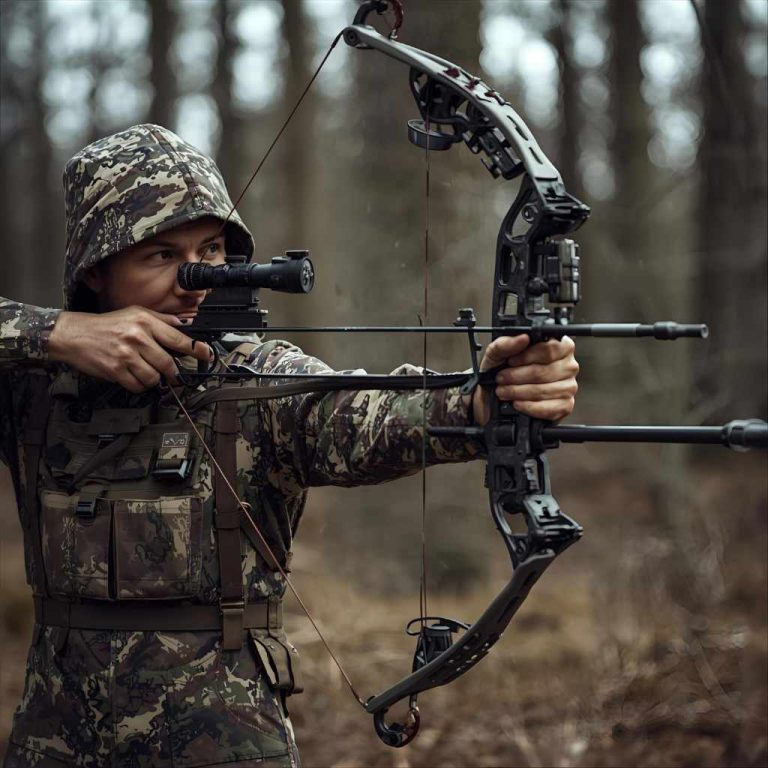
If the bow uses a finger tab, make sure it is easy to reach and in good shape. If it uses a mechanical release, clip and unclip it cleanly before stepping into the field. A 58-inch, three-piece take-down recurve is marketed for recreational archers and hunters alike, while models such as the October Mountain Mountaineer 2.0 Recurve Bow at 62 inches and 50 pounds, the October Mountain Adventure 2.0 Recurve Bow at 48 inches and 20 pounds, and the Bear Legit MAXX RTH Bow Package with a 10 to 70 pound range show how different setups can fit different users. The point is not the label; it is matching the setup to the shooter and keeping it consistent.
Bowstring care is part of the inspection. Keep it waxed and watch for wear or fraying. If damage is visible, replace it before shooting. A damaged string can fail under load, and a first-time hunter should never assume a small fray is harmless.
How do you stay safe while shooting?
Stay within the lane, obey cease-fire and retrieve-arrow signals, and do not shoot past the designated line. On a public or club range, the lane is the rule. On private practice ground, the same discipline still applies: one shooter, one clear lane, one target, one safe backstop.
Every shot should go into a target with a backstop that can catch a miss. That backstop is not optional for home practice. It prevents property damage, protects people behind the target, and keeps a missed arrow from escaping the practice area. Use the same setup every time so a hunting shot does not feel different from a practice shot.
How close should a beginner be? Close enough to keep every arrow in the target and backstop. For most new archers, that means starting at a short distance and moving back only after repeated clean hits and stable form. The exact yardage matters less than the rule: do not add distance until the shot is controlled.
Never dry fire a bow. A dry fire means the string is released without an arrow, and that can damage the bow and injure the shooter. To avoid it, make nocking a deliberate step, keep your arrow count organized, and pause before drawing if anything feels rushed or unclear.
What gear should a beginner wear?
Wear an arm guard and finger protection or a mechanical release as the bow calls for it. An arm guard protects the forearm from string slap, which is a common beginner problem. Finger tabs are common for recurve shooters. Mechanical releases are common on compound bows and reduce finger strain.
Clothing should not interfere with the string path, anchor point, or release. Sleeves, hood cords, and loose cuffs can create contact problems. The bow itself should be practiced with the same setup used in the field, including the clothing layers expected on the hunt. A beginner who practices in light sleeves but hunts in a thick jacket may get a different anchor and a different string path.
On public land, add blaze orange or blaze pink when required by local rules, and strongly consider it when hunting around other people. Public-land hunters are advised to wear head-to-toe blaze orange hunting gear. Also carry a fully charged cell phone or GPS device for emergency contact, especially when hunting alone or on remote ground.
How do you handle arrows and the quiver?
Keep arrow handling controlled. A bowhunter should not fish arrows out of a pocket, wave one around while walking, or nock one before the shooting lane is clear. Treat the quiver as part of the field setup, not a storage afterthought.
Practice with the quiver on or off consistently. If the quiver will be on the bow during the hunt, practice that way often enough to learn the balance shift and the clearance needed when drawing. If it will come off in the stand, practice that method too. Changing it at the last minute is a setup mistake, not a small preference.
Suppose a beginner practices with the quiver off, then heads into the woods with four arrows on the bow. The added weight can change the feel of the draw and the way the bow settles at full draw. That is not a gear problem alone; it is a consistency problem that should be fixed before hunting.
How do you stay safe on public land?
Public land adds other hunters, trails, access roads, parking areas, and shared cover. Pick a setup that keeps your shooting lane away from those human routes. Visibility matters here, too. Blaze orange or blaze pink helps other hunters notice you sooner, especially during peak use periods.
Avoid busy periods when possible. Public-land hunters are commonly advised to avoid peak hunting times like opening day and weekends if the goal is lower crowd pressure. Also think about where other people may approach from. A deer trail can cross a user trail, and a stand can sit too close to a parking route if the map is not studied before the hunt.
Picture a first-time hunter setting up near a brush edge that looks empty from the truck. A trailhead parking area is 200 yards away, and another hunter walks the same corridor at dawn. That setup is risky because the line of fire and the human travel route overlap. Move, or do not hunt that spot.
What mistakes make first-time hunters unsafe?
The biggest beginner mistakes are mismatched practice and hunt setups, shooting with damaged gear, and rushing the target check. A bow that was tuned one way on the range and carried another way in the field can lead to poor shot control. Damaged strings, cracked arrows, and loose nocks only increase that risk.
Accidental nocking is another common failure case. New hunters sometimes nock too early, then turn, climb, or talk with an arrow already on the string. That is avoidable. Only nock when the shooting lane is clear and the shot decision is made. If the shot does not feel certain, do not draw.
String slap usually means the arm guard was skipped, the grip was poor, or the shooter collapsed the bow arm at release. Dry fire is worse. Both are preventable by slowing down, keeping equipment consistent, and stopping when form breaks down.
What should you do if you feel underprepared for a bow hunt?
Stay on the range. If the bow is not tuned, the arrows are not consistent, or the shooter still misses the backstop at short distance, the hunt should wait. A first-time bowhunter who is unsure about target judgment, gear handling, or shot control is not ready for a live field shot yet.
Use that time to repeat the inspection routine, practice with the same clothing and quiver setup, and work from a safe distance until every arrow lands where expected. If the gear still feels unfamiliar, a better choice is more practice, not a harder hunt.
What are the most important bow hunting safety tips for a first-time hunter?
The most important safety tips are simple: treat the bow as loaded, never dry fire it, inspect the equipment before shooting, and confirm the target and backdrop every time. The next layer is field discipline. A beginner should only nock an arrow when the lane is clear and should wear the right protective gear.
How close should a beginner be when practicing bow hunting safely?
Close enough to control every arrow. Beginners should start at a distance where hits stay in the target and the backstop can catch a miss. Short-range practice builds safer habits faster than long-range guessing. Distance should increase only after repeated, stable, centered shots.
What should I inspect on my bow before heading into the field?
Check the string for fraying, the limbs for cracks, and the rest of the bow for visible damage. Inspect arrows for cracks or splinters and make sure the nock fits properly. If the string looks worn or the arrow looks questionable, do not hunt with it.
How do I avoid dry firing a bow?
Keep the arrow count organized, nock only when the shot is ready, and never release the string without an arrow in place. A dry fire can damage the bow and injure the shooter. If the process feels rushed, stop and reset before drawing.
What safety gear should a first-time bow hunter wear?
Wear an arm guard, plus finger protection or a mechanical release based on the bow type. Add blaze orange or blaze pink on public land when required or when other hunters may be nearby. Carry a charged phone or GPS device if the hunt is remote or solo.
How do I stay safe when hunting public land with a bow?
Stay visible, stay aware of other hunters, and avoid setups near trails, parking areas, and access routes. Pick a shooting lane that keeps the backdrop clear of people and paths. A charged phone or GPS device helps if a plan changes or a safe exit is needed.
What are the biggest beginner mistakes that lead to unsafe bow hunting?
The biggest mistakes are using damaged gear, mixing up practice and hunt setups, nocking too early, and shooting before the target and backdrop are confirmed. Another common error is ignoring range commands or field conditions. Safety slips usually come from rushing, not from one dramatic mistake.
Should I practice with my quiver on or off before hunting?
Practice the way you plan to hunt. If the quiver will stay on the bow, train that way so the draw and balance stay familiar. If the quiver comes off in the stand, practice that version too. Consistency matters more than preference on hunt day.
How do I identify my target and what’s beyond it before shooting?
Pick the animal, confirm the angle, and then check the ground, brush, and open space behind it. A bow shot is never just about the animal in the lane. If you cannot clearly name the target and the backdrop, the shot should not happen.
What should I do if I feel underprepared for a bow hunt?
Do not force the hunt. Return to short-range practice, check every piece of equipment again, and work through the same setup you will use in the field. If the bow still feels inconsistent or the shooter still hesitates on basic safety steps, more range time is the better choice.