How to Sight in a Bow for Hunting Season
Sight in a hunting bow at 20 yards first, then confirm at 30 or 40 yards with field points and broadheads so your bow lands where you plan to shoot. A poor zero leads to clean misses, weak blood trails, and broadhead hits that wander off target. This guide covers setup checks, a quick zeroing sequence, and a simple pre-season confirmation routine.
What you’ll need


- Compound bow with a sight, rest, string, and arrows
- Field points for the first sight-in shots
- Broadheads for the later confirmation step only
- Safe archery target that can be shot at 20, 30, and 40 yards
- Bubble level for leveling the sight and checking bow cant
- Allen keys for windage, elevation, and pin screws
- Tape measure or a marked range for setting distance
- Clear shooting lane with a safe backstop indoors or outdoors
- Notebook or phone note for recording pin settings and group results
Pre-season sight-in checklist
| Bow setup check | Target distance | Group size | Adjustment made | Pass/fail |
|---|---|---|---|---|
| Bow level, rest secure, nock aligned, sight tight | 5 or 10 yards | 3 arrows inside a hand-sized cluster | Set rough elevation and windage to paper center | |
| Bubble centered, pins visible, field points installed | 20 yards | 3-arrow group that repeats in the same area | Move sight housing for windage and elevation, or fine-tune top pin | |
| Same form, same anchor, no bow cant | 30 yards | 3-arrow group with consistent height and left-right hold | Set or confirm second pin spacing | |
| Hardware checked again after pin work | 40 yards | 3-arrow group that stays tight enough for hunting use | Confirm third pin and mark any needed micro-adjustment | |
| Bow tuned and field-point zero complete | 20 and 30 yards with broadheads | Broadheads close to field-point impact | Confirm or tune before opening day |
How do you sight in a bow sight?
Start with a tuned, level bow and use the sight to move impacts into the center of the target. For a compound bow sight, the first job is repeatable groups, then controlled windage and elevation changes. Single-pin and multi-pin sights follow the same logic, but the pin workflow differs.
Follow this sequence
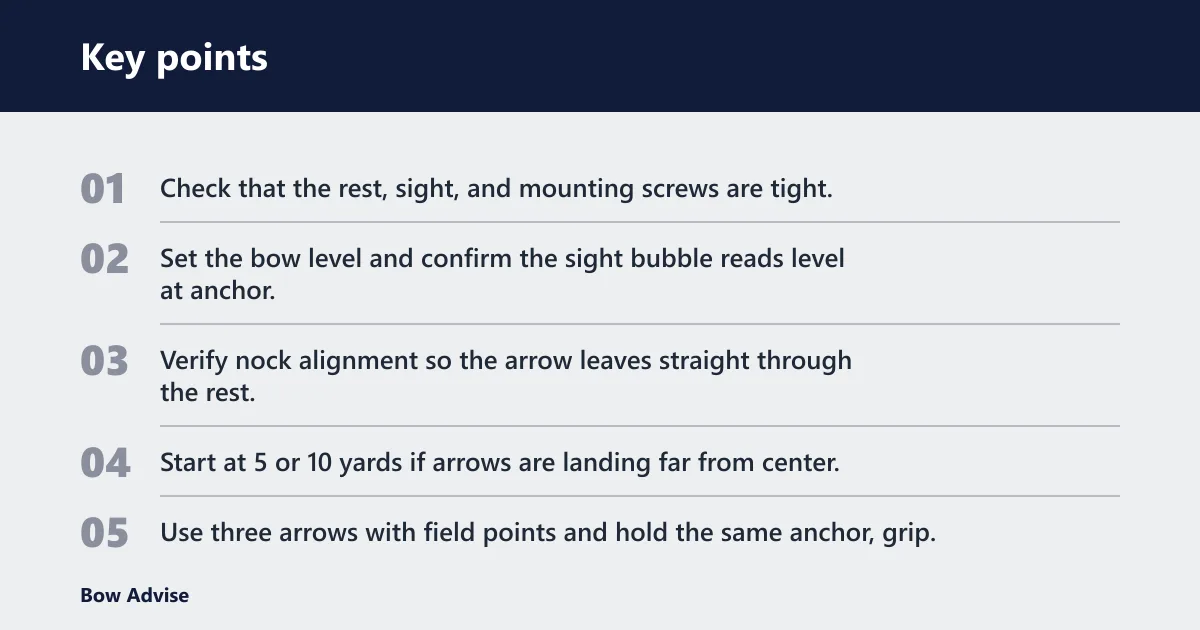
- Check that the rest, sight, and mounting screws are tight.
- Set the bow level and confirm the sight bubble reads level at anchor.
- Verify nock alignment so the arrow leaves straight through the rest; a common check is to watch that the arrow sits level on the rest at full draw and clears cleanly without obvious tail-high or tail-low contact.
- Start at 5 or 10 yards if arrows are landing far from center, then move back after the group is close.
- Use three arrows with field points and hold the same anchor, grip, and release for every shot.
- Move the sight housing for left-right and up-down correction, then re-shoot before changing anything else.
If the first two arrows are close and the third jumps wide, the shot process is more likely the issue than the sight. Fix form first, then adjust the bow.
How to move the sight
For a shot group that lands left or right, move the sight housing toward the impact, not away from it. If the group hits left of center, shift the housing left. If the group hits low, raise the sight or pin setting that matches the hunting distance. Make each change in the same direction until the group centers.
Single-pin sights often use one aiming pin and micro-adjustment screws for fine changes. Multi-pin sights may use separate fixed pins for different yardages, often with the top pin set closest to the target. Hybrid sights split the difference by giving a fixed top pin with finer movement for the housing or a dial for distance changes.
What distance should you sight in your bow for hunting?
Use 20 yards as the common top-pin baseline, then confirm 30 and 40 yards so the other pins match real hunting shots. That setup works for a single-pin or multi-pin bow sight. If most shots happen in tight woods, a 20-yard zero still gives a practical reference and keeps the top pin useful.
Choose the distance around the hunt
If shots are usually inside 25 yards, a 20-yard zero keeps the top pin honest and the pins below it easy to sort. If a hunter faces open fields or longer lanes, the 30- and 40-yard checks matter even more, because they show whether the pin spacing inside the housing is usable under stress.
ArcheryStreet describes a typical 3-pin setup as 20, 30, and 40 yards. G5 notes that fixed multiple-pin sights often come in two to five pins, and some fixed pin sights are set at 20 or 25 yards, then 5 or 10-yard increments. That makes the 20-yard top pin a strong default, not a rule for every setup.
Use a realistic hunting zero
Pick the zero around the distances that actually show up in the field, not the farthest number on the pin tape. A 20-yard zero is common because it works well as a baseline, while 30 and 40 yards confirm whether the sight picture stays predictable as distance grows. Working at 20, 30, and 40 yards is the minimum for proper sighting.
Suppose a bowhunter expects whitetail shots in brushy cover where 18 to 28 yards is normal. A 20-yard zero and a 30-yard check fit that terrain better than chasing a 60-yard mark that may never matter on opening day.
Should you sight in a bow with field points or broadheads?
Use field points first for the initial zero. Broadheads come later, after the bow is tuned and the field-point group is tight. Field points fly more cleanly through the air and are easier to remove from a target, which makes them the right tool for setting the sight before hunting season.
Separate sight correction from tuning
If field points and broadheads do not land together, do not blame the sight first. That difference can point to rest timing, nock alignment, arrow spine, or another tune issue. Fix bow tune before making broadhead changes to the sight picture.
The clean sequence is simple: tune the bow, set the 20-yard field-point zero, confirm 30 and 40 yards, then shoot broadheads at the same distances. If broadheads hit a little off after that, the next step is tuning or broadhead-specific correction, not a fresh hunting zero.
Fast pre-season workflow
Bowhunt 101 describes sighting in a bow as a fairly simple process. The quickest solid version is a step-by-step guide that begins close, confirms the top pin, then moves back in measured steps. That keeps the bow ready for hunting without wasting arrows or time.
- Set a safe target at 5 or 10 yards and shoot three field-point arrows.
- Use the group, not one arrow, to set a rough center.
- Move to 20 yards and fine-tune windage and elevation.
- Shoot three more arrows and average the group before changing anything else.
- Confirm 30 yards, then 40 yards, adjusting pin spacing or the housing as needed.
- Shoot broadheads at 20 and 30 yards to confirm the hunting setup.
Hunterzonepro recommends starting with three arrows at 5 yards, then moving to three shots at 10 yards. That short-range start helps when the bow is badly off or when time is limited before opening day, because it gets the arrows onto paper before the longer zero work begins.
Multiple sessions help because one clean group is better than one rushed adjustment. If the first day gets the bow close, the second day can confirm the same point of impact under better focus. That repeatability matters more than a fast guess.
Common mistakes
One common error is adjusting the sight before checking form. If arrows group left or right, first confirm a consistent anchor, straight grip, and no bow cant. A tilted bow changes impact point, especially at longer distances, and can make a good sight look wrong.
Another mistake is moving a pin when the rest or nocking point is off. If arrows plane or scatter badly, the bow may need tuning before sight changes will hold. If the broadhead group differs from field points, that is a tuning question first, a sight question second.
Say a bowhunter sees a 4-inch left group at 20 yards after tightening the sight. If the next three arrows repeat the same left group, move the housing left and shoot again. If the next group jumps high and wide instead, stop and check grip pressure, rest timing, and the bubble level.
Skipping the broadhead confirmation step is another miss. A field-point zero can look perfect and still leave a broadhead a little off at 30 yards. That is why the final pre-season check should always include broadheads after the main zero is set.
Prevention: record the final 20-, 30-, and 40-yard settings after the last session so the bow can be returned to the same mark next season.
Parts of a bow sight and how they work
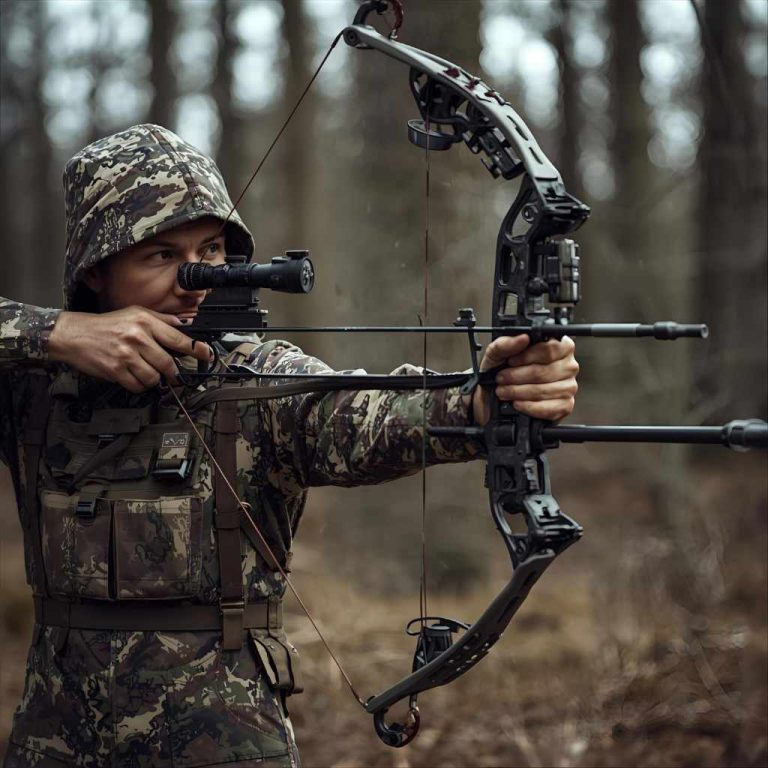
Single-pin sights use one aiming pin that moves to different yardages. Multi-pin sights use several fixed pins, often with the top pin set for the closest yardage and the rest spaced farther out inside the housing. Hybrid sights combine a fixed pin layout with some adjustable travel for finer range work.
Most hunting sights use windage and elevation adjustments to move the whole sight, and many also add micro-adjustment capability for fine changes. Fiber-optic pins improve visibility in dim woods, and G5 notes common fiber sizes of .029, .019, and .010. Larger fiber optics are easier to see in low light, which matters for early morning and late evening hunts.
A bubble level belongs on the sight for setup and on the bow while aiming. During setup, it helps level the sight to the bow. While shooting, it helps the archer keep the bow from canting, which keeps the pin and the arrow path more repeatable.
Frequently asked questions
Best way to sight in a bow
The best workflow is tuned bow first, field points second, broadheads last. That order keeps setup problems from being mistaken for sight errors. For most hunting bows, a 20-yard zero with follow-up checks at 30 and 40 yards is the cleanest balance of speed and practical accuracy.
How do I adjust a bow sight left or right?
Move the sight housing toward the direction the arrows are hitting. If the group lands left, move the housing left. If the group lands right, move it right. Re-shoot the same distance after each change and keep the bow level so the correction stays clean.