How Much Does an Archery Target Cost? Price Guide
An archery target can cost anywhere from a modest amount to a few hundred dollars, and beginners may want to budget for a target that works for backyard practice and safely stops their bow. Pick poorly, and you pay twice: once for the target, then again for blown-through cores, damaged arrows, or constant replacement. This guide compares target types, real price ranges, and the total cost over time so you can pick the cheapest target that still lasts.
This guide is part of our Bow hunting laws and regulations series.
How much does an archery target cost?
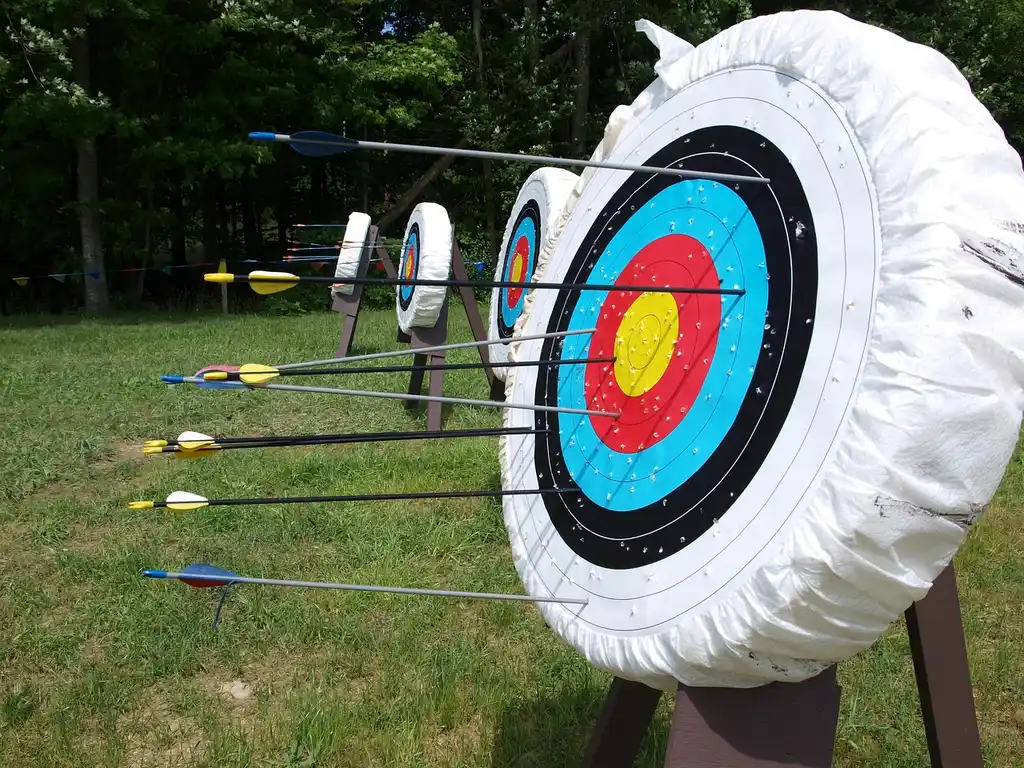


Most archery targets fall between $25 and $300+, but the best value for a beginner is often in the middle of that range. Paper targets are the cheapest upfront, bag targets usually land at $25 to $60, foam block targets typically run $30 to $80, and 3D archery targets can reach $100 to $400.
Quick price ranges by target type
- Paper targets and frame: paper targets cost just a few dollars, and a frame or stand often adds about $20 to $50.
- Bag target: $25 to $60.
- Foam block target: $30 to $80.
- 3D archery target: $100 to $400; beginner-friendly foam versions start around $60.
What beginners usually spend first
Most beginners should expect to spend more than the lowest sticker price once they factor in stand, replacement faces, or a second target for a different arrow type. A smart first purchase is the least expensive target that fits the bow, arrow speed, and practice style without taking arrows too deep.
📊 Foam block targets typically range from $30 to $80. Source: How Much Does an Archery Target Cost? Affordable Must-Have Options.
What affects archery target cost?
Price depends on more than brand name. Material quality, target size, weight, weatherproofing, and self-healing features all change the price and the lifespan. A small, light target may cost less at checkout, but a denser target can stop arrows better and last much longer.
Material quality and stopping power
Foam block targets use dense foam or compressed fibers, and the better versions usually cost more because they hold up longer. Premium foam and compressed fibers also affect arrow stopping performance. That matters more as draw weight rises, because faster arrows place more stress on the target face and core.
Target size, weight, and portability
Larger targets use more material, so they cost more and weigh more. That extra size can help with backyard practice because it gives a bigger miss zone, but it can be awkward indoors or in a small garage. Smaller targets are easier to move, but they often wear out faster in a tight aiming spot.
Weatherproofing and self-healing features
Special outdoor features can raise the price. Weatherproofing matters if the target will stay outside, and self-healing foam can extend lifespan by closing around arrow holes better than basic material. Those features are often worth paying for if the target will live on a wet deck, open patio, or uncovered range.
Brand and design differences
Design changes price too. Replaceable inserts, multiple aiming faces, layered foam, and removable covers usually cost more than a basic block or bag. A higher price does not automatically mean better value, though. The useful question is how many shots the target can take before replacement or repair.
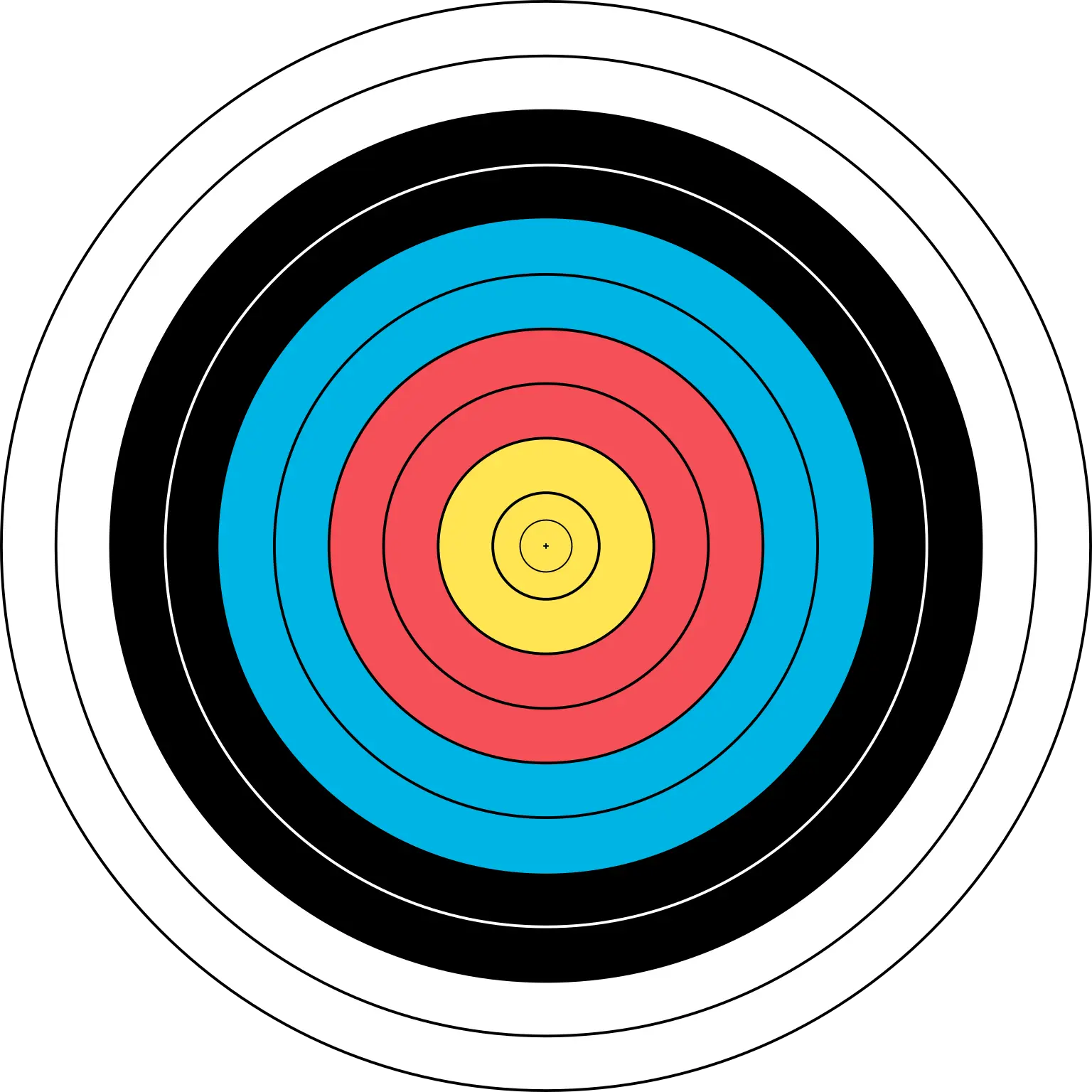
Foam block targets: price, lifespan, and best use
Foam block targets typically range from $30 to $80. They are made from dense foam or compressed fibers and are described as self-healing, which makes them a common beginner choice for general target practice. They cost more than paper, but they usually outlast a cheap setup by a wide margin.
Why beginners buy them
Foam blocks are easy to set up, stop arrows cleanly, and work well for repeat practice at one spot. They suit backyard sessions where the archer wants a stable aiming face and a target that does not need constant adjustment. For many new archers, that simple setup is worth the extra cost.
When a foam block is worth the money
A foam block is worth the money when a beginner shoots often enough that paper replacement becomes annoying, or when a bag target no longer stops arrows well. It also makes sense for archers using a compound bow or a faster recurve setup, because denser material usually handles more stress.
Bag targets: are they the cheapest practical option?
Bag targets usually range from $25 to $60, and they are often the best low-cost choice for easy transport. They are light, simple to move, and can be flipped or rotated to extend life. That makes them practical for field points, but not every bag is suited for every arrow setup.
Field points versus broadheads
Bag targets are commonly used with field points, and some are also made for broadheads. That detail matters. A target that is not broadhead-safe should never be used with broadheads, because blade tips can cut through soft material and ruin the bag much faster. Always confirm the target rating before buying.
How flipping or rotating extends life
Flipping or rotating a bag target spreads wear across more surface area. That can reduce replacement frequency and improve the total value of the target. A bag that costs a little more but lasts longer may be cheaper over time than a very low-cost bag that dies after a few hundred shots.
Do 3D archery targets cost more than standard targets?
Yes. In many cases, 3D archery targets cost more than standard foam blocks, bags, or paper setups. They can cost $100 to $400, while beginner-friendly 3D foam versions start around $60. They are made to simulate animals, so the material, shape, and surface detail add to the price.
Entry-level foam versions versus premium models
Entry-level 3D foam targets are the lower-cost path into realistic practice. Premium models cost more because they use more layered foam and more detailed forms. That extra cost can make sense for hunters who want shot placement practice on an animal-shaped target, but it is not the cheapest option for general target work.
When a 3D target makes sense for beginners
A 3D target makes sense when the beginner wants hunting-style practice more than pure bullseye work. It is less useful for someone still learning anchor points, release consistency, and sight picture. For a new archer on a budget, a standard target usually gives more practice value per dollar.
How much do paper targets and frames cost?
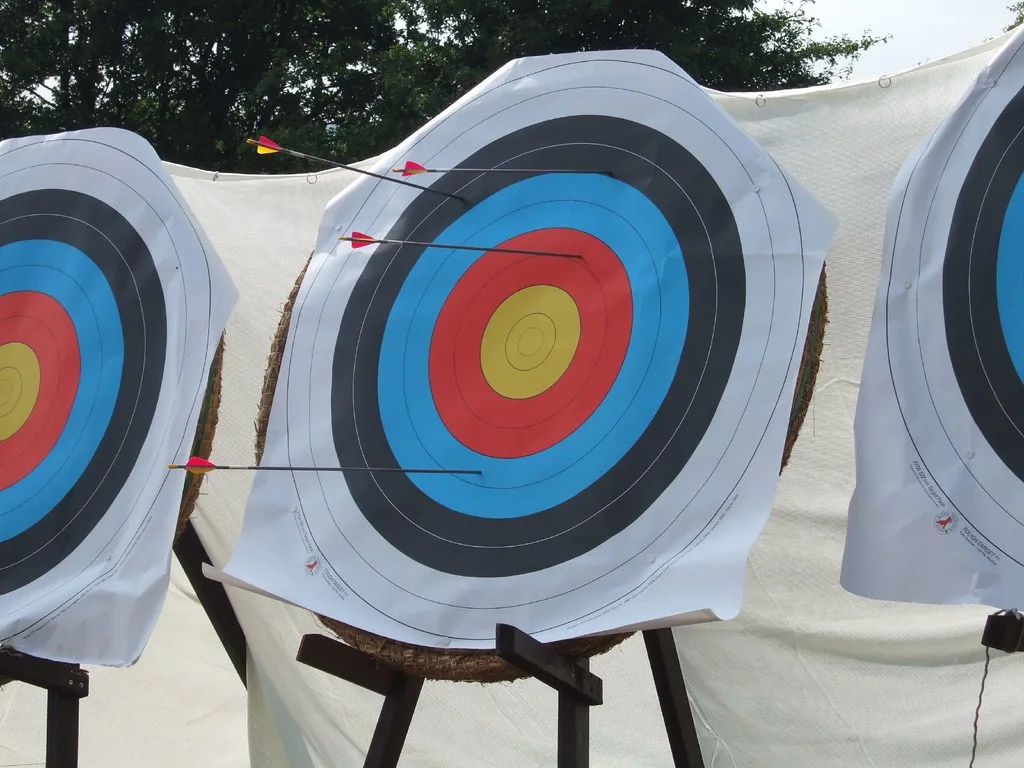
Paper targets and simple frames are often the least expensive option. Paper targets themselves can cost just a few dollars, and paper targets plus a frame or stand often land around $20 to $50. They are best for precision, group size tracking, and form work, but the paper needs frequent replacement.
Best use for form and precision work
Paper targets help an archer see whether arrows are grouping left, right, high, or low. That makes them useful for sight adjustment and basic form checks. They are less suited to heavy daily shooting because the face tears quickly, especially with repeated hits in the same area.
Why replacement adds up
The paper itself is cheap, but replacement frequency changes the real cost. A frame, stand, or backer also adds to the total. Over time, a paper setup can become more expensive than expected if a shooter goes through several target faces every week.
How to choose the right target for your bow type?
Bow type changes target choice because draw weight and arrow speed change how much stopping power is needed. Compound bows often need tougher targets than lighter recurve setups, and higher draw weight demands a denser target. Home space, backyard room, and indoor setup limits matter too.
Compound bow target needs
Compound bow use usually calls for a tougher target, especially at moderate to higher draw weights. Faster arrows can bury deeper into soft material, so dense foam blocks or suitable bag targets are often better than thin paper-only setups. Broadhead use requires a broadhead-safe target, not just any foam or bag.
Recurve bow target needs
Recurve bow use can work well with foam blocks, bag targets, and paper systems, depending on draw weight. Lighter recurves are easier on targets, but a strong recurve still needs enough density to stop arrows safely. Beginners should match target toughness to arrow speed, not only bow style.
Home, backyard, and indoor setup limits
For a home or backyard setup, portability and size matter as much as stopping power. A larger target is easier to hit, but it takes more room and weighs more. Indoor spaces usually favor paper targets on a frame or a compact block, because setup and storage are simpler.
Cost-per-use table and beginner buying guide
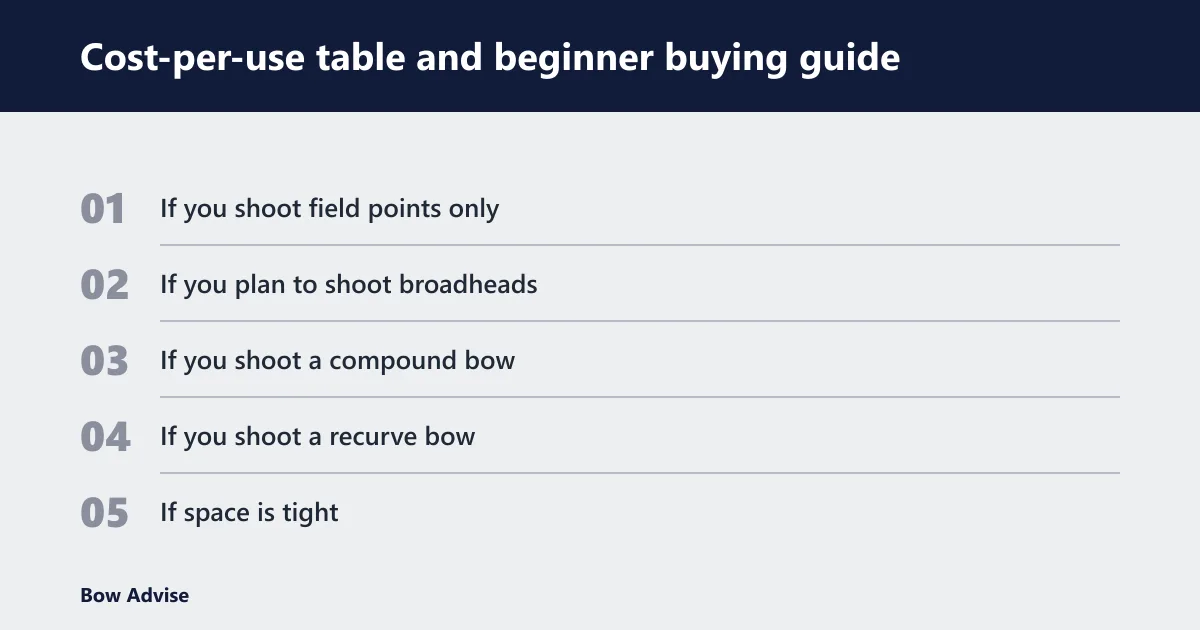
The least expensive archery target is not always the least expensive over time. Total value depends on lifespan, replacement frequency, and whether the target matches your bow and arrow type. A target that costs less upfront but wears out quickly can become more expensive than a sturdier option.
| Target type | Upfront price | Expected lifespan | Portability | Bow compatibility | Value notes |
|---|---|---|---|---|---|
| Paper target + frame | $20 to $50 total; paper itself costs a few dollars | Short; face replacement is frequent | Good if the frame is light | Best for field points and form work | Lowest entry cost, but replacement adds up fast |
| Bag target | $25 to $60 | Moderate; longer if rotated or flipped | Very good | Field points; some models also accept broadheads | Strong value for portable practice |
| Foam block target | $30 to $80 | Moderate to long, depending on density | Fair to good | Good for many recurve and compound setups | Often the best all-around beginner choice |
| 3D archery target | $100 to $400; entry-level foam versions start around $60 | Long if used carefully | Poor to fair | Best for hunting-style practice | Most realistic, but not the cheapest route |
- If you shoot field points only: start with a bag target if portability matters, or a foam block if you want more stopping power.
- If you plan to shoot broadheads: buy only a target rated broadhead-safe.
- If you shoot a compound bow: lean toward denser foam or a strong bag, especially as draw weight rises.
- If you shoot a recurve bow: lighter draw weights can work well with many foam or bag targets, but higher draw weight still needs tougher material.
- If space is tight: paper on a frame or a compact block makes storage easier.
Say your target budget is $35. A paper target frame might fit that number today, but frequent face replacement can make it the more expensive choice after a few weeks of regular shooting. A foam block near the top of its price range may cost more now and less later if it survives far longer.
A common first-timer mistake is choosing an archery target by diameter alone without checking the material or density. A bigger target can still fail if the foam is too soft for the bow’s draw weight, or if the target is not broadhead-safe. For total value, the question is not only “how much does it cost?” but also “how long will it stop arrows safely?”
Frequently asked questions
How much are archery targets?
Archery targets usually cost $25 to $300+, depending on type and build. Paper targets are the cheapest upfront, bag targets often cost $25 to $60, foam block targets usually run $30 to $80, and 3D targets can reach $100 to $400. The real cost depends on lifespan, not only sticker price.
What is the cheapest archery target for beginners?
Paper targets with a simple frame are the cheapest option, with paper targets costing just a few dollars and frames often adding about $20 to $50. That is best for form work, but frequent replacement can add up. For many beginners, a bag target or foam block is the better long-term value.
How much does an archery target cost for compound bows?
For compound bows, many beginners end up in the $30 to $80 foam block range or the $25 to $60 bag range, depending on draw weight and arrow speed. Faster compounds need tougher stopping power, so the cheapest target is not always the safest or least expensive over time.
How much does an archery target cost for recurve bows?
Recurve bow targets can cost anywhere from a few dollars for paper to $30 to $80 for foam blocks and $25 to $60 for bag targets. Lighter recurves are easier on targets, but higher draw weight still calls for denser material. The bow’s speed matters as much as the bow type.
Are foam block targets worth the money?
Yes, for many beginners they are. Foam block targets typically cost $30 to $80 and use dense foam or compressed fibers that are described as self-healing. That usually gives better durability than paper and more stopping power than a thin setup, especially for repeat backyard practice with field points.
How much do paper targets and frames cost?
Paper targets themselves can cost just a few dollars, and paper targets plus a frame or stand often cost about $20 to $50. They are the cheapest option for precision work, but the face needs frequent replacement. That makes them low cost at first and less attractive for heavy shooting volume.