Bow Hunting Season Timeline for Beginners Before Opener
A practical starting point is about 8 weeks before opening day: fit bow and arrows, confirm broadheads, practice weekly, and finish with a full dress rehearsal about 7 days out. Skip that window and small setup errors become lost arrows, sloppy groups, and last-minute panic. This timeline breaks pre-opener work into weekly checkpoints from eight weeks out to the evening before season.
A four-Week countdown to opening day
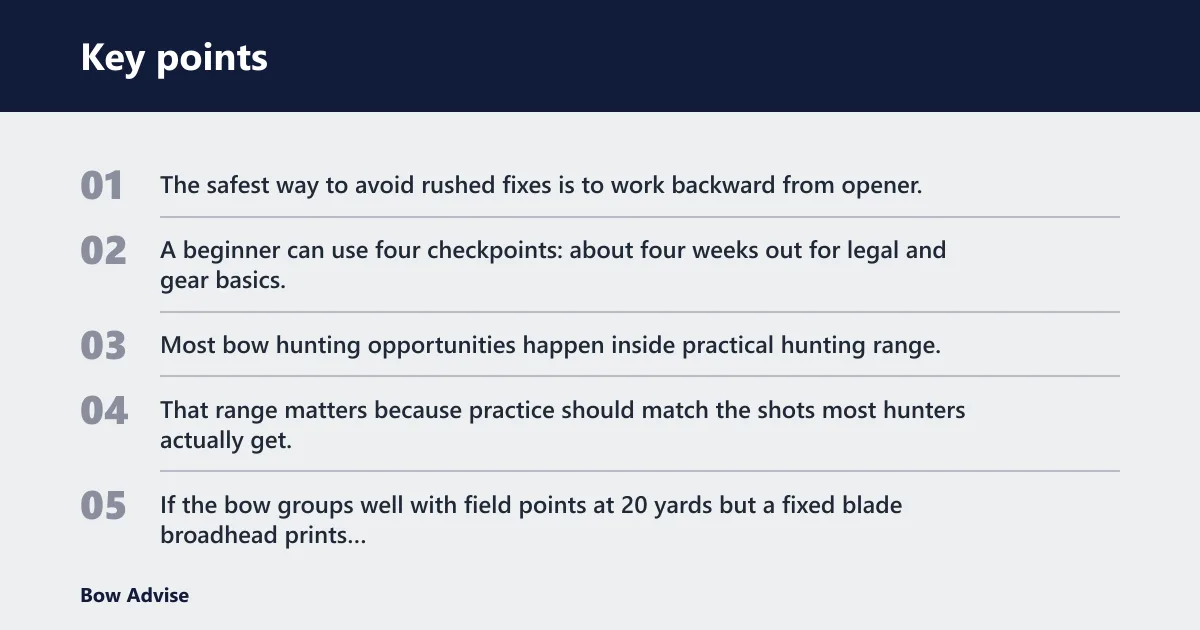


The safest way to avoid rushed fixes is to work backward from opener. A beginner can use four checkpoints: about four weeks out for legal and gear basics, about three weeks out for tuning and arrow checks, about two weeks out for field positions, and about one week out for final inspection and pack verification.
Most bow hunting opportunities happen inside practical hunting range, about 20 to 30 yards. That range matters because practice should match the shots most hunters actually get, not long-distance targets that look good on the range and rarely matter in the field.
| Week before opener | Task | Pass/fail benchmark | Common mistake to catch |
|---|---|---|---|
| 4 weeks out | Confirm bowhunter education, state rules, bow inspection, arrow fit | All required paperwork is complete; bow has no visible damage; arrows match setup | Missing course proof, loose peep, cracked arrow shaft, wrong spine |
| 3 weeks out | Tune check and broadhead flight check | Broadheads and field points group closely at hunting distance | Rest issues, bad cam timing, broadheads hitting off line |
| 2 weeks out | Practice kneeling, seated, and rangefinder distance checks | Clean shots from field positions at realistic yardages | Only shooting from perfect standing form |
| 1 week out | Final gear inspection, pack check, treestand safety check, and dress rehearsal | Every item is packed, working, and ready for the hunt | Dead batteries, missing release, dull broadheads, forgotten treestand safety gear |
If the bow groups well with field points at 20 yards but a fixed blade broadhead prints about 4 inches left, that is generally considered not good enough for opening week. That is not a “good enough” result for opening week. It is a warning that the bow and arrow setup still needs work before the hunt starts.
Should beginners start with a compound bow?
For most new hunters, yes. A compound bow is the best starting point because let-off at full draw makes it easier to hold on target, and many models allow adjustable draw weight as skill and strength improve. That combination gives beginners more control during the learning phase.
Why let-off matters for new hunters
Let-off reduces holding weight at full draw, so aiming is less tiring and form breaks down less quickly. That matters during real hunting shots, where a hunter may need to hold still, judge movement, and settle into the sight picture without rushing the release.
Why adjustable draw weight helps beginners
Many compound bows can be set within a workable draw-weight range, which helps a beginner start lighter and build up only after form is stable. A bow that is too heavy often leads to short draws, collapsed posture, and poor arrow flight.
When a recurve makes sense instead
A traditional bow can make sense for a beginner who wants traditional archery and accepts a steeper learning curve. It is not the easiest path for most new hunters, because there is no let-off and fewer aiming aids to hide form errors.
Beginner bow setup essentials
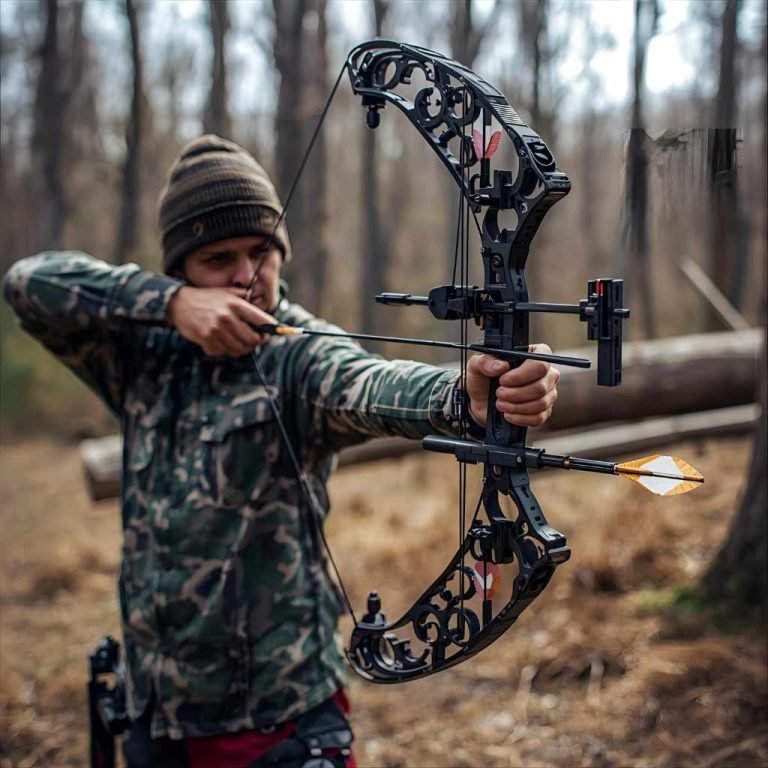
Keep the setup simple. A basic hunting bow should not carry extra accessories that confuse a new archer before season. Start with a multi-pin sight, a release aid, a reliable rest, a front stabilizer, and carbon arrows that match the bow.
Multi-pin sight setup for hunting distances
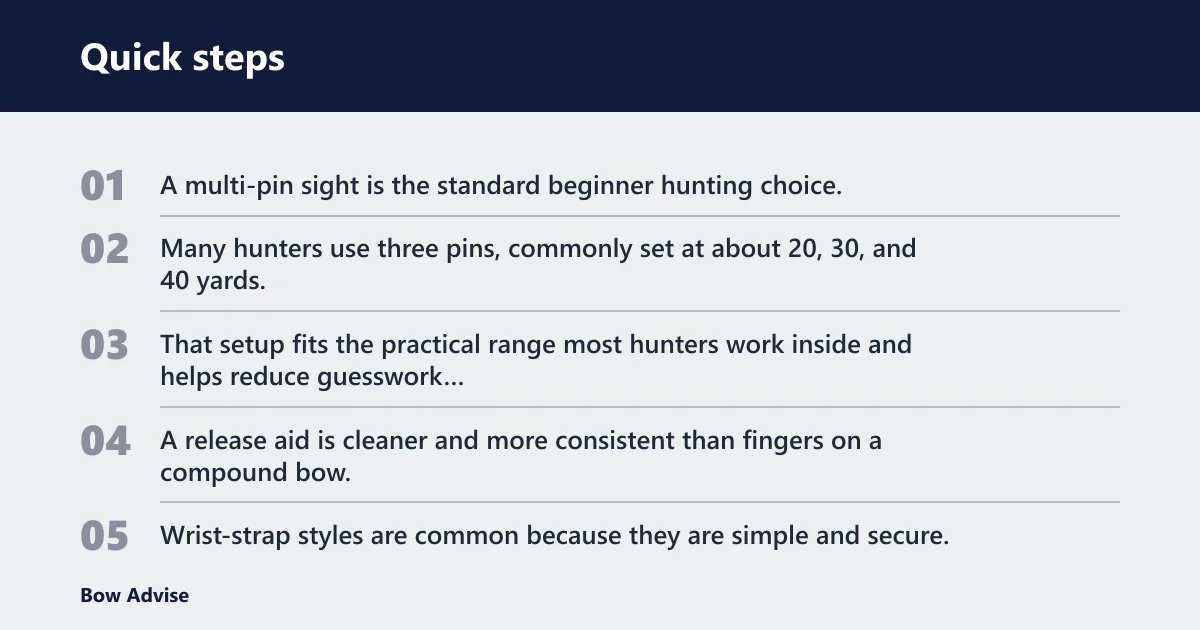
A multi-pin sight is the standard beginner hunting choice. Many hunters use three pins, commonly set at about 20, 30, and 40 yards. That setup fits the practical range most hunters work inside and helps reduce guesswork under pressure.
Release aid choices and why they matter
A release aid is cleaner and more consistent than fingers on a compound bow. Wrist-strap styles are common because they are simple and secure. Handheld thumb trigger styles are also popular, but beginners should choose one style and learn it well before changing.
Rest, stabilizer, and arrow fit basics
Full-capture rests keep the arrow contained, which is beginner-friendly. A Whisker Biscuit is a common example. Drop-away rests can give cleaner fletching clearance, but they also add more setup variables.
A front stabilizer in the 8–12 inch range helps reduce vibration and torque. It should not make the bow awkward to carry. The purpose is steadier aiming, not extra weight for its own sake.
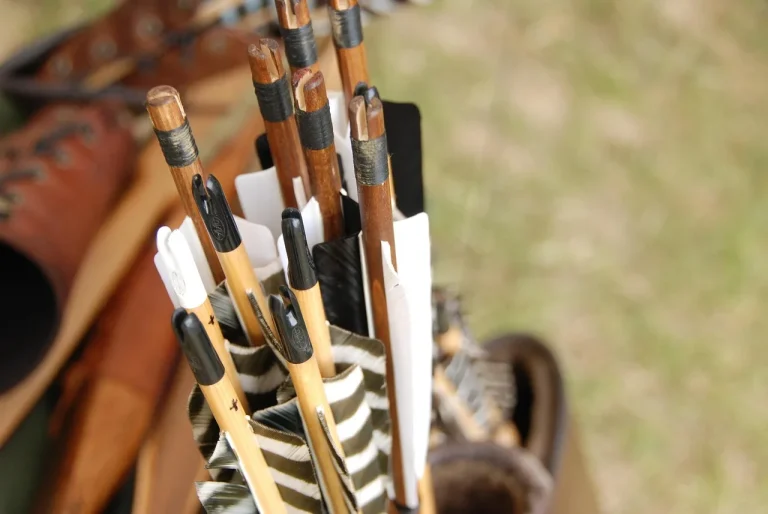
Carbon arrows must match the bow setup. That means correct spine, correct length, and the right total grain weight for the bow’s draw weight and draw length. A mismatch can produce poor flight, noisy shots, and broadhead problems later.
Week 4 readiness check
Four weeks before opener is the time for the boring but important work. Check state regulations, confirm bowhunter education requirements, inspect the bow, and make sure the arrows are the right fit. This is also the point where most new hunters discover that prep takes longer than expected.
Bowhunter education and state rules
Bowhunter education is often required for new hunters, but the rule is state-specific. Check early, because paperwork problems can block a hunt even when the bow is ready. Also confirm broadhead legality now, not the night before opener.
Bow inspection and basic maintenance
Inspect the peep sight, cams, strings, cables, limb pockets, screws, and rest hardware. Look for loose parts, fraying serving, and anything that shifted since the last shooting session. Bad cam timing should be fixed before broadhead testing begins.
A common first-timer mistake is assuming a bow that “still shoots” is ready. A loose peep can rotate, a rest can drift, and a cracked arrow can fail on the first hard impact. Those are all pre-opener problems, not field problems.
Arrow spine, length, and total grain weight
Check each carbon arrow for cracks, especially near the insert and nock end. Then confirm that the arrows are cut to the proper length for the setup and matched to the bow’s draw weight and draw length. Matching matters more than brand choice.
Week 3 broadhead flight check
Three weeks out is the broadhead checkpoint. Confirm broadhead flight before the hunt, because that is where many setup problems show up. A bow that groups field points well still may not send broadheads to the same spot without tuning work.
Fixed blade versus mechanical broadheads
Fixed blade broadheads and mechanical broadheads both have a place, but the broadhead must be legal in the hunter’s state and must be tested before season. Fixed blades usually demand cleaner tune and arrow match. Mechanical heads can be easier to group, but legality and reliability still need checking.
How to confirm broadhead and field point impact match
Start at a realistic hunting distance, then compare field point and broadhead impact. The goal is not perfect target-style clustering at every distance; the goal is clean, repeatable flight that puts both points close enough for ethical hunting confidence.
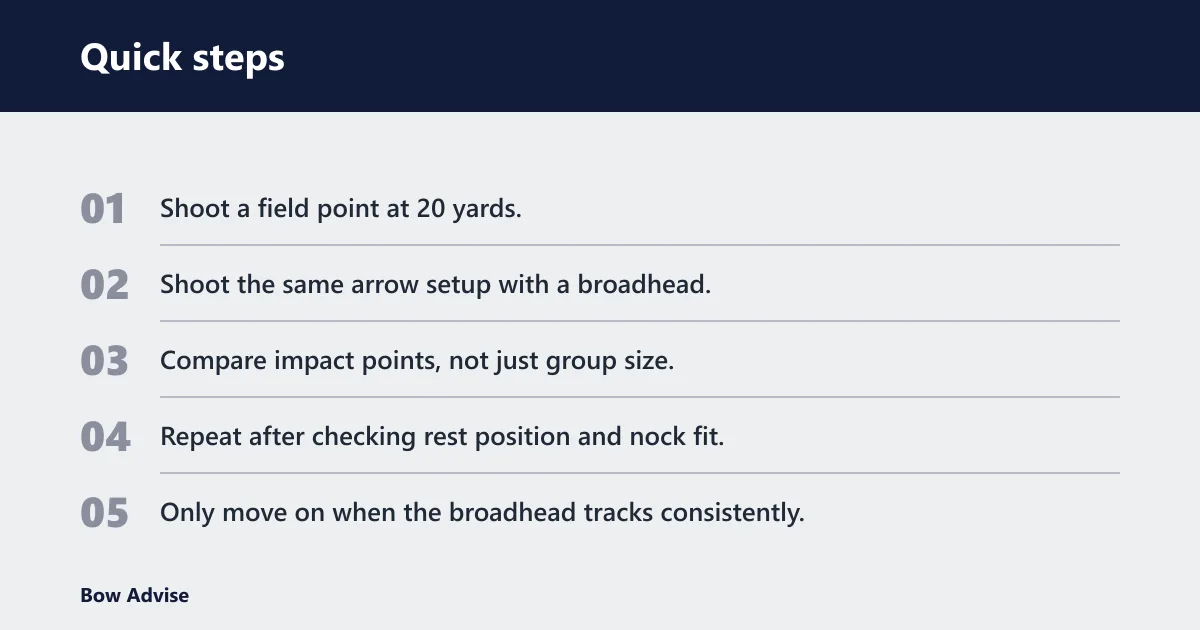
- Shoot a field point at 20 yards.
- Shoot the same arrow setup with a broadhead.
- Compare impact points, not just group size.
- Repeat after checking rest position and nock fit.
- Only move on when the broadhead tracks consistently.
Common tuning mistakes to catch now
Look for a rest that is not timed correctly, a nock point that is off, vanes that contact the rest, or cam timing that is out. Those issues often show up first with broadheads because broadheads are less forgiving than field points.
Suppose a hunter is grouping field points inside the target center at 20 yards, but broadheads land several inches high and right. That usually means the bow still needs tuning work, not a stronger grip or a different aiming pin.
Week 2 hunting-position practice
Two weeks out, shift from perfect range shooting to hunting positions. The goal is to make the first hunt feel familiar. Practice kneeling and seated shots, because those positions change anchor, torso angle, and how the sight picture settles.
Kneeling shots
Kneeling shots help simulate grass, brush, and low-angle cover. Start at short distance, then move to practical hunting range only after the form stays consistent. Keep the shot process simple: draw smoothly, settle, aim, and release without lunging forward.
Seated shots
Seated shots matter for ground blinds and low-profile setups. Practice from a chair or a low stool that mimics the seat height you will actually use. The bow arm often feels different here, so anchor point and elbow position should be checked carefully.
Rangefinder use and distance validation
A rangefinder belongs in the practice routine before opener, not just in the pack. Use it to confirm yardage on target stakes, trees, and landmarks. That way, the hunter learns how far 20, 30, and 40 yards actually look from a real setup.
Practice should include the shots most hunters are likely to see, about 20 to 30 yards, from the positions that match the hunt. That combination builds better judgment than only shooting flat-ground groups at fixed markers.
What should you verify before opening day?
Before opening day, verify every hunt-day item that can stop the hunt or make the shot unsafe. That includes the bow, arrows, broadheads, release, sight, pack, rangefinder, and treestand body harness. The final check should catch missing gear, loose parts, and dead batteries.
Final gear inspection and pack
Confirm that the bow is shooting to point of aim, every arrow is intact, and all broadheads are sharp and legal. Pack extra nocks, a small tool kit, a rangefinder, and anything required for your hunting setup. A missing release can cancel the first hunt before it starts.
Treestand body harness and field safety gear
For elevated hunting, carry a safety treestand strap. It should be part of pre-season gear and used before every treestand hunt. Also verify straps, a lineman’s belt if used, and all attachment points that keep the hunter connected from climb to descent.
Last-minute bow and arrow checks
Check for loose peep sights, loose rest hardware, damaged fletching, cracked arrows, and any sign that the bow has drifted out of tune. Shoot a few final arrows only if the setup is already close. The last week is for confirmation, not rebuilding.
Frequently asked questions
How far before bow season should I start practicing?
Start at least 8 weeks before opening day if possible. That gives enough time to fit the bow, tune arrows, test broadheads, and practice from hunting positions without rushing. Many beginners wait too long and then try to fix setup issues in the final week.
What should I check on my bow before opening day?
Check the peep sight, cams, string, cables, rest, arrows, nocks, and broadheads. Make sure the sight is secure, the arrows are not cracked, and the bow still shoots to point of aim. If anything moved since the last practice session, fix it before hunting.
How do I know if my broadheads are ready for hunting season?
Your broadheads are ready when they are legal, sharp, securely mounted, and flying close to your field points at a hunting distance. If broadheads impact far from field points, the bow still needs tuning. Do not wait until opener to discover that problem.
What should a beginner practice before the first hunt?
A beginner should practice drawing smoothly, anchoring consistently, aiming at 20 to 30 yards, and shooting from kneeling and seated positions. That covers the most common hunting angles and distances without overcomplicating the process. Include rangefinder checks during practice.
Should I use a compound bow or recurve as a beginner hunter?
Most new hunters should start with a compound bow because let-off and adjustable draw weight make it easier to learn. A recurve can work for someone who wants traditional archery, but it leaves less margin for error and usually demands more practice time.
What gear do I need to verify before bow season starts?
Verify the bow, sight, release, rest, stabilizer, arrows, broadheads, rangefinder, and treestand safety strap if you hunt from elevation. Also confirm bowhunter education requirements and state rules early. If any item depends on batteries, charge or replace them before opener.
How do I practice hunting shots from real positions before opener?
Build practice from standing to kneeling, then seated, then from the angle and distance you expect in the field. Keep shots inside practical hunting range and use a rangefinder to confirm yardage. That progression makes the first hunt feel far less foreign.
When should I confirm broadhead flight before bow season?
A common rule of thumb is to confirm broadhead flight about 3 weeks before opener, after the bow is inspected and before final field-position practice. That leaves enough time to fix rest issues, cam timing problems, or arrow mismatches. A last-minute broadhead surprise is one of the easiest pre-season mistakes to avoid.