How to Arrow a Deer After the Shot: Blood, Wait Times
After the shot, read the arrow and the deer first, then wait about 30 minutes to several hours, depending on the hit sign. Gut and liver hits need the longest delay. Move in too soon and a wounded deer can jump, run farther, or leave a poor trail. This guide gives a post-shot decision tree for blood, arrow sign, deer reaction, wait times, and the right recovery path.
What to do in the first 10 minutes
Right after the shot, hunters should ask three questions: where did the arrow hit, what did the deer do, and where did it go. Those three answers shape the rest of the recovery plan. The goal is simple: stay still, watch, mark, and decide before taking the first step.
Stay still and watch the deer’s reaction
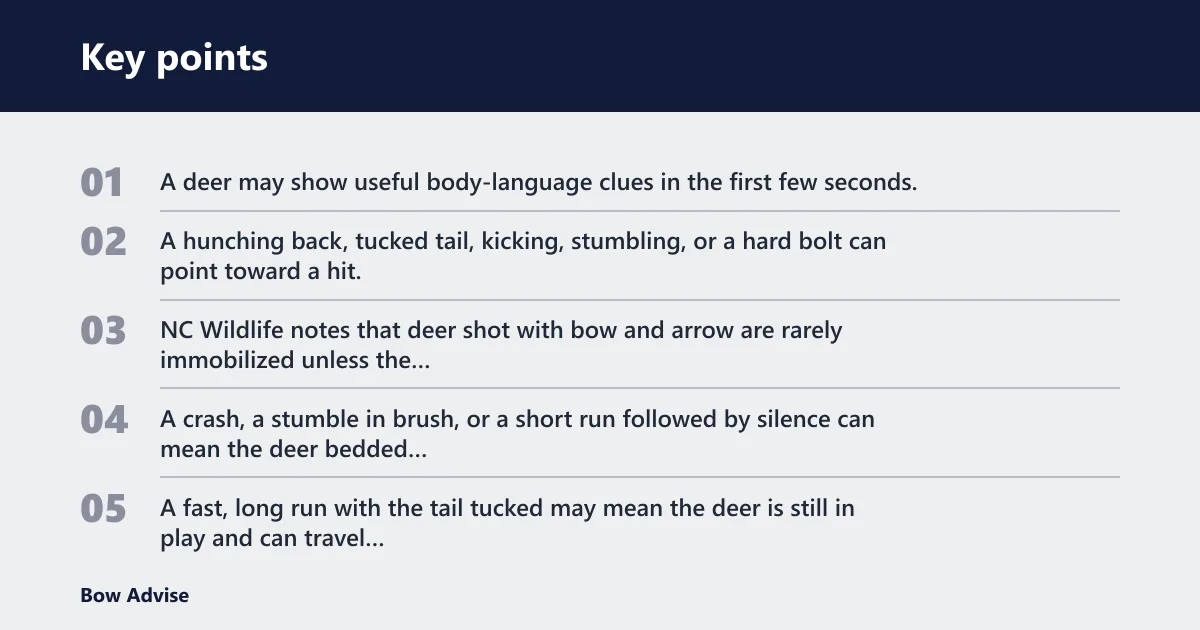
A deer may show useful body-language clues in the first few seconds. A hunching back, tucked tail, kicking, stumbling, or a hard bolt can point toward a hit, but none of those reactions proves a clean recovery yet. NC Wildlife notes that deer shot with bow and arrow are rarely immobilized unless the spine is severed.
Sound matters too. A crash, a stumble in brush, or a short run followed by silence can mean the deer bedded nearby. A fast, long run with the tail tucked may mean the deer is still in play and can travel farther if bumped again.
Mark the impact point and last sighting
Before leaving the stand or blind, mark four things: the impact point, the last place the deer was seen, the direction of travel, and a landmark or waypoint. A phone, GPS note, map mark, or biodegradable marker all work. The point is to have a fixed reference before the ground turns confusing.
That habit matters even more in leaves, grass, or low light. The same source says sign may take 5-10 yards or more to appear, so the first visible blood is not always at the hit site. Marking the shot and the last sighting keeps the search from starting in the wrong place. (Ncwildlife)
Note the arrow, sound, and direction of travel
Recover the arrow only if it is easy and safe to do so. The shaft, broadhead, and any material on them can help narrow the hit. A clean miss often leaves little more than grass or dirt. Blood, fat, hair, and tissue point in different directions.
Arrow flight also matters. A hard deflection, a loud “thud,” or a pass-through that disappears into the timber can all change what follows. Quartering angle, distance, and the deer’s movement at impact all affect where the broadhead entered and what it likely touched.
What the deer’s reaction can tell you
Deer reaction is a clue, not a verdict. A deer that hunches, kicks, or runs off hard may still be hit in a very different way than the reaction suggests. Use the reaction to guide the wait, then confirm with sign instead of guessing from movement alone.
Hunching, tucked tail, and stumbling
A hunching back can suggest a hit in the body cavity, and a tucked tail often lines up with a stressed or hurt deer. Stumbling or a short, unsteady run may point toward a more serious hit than a muscle graze. Whitetail Hunting Kentucky notes that those reactions can help identify shot type.
Suppose a deer jumps at the shot, tucks its tail, then runs 60 yards and stops twice before bedding. That sequence fits a deer that may be hurt but not instantly down. The trail plan should start with caution, not speed.
Kicking, crashing, or a hard bolt
Kicking can happen with many hit types, including non-vital hits, so it cannot stand alone as proof. A loud crash can mean the deer hit brush or went down briefly. A hard bolt with the tail down often means the deer is still mobile and may be bedded before dark.
Even a dramatic reaction does not settle the question. A deer can look hit hard and still travel a long way if the shot is not lethal. That is why the arrow and the blood trail matter more than the sound of the getaway.
When a reaction still does not confirm the hit
Reaction alone is weak evidence when the shot was at an angle, the light was poor, or the deer was moving. A deer can flinch from the shot itself and still be missed. In those cases, the safest move is to mark the site and wait for sign before assuming a hit type.
Do not let excitement turn a possible miss into a rushed recovery. The first sign on the arrow or ground should drive the next choice.
What does the arrow tell you?
The arrow is often the best close-range record of the shot. Blood color, froth, hair, tissue, and arrow condition can point toward lung, liver, gut, or a graze. Read all of those clues together. One clue by itself is rarely enough.
Blood color and froth
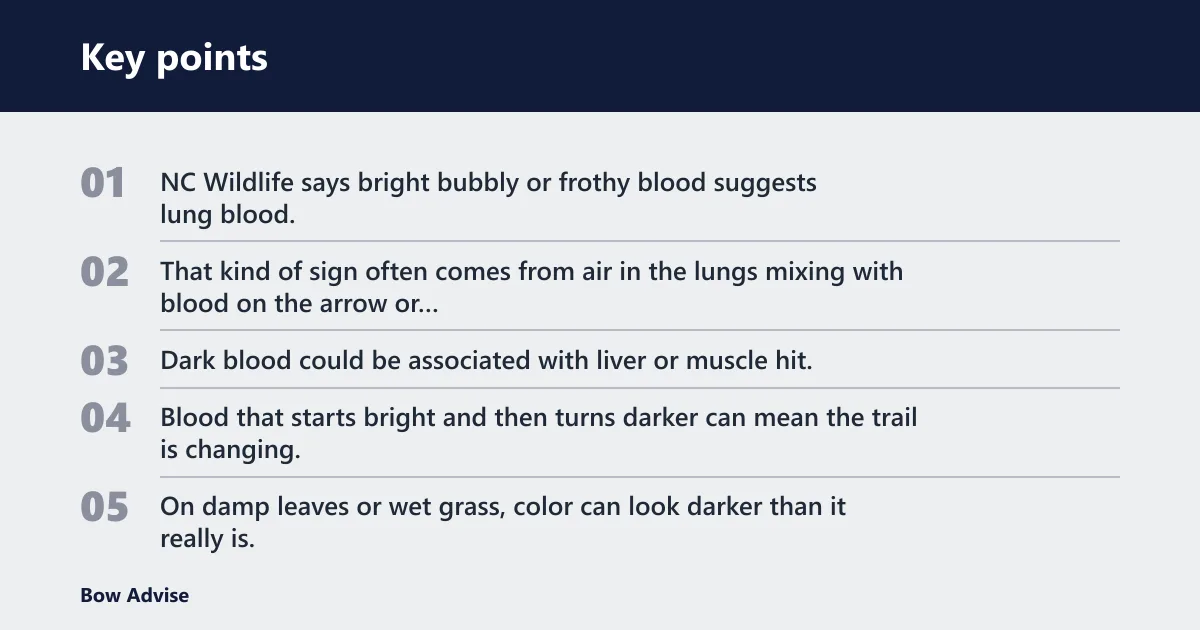
The same source says bright bubbly or frothy blood suggests lung blood. That kind of sign often comes from air in the lungs mixing with blood on the arrow or ground. Dark blood could be associated with liver or muscle hit, but dark blood alone does not prove a liver shot.
Blood that starts bright and then turns darker can mean the trail is changing, not that the first clue was wrong. On damp leaves or wet grass, color can look darker than it really is. In dry dust or snow, the same blood may read differently.
Hair, tissue, and debris
Hair can help, but only when it is read with the shot angle and arrow condition. Belly hair is usually longer and lighter. Body hair near the shoulder is often shorter and stiffer. Tissue, fat, or plant debris on the shaft can also point to where the arrow passed.
A broadhead coated with greenish material may suggest a gut hit, while watery blood with froth suggests lungs. A dry shaft with a few hairs but no blood may point to a graze or a miss. Treat mixed sign as uncertain until the trail proves otherwise.
Arrow shaft and broadhead clues
A pass-through that is heavily bloodied on both sides often gives better information than a buried arrow. A bent shaft, broken nock, or clipped fletching can mean the arrow struck hard on the way in or out. The broadhead can also carry bone chips or stomach material.
Read the arrow before stepping into the trail. That small pause can save the only clean sign available.
Deer recovery decision table
This table turns sign into a next move. Use the observed clue first, then match it to the likely hit type, the wait window, and the first action. If the sign is mixed, choose the more cautious row.
| Observed sign | Likely hit type | Recommended wait window | Leave the area? | First tracking action |
|---|---|---|---|---|
| Bright bubbly or frothy blood; possible lung sign | Lung or double-lung | 10 to 15 minutes for a double-lung shot | Yes, if the deer is not visible down | Mark the hit, then move quietly to the first blood with a light |
| Bright blood plus quick hunching or stumbling | Lung, possibly single-lung caution | 8 to 10 hours if single-lung is possible | Yes | Back out, then return from the safest approach and follow sign slowly |
| Dark blood, slower trail, deer bedded or moving slowly | Liver | 6 to 8 hours | Yes | Mark the last blood and return later with a calm search plan |
| Green or foul smell, watery blood, or stomach material | Gut or paunch | 10 to 12 hours | Yes | Leave immediately and wait before taking up the trail |
| Hair only, no blood, or uncertain arrow sign | Graze or uncertain hit | At least several hours if the deer reacted hard; longer if gut is possible | Usually yes | Return to the hit site and search slowly for the first true sign |
| No blood, no hair, no impact sign | Likely miss or light graze | Short check only if the deer was clearly struck; otherwise no wait required | Often no, unless another hunter or boundary issue requires it | Inspect the impact area and arrow path for cut brush, dirt, or bone chips |
How long should you wait before tracking?
The wait depends on the hit sign, the shot angle, and the deer’s behavior. A strong lung hit can allow a short wait. Liver and gut hits need far more time because the deer may still bed nearby and move again if pressured. Weather can change how visible sign is and how fast odor or blood disperses.
Lung and single-lung caution
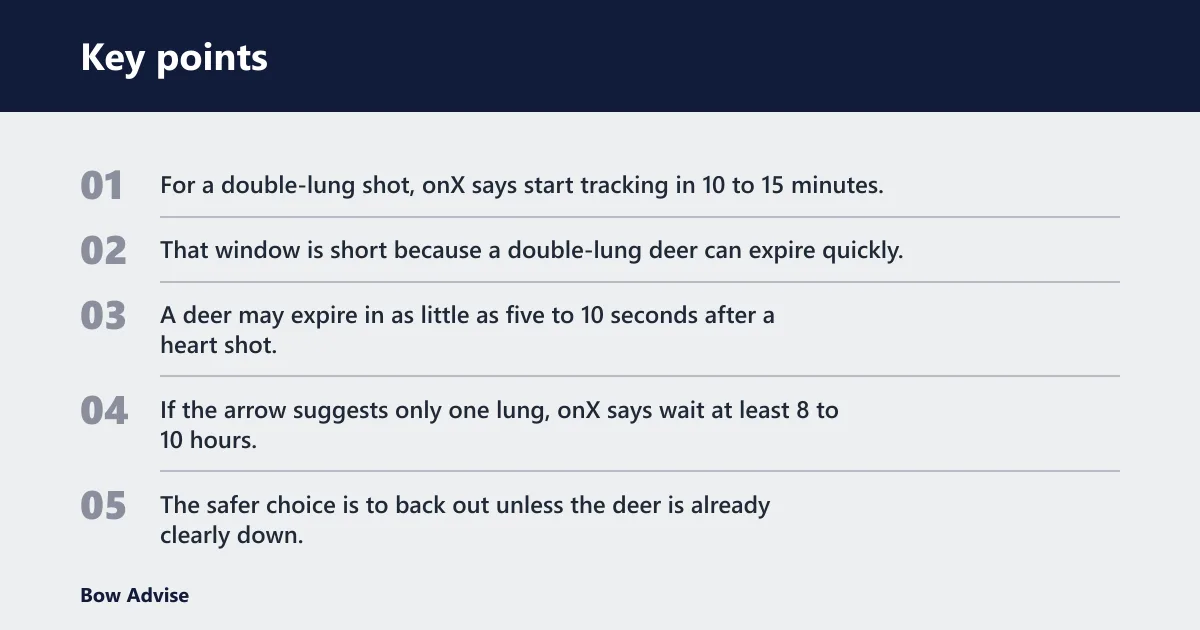
For a double-lung shot, onX says start tracking in 10 to 15 minutes. That window is short because a double-lung deer can expire quickly, and a long delay can let the trail cool or wash out. A deer may expire in as little as five to 10 seconds after a heart shot, but that is not something a hunter can count on in the field.
If the arrow suggests only one lung, onX says wait at least 8 to 10 hours. Single-lung deer can travel and bed again. The safer choice is to back out unless the deer is already clearly down.
Liver hit timing
For a liver shot, onX says wait 6 to 8 hours before tracking. Dark blood, a careful walk away, and no heavy froth often fit this pattern. The deer may still be close, but it may also bed tightly and move only if disturbed.
A common first-timer mistake is starting too soon because the blood looks “good enough.” Liver hits often create a trail that seems usable, then ends at a bed with little more sign. Waiting makes the recovery more likely.
Gut hit timing and weather adjustments
For a gut shot, onX says wait 10 to 12 hours. If the weather is hot, rain is coming, or sign is sparse, even more caution may be needed. A gut shot can leave weak blood at first, then a better trail later as the deer beds and the wound changes.
Cold weather can preserve sign longer, but it does not make a gut hit safer to push. Rain can wash away the best clue on the trail. In both cases, the first decision is still to avoid bumping the deer out of its bed.
How shot angle changes the recovery plan
Angle changes everything. It changes the entry point, which organs are in line, and how much margin the shot had. Field & Stream says the behind-the-shoulder lung shot offers the largest vital target and the most margin for error. Quartering shots have more variables.
Quartering-away shots
Field & Stream says quartering-away and quartering-to angles have dedicated aiming guidance for bowhunters. On a quartering-away shot, the arrow can drive through one side of the chest and angle toward the off-side lung. That setup can create better blood than a clipped one-lung hit, but it can also exit farther back than expected.
If the exit appears low and back, plan for longer caution. If the arrow shows bright froth and a clean pass-through, the wait can be shorter than a liver or gut scenario. Angle affects both the sign and the wait.
Quartering-to shots
Quartering-to shots are less forgiving because the near shoulder can stop the arrow or deflect it. A hit that looks high on the entrance side may still miss the lungs or only clip one. That uncertainty pushes the recovery plan toward a longer wait and more careful sign reading.
When the angle is steep, do not use the deer’s reaction alone to decide. Confirm with the arrow and trail before choosing a short or long delay.
Tracking deer sign and tools
Once the wait is over, the trail should be taken one clue at a time. Start at the impact point, then move from sign to sign with markers, light, and notes. The work is slow on purpose. Fast movement can blow past the best sign or push a wounded deer from a bed.
How to move sign to sign
Use biodegradable markers to flag each blood spot, hair clump, or disturbed patch. A flashlight or headlamp helps in timber, grass, and creek bottoms. Phone or GPS notes can save the line of travel if the trail turns or fades. Map waypoints help when the line crosses property edges or thick cover.
When the trail is strong, move only to the next visible sign before looking farther ahead. When the trail weakens, return to the last confirmed sign and widen the search in a controlled way instead of wandering.
What to mark and record
Mark the impact point, the last blood, the last bed, and any place where the deer changed direction. Note the size and color of each blood spot if the trail becomes thin. That record is useful when the search must pause and restart later.
If the deer crosses a fence, road, or property line, stop and get permission before continuing. Legal and ethical responsibility to recover the deer does not remove the need to stay within the law.
When to use a dog or a helper
When it is legal, a tracking dog can help on weak trails, hot weather days, or when the sign is mixed. A helper can also be useful for marking, watching the line, or handling property access. Use extra help early if the trail is fading and the deer may have traveled farther than expected.
Do not bring in a dog too soon on a gut or liver hit if the deer is likely to be bedded close by and still alive. The wrong pressure at the wrong time can make the trail worse.
Frequently asked questions
How far will a deer travel after being shot with an arrow?
The distance depends on hit type, angle, and how soon the deer is pressured. A heart or double-lung hit may leave the deer very close, and a heart shot can end in as little as five to 10 seconds. Single-lung, liver, and gut hits can carry the deer much farther before it beds or expires.
How long does it take a deer to die after being shot with an arrow?
There is no safe exact answer. A heart shot can be very fast, sometimes within five to 10 seconds, while a double-lung shot often needs only a short wait before tracking. Liver and gut hits can take hours. The right move is to read the sign, then match the wait to the likely hit type.
Do deer feel pain when shot with an arrow?
It is reasonable to treat any arrow hit as painful and stressful, even if the deer’s reaction is brief or hard to read. The practical response is to avoid adding pressure, wait the proper amount of time, and recover the deer as quickly and cleanly as the sign allows. That is the most ethical course.
What should I do right after I arrow a deer?
Stay still and answer three questions: where hit, what did the deer do, and where did it go. Mark the impact point and last sighting before leaving the stand. Then read the arrow and the deer together so the next step is based on sign, not excitement.
How long should I wait before tracking a deer after a bow shot?
Wait time depends on the likely hit. For a double-lung shot, onX says 10 to 15 minutes. For a single-lung shot, wait at least 8 to 10 hours. For a liver shot, wait 6 to 8 hours. For a gut shot, wait 10 to 12 hours. If the sign is uncertain, choose the longer, safer delay.
What blood means a lung hit vs a gut hit?
Bright bubbly or frothy blood points toward lungs, according to NC Wildlife. Dark blood can be associated with liver or muscle hit. Gut sign often includes watery blood, stomach material, or a foul smell. Use the blood with the arrow, hair, and deer reaction before deciding which hit is most likely.
When should I stop tracking and get help recovering a deer?
Stop if the trail crosses a property line, the sign disappears in a way that suggests pushing the deer, or the recovery is entering unsafe terrain. Get help sooner if a tracking dog is legal and available, or if the sign is too weak to follow safely. The goal is recovery, not chasing the deer into another county.
How do I avoid pushing a wounded deer farther away?
Wait the correct amount of time, then move slowly and only to the next sign. Do not grid-search too early on a gut or liver hit. Mark every clue, back out when the trail turns weak, and return with a better plan rather than forcing the deer to keep running.