Tree Stand vs Ground Blind for Bow Hunting: How to Choose
Choose a tree stand when I need longer, cleaner shooting lanes and can watch deer movement from above; choose a ground blind when access, low cover, or a rifle-like setup matters more than height. Bad placement means blown wind, bad angles, and wounded deer. I’ll break down tree stand vs ground blind for bow hunting with a decision matrix on terrain, distance, mobility, safety, and shot angle.
This guide is part of our Bow hunting laws and regulations series.
tree stand vs ground blind bow hunting
The core trade-off is simple: a ground blind gives flatter, ground-level shots. A tree stand gives me height, visibility, and tighter lane control, while a ground blind gives me concealment at deer level and easier access in cover or open ground. I’ve used both on my own range and in the woods, and the better choice usually comes from terrain and entry route, not comfort.
| Decision factor | Tree stand | ground blind for bow hunting | Winner |
|---|---|---|---|
| Visibility and lane reading | High vantage point helps read trails, funnels, and movement | Limited view through windows and mesh | Tree stand |
| Concealment in open terrain | Depends on tree cover and background | Strong concealment even with sparse vegetation | ground blind for bow hunting |
| Shot angle control | Often steeper downhill shots | Flatter, ground-level shots | ground blind for bow hunting |
| Mobility and packability | Less mobile, especially if it is a heavier setup | Usually faster to move and pack | ground blind for bow hunting |
| Safety for solo hunters | Requires safety tether, climbing discipline, and careful exit | No fall risk from height | ground blind for bow hunting |
Visibility and lane reading
A tree stand lets me watch bed-to-feed travel, edge habitat, and funnel crossings from above. That extra angle matters when deer hug cover and only give me a shoulder or vitals for a few seconds.
A blind narrows the view, which is fine when I already know the exact crossing or food-source edge. If I am still learning the property, the stand gives me more information per sit.
Concealment and access
A ground blind disappears better in open ground, tall grass, cut beans, or edges with little natural cover. I can sit lower, keep movement hidden, and avoid skylining myself.
A tree stand can be harder to hide if the tree choice is weak or the trunk is too thin. On pressured land, bad stand placement gets noticed fast.
Shot control and safety
From a stand, the shot angle changes everything. Broadside deer are easy to read, but steep downhill shots can shrink my effective pin gap and make yardage judgment more punishing if I guess wrong.
A blind keeps arrows flatter and more familiar, but I still have to line up the window, chair height, and broadhead clearance. A blind that is too short or too cramped turns a simple shot into a fabric scrape.
What a tree stand gives you that a ground blind cannot
A tree stand gives me elevation, a better overview, and more room to see deer before they arrive at the shooting lane. Many bowhunting stands sit at a moderate height, and that height changes both visibility and angle control in a way a ground blind cannot copy.
Typical height range and what it changes
Too low and deer pick you off sooner; too high and the downhill angle starts working against clean arrow placement.
I learned this the hard way on a compound setup years ago when my bow was set 10 lb too heavy. I flinched for a month before I backed the limb bolts out and got honest about what I could actually control. Stand height is the same kind of honesty.
Visibility, shooting lanes, and route reading
From a stand, I can read where deer are crossing before they hit the lane. That helps me decide whether to hold at half draw, stop the deer, or wait for a broadside turn.
Another benefit is placement along travel routes, such as edges or funnels, where deer may pass before reaching thicker cover. A stand placed on the edge of a funnel or between bedding and feed often gives me a shot before the deer reaches the thickest cover.
Wind, scent drift, and pressure
Elevation can help my scent drift over a deer’s nose line if the wind and thermals cooperate, but it does not fix a bad setup. A stand should sit off the main travel route and use the wind to push scent away from where the deer expect danger.
On pressured ground, a stand that gets bumped by noisy climbing or repeated access can educate deer fast. I only use one if I can slip in and out without spooking the whole area.
What a ground blind gives you that a tree stand cannot
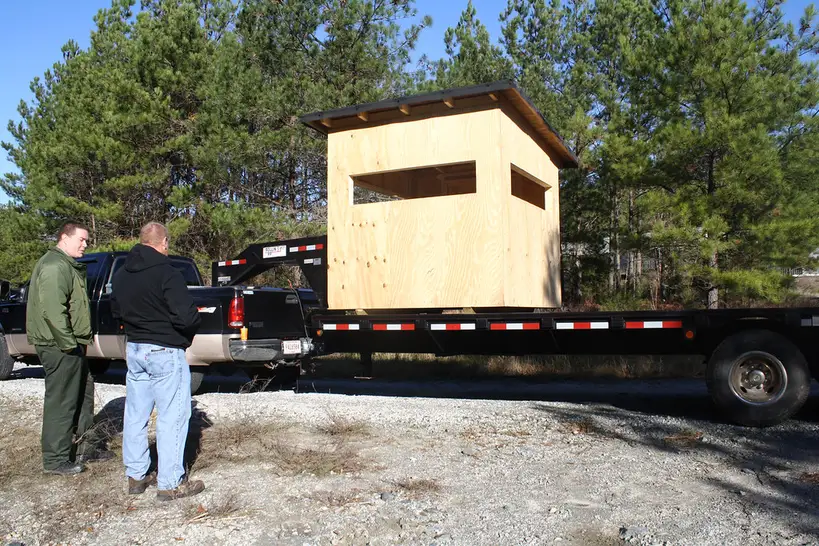
A ground blind gives me floor-level concealment, easier entry in open ground, and a steadier shooting position when the tree options are poor. Hub-style blinds often offer more interior room, while popup blinds usually pack smaller and move faster.
Hub-style vs popup blinds
A hub-style blind is the roomier option. I like it when I need space for a bow, a chair, and maybe a second person or a little extra gear.
A popup blind usually wins when I want speed and a smaller footprint. It is the better choice for quick moves, short seasons, or public land situations where I do not want to leave much behind.
Footprint, window height, and chair clearance
The blind footprint matters more than most beginners think. If the blind is too small, my knees hit the wall, my bow arm crowds the window, and I lose the shot before the deer even arrives.
Window height matters too. I want the opening high enough to clear my broadhead and low enough that I can draw without exposing my face and shoulders.
Why blinds work better in open ground
In open terrain, a blind can make a kill spot where a stand is impossible. If there is no safe tree, or the deer pattern runs through waist-high cover, the blind solves the concealment problem without forcing a bad tree choice.
That said, I still care about the approach. If my walk-in brushes the edge of the blind or crosses the deer path, the blind becomes a shiny box that deer learn to avoid.
How do shot angles change between a stand and a blind?
Shot angles change a lot between the two setups. A stand often creates steep downhill shots and more exact pin-gap work, while a blind usually gives flatter shots but demands precise window alignment, yardage judgment, and enough space for clean broadhead clearance.
Steep downhill shots from a stand
When I shoot downhill, the arrow path and the deer’s body angle do not match a flat-ground shot. That means my range estimate can be off if I ignore the angle, and my pin choice can feel different than it does on level ground.
At close range, steep angles make me especially careful with the exit path and my exact point of aim. I want the arrow to stay out of heavy shoulder bone and still cut the vitals.
Broadside and quartering shots from each setup
Broadside shots are the cleanest from either setup. Quartering-away shots are often the best follow-up option if the deer gives me enough room and the lane is open.
Quartering-to shots are where beginners get impatient. I pass more of them than I take, especially from a stand where a bad angle can ruin the chance and risk a poor hit.
Range estimation, pin gap, and window alignment
From a stand, the distance from my eye to the impact point can feel shorter than it really is. That can change pin-gap decisions if I trust instinct instead of rangefinder confirmation.
From a blind, the challenge shifts to window placement. If the chair is too low or the window too high, I fight the fabric and lose the shot lane. I want the bow to come up naturally without rubbing the blind wall.
How do deer react to tree stands and ground blinds?
Deer react more to intrusion than to the object itself. A tree stand leaves less visible ground-level clutter, but climbing noise and repeated access can educate deer; a blind leaves more physical evidence, yet it can be less disruptive if I place it once and leave it alone.
Bed-to-feed travel and funnels
Deer on bed-to-feed routes usually prefer edges, pinch points, and the path of least resistance. A stand works well when that route is elevated enough for me to watch it without being on top of the trail.
A blind works better when the trail runs through open cover or a field edge where the deer already expect low, ground-level shapes.
Pressure response after intrusion
On pressured property, deer often change timing and route after a bad intrusion. A noisy tree setup, a busted approach, or a blind left in the wrong spot can push them nocturnal or make them skirt the area.
I think in terms of evidence left behind. Broken limbs, shine from the blind windows, and human scent on the entry route all matter.
Which setup leaves less evidence
A stand leaves less visual footprint once it is in the tree, but only if I can access it quietly. A blind leaves more visible footprint, yet it can reduce scent drift to eye level and keep movement hidden if the approach route stays clean.
On fresh sign, I ask one question: which setup lets me hunt with the least amount of deer education? That answer changes by habitat.
Proof asset: 8 hunting scenarios that decide the better setup
This is the decision matrix I use when I am choosing between a stand and a blind. I care about terrain, distance, mobility, and the way deer are actually moving that week, not which setup sounds better on paper.
| Hunting scenario | Better setup | Why | Most common failure point |
|---|---|---|---|
| Open field edge | ground blind for bow hunting | Low cover is weak, and the blind hides movement at ground level | Window glare and a blind that sticks out in the wrong place |
| Thick bedding cover | Tree stand | Elevation helps watch the edge without crashing into bedding cover | Bad tree choice that blocks lanes or forces noisy access |
| Public land walk-in | ground blind for bow hunting | Fast setup, easy packing, and less impact if you must move often | Leaving too much scent or over-committing to a crowded spot |
| Solo scouting setup | Tree stand | Lets me learn trails, wind, and movement from above on a small footprint | Unsafe climb or no solid tree with clear shooting lanes |
| Rain and cold conditions | ground blind for bow hunting | More weather protection and less exposure to wind chill | Condensation, noisy fabric, or poor ventilation |
| Elevated shot practice | Tree stand | Best for learning downhill angles, pin gaps, and range judgment | Practicing from the wrong height and assuming flat-ground form carries over |
| Pressured deer | Tree stand | Less visible intrusion if access is quiet and the tree is well placed | Climbing noise or repeated entry on the same trail |
| Short-season hunts | ground blind for bow hunting | Fast to deploy when time is limited and the exact tree is not perfect | Rushing setup and accepting a bad window or bad wind |
Choose Tree stand if… / Choose ground blind for bow hunting if…
Choose a tree stand if your best chance comes from height, longer shooting lanes, and reading deer movement along funnels or edges. It also fits when you can climb safely, have a solid tree, and can keep access quiet enough that deer do not key in on the spot.
Choose ground blind for bow hunting if your terrain lacks good trees, your shots are inside a tighter distance band, or you need concealment in open ground. It also fits when you want easier mobility, better weather protection, or a simpler setup for public land and short hunts.
If I were buying my first setup for a new bowhunter, I would pick the stand first only when the property has safe trees, clean access, and enough travel-route visibility to matter. If the ground is flat, open, or packed with low cover, I would buy the blind first.
How high should a tree stand be for bow hunting
I usually think in a practical range rather than a fixed number. For bowhunting, a stand is often high enough to clear brush and break up your outline, while still keeping the angle and climb manageable.
The right height depends on tree cover, shot distance, and how well you can see the deer trail from that point. If I cannot see enough lane or cannot shoot cleanly, the height is wrong.
Do you need a tree stand to bow hunt
No, you do not need a tree stand to bow hunt. I have killed deer from blinds and from ground-level setups when the cover, wind, and approach route were right.
A stand is helpful, but it is only one tool. If the terrain does not support it, a blind or even a well-placed ground setup can be the better hunting decision.
Which is better for bow hunting a tree stand or ground blind
Neither wins every time. A tree stand is better when you need height, route visibility, and cleaner lane control, while a ground blind is better when cover is thin, access must stay fast, or you want a lower, quieter profile.
If I had to choose one for a mixed-property beginner, I would pick the setup that matches the habitat you actually hunt most. That matters more than brand, style, or habit.
Can you bow hunt effectively from the ground
Yes, you can bow hunt effectively from the ground if the deer expect that kind of cover and your movement stays hidden. I have seen ground-level setups work well in thick brush, field edges, and blind setups with clean approach routes.
The trick is discipline. On the ground, every shift matters, and you lose the advantage of height quickly if your outline or draw movement is exposed.
What is the best setup for bow hunting in thick cover
In thick cover, I usually lean toward a tree stand if I can find a safe tree and open lane into the trail. If the cover is too tangled or the tree options are poor, a blind on the edge of the cover can be the better answer.
The best setup is the one that lets me see the path without forcing a noisy entrance through bedding cover. Thick cover punishes sloppy access.
Is a ground blind safer than a tree stand for bow hunting
Yes, a ground blind is safer in the sense that it removes the fall risk that comes with an elevated hunting platform.rm. A tree stand requires a safety tether, a proper attachment point, a lineman belt while climbing, and strict discipline on entry and exit.
That said, blind safety still depends on setup. A crowded interior, poor broadhead clearance, or bad visibility can create other problems, just not a fall.
How do deer react differently to tree stands and ground blinds
Deer do not react to the name of the setup. They react to scent, noise, movement, and how well the setup matches the terrain. A stand can be less visible but more sensitive to climbing intrusion, while a blind can hide you well but leave more evidence if it is placed badly.
On pressured deer, I assume every extra mistake teaches them. That is why I care as much about access route and wind as I do about the setup itself.
Safety and access discipline checklist
- Pick the tree or blind site before I carry gear in.
- Check wind and thermals before every hunt.
- Use a safety tether any time I leave the ground in a stand.
- Use a lineman belt while climbing and while setting my platform.
- Plan my entry and exit so I do not cross the main deer route.
- Make sure the blind window height and chair clearance let me draw cleanly.