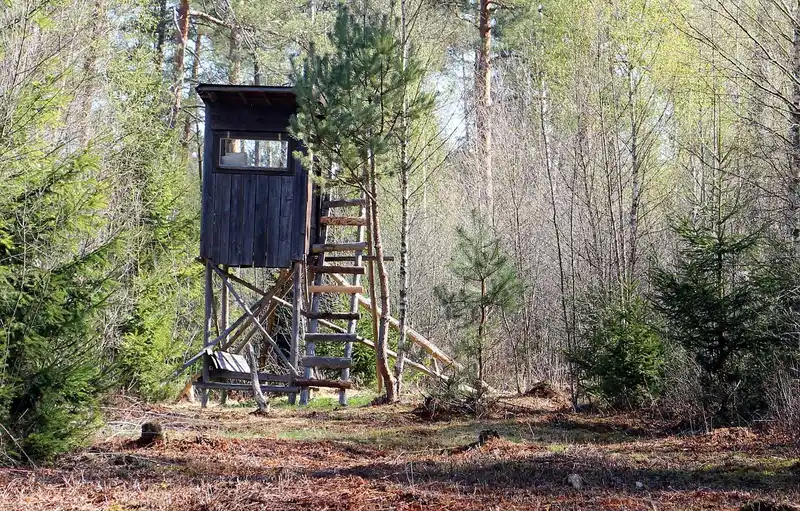
How to Hunt Public Land with a Bow
To hunt public land with a bow, choose access that keeps you away from predictable hunter traffic, set up about 200 to 400 yards from parking areas, trails, and obvious edges, and hunt first light and the last hour. Poor access choices push deer nocturnal and burn a spot fast. This guide covers pressure-based access, timing, entry routes, and setup choices for a beginner’s first public-land bowhunt.
Public land basics and rules


Public hunting land can include state wildlife management areas, national forests, national wildlife refuges, walk-in areas, and, in some states, state parks where hunting is allowed. Texas, for example, offers public hunting on over 1 million acres of land across more than 180 hunting areas, and its Annual Public Hunting Permit provides nearly year-round hunting. Texas public hunting includes wildlife management areas and state parks. (Texas)
The point is not finding public ground alone. It is finding the parcel where bow hunting is legal under that parcel’s own rules, dates, and permit system.
What to verify before the hunt
Start with the license requirement, then check whether that parcel needs a separate access permit, reservation, or hunt code. Confirm season dates for the exact area, then read the land agency page, kiosk posting, and boundary map. County rules and area-specific weapon rules can change what is legal on one tract but not the next.
Can you shoot a bow on public land? Often yes, but only on land open to that method and only during the correct season on the correct parcel. A bow may be legal on one wildlife area and restricted on another refuge, state park, or walk-in unit.
How parcel rules change the plan
Public-land bow hunting is not one rule set. Different regulations by parcel can change whether you may hunt at all, whether you need a permit, which days are open, and where you may park or walk in. Some parcels also limit camping, shooting hours, or access roads, which changes the best entry route.
That is why the first plan should be legal, not tactical. If the boundary, season, or permit is wrong, the rest of the scouting does not matter.
📊 Texas offers public hunting on over 1 million acres of land. Source: Texas.
How do you find public land to bow hunt near you?
Use state and federal agency maps first, then confirm the boundary in a mapping app with public boundary layers, topographic layers, satellite layers, and terrain layers. Check each parcel against a county GIS map or land app before you think about deer sign. The easiest place to find is often the easiest place for other hunters to find, too.
Use agency maps first
State wildlife agency websites, federal land maps, and public hunting area maps should be the first stop. Texas offers an interactive map for public hunting areas, which is the right kind of tool because it lets a hunter sort parcels before driving anywhere. Outdoor Life also points hunters toward public land, mapping apps like OnX or Huntstand, and notes access points and topography.
Look for the land type first: wildlife management area, national forest, national wildlife refuge, walk-in area, or state park. Then check whether hunting is allowed on that tract and whether bow hunting has any parcel-specific restriction.
Confirm boundaries in mapping apps
A mapping app should do more than mark a green blob. Turn on public boundary layers, then compare them with satellite layers to confirm property lines, roads, parking areas, creek crossings, and the actual edge of the huntable block. Use topographic layers to see ridges, saddles, benches, drains, and low spots that can move scent or concentrate deer travel.
Access-point mapping matters because the shortest route is often the loudest route. A road pull-off beside a field edge may look easy, but it can place a hunter directly in the path used by everyone else.
Check parking and legal access points
Public-road access does not always mean legal hunting access. Some areas allow parking but not entry from a certain side, or they may require a designated lot, kiosk sign-in, or gate use. Note the parking area, then draw the likely entry and exit routes before leaving home.
Choose one route that gets in quietly and one route that gets out without crossing the cleanest deer movement line. If the exit walks through the bedding side, the spot may not survive more than one hunt.
Public land checklist
This is a simple decision asset for ranking two or three parcels before a trip. Use it before you commit to boots on the ground. The score is not about proving a spot is perfect; it is about finding the best risk balance.
| Factor | 0 points | 1 point | 2 points |
|---|---|---|---|
| Access pressure | Parking lot, main trail, obvious edge | Moderate walk, mixed sign of people | Longer, less obvious approach, little hunter traffic |
| Wind safety | Wind carries toward bedding or access | Borderline wind with limited margin | Wind and thermal direction keep scent off likely deer travel |
| Deer sign quality | Old or scattered sign only | Some fresh sign, but weak pattern | Fresh tracks, droppings, rubs, scrapes, or clear trail corridors |
| Exit stealth | Exit crosses main deer route or hunter route | Exit is workable but exposed | Quiet exit with low chance of bumping deer or hunters |
Score each parcel out of 8. In general, about 6 to 8 is a workable public-land option, 4 to 5 needs caution, and 0 to 3 is a pass for that day.
Pre-trip legality checks
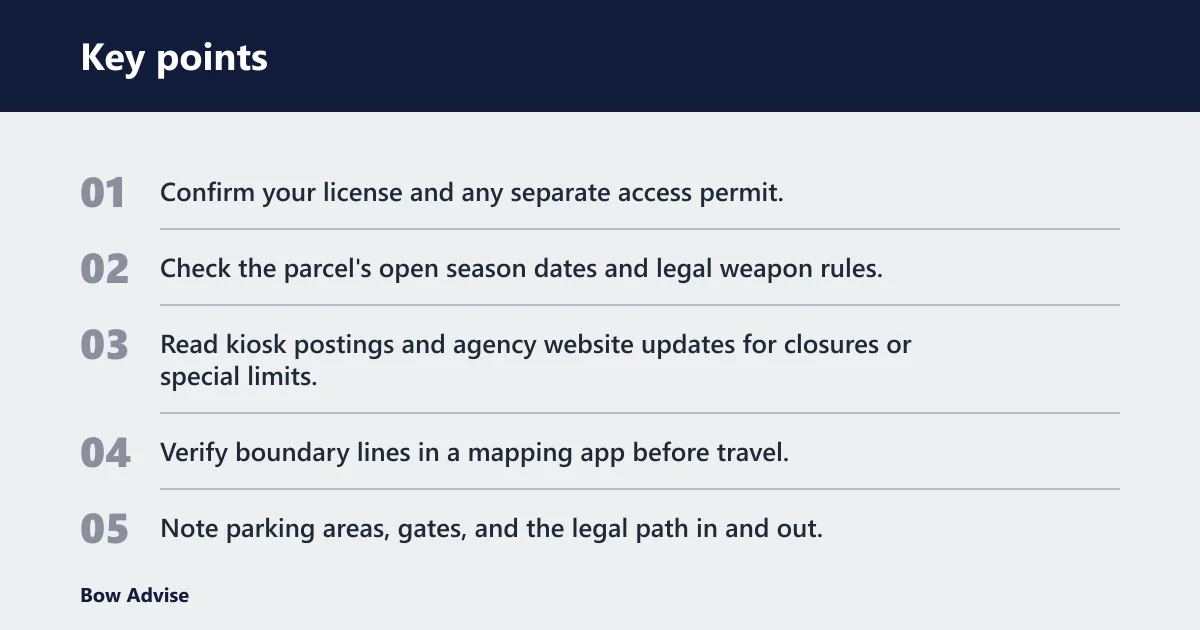
- Confirm your license and any separate access permit.
- Check the parcel’s open season dates and legal weapon rules.
- Read kiosk postings and agency website updates for closures or special limits.
- Verify boundary lines in a mapping app before travel.
- Note parking areas, gates, and the legal path in and out.
Map-based access scoring
Assign the access pressure score first. Then compare wind safety and exit stealth. A spot with great deer sign but terrible access pressure can still lose to a less glamorous parcel if the first one sits beside the parking lot and a main trail.
A common first-timer mistake is hunting the closest obvious cover because the sign looks hot. On public land, that cover is often the first place hit by other hunters, which pushes deer away before daylight.
In-field go/no-go triggers
Go in if your entry route stays quiet, the wind works, and the sign is current enough to justify the sit. Leave or switch parcels if you bump deer on entry, find fresh hunter pressure at the parking area, or see that the wind is wrong for the bed-to-feed route you planned.
Say your two parcels both have fresh tracks, but one sits 150 yards from a lot and the other takes a longer walk through a ridge line with fewer boot tracks. The second parcel is usually the better first sit because it gives the deer a better chance to stay unpressured.
How do you avoid other hunters on public land?
Read pressure from parking and roads, then choose the access route that other hunters are least likely to take. On public land, deer react to people as much as they react to food or cover. Weekend pressure is often stronger than weekday pressure, and the most obvious trail often gets the most traffic.
Read pressure from parking and roads
Look at where trucks, ATVs where legal, and boot tracks are most likely to start. If a parcel has one road pull-off and one easy trail, expect that line to draw attention. Access points near fields, creek crossings, and obvious ridges often hold more hunter traffic than a longer entry from a less visible side.
Outdoor Life notes that hunting public land means competing with other hunters, so pressure is part of the plan, not an afterthought.
Pick longer or less obvious approaches
The best way to hunt public land with a bow is often to take the route that avoids the least-resistant path everyone else uses. That may mean a longer walk, a sidehill line, or a route that enters from the edge of thicker cover instead of the most direct trail.
Do not go deep just to go deep. Distance alone does not solve pressure if the route crosses bedding or walks through the same funnel every hunter uses.
Use weekday and time-of-day pressure
Weekday hunts often have less human pressure than weekend hunts, especially on parcels near cities or major roads. Early morning and late evening deer movement can be predictable, but the first hour after dawn is also when many hunters are moving in. Midday can be useful only if the parcel is quiet and the setup allows an all-day sit.
Where should you hunt deer sign, food, and water?
Hunt sign that matches pressure, not sign that merely looks fresh. Tracks, droppings, rubs, scrapes, and trail corridors matter more when they connect bedding to food or water without crossing heavy human traffic. On pressured public land, deer often shift to safer routes and shorter feeding windows.
Compare bedding to travel corridors
Bedding areas are valuable, but getting too close can blow the spot up. Look for trails that lead from bedding toward food or water while staying just outside the highest-pressure access lines. A corridor that skirts a ridge, ditch, or brush edge can be better than a trail that cuts straight through an obvious opening.
Fresh rubs and scrapes can help, but they matter most when they line up with a route deer can use without meeting hunters. A scrape near a lot is less useful than a less obvious trail with repeated tracks and droppings farther back.
Use food and water shifts by season
Food sources change with season and pressure. Agriculture edges can be strong when fields are active, acorn drops can pull deer into cover edges, natural browse can matter when crop use slows, and waterways can concentrate movement when nearby cover is secure. Dry-season concentration points can matter when water becomes scarce.
Keep food and water in the same pressure context. A water hole beside a parking lot may look good on the map, but it may be too exposed to produce daylight movement after opening weekend.
Wind, thermals, and timing
Wind direction and thermal shifts decide whether a public-land spot is safe to enter. Morning and evening movement are useful, but only if scent can stay off the likely deer line. The same source notes deer are most active early morning, late evening, and at night, which makes timing useful but never enough on its own.
When a spot is safe to enter
Choose an entry when the wind carries your scent away from bedding and from the main trail you expect deer to use. If thermals are rising in the morning, avoid a route that sends scent uphill into the bed. If evening thermals are dropping, stay off low drainages that can pull your scent into the travel corridor.
Weather windows matter most on public ground when they calm human scent spread and let a setup hold for longer. A steady wind is often easier to manage than a swirling one, even if the steady wind is not ideal on paper.
All-day sit conditions
All-day sits make sense on quiet parcels with little foot traffic, a stable wind, and a setup that can handle changing thermals. If the parcel is near a busy lot or a common crossing point, an all-day sit can become a long way to get bumped out by midmorning hunters.
Suppose a parcel has fresh sign, but the wind shifts twice by 10 a.m. and a second truck arrives at the lot. That is a strong cue to leave and save the spot for a better wind, not to force the sit because the sign looked good at daylight.
When to leave and switch parcels
Leave when the wind breaks, when pressure rises, or when the entry route becomes noisy enough to push deer into cover. A smart switch protects the spot for another day. Public land often rewards patience across multiple parcels more than stubbornness on one crowded tract.
How to bow hunt public land with mobile setups and light camera use
Mobile hunting setups matter because public land changes fast. Hang-and-hunt, saddle hunting, quick relocation, and stealthy setup changes let a hunter adapt when deer shift after pressure or weather changes. A fixed, bulky setup can be too slow for pressured ground.
Hang-and-hunt and saddle options
Hang-and-hunt works well when the exact tree choice depends on wind, thermals, and fresh sign. Saddle systems help with versatility when a hunter needs to move quietly and set up in a different tree after pressure shifts. Both methods fit public land better than a setup that takes too long to adjust.
Keep the setup simple. On pressured ground, the less time spent in the open, the better.
Legal trail camera use
Trail cameras can help pattern deer movement if legal on that parcel. Cellular cameras are useful when low-intrusion monitoring matters, because they reduce repeated scouting visits. But legal-use restrictions can vary by state and parcel, so the rules must be checked before any camera goes out.
Use cameras sparingly and place them where they answer one question: which route is deer using under pressure? Do not scatter cameras all over a parcel and then keep walking in to check them.
Minimum public-land bow kit
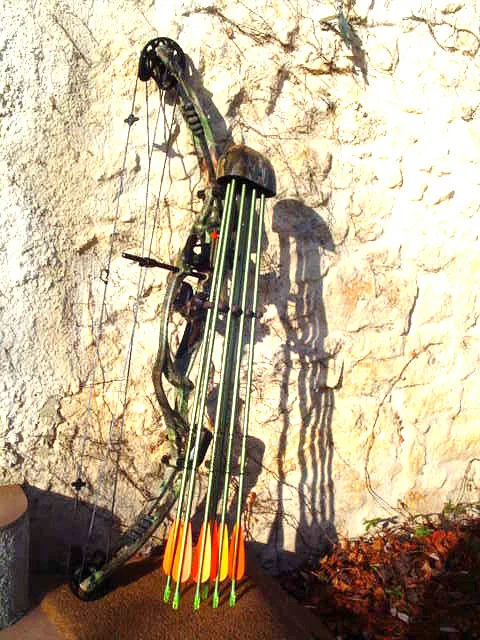
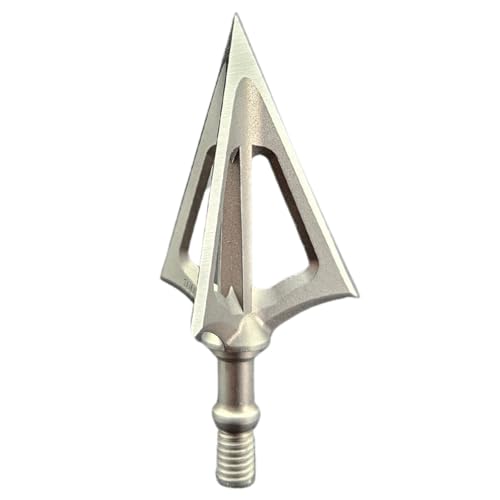
For long hikes and fast exits, the kit should stay light and functional: bow, release, fixed or compact quiver setup, headlamp, water, rangefinder, sharp broadheads, small first-aid kit, compact pack, drag rope, and a quiet way to carry extra layers. If the setup cannot handle an all-day sit or a fast retreat, it is too bulky for pressured public ground.
Gear matters less than fit. The best public-land kit is the one that lets a beginner walk farther, stay quiet, and leave without making noise.
Can you bow hunt in your backyard?
Sometimes, but only if local law, city or county rules, weapon ordinances, setback requirements, and property size make it legal. Backyard bow shooting is not a public-land issue, but it is a different legal and safety question. Do not assume that a backyard, suburban lot, or private fence line follows the same rules as a public parcel.
Check local ordinances first, then confirm safe arrow flight, backstop, and target direction. If any part is unclear, do not treat it as legal just because the bow itself is quiet.
Frequently asked questions
What rules should I check before bow hunting public land?
Check the license requirement, parcel permit rules, season dates, boundary maps, kiosk postings, access restrictions, and any area-specific weapon rules. County rules and land-agency rules can differ, so one parcel may allow bow hunting while the next tract does not.
What gear do I need for public land bow hunting?
Keep the kit light enough for a long walk and an easy exit: bow, release, arrows, sharp broadheads, headlamp, water, rangefinder, compact pack, first aid, and a simple system for carrying layers. If the setup is too heavy or slow, it works against stealth on pressured ground.
How deep should I hike on public land to hunt deer?
Deep is not automatically better. A farther walk can help, but only if the route stays quiet and avoids bedding, main trails, and other hunters. The better question is whether the access route reduces pressure. Some productive spots sit closer than expected when they are hard to reach quietly.
Can you shoot a bow on public land?
Usually yes on land that is open to archery hunting, but not everywhere and not under every rule set. Some parcels need special permits, some have area-specific weapon limits, and some close certain zones or dates. Always confirm the exact parcel before carrying a bow in.