How to Sight in a Hunting Bow for the Field Shot
Sight your hunting bow at about 20 to 30 yards, then verify the same pin at a second measured distance and from realistic field positions before deer season. A range-only zero can miss when angle, light, or body position changes, and that can cost clean hits. This guide lays out a step-by-step zero for field shots, plus a short checklist to confirm it holds.
What you’ll need
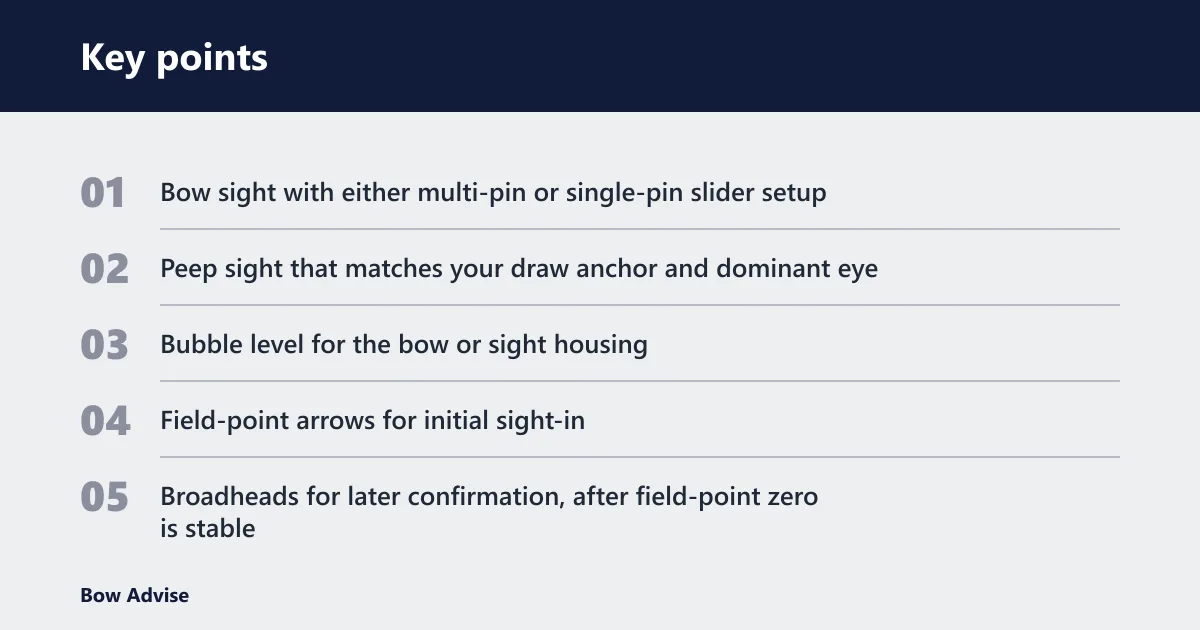


- Bow sight with either multi-pin or single-pin slider setup
- Peep sight that matches your draw anchor and dominant eye
- Bubble level for the bow or sight housing
- Field-point arrows for initial sight-in
- Broadheads for later confirmation, after field-point zero is stable
- Target that can safely stop arrows at measured distances
- Measuring tape or rangefinder for exact yardage
- Allen keys or the sight’s adjustment tool
- Sight tape for a slider sight, if you use one
- Notebook or phone note for pin order, yardages, and changes
Before you touch the sight
A tuned bow comes first. If the arrow leaves badly, the sight only hides the problem. Mount the sight level, check that the peep lines up naturally at full draw, and set a measured target distance instead of guessing.
Start with the arrow setup
Begin with field-point arrows for the first zero. They pull easier, and they show the true setup before broadheads enter the process. Keep the same arrow weight, rest setting, and nock setup you plan to hunt with.
Confirm the sight and peep
The peep sight helps the eye return to the same anchor and line the sight housing up the same way every time. A bubble level keeps the bow from canting. Canting pushes impacts left or right, and that error grows more obvious as yardage increases.
How do you sight in at 20 yards?
Set a measured 20 yards and center the closest pin there. Shoot three-arrow groups, then adjust windage and elevation in the direction the group needs to move. Repeat until the group lands where the pin sits, with the same anchor and bubble level on every shot.
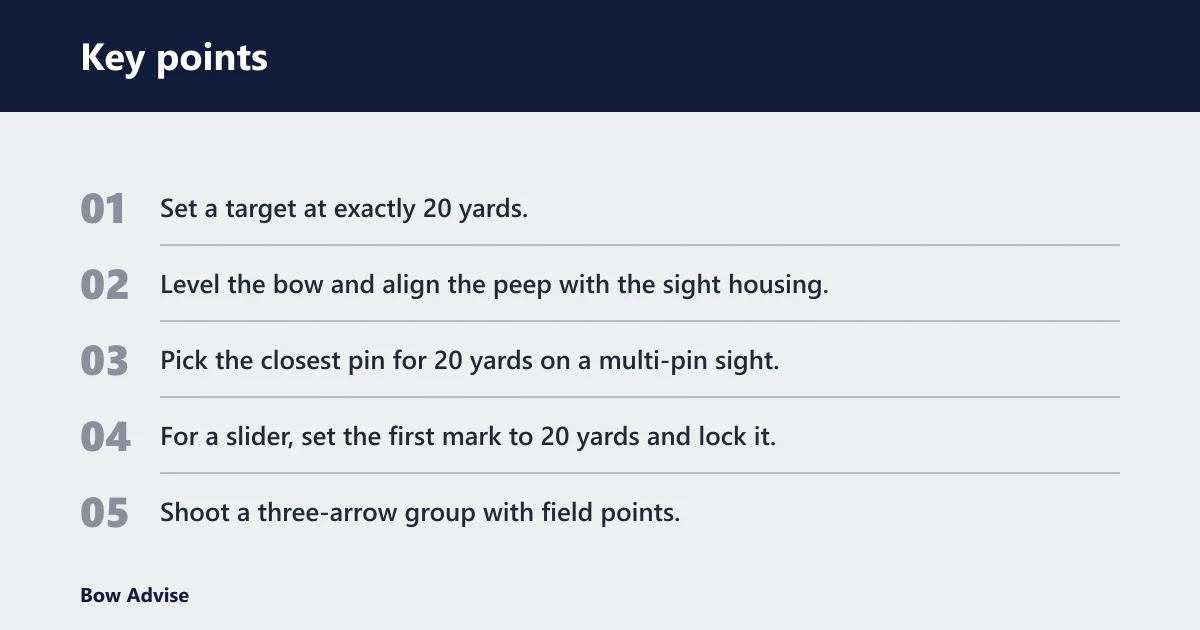
- Set a target at exactly 20 yards.
- Level the bow and align the peep with the sight housing.
- Pick the closest pin for 20 yards on a multi-pin sight.
- For a slider, set the first mark to 20 yards and lock it.
- Shoot a three-arrow group with field points.
- Move windage or elevation in a measured step, then shoot again.
- Stop once the group centers and the sight picture stays repeatable.
A common first-timer mistake is dialing the sight after a single calm-range group, then missing high when the bow is shot from a tree stand in the wind. A better check is a full three-arrow group with the same anchor and peep alignment. If the first pin is set at 20 yards, that pin becomes the base for the rest of the sight-in process.
If your group lands 2 inches low and 1 inch right at 20 yards, move elevation up and windage left, then shoot another three-arrow group before changing anything else. That keeps the correction tied to the actual impact pattern instead of one bad release.
How do you confirm farther pins?
Move to exact measured distances and verify each pin or slider mark one by one. Most modern multi-pin hunting sights cover roughly 20 to 50+ yards, and onX recommends the closest pin at 20 yards, then 30, 40, and 50 yards if that fits the setup. Exact yardage matters more than a guessed field mark.
Multi-pin sights
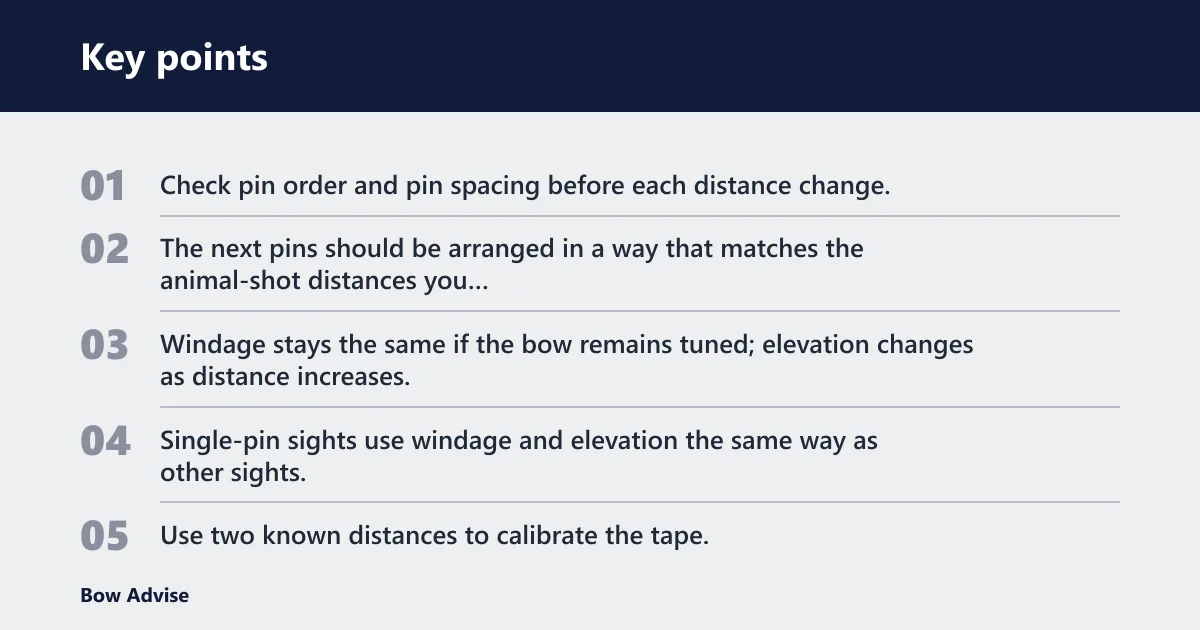
Check pin order and pin spacing before each distance change. The next pins should be arranged in a way that matches the animal-shot distances you expect, not just what looks tidy in the shop. Windage stays the same if the bow remains tuned; elevation changes as distance increases.
Single-pin slider sights
Single-pin sights use windage and elevation the same way as other sights, but the distance marks come from a sight tape. Use two known distances to calibrate the tape, then match the printed or blank tape to those marks. Sight tapes let a slider repeat actual yardage instead of guesswork.
How far to confirm
Confirm at 30, 40, and 50 yards if your sight and arrow setup are meant for those distances. Many hunters also like a close check at 15 or 25 yards because that is where deer often appear first. Short-range confidence still matters when a shot opens fast.
| Distance | What to verify | What should stay consistent |
|---|---|---|
| 20 yards | Closest pin or base slider mark | Group center, anchor, level bubble |
| 30 yards | Second pin or next slider mark | Pin order, sight housing alignment |
| 40 yards | Third pin or next slider mark | Elevation change and arrow flight |
| 50 yards | Outer pin or farther slider mark | Repeatable hold and measured yardage |
How do you prove it in the field?
Range-perfect groups do not prove field readiness. Check uphill and downhill shots, shoot from a stand or slope, and repeat with the quiver on. Then check low light and awkward body positions, because those are the moments when anchor, cant, and sight picture drift.
Angle changes
On steep uphill or downhill shots, keep the bow level and aim with the same anchor, but expect the sight picture to feel different. The pin may seem to float differently because body angle changes the stance. What matters is whether the impact moves when the angle changes, not whether the shot feels easy.
Light and gear changes
Low light can hide the pin ring, peep, or level bubble. A quiver on the bow can also change balance and point of impact. Wind and rain matter too, especially during the first setup, because both can blur the sight picture and mask small form errors. onX advises avoiding bad weather during the initial sight-in, and that is sound advice when the goal is a clean baseline.
Suppose a bow is dead-on at 30 yards on a flat lane, but the same pin lands left from a tree stand with the quiver attached. That points to a field-use issue, not a pin-distance issue. Recheck cant, then repeat the shot from the same stand height before changing the sight.
Field zero checklist
Use this as a pass/fail check after the main sight-in work. Score one point for each pass. A score of 10 or 11 suggests the setup is close, but broadhead confirmation still matters. A full 12 suggests the bow has been checked across the conditions that cause real misses.
| Check | Pass | Fail |
|---|---|---|
| Bow level | Bubble stays centered through the shot | Bow cants or tilts under draw |
| Sight housing level | Housing stays square to the bow | Housing appears rotated or tilted |
| Peep alignment | Peep centers naturally at full draw | Head position changes the sight picture |
| Anchor consistency | Each shot reaches the same anchor | Anchor shifts between shots |
| 20-yard zero | Group centers at measured 20 yards | Group needs a major correction |
| 30-yard confirmation | Impact matches the next pin or mark | Distance change moves the group off line |
| 40-yard confirmation | Impact repeats at exact 40 yards | Longer pin drifts or groups open up |
| Uphill/downhill check | No new left/right drift from angle | Shot changes when the angle changes |
| Low-light check | Pin, peep, and bubble stay visible | Sight picture breaks down at dusk |
| Quiver-on check | Impact stays stable with the quiver attached | Bow balance changes the group |
| Broadhead confirmation | Broadheads land acceptably close to field points | Broadheads strike differently and need correction |
| Final hunt-ready confidence score | 10-12 passes with repeatable form | Below 10, or any fail that remains unresolved |
Common mistakes
Using broadheads before field-point zero is stable causes false fixes. Broadheads can hit differently than field points, so they should be confirmed after the base sight-in is done. That difference is normal enough to require a separate check, not a guess.
Skipping a recheck after changing arrow weight, broadhead style, or quiver setup is another common miss. A bow that was right with one setup can drift with another. Sight cant, inconsistent anchor, and low-light visibility problems also show up more at 30 yards and beyond than they do at a short indoor-style setup.
- Return to the exact measured yardage before changing the sight again.
- Check the bubble level and peep alignment first.
- Reshoot a three-arrow group with the same arrow type and quiver setup.
- If the group still moves, confirm whether the issue appears only at longer yardages.
- After field points are stable, confirm broadheads and adjust for the real hunting setup.
Frequently asked questions
How do I sight in a hunting bow for actual field distances?
Set the first pin or slider mark at a measured 20 yards, then confirm at 30, 40, and 50 yards if your setup uses those distances. After that, repeat the same shots from uphill, downhill, low-light, and quiver-on positions before calling it ready.
Should I sight in with field points or broadheads?
Start with field points. They are the right choice for the first zero because they are used for initial sight-in and are easier to manage during setup. Confirm broadheads after the base sight is stable, since they can strike differently than field points.
What distance should I sight in my bow for hunting?
For many hunting sights, 20 yards is a common starting point, and many setups then move out to 30 and 40 yards. Some hunters also confirm 50 yards. The right set of distances depends on the bow, sight, and the shots expected in the field.
Do I need to sight in my bow if I already tuned it at the range?
Yes. A range tune does not prove the bow will hold zero from a stand, on a slope, or in low light. Recheck the same pin from field positions, with the quiver on and the bubble level centered, before deer season starts.
How many yards should my first pin be set for deer hunting?
Set the closest pin at 20 yards for a common hunting setup. Archery Support notes that some shooters begin at 10 yards for pin setup, but for field use, 20 yards is the more common starting point for the first hunting pin.
How do I sight in a single-pin slider bow sight for hunting?
Use two known distances to calibrate the sight tape, then match the printed or blank tape to those marks. Confirm the slider at 20 yards first, then verify the marks at 30 and 40 yards. If the tape misses, recalibrate from measured distances.
What changes when I sight in uphill or downhill shots?
The sight picture changes because body angle and bow position change. Keep the bow level, maintain the same anchor, and check whether impact shifts when shooting from a stand or slope. If the shot drifts only at angle, that is a field-position issue.
How do I confirm my bow is still sighted in after moving it to the field?
Shoot a three-arrow group at a measured distance, then repeat from the same height, angle, and footing you will use to hunt. Check the bubble, peep, quiver, and light conditions. If any one of those changes the group, the bow is not fully field-verified yet.
What if my sight tape doesn’t match my actual arrow flight?
Stop trusting the tape and recalibrate it from two measured distances. Then confirm the slider marks again with field-point arrows. If the mismatch remains after that, check whether arrow weight, quiver setup, or sight cant changed the bow’s impact point.