Difference Between Crossbow and Bows: Expert Guide
The main difference between a crossbow and a traditional bow lies in their design and how they are operated. A traditional bow requires continuous physical effort to hold drawn, while a crossbow, once cocked, holds the string in place, allowing the archer to aim without sustained muscle strain. This makes crossbows generally easier to learn to shoot accurately for beginners.

BARNETT
Barnett Recruit XP Crossbow Package, Compact Crossbow…
- BARNETT EXPLORER RECRUIT XP CROSSBOW: Compound crossbow with complete hunting accessory package in Gray. This Barnett crossbow is…
- DURABLE: The Recruit was built to be fun to shoot yet lethal to hunt with. With a 330 FPS rating, it sends arrows at speeds rivali…
- SAFETY FEATURES: Barnett put safety first. Featuring a Soft Lok Floating Bristle Arrow Retainer, Anti-Dry Fire (ADF) Trigger Syste…
As an Amazon Associate I earn from qualifying purchases.
Welcome, fellow archery enthusiasts! Are you curious about the world of bows and arrows but feeling a bit overwhelmed by all the different types? You’ve probably seen them in movies, at fairs, or perhaps even in video games. Two popular choices often come up: traditional bows and crossbows. They both shoot arrows, but how are they different? It’s a common question, and understanding these differences is your first step to choosing the right gear for you. Don’t worry, we’ll break it all down simply, just like learning any new skill. By the end of this guide, you’ll know exactly what sets them apart, what might be best for your first steps into archery, and why this knowledge is important for fun and safety.
Understanding the Core Difference: Mechanics and Operation
At its heart, the fundamental distinction between a crossbow and a traditional bow lies in their mechanical operation and the physical effort required to use them. Think of it this way: a traditional bow is like a rubber band that you have to keep stretching until you’re ready to let go. A crossbow, on the other hand, has a locking mechanism, like a trigger, that holds the string back for you. This simple difference has a big impact on how you shoot and what makes each unique and appealing.
Traditional Bows: The Classic Archery Experience
Traditional bows, often referred to as “recurve bows” or “longbows,” are the ancestors of modern archery equipment. They are elegant in their simplicity and rely entirely on the archer’s strength and skill to draw, hold, and release the arrow. No triggers, no complex mechanisms – just you, the bow, and the arrow.
Types of Traditional Bows:
- Recurve Bows: These bows have limbs that curve away from the archer. This design stores more energy than a straight limbed bow, making it more powerful and efficient. Modern recurve bows are often used in Olympic archery.
- Longbows: Traditionally made of a single piece of wood, longbows are characterized by their length (often as tall as the archer) and their straight limbs that only curve slightly when unstrung. They offer a pure, minimalist archery experience.
- Compound Bows: While still traditional in the sense they are hand-held and shot like other bows, compound bows use a system of cables and pulleys (cams) to significantly reduce the holding weight of the bow. This makes them easier to hold at full draw for longer periods and allows for greater accuracy. They are a bridge between traditional and crossbow principles.
How They Work:
When you draw a traditional bow, you are using your muscles to bend the limbs. The further you pull the string back, the more energy is stored in the limbs. To shoot, you simply release the string. This release must be smooth and controlled to ensure accuracy. The challenge and reward of traditional archery come from developing the strength, form, and consistency to hold the bow steady at full draw while aiming and then executing a clean release.
Pros of Traditional Bows:
- Simplicity and Elegance: Fewer moving parts mean less to go wrong and a purer focus on the archer’s skill.
- Full Body Workout: Drawing and holding a traditional bow engages multiple muscle groups, providing a physical challenge.
- Versatility: They are generally lighter and easier to maneuver in dense environments like forests.
- Cost-Effectiveness: Many entry-level traditional bows are more affordable than crossbows.
- Rich History: Using a traditional bow connects you to centuries of archery heritage.
Cons of Traditional Bows:
- Requires Significant Strength: Holding the bow at full draw can be physically demanding, especially for beginners.
- Steeper Learning Curve for Accuracy: Mastering form, shot consistency, and a clean release takes considerable practice.
- Less Power (for same draw weight): Compared to a similarly weighted crossbow or compound bow, traditional bows can be less efficient in transferring energy to the arrow.
Crossbows: Mechanical Advantage and Ease of Use
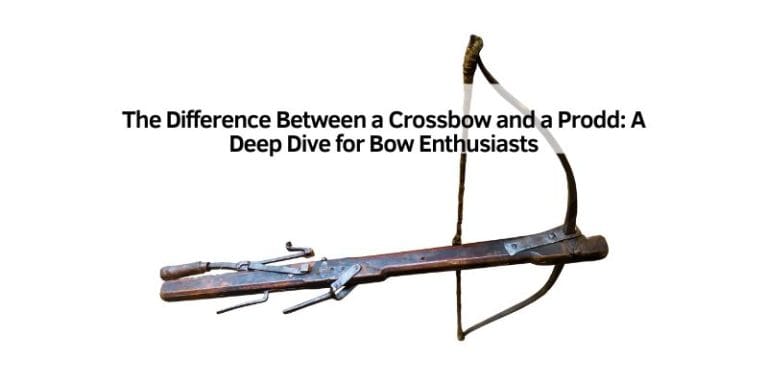
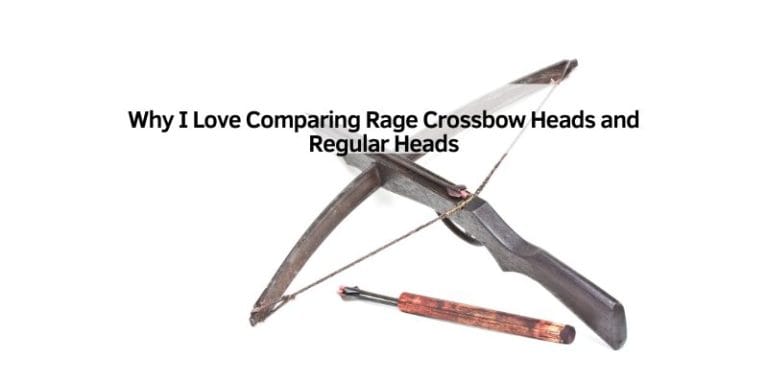
Crossbows, conversely, are often described as a sort of hybrid between a bow and a rifle. They feature a stock that is braced against the shoulder, a trigger mechanism for release, and often a cocking system to draw the string. Once cocked, the string is held in place by a latch, allowing the archer to take their time aiming without maintaining continuous muscle tension.
How They Work:
The process of shooting a crossbow involves several distinct steps:
- Cocking: The string is pulled back using a cocking mechanism (like a rope cocker, crank, or cocking sled).
- Loading: A bolt (a shorter, heavier arrow used in crossbows) is placed onto the rail.
- Safety: The safety mechanism is engaged.
- Aiming: You can take your time aiming, as the string is held in place.
- Firing: You pull the trigger to release the string and launch the bolt.
This mechanical assistance is what makes crossbows much more accessible for many people, particularly those who may not have the upper body strength required for traditional bows, or who have physical limitations.
Pros of Crossbows:
- Ease of Use and Accuracy: The ability to hold the string cocked and aim without fatigue dramatically aids beginners in achieving accuracy quickly.
- Requires Less Strength: The cocking mechanism does the heavy lifting; you don’t need to hold the draw weight yourself.
- Faster Learning Curve: Many people can hit a target accurately with a crossbow much sooner than with a traditional bow.
- Higher Power Potential: Modern crossbows can generate significant arrow speeds and kinetic energy, making them effective for hunting.
- Stable Shooting Platform: The stock provides a stable rest against the shoulder, similar to a rifle.
Cons of Crossbows:
- Bulkier and Heavier: Crossbows are generally larger and heavier than traditional bows, making them less maneuverable.
- More Complex: They have more moving parts, which means more maintenance and a higher chance of mechanical issues.
- Slower Rate of Fire: Re-cocking and re-loading takes time, making follow-up shots much slower than with traditional bows.
- Higher Cost: Entry-level crossbows often cost more than entry-level traditional bows.
- Can Be Noisy: Some crossbows can produce more noise upon firing compared to the whisper of a traditional bow.
Key Differences at a Glance: A Comparison Table
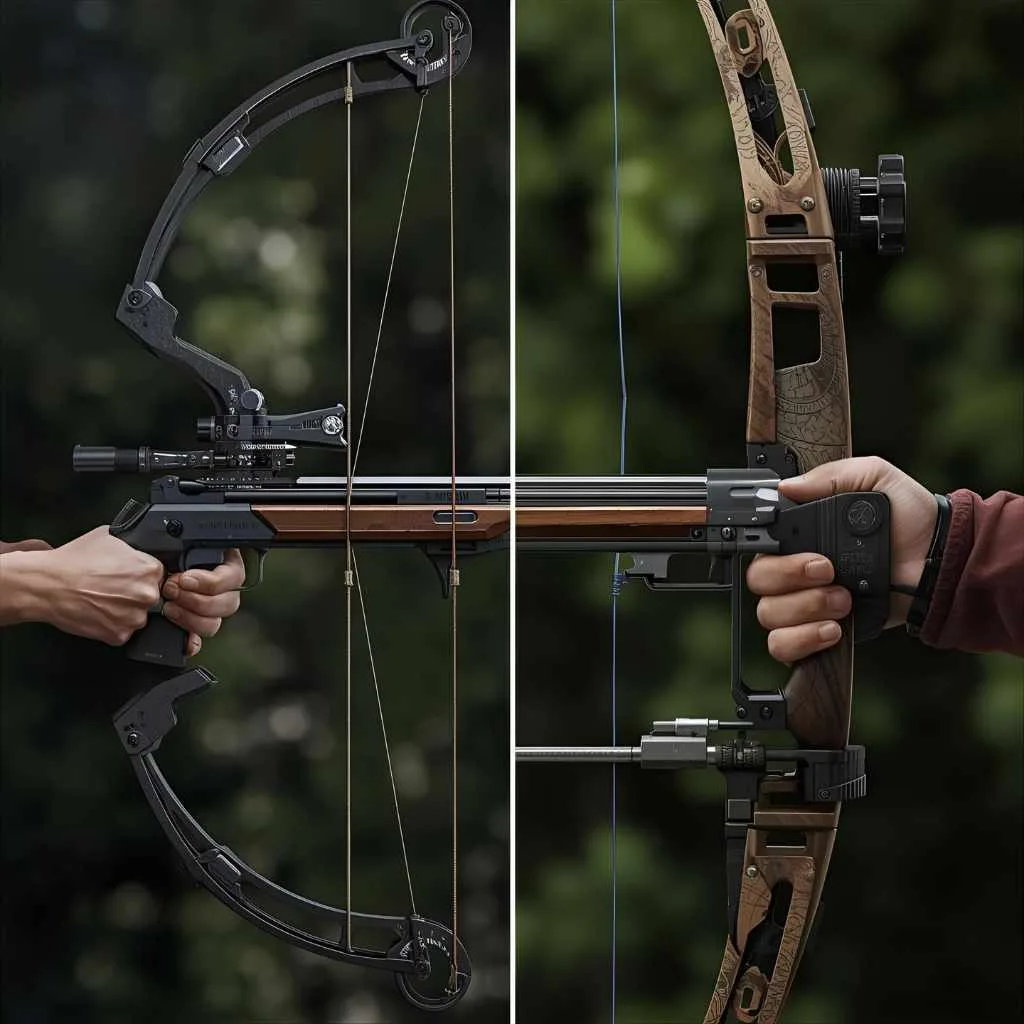
To help visualize the distinctions, let’s summarize the key differences in a handy table. This will offer a quick overview of how these two archery tools stack up against each other.
| Feature | Traditional Bow (Recurve/Longbow) | Crossbow |
|---|---|---|
| Operation | Manual draw, hold, and release | Cocking mechanism, trigger release |
| Holding Weight | Requires continuous muscle effort | Held by a mechanism; minimal effort to hold |
| Ease of Aiming | Difficult due to holding fatigue | Easier; can aim without strain |
| Learning Curve (Accuracy) | Steeper; requires significant practice for form | Gentler; beginners often achieve accuracy faster |
| Physical Strength Required | High (to draw and hold) | Low (to cock and pull trigger) |
| Rate of Fire | Fast (quick follow-up shots) | Slow (requires re-cocking) |
| Size & Weight | Generally lighter and more compact | Generally bulkier and heavier |
| Complexity & Maintenance | Simple, low maintenance | More complex; requires more maintenance |
| Typical Use | Sport archery, traditional hunting, recreation | Hunting, target shooting, recreation (especially for those with strength limitations) |
Choosing Your First Archery Companion: Traditional Bow vs. Crossbow
So, which one is right for you? As your friendly archery guide, I always say the best bow is the one you enjoy shooting the most and can use safely! For beginners, the choice often boils down to your personal goals, physical capabilities, and what kind of archery experience you’re looking for.
When a Traditional Bow Might Be Your Best Bet:
- You’re drawn to the minimalist, historical, or pure sport of archery.
- You want to build upper body strength and develop a deep understanding of form.
- You have a competitive spirit and enjoy the challenge of mastering a skill through practice.
- Budget is a primary concern, as entry-level recurve bows can be very affordable.
- You plan on participating in more traditional archery disciplines that may not permit crossbows.
When a Crossbow Might Be Your Best Bet:
- You want to enjoy shooting arrows and hitting targets relatively quickly.
- You have physical limitations or lack the upper body strength for traditional bows.
- You are primarily interested in hunting and want a powerful, accurate tool.
- You appreciate the mechanical advantage and prefer a trigger-based release.
- You want a stable shooting platform that feels familiar if you have experience with firearms.
It’s also worth noting that if you’re interested in what’s often called “Olympic style archery,” you’ll almost always be looking at recurve bows, which are a specific type of traditional bow. You can learn more about the equipment used in Olympic archery from official sources like the Olympics archery page.
Essential Safety and Handling: A Must-Know for All Archers
No matter what type of bow or crossbow you choose, safety is paramount. Archery is an incredibly rewarding activity, but it demands respect and careful attention to safety rules. These apply whether you’re using a simple backyard bow or a high-powered crossbow.
General Safety Rules for Any Bow/Crossbow:
- Always Treat a Bow as if it were Loaded: Never point a drawn bow or cocked crossbow at anything you do not intend to shoot.
- Know Your Target and What’s Beyond It: Arrow backstops are crucial. Ensure you have a safe area for your arrows to land or be stopped. Never shoot at unverified targets.
- Never Dry Fire: Firing a bow or crossbow without an arrow or bolt can cause serious damage to the equipment and potentially injure the user. The energy has to go somewhere!
- Inspect Your Equipment: Before every shooting session, check the bow/crossbow, string, limbs, and any accessories for wear and tear.
- Use the Right Ammunition: Traditional bows use arrows, while crossbows use bolts. Using the wrong type can be dangerous and damage your equipment.
- Wear Safety Gear: An armguard protects your forearm from string slap. A finger tab or glove protects your drawing fingers. Quivers help manage arrows/bolts safely.
- Supervise Young Archers: Always have experienced adult supervision for children and new shooters.
Specific Safety Considerations for Crossbows:
- Understanding the Cocking Mechanism: Ensure you know how to safely cock your crossbow without losing control of the limbs or string.
- Engaging the Safety: Always engage the safety mechanism after cocking and keep it engaged until you are ready to shoot.
- Proper Bolt Placement: Make sure the bolt is seated correctly on the rail and against the string.
- Safe Transport: Crossbows are often transported cocked for hunting. Know the proper procedures for safe carrying and handling.
For detailed safety standards and best practices in archery, you can refer to resources from organizations like the USA Archery. They provide excellent guidance on everything from equipment to safe shooting practices.
Maintenance and Care: Keeping Your Equipment in Top Shape
Just like any tool, your bow or crossbow needs a little care to perform its best and last a long time. Proper maintenance isn’t just about keeping your gear looking good; it’s about ensuring it functions reliably and safely.
Maintaining Traditional Bows:
- Strings: Wax your bowstring regularly (every few hundred shots or if it looks dry) to prevent fraying and maintain its integrity.
- Limbs: Keep limbs clean and dry. Avoid storing the bow in extreme temperatures or humidity. Never lean them against anything sharp.
- Riser (Handle): Clean the riser with a soft cloth. Some modern recurve risers have interchangeable attachments that should be kept clean and securely fastened.
- Storage: Store your bow in a bow case or a protective sleeve when not in use to shield it from dust, moisture, and impacts.
Maintaining Crossbows:
Crossbows require a bit more attention due to their mechanical complexity:
- String and Cables: These are the lifeblood of your crossbow. Inspect them regularly for any fraying, nicks, or wear. Keep them clean and apply manufacturer-recommended string wax.
- Cocking Mechanism: Regularly check that all parts of your cocking device (rope, crank, etc.) are in good working order.
- Rail and Bolt Retainer: Keep the rail clean and free of debris. A clean rail ensures smooth bolt travel. The bolt retainer spring should be checked for tension.
- Trigger Assembly: Ensure the trigger function is smooth and that the safety mechanism engages and disengages properly. Never apply lubricants to the trigger assembly unless specifically instructed by the manufacturer.
- Scope and Mounts: Ensure your scope is securely mounted and hasn’t shifted.
- Lubrication: Follow your crossbow manufacturer’s manual for specific lubrication points and recommended products. Over-lubrication or using the wrong type of lubricant can cause serious problems.
Always refer to your specific bow or crossbow’s owner’s manual for detailed maintenance instructions. Manufacturers like Barnett Crossbows or Mathews Archery provide extensive guides and support for their products.
Frequently Asked Questions (FAQs)
Q1: Can I use regular arrows with a crossbow?
A: No, you should never use regular arrows (designed for traditional bows) with a crossbow. Crossbows use shorter and heavier projectiles specifically called bolts. Using arrows can damage the crossbow and be dangerous.
Q2: How much does it cost to get started in archery?
A: Entry-level traditional recurve bows can range from $100-$300, while entry-level crossbows typically start at $300-$500 and can go much higher. Don’t forget to factor in the cost of accessories like arrows/bolts, a target, armguard, and a quiver.
Q3: Is archery difficult for beginners?
A: Traditional archery can have a steeper learning curve as it requires mastering form and building strength. Crossbows are generally easier for beginners to achieve accuracy with quickly due to their mechanical assistance.
Q4: What’s the best bow for women or smaller individuals?
A: Both traditional bows and crossbows come in various draw weights and sizes. For traditional bows, a lighter draw weight is key. For crossbows, factors like stock adjustability and manageable cocking mechanisms are important. Many women and smaller individuals excel with both types.
Q5: Can I hunt with both a crossbow and a traditional bow?
A: Yes, both are used for hunting, but regulations vary significantly by location. Some states and countries have specific seasons or regulations that allow only crossbows, only traditional bows, or both. Always check your local hunting regulations before making a purchase for hunting purposes.
Q6: What is the difference between a crossbow bolt and a traditional bow arrow?
A: Crossbow bolts are typically shorter, heavier, and fletched differently than arrows for traditional bows. This is due to the higher speeds and different launch mechanics of crossbows. Using the wrong projectile can be dangerous and damage your equipment.
Related pick: Check today's price on Amazon