Difference Between Crossbow & Compound Rage Extreme
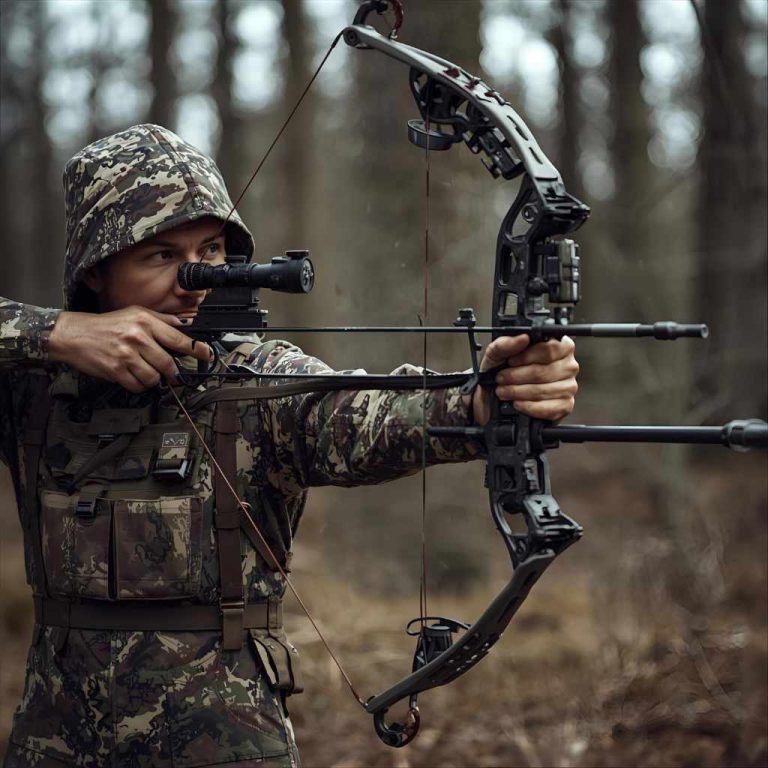
The main difference between a crossbow and a compound bow lies in their fundamental design and operation. A crossbow is essentially a bow mounted horizontally on a frame, shot from the shoulder, and triggered. A compound bow, on the other hand, is a modern recurve bow utilizing cams and pulleys to store and release energy for a more powerful, stable, and easier-to-draw shot. When people mention “Rage Extreme,” they are typically referring to a specific brand of broadhead (like the Rage Hypodermic Deep Six), which is an accessory used with bows and crossbows, not a type of bow itself.

SHENG-RUI
SHENG-RUI Bow String Wax Archery Crossbow Recurve…
- Weight: 0.15 OZ/PC
- Diamater: 16.5 mm, Length: 66 mm
- Directly to Rail, Wipe Down with Finger or Soft Cloth
As an Amazon Associate I earn from qualifying purchases.
Hey there, fellow archery enthusiasts! Navigating the world of bows can feel like trying to hit a bullseye in the dark sometimes, right? You see all these different types, and then you hear terms like “Rage Extreme” thrown around, and it can get confusing fast. Are they the same thing? How do they work differently? If you’ve ever scratched your head wondering about the difference between a crossbow and a compound bow, or what exactly a “Rage Extreme” is, you’re in the right place. We’re going to break it all down in a way that’s easy to understand, so you can feel confident about your archery gear and choices. Get ready to see clearly, because we’re making archery simple and fun!
Before we dive into the nitty-gritty, let’s clarify a common point of confusion. When you hear “Rage Extreme,” it’s usually a reference to a brand of broadhead made by Rage. Broadheads are the pointed tips that go on arrows, and they’re crucial for hunting. They aren’t a type of bow at all! So, while we’ll touch on broadheads, our main focus today is understanding the core differences between crossbows and compound bows. These two pieces of equipment serve a similar purpose but achieve it in very different ways.
Understanding the Basics: Crossbow vs. Compound Bow
Let’s start with the big picture. Both crossbows and compound bows are designed to launch arrows with great force and accuracy. However, their mechanics, how you shoot them, and the experience they offer are quite distinct. Think of it like comparing a rifle (crossbow) to a high-performance sports car (compound bow) – both are powerful tools, but they operate and feel very different.
The Crossbow: A Horizontal Powerhouse
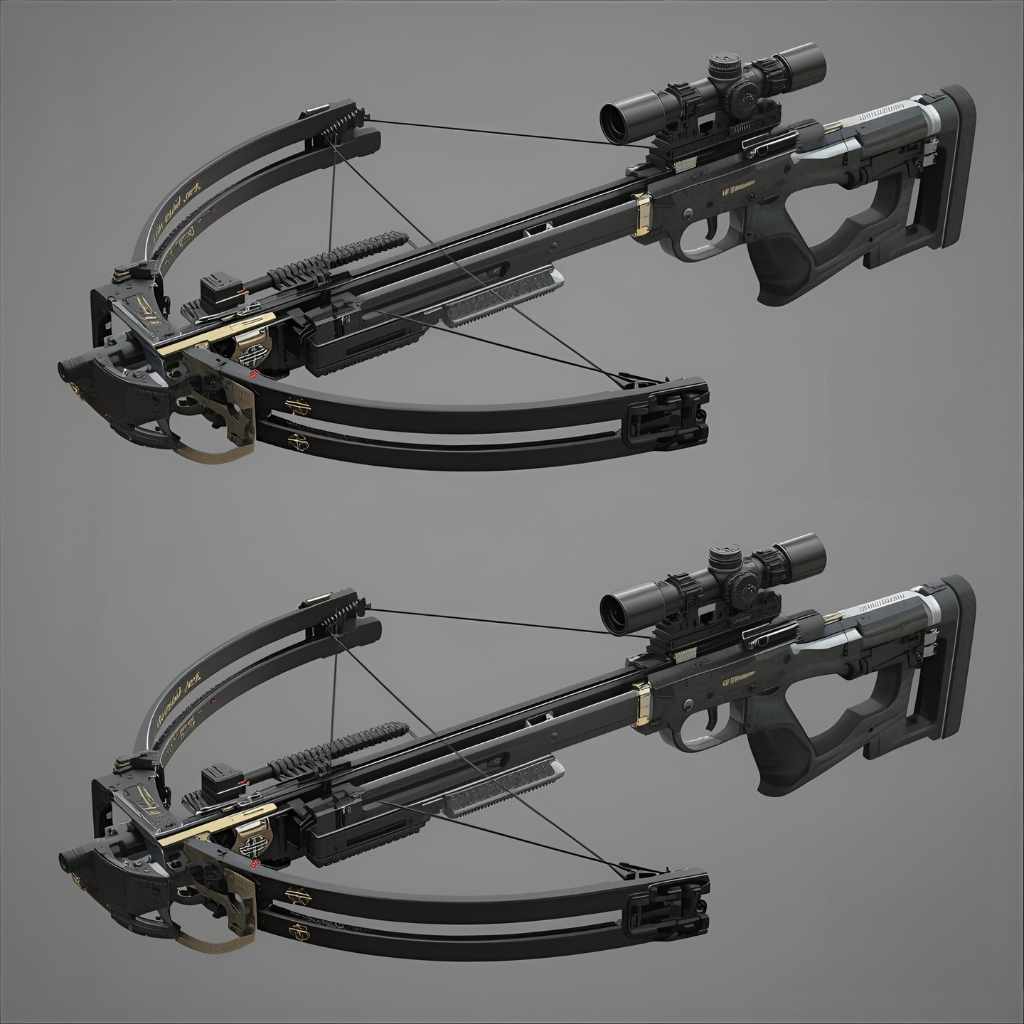
Imagine a bow that’s stable, easy to aim, and doesn’t require much strength to hold steady. That’s a crossbow! It features a bow assembly (called the prod) mounted horizontally on a stock that you hold like a rifle.
How a Crossbow Works:
The process of firing a crossbow is quite mechanical and straightforward:
- Cocking: You pull the bowstring all the way back until it latches securely onto the trigger mechanism. This is like “loading” the weapon. Modern crossbows often use cocking aids, like a rope cocker or a crank system, to make this easier.
- Aiming: You shoulder the crossbow and use a scope or sights to aim at your target, just like with a rifle. Because the string is held back by the trigger mechanism, you can hold your aim for as long as you need without getting fatigued.
- Firing: When you’re ready, you squeeze the trigger. This releases the string, which then propels the arrow forward with tremendous speed and force.
The power of a crossbow comes from the stored energy in the limbs and string. Once cocked, this energy is ready to be unleashed instantly by the trigger.
Key Features of a Crossbow:
- Horizontal Design: The bow is mounted sideways on a stock.
- Trigger Mechanism: Fires the arrow when the trigger is pulled, holding the string in place until then.
- Stock: Provides a stable platform for shouldering and aiming.
- Scopes are Common: Most crossbows come with or are designed to use scopes for precision aiming.
- Ease of Holding: Once cocked, it requires no physical effort to hold the drawn string.
Pros of a Crossbow:
- Easy to Learn: Its rifle-like operation makes it very beginner-friendly, especially for those familiar with firearms.
- Steady Aim: You can hold your aim for extended periods without muscle fatigue.
- High Power & Speed: Modern crossbows are incredibly powerful and can shoot arrows at very high velocities.
- No Draw Weight Strain: You don’t need significant upper body strength to hold the bow drawn back.
Cons of a Crossbow:
- Bulkier & Heavier: Generally larger and heavier than compound bows, making them less maneuverable.
- Slower Reloading: Re-cocking a crossbow can take more time and effort than nocking a new arrow on a compound bow.
- Limited Shot Capacity: You typically only carry one arrow ready to fire at a time.
- Requires Accessories: Cocking devices are often necessary, adding to the gear.
The Compound Bow: The Modern Archery Marvel
A compound bow is an evolution of the traditional recurve bow, designed to make drawing and holding the string easier, while delivering impressive speed and power. It uses a system of cables and cams (or wheels) at each end of the limbs.
How a Compound Bow Works:
The magic of a compound bow lies in its pulley system:
- Draw Cycle: When you start to pull the draw string back, the cams rotate. Initially, it feels like it requires significant effort.
- Let-off: As the cams rotate further, their eccentric shape changes the leverage. This significantly reduces the amount of holding weight required to keep the string drawn back. This is known as “let-off” and is a defining feature of compound bows. For example, a bow with a 70-pound peak draw weight might have a let-off of 80%, meaning you only need to hold about 14 pounds of weight at full draw.
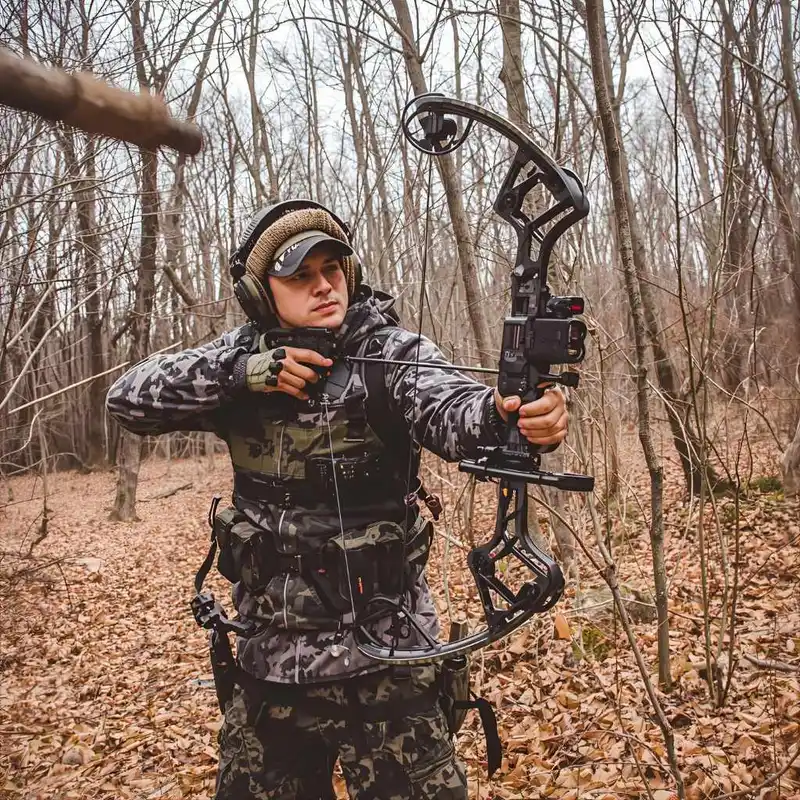
- Anchor and Aim: You pull the string back to your anchor point (usually your cheek or jaw), hold it steady with minimal effort thanks to the let-off, and aim using sights.
- Release: You release the string (either by hand or with a mechanical release aid), which causes the cams to spin rapidly, transferring stored energy to the arrow.
The compound bow stores a large amount of energy in its highly-cambered limbs and releases it efficiently through the cable and cam system, resulting in a fast and accurate shot.
Key Features of a Compound Bow:
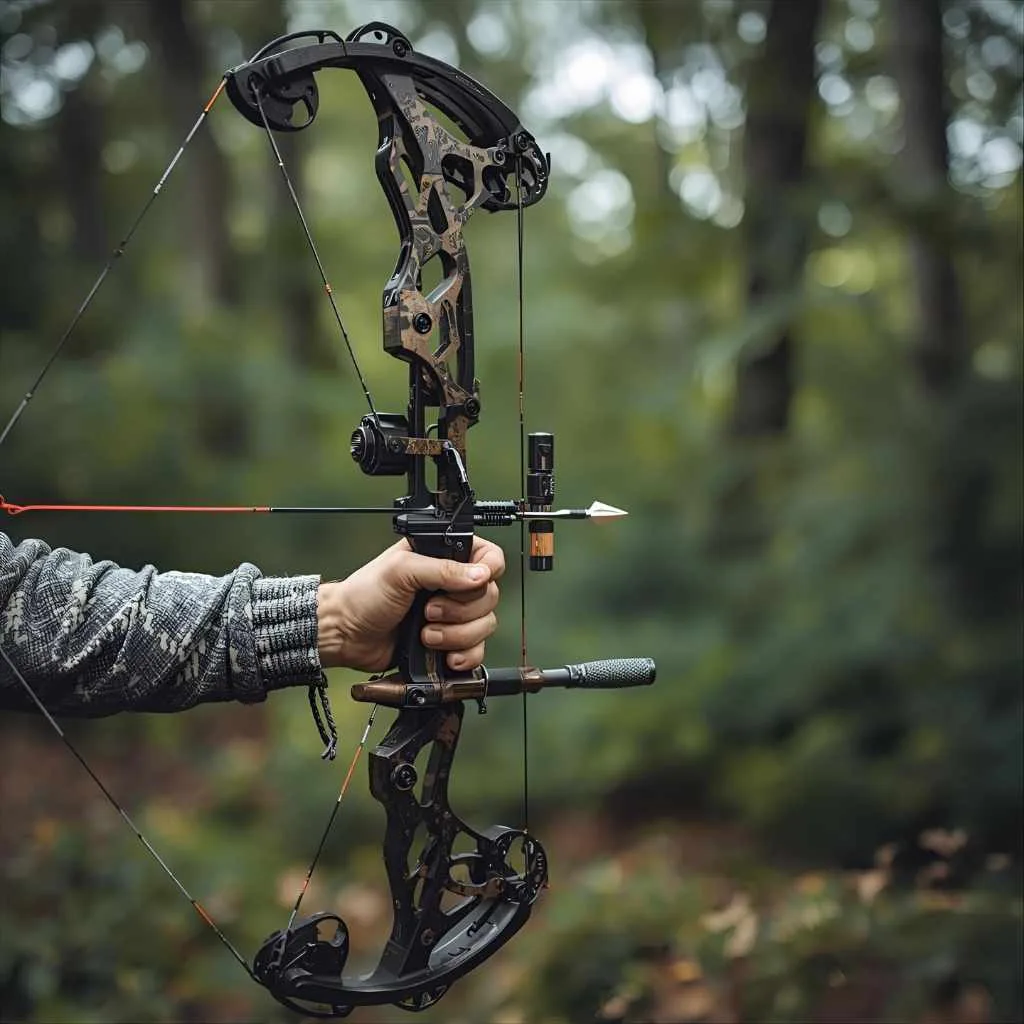
- Cams and Pulleys: Their primary mechanism for storing and releasing energy, and for achieving let-off.
- Let-off: The reduction in holding weight once at full draw.
- Sights: Often equipped with multi-pin sights for aiming at different distances.
- Stabilizers: Used to balance the bow and absorb vibration.
- Arrow Rest: A device that holds the arrow on the riser.
Pros of a Compound Bow:
- Easier to Hold: The let-off feature makes holding at full draw much less strenuous.
- Faster Arrow Speeds: Generally capable of launching arrows at higher velocities than comparable crossbows or traditional bows.
- More Maneuverable: Typically lighter and more compact, making them easier to carry and move in treestands or blinds.
- Quicker Reloading: Nocking a new arrow and drawing the string is a more fluid process.
- Customizable: Highly adaptable with various accessories.
Cons of a Compound Bow:
- Steeper Learning Curve: Requires more practice to master drawing, anchoring, aiming, and releasing techniques.
- Requires More Strength (to Draw): While holding is easier, drawing the bow to full draw can require significant strength.
- More Maintenance: The complex cable and cam system may require occasional tuning and maintenance.
- Can be Expensive: High-end compound bows and their accessories can be a significant investment.
What is “Rage Extreme”? It’s Not a Bow!
Now, let’s clear up the “Rage Extreme” part. As mentioned earlier, “Rage” is a very popular brand that makes broadheads. Broadheads are the business end of an arrow, designed to expand on impact for a larger wound channel, leading to a more effective harvest in hunting situations. The term “Extreme” often denotes a specific, high-performance model within their product line, like the “Rage Hypodermic Deep Six” or similar.
These broadheads are accessories you attach to the end of an arrow. They are used with both compound bows and crossbows, provided the arrow and broadhead are compatible with the specific bow system.
Types of Broadheads (And Where Rage Fits In)
There are two main categories of broadheads:
- Fixed-Blade Broadheads: These have blades that are permanently in place. They are generally simpler, very durable, and less prone to mechanical failure.
- Mechanical Broadheads: These, like many Rage broadheads, have blades that are folded or retracted during flight and deploy upon impact with the target. This design is intended to create a larger cutting diameter and a more aerodynamic profile in flight.
Rage is particularly known for its innovative mechanical broadheads. Models like the “Rage Hypodermic” and “Rage SlipCam” are designed for reliable blade deployment and devastating penetration. They are highly regarded by many hunters for their effectiveness.
For a look at the science behind broadhead design and performance, resources from organisations like the U.S. Fish and Wildlife Service can provide valuable context on hunting regulations and ethical practices, though they don’t detail specific product differences.
Key Differences at a Glance: Crossbow vs. Compound Bow
To help solidify the distinctions, let’s look at a comparative table. This breaks down the core aspects in a side-by-side format.
| Feature | Crossbow | Compound Bow |
|---|---|---|
| Design Concept | Horizontal bow mounted on a stock; fired by a trigger. Similar to a rifle in handling. | Vertical bow utilizing cams and pulleys to reduce draw weight; shot by hand or release aid. |
| Operation | Cocked and locked; trigger release. | Draw, anchor, aim, release. |
| Holding Weight | Zero holding weight when cocked; can hold indefinitely. | Significantly reduced holding weight (let-off) at full draw. |
| Ease of Use (Beginner) | Very easy to adopt, especially for firearm users. | Steeper learning curve; requires practice for proper technique. |
| Physical Strength Required | Minimal to draw (especially with cocking aids); no holding strength. | Significant strength to draw; minimal strength to hold. |
| Speed & Power | Very high speed and power. | Generally highest arrow speeds in archery; very powerful. |
| Maneuverability | Bulkier, heavier, less maneuverable. | Lighter, more compact, very maneuverable. |
| Reloading Speed | Slower; requires cocking mechanism. | Faster; nocking and drawing are quicker. |
| Accessories Mentioned | Rope cocker, crank cocking device, scope. | Release aid, multi-pin sights, stabilizers, arrow rest. |
| “Rage Extreme” Applicability | Can use Rage broadheads on arrows. | Can use Rage broadheads on arrows. |
Choosing the Right Bow for You
So, which one is better? The truth is, neither is inherently “better” than the other. The best choice for you depends entirely on your personal preferences, physical capabilities, intended use (hunting, target practice), and what you find most enjoyable.
Consider a Crossbow If:
- You’re new to archery and want something very easy to pick up and shoot accurately.
- You have physical limitations that make drawing and holding a compound bow difficult.
- You value speed and power but prefer a simpler aiming process that doesn’t involve holding tension.
- You are hunting in situations where rapid re-cocking isn’t a primary concern, and you might have more time for a single shot.
Consider a Compound Bow If:
- You enjoy the challenge of learning and mastering traditional archery techniques.
- You want the most versatile and customizable archery experience.
- You prioritize speed, accuracy, and maneuverability, especially in dynamic hunting scenarios like stalking or moving through dense cover.
- You are willing to invest time in practice to develop the skills needed for this sophisticated equipment.
- You appreciate the mechanical advantage of let-off for holding your aim steady. For more on the physics behind archery, educational resources like those from university physics departments can offer fascinating insights into energy transfer.
Essential Archery Safety Tips (for Both!)
No matter which type of bow you choose, safety is paramount. Archery is a rewarding activity, but it involves powerful equipment. Always prioritize safe practices.
- Always treat every bow as if it were loaded. Never point a nocked arrow at anything you do not intend to shoot.
- Only nock an arrow when you are ready to shoot.
- Always shoot at an appropriate target. Never shoot into the air or at a surface that could cause an arrow to ricochet. A proper archery target is designed to stop arrows safely.
- Inspect your equipment regularly. Check your bow’s string, cables, limbs, and any accessories for wear or damage before each use. For broadheads, ensure they are securely attached and their blades are sharp and undamaged.
- Know your surroundings. Be aware of where everyone is and what is beyond your target.
- Follow proper cocking and uncocking procedures. Never dry fire a bow (firing it without an arrow), as this can cause significant damage to the bow and potentially injure the shooter.
- Use a release aid with a compound bow. This improves accuracy and reduces the risk of “slap” or “snap” on your string fingers.
- Use a cocking device with a crossbow. This ensures consistent and safe cocking.
Familiarizing yourself with safety guidelines from reputable organizations like the National Shooting Sports Foundation (NSSF) is highly recommended for all new archers.
Frequently Asked Questions (FAQ)
Here are some common questions beginners have about crossbows and compound bows:
Q1: Can I use broadheads like Rage Extreme with any bow?
You can use Rage brand broadheads with both compound bows and crossbows, but you must ensure compatibility. Arrows have different spine requirements, and some broadheads are designed for specific arrow inserts (like Deep Six for some compound bows) or arrow diameters. Always check the specifications of your arrows, bow, and broadhead to ensure they work together safely and effectively.
Q2: Which is more powerful, a crossbow or a compound bow?
Both can be extremely powerful. Modern crossbows often deliver tremendous velocity and kinetic energy, especially at shorter ranges, making them suitable for hunting large game. Compound bows are also capable of very high speeds and energy, and their efficiency can sometimes allow for greater energy transfer at longer distances. Power also depends heavily on the specific model and draw weight/length settings of the bow.
Q3: Is a crossbow easier to shoot than a compound bow?
Generally, yes. A crossbow is easier to shoot in terms of the process of aiming and firing. Once cocked, you don’t need to hold the tension, and its rifle-like form factor is familiar to many. A compound bow requires more technique to draw, anchor, and release smoothly, but the let-off makes holding easier.
Q4: What kind of practice is needed for each type of bow?
For a crossbow, practice focuses on aiming, trigger control, and safe handling. For a compound bow, practice needs to encompass proper drawing, anchoring, consistent release, sighting, and often the use of a mechanical release aid.
Q5: Are crossbows legal for hunting in all areas where compound bows are?
Hunting regulations vary significantly by state and even by specific hunting units. Some areas may have separate seasons for crossbows, allow them during archery season, or have restrictions on draw weight or power. Always check your local wildlife agency’s regulations before hunting with any bow type.
Related pick: Check today's price on Amazon