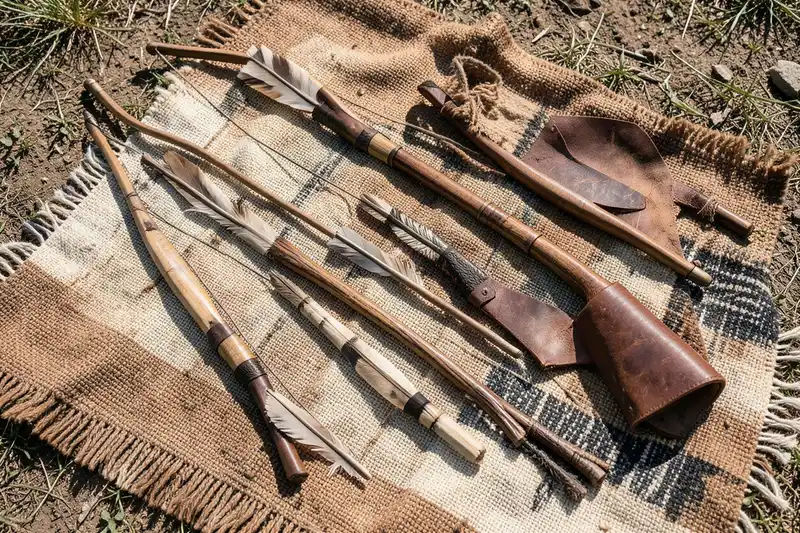
Native American bows and arrows guide: types and uses
A solid Native American bows and arrows guide starts with one rule: match region to purpose, because Plains horse bows, Eastern self bows, and Arctic cable-backed bows were different tools built for different jobs. Miss that and you can buy a wall-hanger, choose unsafe construction, or learn on a bow that shoots badly. I cover history, materials, tribal designs, arrows, draw weights, and how to buy a shootable Native American-style bow.


What makes a Native American bow different by region?
Native American bows were never one standard pattern. Region changed everything: wood supply, humidity, game size, travel style, and whether the bow had to work on foot or from horseback. The short Plains bow and a longer Eastern self bow solved different shooting problems, so buying by appearance alone is a mistake.
Why there is no single Native American bow pattern
Beginners often assume that if a bow looks “traditional,” it must handle the same way. It does not. A bow built for buffalo hunting from horseback needs fast handling in tight space. A bow built for foot travel through timber can afford more length and often gives a calmer shot.
That is why “Native American bow” is too broad to help much as a buying category. I treat these bows as working systems. Bow, string, arrows, quiver, bow case, and climate all matter together.
How environment, game, and travel shaped design
Open Plains country rewarded compact bows that came up quickly. Wooded Eastern country left room for longer self bows that drew smoother and usually forgave small form errors better. Dry Southwest conditions favored some material choices that would act differently in damp country. Arctic makers also had to solve a hard material problem because long, ideal bow staves were less available.
Game mattered too. Small game, deer, elk, and buffalo did not ask the same thing from arrow mass or penetration. War use added another layer, because the best bow for a fast mounted shot is not always the nicest target bow on a modern range.
Foot hunting versus mounted hunting as a design split
The biggest practical split is simple: foot bow or mounted bow. Plains bows are often short, about 42-48 inches, for maneuverability on horseback. Older foot-hunting bows in other regions were often larger, and that extra length can help the draw cycle, cast, and forgiveness when you shoot from the ground.
Short bows are handy. They are also less forgiving at long draw lengths, especially for new archers who creep or collapse. A bow that is too heavy invites flinching until the draw weight is backed down. Bow fit matters more than romance.
According to Plains Indian Weapons, part I: the Bow and Arrows — Plains bows are often short, about 42-48 inches, for maneuverability on horseback. (source)
How Native American Bowstrings Were Crafted and Swapped in the Field
Native American bowstrings relied on sinew, rawhide, plant fibers such as dogbane or nettle, and occasionally animal hair. A failing string at full draw meant a lost hunt or a useless weapon, so hunters replaced them the moment fraying, stretching, or breakage compromised safety.
Material choice shifted with conditions—humidity, cold, and dryness each favored different fibers. Our detailed breakdown of Native American bowstring materials explains how strings were attached, tensioned, and swapped using field-ready substitutes. It also compares which options held up best for self-bows versus composite bows in damp weather, giving you practical context for traditional archery setups today.
The main bow types you need to know
Self bows
A self bow is a single-wood construction. In Native North America, that was a common form for hunting and war, and it covered many regional designs rather than one shape. Self bows are often easier for modern buyers to understand because the structure is simpler and weather risk is usually lower than with sinew-backed replicas.
Longer self bows tend to suit target practice well. They stack less harshly for many shooters and usually tolerate minor release errors better than very short bows. That does not make them better in every context. It makes them easier to live with for many beginners.
Sinew-backed bows
A sinew-backed bow uses a wood core with sinew on the back. Plains makers favored this approach because sinew backing made bows faster-shooting, more powerful, and sturdier against breakage. Many Plains bows were also reflexed with a distinctive gull-wing profile, which helped create a compact, hard-working hunting bow.
One museum example gives useful scale: a sinew-backed bow collected about 1877-79 is described as wood and sinew and has a length of 42 1/2 inches. That does not define every Plains bow, but it shows how short and compact a working example could be.
The tradeoff is care. Sinew changes with moisture. In a range shed, bows with organic backings often respond to weather changes faster than plain fiberglass-backed traditional bows. That matters if you live in humid country.
Composite bows
Composite bows use multiple materials working together, not just one wood stave. In traditional Native bow types, that included multi-part builds where horn, wood, sinew, or backing materials had to be matched well for the bow to work as intended. For a modern buyer, this is the category to approach slowly, because a pretty replica can hide poor glue work, mismatched materials, or unstable tiller.
Composite construction can shoot extremely well when the materials are matched right and the glue lines hold under use. It is also less common in the modern replica market than straightforward self bows and simple sinew-backed reproductions. Unless a maker can explain the build plainly, I assume the piece is decorative until proven otherwise.
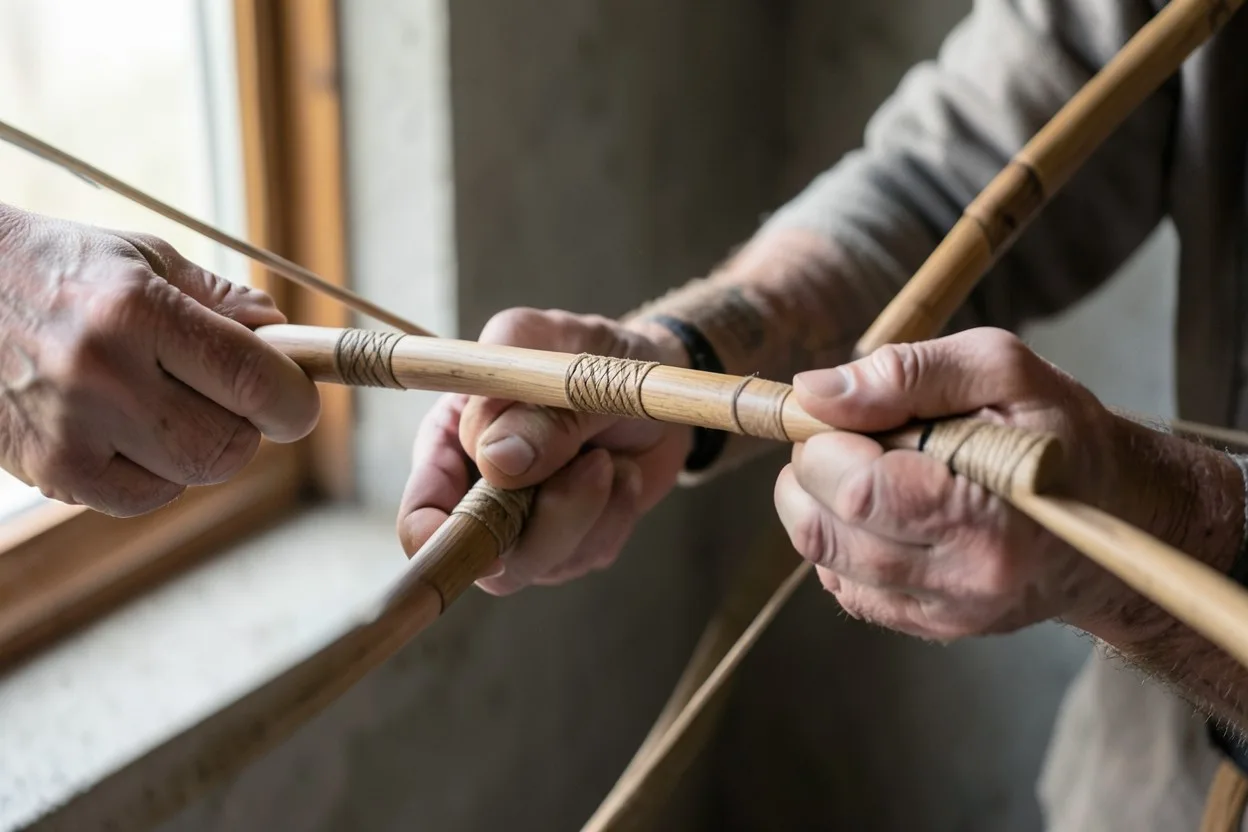
Why sinew backing changed bow performance
Sinew backing let Native American bow makers build wooden bows that bent farther, stored more energy, and stayed less likely to break under heavy draw. The supporting article explains the practical method behind that result: how stretched sinew was glued in thin layers to the back of the bow, why hide glue mattered, and how the process fit short, powerful hunting bows. It also shows why poor application could cause lifting, lost cast, or failure, making backing quality a key factor in performance and durability. For a closer look at the material and construction steps, see Native American sinew backing.
Why Arrow Shaft Straightness Matters
Straight arrow shafts were essential because even small bends could make an arrow fly erratically, lose speed, or split under stress. The supporting guide explains how Native American makers reduced those problems by choosing grain carefully, applying heat to correct bends, repeatedly sighting along the shaft, and protecting it from moisture.
If you want the practical methods behind that craft, arrow shaft straightness breaks down what each step did and why skipping one could weaken the finished shaft. That makes it a useful follow-up for understanding not just how arrows were made, but why they performed reliably in the field.
How did different tribes and regions build bows and arrows?
Different tribes built bows around what they could cut, trade, carry, and hunt with in their own country. Plains makers leaned toward short, powerful mounted bows for horseback hunting and buffalo; Eastern Woodlands groups often used longer self bows for foot hunting in timber; Southwest, Northwest, and Arctic makers solved different wood, climate, and transport problems with distinct lengths, backing choices, and arrow builds.
Plains: short bows for horseback and buffalo
Plains bow design is the one most buyers recognize, and it is also the one most often flattened into myth. Plains bows are often short, about 42-48 inches, for maneuverability on horseback. They were commonly sinew-backed. Plains bow woods listed include ash, chokecherry, juniper, and osage orange.
The article record gives Plains bows an average draw weight of 50-70 pounds. That fits the historical role. The same source says Plains bows were made to shoot an arrow through a buffalo, and one museum description calls Plains bows the most powerful of all. I read those claims as context for intended use, not as a reason for a beginner to buy a heavy replica.
Strings matter here too. Sinew strings belong to the overall traditional system and can feel alive in changing weather. Great for authenticity. Less forgiving for casual storage.
Eastern Woodlands and Southeast: longer bows for foot hunting
In wooded country, longer self bows make sense. They are easier to manage at common hunting draws on foot, and they generally shoot more calmly than a short horse bow. Osage and ash fit naturally into this conversation, though surviving examples and local practice varied by tribe and time.
For a modern shooter, this is often the safest entry point into Native American-style equipment. If your draw is on the longer side, a longer Eastern-style self bow will usually treat you better than a compact Plains replica.
Southwest and Great Basin: dry-country solutions
Southwest and Great Basin bows often reflect material scarcity and dry conditions. Juniper enters the picture here for good reason. Reed arrows also make more sense in this region than many buyers realize. A hollow reed shaft can be light and lively, but it behaves differently from a solid wood shaft in spine, durability, and point mounting.
For small game or lighter setups, reed can be excellent. For rough range use, I still find solid shafts easier for beginners to maintain.
Northwest Coast and Arctic: scarce stave problems, clever backing systems
Northwest and Arctic traditions deserve more attention than they usually get. In places where ideal bow wood was less available, makers used cable-backed and sinew-assisted systems to get useful performance from shorter or less ideal staves. That is bowmaking in its plainest form: solve the material problem you actually have.
These bows can look unusual to a buyer used to longbows. They should. Their purpose and material logic were different from a Plains horse bow or an Eastern self bow.
Key tribes historically linked to archery
Understanding which Native American nations were most associated with archery helps avoid the common stereotype that treats all tribes as a single “bow‑using” culture. The article breaks down the groups that repeatedly appear in historical records—such as the Comanche and Lakota for mounted warfare, the Apache for hunting and raiding, and Pueblo, Hopi, and Eastern Woodlands peoples for documented bow‑making and shooting practices. By comparing horseback warfare, hunting efficiency, and the visibility of written accounts, it shows why certain names surface more often and how regional styles differed.
Explore the full comparison of these Native archery tribes.
How hunters carried arrows in the field
Native American hunters used several practical carry methods, and the right choice depended on silence, speed, and terrain. The supporting guide on Native American arrow carry explains field quivers, back quivers, hip or side quivers, and even bundled carry, showing how each method affected access to arrows and the risk of snagging or noise.
That matters because a good carry setup protected arrows from damage and helped hunters make faster follow-up shots without disrupting a stalk. The article also notes where regional variation came into play, so readers can see that quiver style was not one-size-fits-all.
Materials: wood, sinew, string, shafts, feathers, and points
Bow woods by region and function
Ash, chokecherry, juniper, and osage orange all belong in this guide, but not as interchangeable names. Ash is useful and widely respected. Chokecherry shows up in Plains context. Juniper fits dry-country discussions. Osage orange is famous for good reason, especially where it was available or traded.
The best wood depends on the design you want to copy. A buyer asking for the “best” wood without naming region, draw length, and use is skipping the hard part of the decision.
What sinew backing changes
Sinew backing adds tension strength to the back of the bow. In practice, that can add spring, support reflex, and reduce break risk in a short, hard-working bow. It is one reason Plains makers leaned on it so heavily.
It also changes care. Humidity can soften the backing, shift brace behavior, and make a bow feel dull if conditions turn against you. I tell people to think of a sinew-backed bow the way they would think of a fine wood instrument: protect it from damp swings and careless storage.
Bowstring materials and authenticity
Sinew strings are part of the traditional Plains picture, but they are not carefree. They can perform well and suit a replica historically, yet weather response and maintenance are real concerns. Modern substitute strings may be easier to live with, though they change the feel and authenticity of the system.
If you want a shootable replica rather than a museum-style reproduction, ask the maker what string material the bow was tillered for. That answer matters.
Arrow shafts, fletching, and points
Plains arrows were made from red osier dogwood, juneberry, or chokecherry. Those are established materials, not decorative talking points. Wood shafts tend to be tougher than hollow reed in rough handling. Reed shafts can be lighter and very useful, but they need proper footing or careful point installation to survive abuse.
Arrows were fletched with feathers, particularly turkey feathers. Feather shape and size change drag and stability. If you want a forgiving target arrow, a slightly higher feather profile usually helps. If you want a flatter cast from a light setup, trimming can help, though you lose some correction.
Arrowheads were likely first made from flint and other hard stone points. Metal arrowheads were added later through trade with Europeans. Stone has period correctness and can work well, but metal generally tolerates repeated practice impact better. For range use, many shooters quietly choose a durable field point and keep stone heads for display or special shooting.
Do not ignore nock fit, shaft spine, and point weight. A beautiful replica arrow with a sloppy nock or mismatched spine will make any bow look inaccurate. Switching to a left-hand bow after discovering left-eye dominance can often help tighten arrow groups. Fit and tune fix more “bad bow” complaints than people want to admit.
How powerful and accurate were Native American bows?
These bows could be very effective, but power and accuracy depended on design, arrow mass, draw length, and tune. Plains hunting bows are often described in the 50-70 pound range, strong enough for serious hunting. Accuracy is harder to generalize, because a tuned arrow and a matched shooter matter more than broad claims.
Power: draw weight, draw length, and intended target
The common Plains claim is 50-70 pounds, and that sits in the right historical zone for a serious hunting bow. But draw weight alone tells only part of the story. A short bow pulled past the draw it likes can feel harsh and waste motion. A longer bow at a moderate weight can deliver a cleaner cast with less shooter strain.
For buffalo or war use, heavy arrows and close practical distances matter. I do not treat these bows like modern speed rigs. I treat them like hunting tools built around penetration, handling, and durable field use.
Accuracy: bow design versus arrow tune
A short reflexed Plains bow can be very quick in the hand. It can also punish bad release. A longer self bow generally settles better on target and is easier for beginners to repeat. Neither fact makes one design superior in all situations.
The biggest accuracy gains usually come from matching shaft spine to bow weight, getting nock fit right, and choosing point weight that lets the arrow recover cleanly. If the nock pinches the string, the launch gets weird. If the shaft is too weak or too stiff, groups open fast.
Effective range and practical expectations
Historical users could do serious work with these bows. Modern buyers still need practical expectations. A short Plains replica with heavy wood arrows may hit hard at close hunting distance and feel sluggish at longer target distance. A longer Eastern-style self bow often gives a more relaxed sight picture for range shooting.
That is why I separate hunting power from target pleasure. The best answer changes with the job.
What Was the Practical Arrow Range of Native American Archers?
Native American archers rarely needed shots past 150 to 300 yards in real hunting situations, even though their arrows could fly much farther in controlled conditions. Understanding this gap between maximum flight and practical range is essential for anyone studying traditional archery, since overstating shooting distance often leads to myths about hunting effectiveness and bow performance. The arrow flight distance guide examines how ordinary hunting shots, long-range attempts, and mounted shooting each demanded different techniques, and how bow type, arrow weight, and regional preferences shaped the numbers you will find in the record.
Region-by-region bow and arrow comparison table
Comparison table
| Region or tribal pattern | Common bow type | Typical length | Likely wood | Backing material | Arrow shaft material | Usual use |
|---|---|---|---|---|---|---|
| Plains tribes such as Lakota, Cheyenne, Crow, Nakoda[3] | Short reflexed sinew-backed bow | About 42-48 inches | Ash, chokecherry, juniper, osage orange | Sinew | Red osier dogwood, juneberry, chokecherry | Horseback hunting, buffalo, war |
| Eastern Woodlands tribes | Longer self bow | Usually longer than short mounted bows | Ash, osage where available | Usually none on simpler forms | Wood shafts | Foot hunting, woodland travel, war |
| Southeast tribal patterns | Self bow | Moderate to long | Regional hardwoods, often including ash or osage in some contexts | Usually none on simpler forms | Wood shafts | Foot hunting and war |
| Southwest and Great Basin | Self bow or backed regional form | Short to moderate | Juniper and other local woods | Sinew on some forms | Reed shafts and wood shafts | Dry-country hunting, travel on foot |
| Northwest Coast | Regional self or backed forms | Moderate | Regional woods depending on locality | Sinew or other backing on some examples | Wood shafts | Hunting and war |
| Arctic and Subarctic patterns | Cable-backed or sinew-assisted bow systems | Short to moderate | Available local woods, sometimes limited stave options | Sinew or cable system | Wood shafts suited to local game | Foot hunting in severe climates |
How to read the table without flattening tribes together
The table is a map, not a final verdict. It shows recurring regional logic. It does not mean every tribe in a region used one exact bow or one exact arrow build. Surviving pieces, time period, trade access, and local maker choices all changed the details.
Buyer checklist: shootable replica versus decorative piece
- Ask if it is built to shoot. If the seller avoids that question, assume decoration.
- Confirm draw weight at your draw length. “Forty pounds” means little if your draw is longer than the maker used.
- Check bow length against your draw and use. Very short Plains replicas can be miserable for long-draw beginners.
- Ask the exact construction. Self bow, wood and sinew, or a modern hidden laminate dressed up to look old.
- Inspect tiller and limb symmetry. Uneven bend is a red flag on a functional bow.
- Ask what string material it was tuned for. This matters a lot on traditional-style replicas.
- Look at the nocks and handle. Crude decoration is fine; cracks, lifted backing, and twisted limbs are not.
- Request arrow guidance. A real bowyer should tell you suitable shaft material, spine window, and point weight range in plain language.
- Verify weather limits. This is non-negotiable on sinew-backed bows.
- Ask whether a bow case and quiver are for protection or display only. Traditional paired gear should carry and protect equipment, not just complete the look.
What size Native American-style bow should you buy?
Buy the longest design that still matches the style you actually want to shoot. Short Plains bows suit shorter draws, mounted-history interest, or compact handling. Most beginners do better with a longer self bow and moderate draw weight, because it is easier to string, easier to tune, and more forgiving on release.
Choose length by draw and shooting style
If you draw long, be careful with compact Plains replicas. They can stack early and feel sharp at anchor. For target shooting, I usually steer new archers toward longer Eastern-style self bows. If your goal is studying Plains design or shooting from confined space, the short bow makes more sense.
Choose draw weight by experience
Beginners should stay humble here. If you cannot hold at anchor without shaking or collapsing, the bow is too heavy. Historical draw weights are interesting. Your joints are more important.
For hunting reenactment interest, a heavier Plains-style replica may be appropriate. For regular target use, a moderate setup lets you practice longer and tune arrows better. Bad form learned under too much weight sticks around.
When a short Plains bow helps and when it hurts
A short bow helps with portability, quick handling, and mounted context. It hurts when the shooter has a long draw, inconsistent release, or a target-only goal. That is why buyers who love the look of a Plains bow often end up happier owning two bows: one for style study, one for weekly shooting.
Choosing a beginner-friendly reproduction Native American bow
A practical reproduction Native-inspired bow for beginners typically measures 54–58 inches with a draw weight of 20–25 pounds at 28 inches. These dimensions preserve an authentic look while remaining forgiving enough for new archers to shoot consistently.
Our guide on beginner reproduction bows compares specific styles, explains which features improve accuracy, and includes a decision matrix for matching specs to your skill level. It also covers how to select compatible arrows and verify that a replica is historically styled without sacrificing ease of use. Starting with the right length and poundage prevents bad habits and makes traditional shooting accessible from day one.
How do you string and care for a Native American-style bow safely?
String these bows with care, especially short reflexed and sinew-backed models. Use a method that keeps limb twist under control, inspect the backing before every session, and store the bow away from heat and damp swings. Most damage I see comes from bad stringing, poor storage, or shooting the wrong arrows.
Safe stringing steps
- Inspect first. Look for lifted sinew, cracks, twisted limbs, or damaged nocks.
- Use the method recommended by the maker. For many replicas, a stringer is the safest option.
- Keep limb alignment centered. On short reflexed bows, twist can sneak in fast.
- Set brace height carefully. Too low often gives noisy, unstable launch. Too high can stress the bow and shorten the working stroke.
- Never dry fire. That rule matters even more with organic-backed builds.
Humidity, storage, and travel
Sinew-backed bows and sinew strings react to humidity. In damp weather they can feel softer and less lively. In careless heat, glues and backing can suffer. Keep them in a stable indoor space, out of a hot vehicle, and in a protective bow case when traveling.
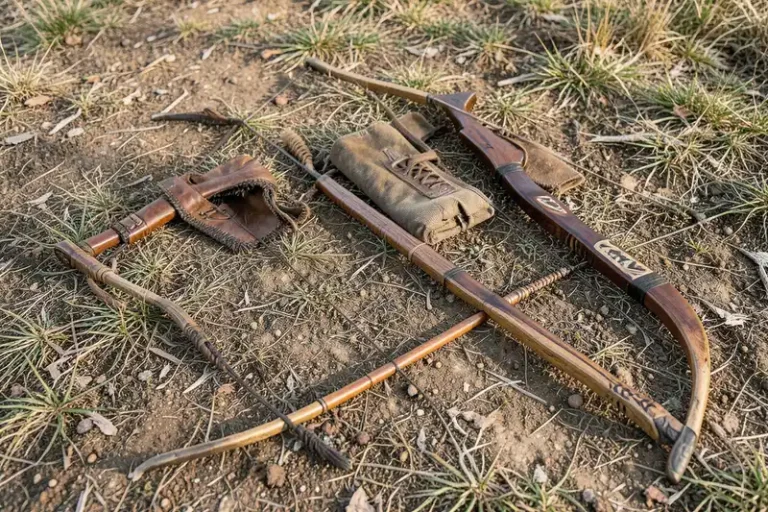
Quiver and bow case were part of the full equipment system, not decoration alone. A good case protects limb tips, string, and backing from handling damage.
Maintenance checks before shooting
Before each session, I check brace height, string wear, nock grooves, and any change in limb alignment. If arrows start fishtailing when they were flying clean last week, I do not blame history first. I check weather, string stretch, and arrow match.
Essential Traditional Bow Accessories for Native-Style Archery
The most important accessories for a native‑style traditional bow are a comfortable finger protector (glove or tab), a quiet string silencer, and a set of properly matched arrows. Getting these three right eliminates sore fingers, reduces noise, and improves arrow grouping, which are the biggest performance gains for hunters and target shooters alike. The supporting guide walks through a quick comparison of each category, explains the selection criteria, and lists top picks—so you can prioritize gear purchases without trial‑and‑error. Learn which items rank highest for comfort, quietness, and consistency in the traditional bow accessories guide.
How Native American Arrow Shafts Were Straightened and Kept Straight
Arrow shaft straightness was critical to accuracy, and the methods behind it were far more precise than many assume. Shafts were selected with attention to grain alignment, hand-straightened over heat, sighted repeatedly down the length, and stored under controlled humidity to prevent warping. Miss any step, and arrows could fly unevenly or split on release.
The full breakdown explains the mechanical reason behind each technique and where each method can fail, giving you a clearer sense of what went into making serviceable arrows by hand. See the detailed guide on Native American arrow straightening.
What makes a Native American-style bow good for target shooting today?
A good target bow in this style is one that fits your draw, accepts matched arrows, and holds tune through a normal practice session. Historical appearance helps if the build is sound. If the bow is too short, too heavy, or too weather-sensitive for your range habits, authenticity alone will not save it.
Match design to your range use
If you shoot weekly at fixed distance, a longer self bow is often the friendlier choice. If you want to study Plains handling and shoot shorter sessions with heavier arrows, a short sinew-backed style can be deeply satisfying. Just go in with the right expectations.
Arrow spine, nock fit, and point weight basics
Arrow tuning is where many replicas come alive or fall apart. Start with a nock that clips the string without pinching. Match shaft spine to the real draw weight of the bow at your draw. Then test point weight until the arrow leaves cleanly and stops wagging in flight.
Solid wood shafts are often easier for beginners. Reed can work beautifully, but the setup window is narrower and durability is lower if you miss the target frame.
When authenticity helps and when it gets in the way
Authentic materials can teach a lot about how these systems worked. They also add variables. For strict range pleasure, a historically inspired self bow with stable modern string material may be the smarter buy. For study, demonstration, or period practice, a fuller traditional build makes more sense.
Choosing the Right Broadhead for Traditional Native‑Style Arrows
Choosing the right broadhead is crucial for preserving the integrity of traditional wooden arrows and ensuring deep penetration on game. The article explains why 2‑blade cut‑on‑contact points in the 100–125 grain range are the most forgiving, and when a 3‑blade design might be appropriate if spine, FOC, and bow weight are perfectly matched. It also compares glue‑on versus screw‑in attachments, outlines optimal cutting diameters for low‑speed bows, and provides a compatibility matrix linking head style, shaft weight, and draw weight. Understanding these details helps hunters avoid shaft split, erratic flight, and wasted ammo with the best broadheads.
Where to go next
If you want to go deeper on this, our How Native American hunting arrows were tuned for flight guide covers it in detail.
For more on this, our How Native American bows stored energy: Reflex, recurved, and simple designs guide walks through it step by step.
We also cover How to string a Native American style bow safely in a separate guide worth a look.
Curious about this? Our What Are Native American Archery Release Aids? Historical Use and Modern Myths guide has the full breakdown.
If you want to go deeper on this, our How Did Native American Archers Aime Their Shots Without Sights? guide covers it in detail.
For more on this, our How Did Native American Arrows Fly So Well? Balance, Weight, and Fletching guide walks through it step by step.
We also cover Were Native American Bows Short or Long? Bow Length by Region in a separate guide worth a look.
Curious about this? Our How Strong Were Native American Bowstrings? Common Materials and Performance guide has the full breakdown.
If you want to go deeper on this, our What Did Native American Archers Wear on Their Wrists? Protection and Arm Guards guide covers it in detail.
For more on this, our How Did Native American Archers Carry Arrows? Quivers, Belts, and Backs guide walks through it step by step.
We also cover Native American Bow vs Recurve Bow: What Are the Differences? in a separate guide worth a look.
Curious about this? Our How to Store a Traditional Bow to Prevent Warping and Damage guide has the full breakdown.
If you want to go deeper on this, our What Tips Help Improve Instinctive Shooting With a Traditional Bow? guide covers it in detail.
Frequently asked questions
What are Native American bows and arrows made of?
Most were built from wood, but the exact system varied by region. You will see self bows of single wood, wood cores backed with sinew, sinew strings on some Plains bows, wood or reed arrow shafts, feather fletching often using turkey feathers, and stone heads later joined by metal points through trade.
What types of Native American bows were used by different tribes?
Three main forms matter for buyers: self bows, sinew-backed bows, and composite or multi-material builds. Plains tribes are strongly tied to short sinew-backed horse bows, Eastern Woodlands groups to longer foot bows, and Arctic makers to cable-backed or sinew-assisted systems shaped by sparse stave wood and severe weather.
How powerful were Native American bows for hunting and war?
Power ranged widely, but many Plains hunting bows are commonly placed around 50-70 pounds. That is serious hunting weight. Short Plains bows were built for close, forceful work with suitable arrows, while longer regional bows could trade some compact handling for a smoother draw and steadier target feel.
What size Native American bow should I buy?
If you are new, buy a longer self bow that fits your draw and keeps draw weight moderate. Choose a short Plains-style bow only if your draw is not overly long and you want that specific handling. Most frustration comes from buying too short and too heavy because the bow looks historically dramatic.
How do Native American bows handle humidity and weather?
Self bows are usually simpler to manage in changing conditions, though all wood bows need sensible storage. Sinew-backed bows and sinew strings are more weather-sensitive. Humidity can soften response and shift brace behavior, so keep them dry, stable, and out of vehicle heat if you want consistent shooting and long life.
Eli5: Did europeans and native Americans invent bow… — Or did the vikings bring the technology to the native americans?
No. Native Americans did not get bow technology from Vikings. Bow use in the Americas long predates Norse contact. The better way to think about it is independent development and long local adaptation. By the time Europeans arrived, Native communities already had mature regional bow systems built for their own environments and needs.