How Far Could a Native American Arrow Travel?
A Native American arrow could fly about 150 to 300 yards in ordinary use, with long-range shots reaching roughly 400 to 500 yards and specialized light arrows going farther. Treating those figures as hunting range leads to missed shots, wasted energy, and weak claims about traditional bows. This guide separates maximum flight, practical hunting distance, and mounted shooting, then explains how bow type and region changed the numbers.
Native arrow distance and comparison table
Here is the clearest way to compare traditional Native bow use: maximum arrow flight is not the same as useful range. A bow can launch an arrow far beyond the distance where a hunter or fighter can place it with control, and that gap matters more than the headline number.
| Bow type | Likely practical range | Why it changes | Point weight and fletching notes |
|---|---|---|---|
| Foot-use self bow | About 50 to 100 yards for hunting or combat, with longer flight possible | Longer one-piece wood bows often suit foot use, and longer draw can help launch a heavier shaft with steadier aim | Heavier points cut distance; broad, well-set feathers help stabilize a wooden shaft with stone or bone points |
| Plains sinew-backed horse bow | About 50 to 100 yards in practical use, with many shots made closer | Short, reflexed or gull-wing bows are easier to handle on horseback and often trade some raw distance for speed and control | Lighter points and efficient fletching help speed; heavy points and oversized feathers slow the arrow more quickly |
| Composite-style bow | Often similar usable distance, but better handling from a short profile | Multi-material construction fits mounted use well because the bow stays short without losing much power | Fine-tuned feather size matters more when the arrow must balance a strong bow with a compact shaft and point |
This table does not claim one tribe, one decade, or one shooting style. It gives a practical frame for reading historical reports. Native materials and methods changed by region, season, game, and whether the archer was on foot or on horseback.
What distance means in traditional archery
Maximum range means the farthest a launched arrow can travel under favorable conditions. Practical range means the distance where a shot still matters for hunting or combat, because accuracy, impact, and recovery all still count. Those are different numbers for a reason.
Maximum range versus practical range
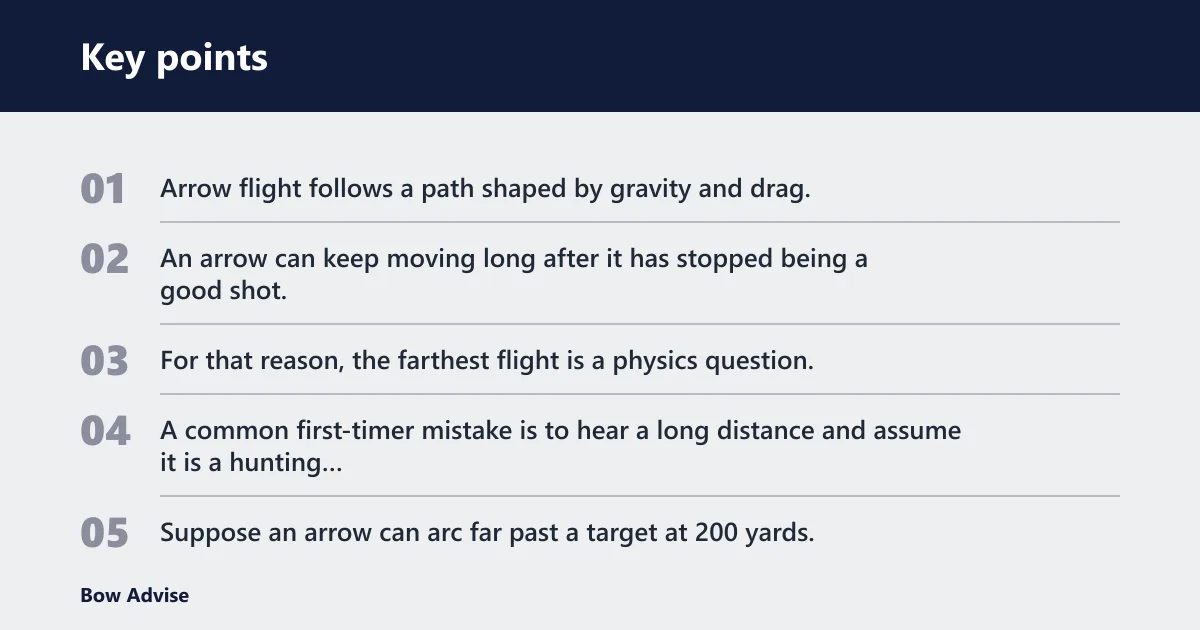
Arrow flight follows a path shaped by gravity and drag. An arrow can keep moving long after it has stopped being a good shot. For that reason, the farthest flight is a physics question, while effective range is a judgment about placement, penetration, and confidence.
A common first-timer mistake is to hear a long distance and assume it is a hunting distance. Suppose an arrow can arc far past a target at 200 yards. That does not mean a clean hit is likely at that range, especially with a moving animal or a rider in motion.
Why angle, drag, and gravity matter
The release angle changes how far an arrow can fly. A lower, efficient angle usually keeps more energy in forward motion, while a steep angle can produce a longer arc but not a useful strike. Wind, humidity, altitude, and arrow design all change the result.
Thin air at higher altitude can reduce drag, so a shaft may carry farther than it does at sea level. Wind can push a light arrow off line, especially one with large feathers or a broad point. Humidity can affect wood and feather behavior, which matters more in traditional gear than many modern shooters expect.
How far could a Native American arrow travel?
In general terms, bows of American Plains Indians could typically shoot arrows between 150 to 300 yards, and some reports place a shot at about 200 yards. That is travel distance, not a promise of usable hunting distance. A lighter shaft, a favorable angle, and good release can stretch that figure.
Typical yard estimates by bow type
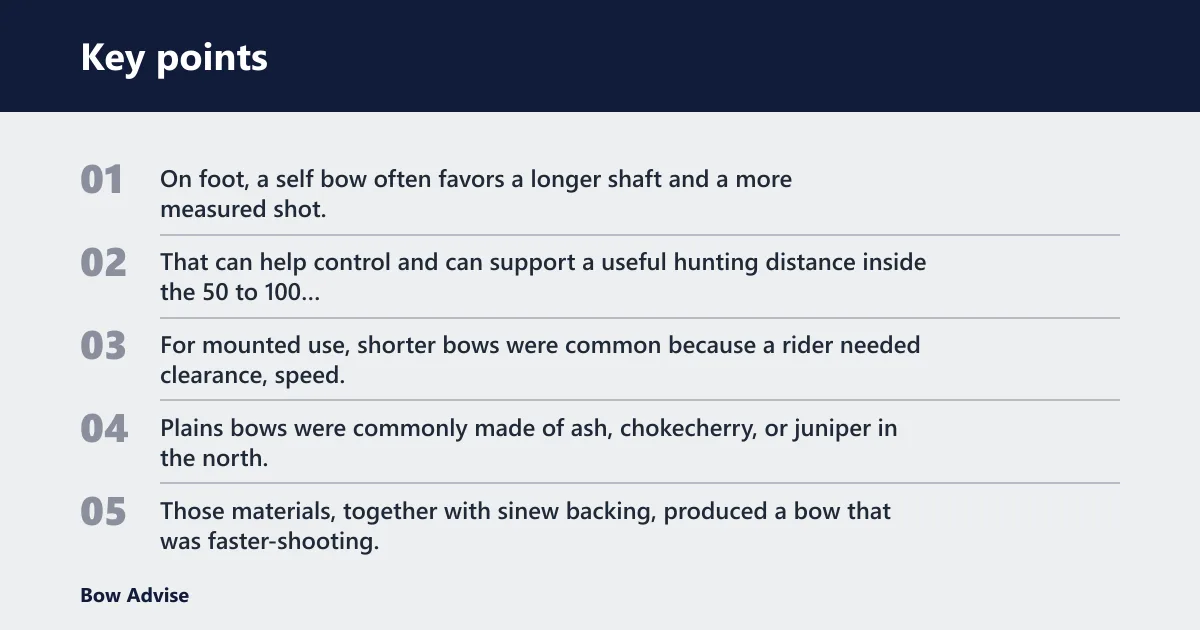
On foot, a self bow often favors a longer shaft and a more measured shot. That can help control and can support a useful hunting distance inside the 50 to 100 yard band. For mounted use, shorter bows were common because a rider needed clearance, speed, and quick handling.
Plains bows were commonly made of ash, chokecherry, or juniper in the north, and osage orange in the south. Those materials, together with sinew backing, produced a bow that was faster-shooting, more powerful, and harder to break. Some Plains sinew-backed horse bows could have been approaching 80 pounds.
Why self bows and horse bows differ
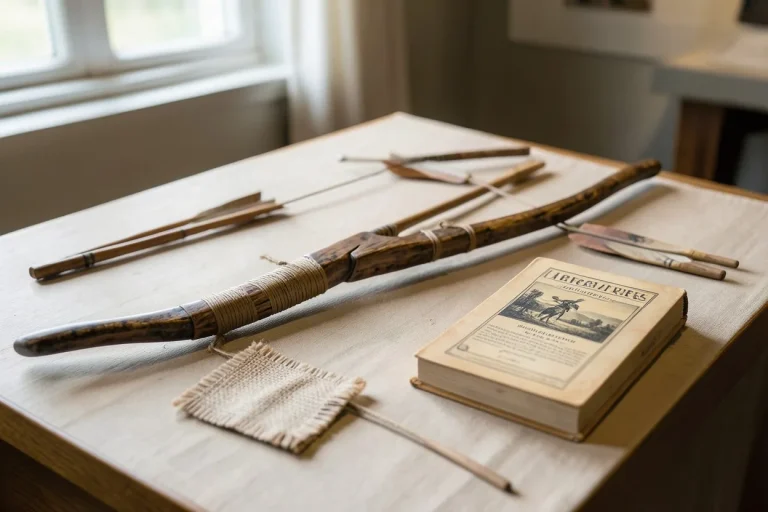
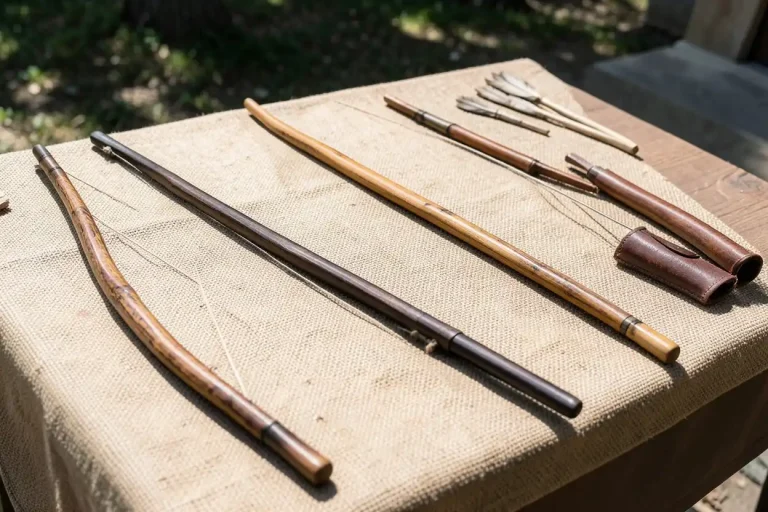
Self bows are single-piece wood bows. They were used widely across earlier Native American archery and often reached a longer profile than many horse bows. That longer form can help smooth the draw, but it is less convenient when a rider needs a compact weapon.
Horse bows on the Plains were often short, about 42-48 inches, for mounted use. That short profile allowed a rider to nock, draw, and loose without fighting the horse’s neck or the rider’s own body position. The tradeoff was not weakness; it was a different balance of speed, handling, and power.
What changes with heavier arrows
Heavier arrows usually lose distance faster than lighter ones, even if they hit harder at short range. A broad stone point, thick wood shaft, or extra-long shaft adds mass. That can help in some hunting tasks, but it usually reduces far-flight performance.
Traditional arrow materials included wood shafts or reeds/shoots, with stone, bone, antler, or metal points attached using sinew or hide glue. Those choices changed weight, stiffness, and balance. The same bow could send two different arrows very differently if one carried a heavy point and the other did not.
Which Native bow types changed distance most?
Bow type matters because it changes stored energy, draw feel, and how much power reaches the shaft. The biggest difference is not “strong” versus “weak.” It is how the bow fits the user, the game, and whether the archer is on foot or mounted.
Self bow performance on foot
Self bows often suit careful shooting at moderate range. A longer bow can be easier to hold steady and may work well with hunting arrows made for penetration rather than maximum flight. In many cases, that means dependable use inside a shorter practical window rather than extreme distance.
Most Native American archery draw weights were lighter than English war bows or Manchu bows. Approximately 50 pounds is usually enough for most game. That figure is a useful benchmark because it sits in the range where many traditional hunting tasks can be done without sacrificing all control.
Plains Indian bow design for horseback use
Plains Indian bow design favored compactness. The reflexed or gull-wing profile and sinew backing let a short bow remain useful from the saddle. The result was a bow that could be carried, nocked, and shot quickly in a moving setting.
Mounted use changed distance in a practical way. A rider may not shoot at the longest possible range because the horse moves, the angle changes, and target timing becomes tighter. So a horse bow may still send an arrow far, but the real job is quick control at shorter distance.
Composite bow construction and short profile
Composite bows use multiple materials such as wood, horn, antler, and sinew. That mix lets makers build a short profile that still stores useful energy. For mounted archery, that short length is a real advantage because it fits the body and saddle better than a longer self bow.
Composite construction does not automatically mean more distance in every case. Arrow mass, point choice, and release still control the result. A well-matched arrow can do more for range than a stronger bow paired with a poor shaft.
What factors changed arrow flight?
Several variables changed arrow flight in Native American traditions: draw weight, arrow mass, shaft length, spine, fletching, point weight, weather, and bow length. None of them acts alone. A change in one piece often forces a change in the others.
Draw weight and stored energy
Draw weight is measured in pounds and tells you how much force it takes to draw the bow. More draw weight usually means more stored energy, which can push an arrow farther and harder. But extra weight also demands better form and a well-matched arrow.
One plain rule applies here: a stronger bow does not guarantee better range if the arrow is too heavy or too stiff. The release has to match the bow. Otherwise, the arrow leaves the string inefficiently and loses speed quickly.
Arrow mass, shaft length, and spine
Arrow mass changes both flight and impact. A long, heavy shaft is slower. A lighter shaft may travel farther but can lose stability if it is not matched to the bow’s power. Spine, or shaft stiffness, also matters because a shaft that bends poorly will not leave the bow cleanly.
How long should the arrow be? It should be long enough for safe draw length and clean release, and matched to the bow and the shooter’s draw. For traditional setups, that usually means a shaft chosen for fit first, then tuned for stiffness and point weight second.
Fletching size, point weight, and weather
Arrow fletching uses feathers to stabilize flight. The feathers help the shaft correct its path and balance the drag created by the point. Larger feathers can add stability, but they also add drag, which can reduce maximum distance.
Point weight changes the balance of the shaft. Heavier points can improve some hunting arrows by aiding penetration and forward balance, but they usually shorten flight distance. Wind has the same kind of effect: it can help or hurt depending on direction, but it almost always changes the clean path of a light arrow more than a heavy one.
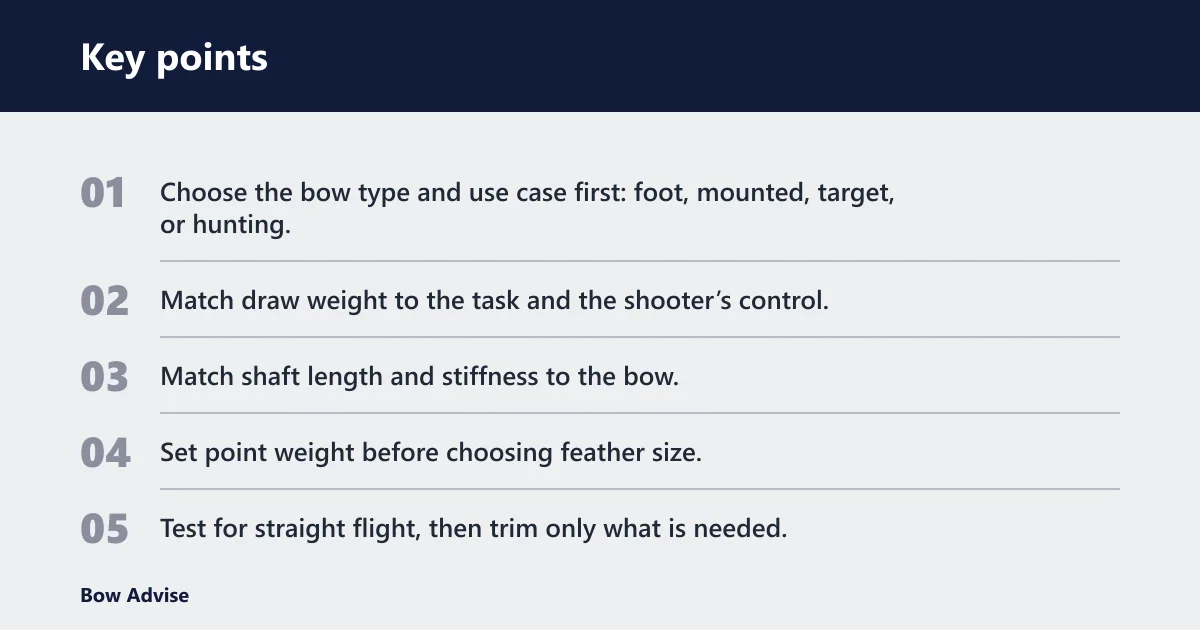
- Choose the bow type and use case first: foot, mounted, target, or hunting.
- Match draw weight to the task and the shooter’s control.
- Match shaft length and stiffness to the bow.
- Set point weight before choosing feather size.
- Test for straight flight, then trim only what is needed.
How fast can a traditional arrow travel?
Arrow speed varies by bow design, draw weight, arrow mass, and release. Faster arrows usually flatter the trajectory and reach the target sooner, but speed alone does not make a shot better. An arrow that is too light or poorly matched can be fast and still be unstable.
Why speed estimates vary by setup
Traditional bows range widely, so speed numbers do too. A lighter arrow from a stronger bow will usually move faster than a heavy hunting shaft from the same bow. Plains horse bows, self bows, and composite bows can all send arrows at useful speed, but the setup changes the result more than the label does.
How speed relates to distance and accuracy
Speed helps with flat trajectory and can reduce the time a moving target has to react. That matters in hunting and mounted shooting. But speed does not replace accuracy, and it does not turn a 50 to 100 yard practical range into a reliable long shot.
Native American archers were able to make one shot every 3-4 seconds, which fits the need for quick follow-up and situational control. The same source says they shot at a range of about 200 yards. That is a useful reminder that speed, range, and accuracy were tied together, not separate goals.
What speed can and cannot tell you
Speed can tell you something about bow efficiency and arrow match. It cannot tell you whether a shot will land where it should, how a rider will manage the shot, or how a heavy point will behave on contact. Use speed as one clue, not the whole answer.
Frequently asked questions
How far can an arrow travel?
That is maximum flight, not a hunting promise. Distance changed with bow type, draw weight, arrow mass, angle, and wind.
How far can you shoot an arrow?
For practical use, the better question is how far you can shoot with control. On many Native bow setups, effective hunting or combat range was generally within 50 to 100 yards. Beyond that, the arrow may still travel far, but accuracy and useful impact become much harder to maintain.
How fast can a arrow travel
Traditional arrow speed depends on draw weight, shaft mass, and bow design. A lighter arrow from a stronger bow will usually move faster than a heavy shaft from the same bow. Speed helps trajectory, but it does not guarantee clean placement or good penetration on its own.
What is the effective range of a Native American arrow?
Effective range is the distance where the shot still matters because accuracy, timing, and impact are still under control. For many Native American bow setups, that was generally within 50 to 100 yards. Mounted shooting often pushed people to shorter practical distances because the rider and horse were both moving.
How long should the arrow?
The right arrow length depends on draw length, bow type, and the stiffness needed for clean flight. It should be long enough for safe draw and proper release, not simply as long as possible. Traditional shafts were often chosen to fit the bow first, then tuned with point weight and fletching.
How far could Native American bows shoot?
That distance is not the same as usable range. Self bows, Plains horse bows, and composite-style bows each fit different roles and changed the number in different ways.