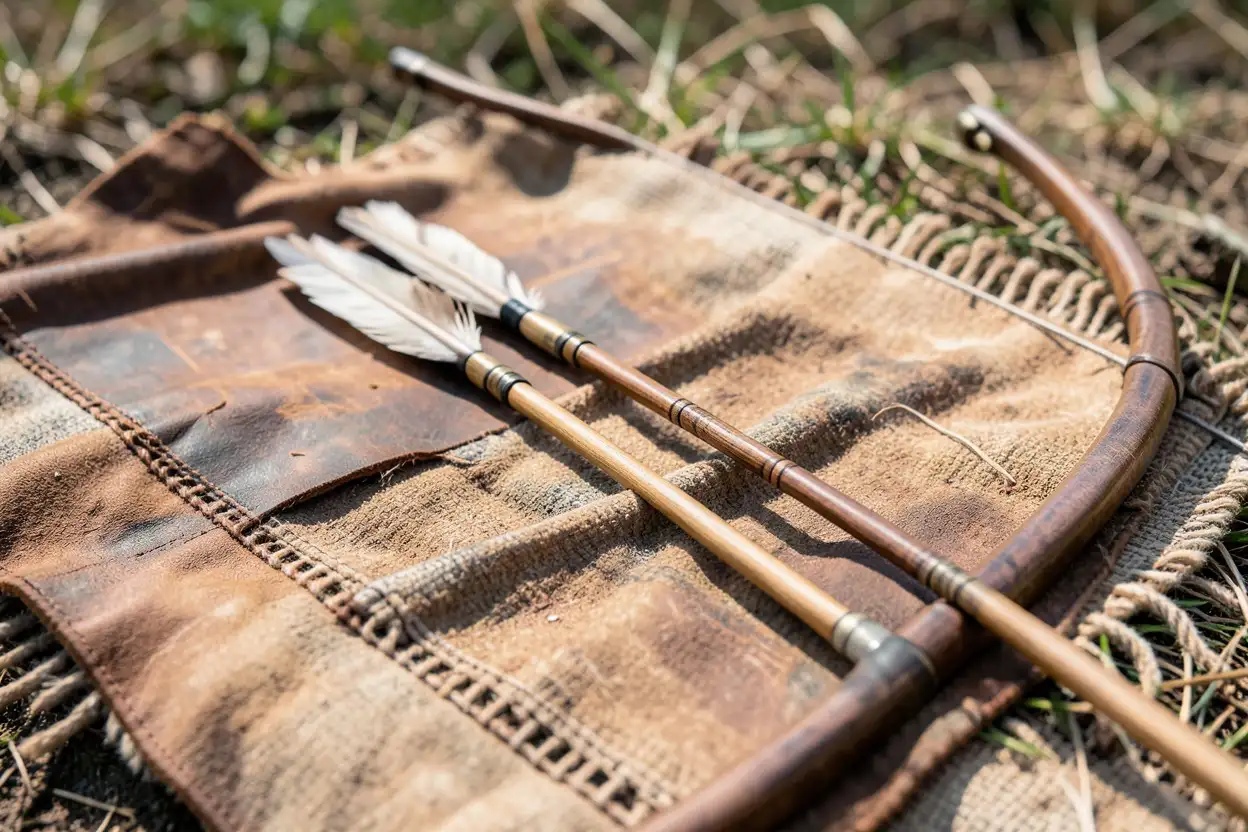
Native American Arrows: Balance, Weight, Fletching
Native American arrows flew straight because makers tuned balance, total front-to-tail mass, shaft stiffness, and fletching together around a consistent point-of-balance and spin plan. When those numbers drift, broadheads and broad-feather/vanes spiral, groups spread, and the arrow flight turns inconsistent beyond a few yards.
This guide is part of our Native American bows and arrows guide series.
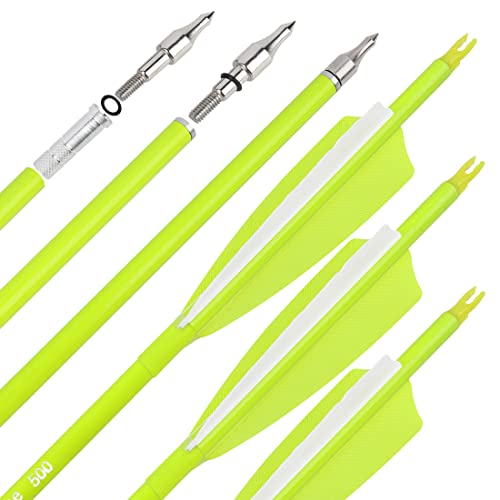


Why did Native American arrows fly so straight?
They treated arrow flight like a system. The release impulse sets the initial oscillation, shaft stiffness governs how the shaft bends, and fletching adds drag to damp tumble. Arrow balance sets where the arrow “wants” to run in pitch and yaw. When those variables match, wobble dies early and the arrow settles into a repeatable trajectory.
Release, oscillation, drag, and center of mass
When an arrow leaves the string, it’s already moving with small pitch and yaw errors from nock alignment, hand position, and bow tune. The shaft then rings like a springy beam. Fletching adds drag exactly where airflow can grab it, and that drag dampens the oscillation instead of letting it grow.
Balance becomes the anchor. The arrow’s center of mass relative to the nock and point controls whether the oscillation dies or builds. Front-of-center bias helps pitch settle sooner. Tail-heavy balance makes the arrow hunt for a new attitude right after release.
Change only the point weight or move the fletch position, and the first few shots look fine, until the wobble pattern shifts. Then groups widen in a way you can track to pitch hunting and yaw correction cycles.
Arrow shaft straightness and stiffness govern the baseline
Before fletching matters, the shaft has to start from a stable baseline. Native-style shafts were made from shoots like dogwood, wild rose, ash, birch, chokecherry, and black locust, then worked to be straight and smooth. Any curve becomes initial yaw, and any rough spot changes how the boundary layer interacts with the fletch and the point as speed builds.
Shaft straightening matters because it changes how the shaft bends under load. Arrow shafts were straightened with bone, wood, sandstone, pumice, and clinkers or burnt lignite. I treat this as pre-tune. If the shaft bends unpredictably, no amount of fletching work consistently corrects the same error.
Fletching drag is stability work, not decoration
Fletching is drag placed where airflow can grab it. That drag slows yaw and reduces end-over-end tumble. With proper fletching, an arrow can spin in a way that helps it maintain a consistent attitude in flight. The balance between damp tumble and creating a new wobble is where most tuning goes wrong.
Native-style “point weight plan” ties everything together
Point weight, projectile point shape, and how the point sits on the shaft shift the forward mass. That changes center of mass, changes how the shaft flexes under impact-load timing, and changes how quickly the arrow settles into pitch. Stone, bone, antler, wood, and metal variants bring different mass and geometry, so the flight system had to account for that forward shift.[3]
My groups tightened within two weeks. It wasn’t because my arrows suddenly got straighter. It was because release errors shrank, so the same arrow behaved more predictably. Tuning gets easier when you stop feeding extra wobble into the system.
According to American Indian Archery Technology — The bow and arrow was adopted in the Upper Midwest about A.D. 500. (source)
How did arrow balance and center of mass change flight?
Arrow balance changes what happens after the arrow starts to oscillate. Front-of-center balance stabilizes pitch so the nose stops hunting and the arrow settles into a consistent angle. Too far forward drives a different early correction behavior. Too far back lets the arrow hunt, which shows up as wobble and inconsistent impact points.
Front-of-center vs tail-heavy balance
Center of mass relative to the shaft changes the moment forces from drag and from any small yaw angle. If the forward mass is heavy enough, the nose tends to stay pointed toward the flight path. If tail mass dominates, the arrow can alternate attitude as it tries to reduce the net torque.
In practical tuning terms: if I see late correction and wandering drift, I look at point weight and where it sits, then verify whether shaft stiffness matches total arrow mass. Balance is a combined result of shaft mass distribution, point and projectile weight, and any foreshaft use.
Balance must match stiffness, not fight it
Balance alone can’t fix a stiffness mismatch. A weak spine shaft, meaning it under-bends for the load it experiences, can behave differently in pitch than a stiff spine shaft. If balance pushes the arrow toward stability but the spine can’t return to the same direction at release, the arrow works briefly and then the wobble pattern repeats differently downrange.
That’s why I treat tuning as one workflow. Center of mass first, then shaft oscillation behavior, then fletching drag placement.
Foreshafts affect balance on lighter reed arrows
Some light reed and cane arrow setups may have used foreshafts. A foreshaft can support point attachment and help protect the shaft end, but it also adds mass where the builder chooses to put it. That means foreshaft decisions change balance, and balance changes stability. On builds where the main shaft is light, the foreshaft becomes a major part of the point-of-balance plan.
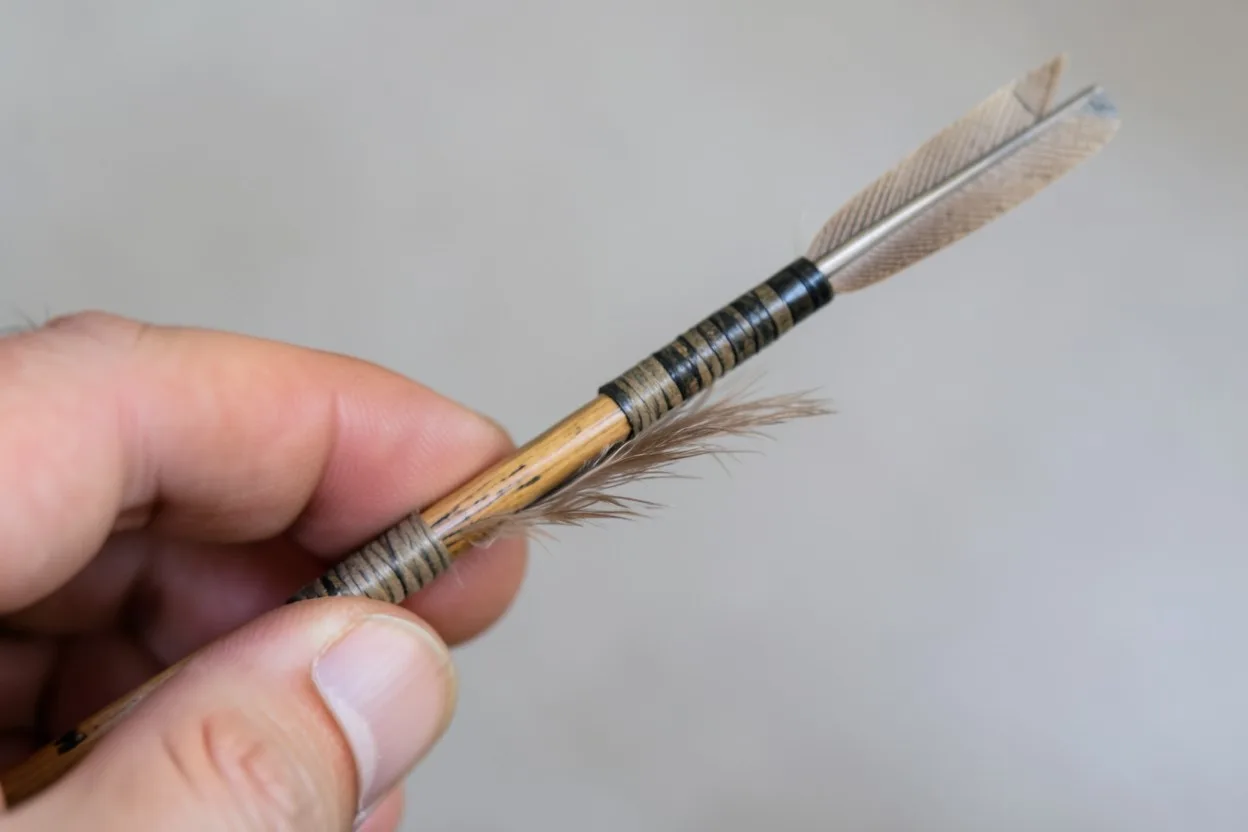
How did shaft stiffness and weight work together?
Shaft stiffness and weight determine how the arrow returns to a stable direction after release. Spine isn’t one number. Length, material, and bending behavior under load interact with point weight. When stiffness recovers in sync with forward balance, wobble damps instead of amplifying.
Weak vs strong spine shows up as different wobble signatures
If the shaft is too weak for the draw or load, it bends more and may overshoot its stable direction early. If it’s too stiff, it may under-bend and not align quickly. Those two mistakes can look similar as poor grouping, but the underlying motion differs.
With arrows, you don’t get the luxury of ignoring mismatch. You see it in the flight pattern and you adjust the system.
Practical tuning rule: match spine to load and mass
A practical rule I use is to match the shaft’s bending behavior to both the draw conditions and the total arrow mass, including point and any foreshaft. If you keep the shaft but change point weight, effective flex timing changes because forward mass changes how the system responds to the release impulse.
That’s also why a good shaft can fly badly if it’s paired with the wrong point weight or an oversized fletching package that increases drag at the wrong moment.
How did feather fletching keep arrows from tumbling?
Feather fletching kept arrows from tumbling by adding controlled drag that damps the oscillation responsible for end-over-end motion. Proper fletching reduces yaw and pitch wander, which helps the arrow settle into a consistent attitude. Done wrong, excessive drag or poor placement can create its own correction cycle and worsen wobble.
Fletching prevents tumbling and damps yaw
Fletching prevents end-over-end tumbling in flight. It also changes how quickly the arrow self-stabilizes as air loads build. The effect is strongest when the arrow’s center of mass and shaft stiffness already let the nose settle. Otherwise, the drag has to fight an instability it can’t fully correct.
Turkey feathers and fletching function as a balance tool
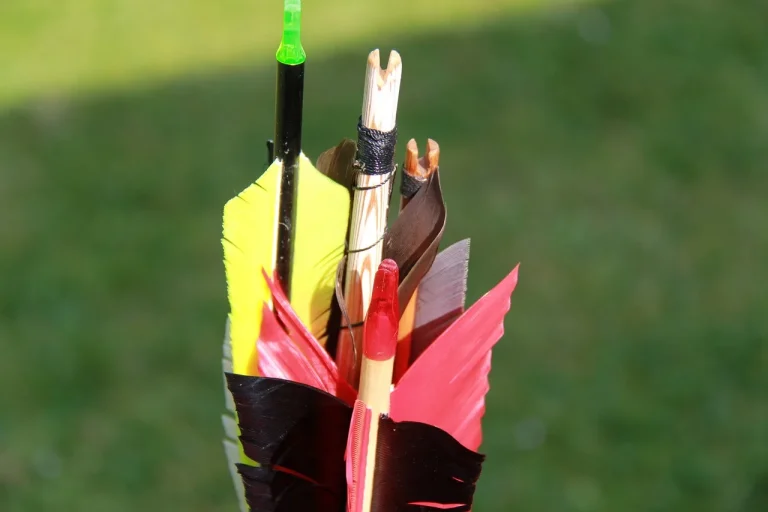
Plains arrows were fletched with feathers, especially turkey feathers, to make them fly straighter. In a tuning-system view, there’s no magic in one bird. What matters is feather shape and surface area, which translates into drag and stability behavior. That drag works with the forward balance set by point and shaft mass.[2]
Spin can help, but balance and stiffness decide whether it stays organized
Proper fletching can make an arrow spin in flight for an ideal trajectory. Spin stays stable only when shaft stiffness and balance keep the rotation aligned with the flight path. If the arrow is tail-heavy or the spine is mismatched, spin turns into a repeating wobble pattern instead of a damping mechanism.
Oversized fletching is a common failure case
Too much fletching area can add drag beyond what the arrow system needs for stability. Excess drag can exaggerate correction cycles and push the arrow into hunting behavior. When I diagnose poor flight, I check this first on builds where the fletches are much larger than the points and shaft stiffness would normally support.
What do nocks, points, and foreshafts do for accuracy?
Nocks, points, and foreshafts influence accuracy by controlling how the arrow leaves the string and where the forward mass sits. Nock fit and notch alignment affect release direction, and small inconsistencies show up as horizontal drift and early yaw. Point and projectile shape change forward balance and stability. Foreshafts on lighter reed arrows can support point attachment and reduce loss without upsetting the balance plan.
Nock alignment controls the start of the wobble
The nock is the interface between the arrow and the string. A cut notch or separate carved piece must fit the bowstring with correct alignment. If the fit is off, the arrow can leave with a consistent angular error. Even a small misalignment becomes yaw, and the fletching then damps it imperfectly.
That’s why I treat nock work like part of tuning, not assembly. When students glue and go a nock, their groups show the truth fast. Correcting nock fit often cleans up early yaw before you touch fletching.
Point material and forward balance determine stability timing
Arrowheads and projectile points were made from stone, bone, antler, wood, and metal variants. Different materials and shapes change point weight, and point weight shifts forward balance. Since balance affects pitch stability, point geometry changes how quickly the nose settles and how stable the arrow stays through the damping phase.
Small sharp points for big game and blunter points for birds or small game changed mass and shape. In a tuning workflow, I treat those as balance changes, then I check stiffness match and fletching drag.
How foreshafts help reed arrow builds
Some Native arrows used foreshafts on lighter reed arrows. The foreshaft supports point attachment, can reduce shaft breakage or loss at the impact end, and can also help you control how much mass sits forward. Since balance is system-wide, adding a foreshaft forces you to recheck center of mass against shaft stiffness and fletching.
String and release conditions affect how cleanly the arrow starts
String material influences repeatability too. Plant fiber string is described as superior because it resists stretching and stays strong in damp conditions. Sinew, rawhide, gut, and plant fiber all influence stretch resistance and how the string behaves when humidity changes. Less stretch variation keeps the release impulse and launch conditions closer shot-to-shot.
In bowhunting, I care about damp performance because timing shifts become flight differences when the arrow is tuned close to center-of-mass stability.
How were shafts made straight enough to matter?
Shaft straightness matters because any bend becomes initial yaw and changes how the shaft oscillates after release. Native-style practice used heat, pressure, flame, and abrasive stone approaches to true shafts before fletching. The goal was a consistent baseline so your balance, stiffness match, and fletching drag can do their jobs.
Straightening tools and methods used before fletching
Arrow shafts were straightened with bone, wood, sandstone, pumice, and clinkers or burnt lignite. Heat and pressure were used to true shafts, and the abrasive approaches corrected remaining curve while smoothing the surface. After straightening, shafts were often shaved and sanded, and many were heat-straightened to keep them true before fletching.
I’ve found that surface finish matters more than beginners expect. A rough shaft interacts differently with airflow, and it can change how fletching drag loads the arrow during the early part of the flight.
Why surface smoothing reduces early wobble
Initial wobble is where groups either tighten or spread. When the arrow starts with less unintended yaw, the stability system built through balance and fletching dampens the remaining oscillation. When the shaft is crooked, the fletching has to fight a new attitude every shot.
Flight-mechanics checklist: symptoms to causes and fixes
Use this as a tuning workflow. Diagnose the flight symptom, identify which part of the stability system it points to, then change one variable at a time. In my shop, this prevents the classic trap where you fix a wobble with a change that masks the symptom while worsening another part.
| Symptom in flight | Most likely cause | What to check first | Fix |
|---|---|---|---|
| Too nose-heavy (early dive, wanders left-right) | Forward balance shifted too far ahead of the stability point | Point/projectile weight; where the point sits; any foreshaft mass placement | Reduce forward weight (lighter point) or shift balance rearward by adjusting point/fore-shaft placement; keep fletching placement conservative |
| Too tail-heavy (late catch-up, wobble grows) | Center of mass too far back for the shaft’s oscillation behavior | Point weight; shaft mass distribution; whether the shaft stiffness matches your load | Add forward balance (heavier point) or move balance forward; if groups stay wild, tune spine to match draw and arrow mass |
| Fishtailing (alternating yaw) | Weak spine or fletching drag that amplifies oscillation | Spine match; fletching size and placement; nock alignment | Move to a better spine match; reduce oversized fletching area; verify nock notch alignment and string fit |
| Porpoising (pitch oscillation) | Nock alignment, pitch stability, or spine/fletching mismatch | Release alignment; spine stiffness; fletching size that destabilizes pitch | Re-cut/adjust nock fit for consistent release; test a slightly different point weight; reduce or reposition fletching so drag damps pitch wobble |
| Weak spine (under-bending, inconsistent recovery) | Too much flex for the load and balance you built | Draw weight/load; arrow length; point weight | Use a stiffer shaft or adjust point weight so the system returns to stable direction after release |
| Strong spine (under-bending, stays “stubborn”) | Too little flex for the load and balance you built | Draw/load; arrow mass; whether point weight is within the spine’s stable window | Use a weaker (more bendable) shaft, or reduce forward mass so pitch stability matches shaft behavior |
| Oversized fletchings (excess drag, instability cycles) | Too much drag for the arrow’s balance and spine to damp smoothly | Fletch area; fletch placement; whether point weight is paired correctly | Reduce fletch area or adjust placement so drag damps tumble without creating its own wobble cycle |
| Mismatched point weight (even with a “good” shaft) | Forward balance and oscillation timing no longer match | Point mass; point shape; how the point is hafted or attached | Pair point weight to the shaft’s spine behavior; retune fletching drag to match the new center of mass |
What arrow shaft materials were lightest and straightest?
Light reed/cane shafts can be fast, but “lightest” doesn’t automatically mean straightest in flight. Straightness and stiffness uniformity drive performance, and both wood and reed/cane can work if they’re heat-straightened, shaved, sanded, and tuned for point weight and fletching drag. In practice, I choose whichever shaft family matches my spine needs reliably.
Wood shafts and reed/cane concepts
Native shafts were often made from wood shoots such as dogwood, wild rose, ash, birch, chokecherry, and black locust. These can be worked into straight, consistent beams with straightening tools and abrasive materials. Reed/cane arrow concepts typically need careful end prep and often benefit from foreshafts for point attachment.
Straightness is a requirement, not a bonus
Regardless of material, shafts must be straight and smooth enough to avoid unintended initial yaw. Bone, wood, sandstone, pumice, and clinkers or burnt lignite were used to true shafts. If straightness isn’t consistent, your fletching and balance tuning can’t produce repeatable damping.
Why did some Native arrows use foreshafts?
Foreshafts show up when the main shaft material needs help with point attachment and end protection, especially on lighter reed/cane arrows. They can reduce shaft breakage or loss and keep point attachment reliable. The tradeoff is balance. Adding a foreshaft changes center of mass, so fletching and spine need to match.
Point attachment and protection
A foreshaft gives you a controlled, reinforced section where the point sits. That matters for survival of the arrow and for repeatability of how the point aligns relative to the shaft axis.
Balance shifts and changes stability
Because foreshafts add mass forward or aft, depending on the build, they shift the point-of-balance. That changes how quickly pitch settles and how stable yaw feels. I re-check balance after changing a foreshaft plan, even when the arrow looks the same.
How did arrowhead weight change arrow performance?
Arrowhead weight changes forward balance, which controls pitch stability and how quickly wobble damps after release. Heavier points move the center of mass forward and can stabilize pitch, while lighter points may make the arrow tail-heavy and increase hunting. Point shape also changes aerodynamic behavior and how the point’s mass sits on the shaft.
Point material and shape shift forward balance
Projectile points made from stone, bone, antler, wood, and metal variants can vary a lot in weight and geometry. Even when overall arrow mass stays similar, the distribution between front and rear mass shifts the stability plan.
That’s why Native arrow makers could use different point styles for different game sizes while still getting straight flight. They tuned balance and stiffness pairing around the forward mass of that specific point style.
Did Native Americans use reed or wood arrow shafts?
Yes, both categories show up depending on regional materials and construction goals. Wood shafts made from shoots like dogwood, ash, birch, and black locust appear in traditional arrow material selections, while lighter reed/cane approaches appear in builds that benefit from foreshafts. The point is consistency and tunability, not one material being universally best.
Material selection supports the tuning system
Wood shafts can be straightened and smoothed with heat and abrasive methods, then tuned through length, stiffness, and point balance. Reed/cane shafts can be light and quick, but they often require careful reinforcement at the point end, which is a reason foreshafts were used.
How were arrows straightened without modern tools?
They straightened shafts with heat and pressure, plus stone and burn or abrasive approaches, then used smoothing and end prep before fletching. Tools included bone, wood, sandstone, pumice, and clinkers or burnt lignite. The goal was consistent shaft geometry so initial yaw and oscillation behavior didn’t vary shot to shot.
True the shaft before you tune flight
If the shaft curve changes, your tuning targets move. Straightening methods were paired with shaving and sanding, and many shafts were heat-straightened. Only after baseline consistency did fletching and point work produce repeatable flight.
How did native Americans discover the use of feathers on arrows?
They discovered feather fletching through repeated cause-and-effect observation. When certain fletching shapes and placements reduced tumble and improved stable travel, that choice spread. On the mechanics side, fletching prevents end-over-end tumbling by adding controlled drag, and proper fletching can create spin that supports a stable trajectory. Over time, they matched feather choices to point and shaft behavior.
Frequently asked questions
How did arrow balance affect flight accuracy?
Arrow balance affected accuracy by controlling pitch stability through center of mass placement. Front-of-center balance helps the nose settle, while tail-heavy balance encourages hunting behavior. Because balance depends on point weight and any foreshaft use, accuracy requires pairing balance with shaft stiffness behavior, not adjusting one part alone.