How to Tell If Arrow Direction Problems Come From the Bow
If left/right or high/low misses repeat at the same distance with the same setup, suspect the bow. If the misses change with distance, target face, or one shot, suspect the shooter. Ignoring that split wastes tuning time and sends you after the wrong adjustment. This guide shows the quickest symptom checks, one-shot tests, and first fixes for recurve and compound arrows that drift left, right, high, or low.
This guide is part of our Arrow direction guide for archers series.
Arrow direction checklist

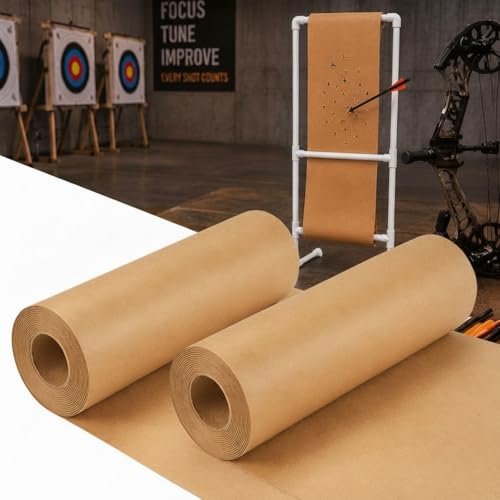

Start with pattern, then distance, then timing. That order keeps a beginner from moving the sight or rest before the cause is clear. Left-right shifts that stay grouped often point to bow setup. A miss that appears once, then disappears, usually points to form or release.
| Symptom pattern | Likely bow cause | Likely shooter cause |
|---|---|---|
| All arrows may move left or right by about the same amount at the same distance | Bow torque, bow canting, accessory weight, or an out-of-tune setup | Less likely unless the grip, stance, or head position changed recently |
| Only one arrow may fly off line | Loose component, damaged arrow, shifted rest, or nock issue | Release mistake, peeking, or a hurried shot |
| Groups are tight at 10 yards but open at 30 yards | Arrow drift, tune sensitivity, or slight bow alignment error | Small form flaws that grow with distance |
| Shots hit high on one end, low on another | Shifted bow setup, peep movement, or sight issue | Anchor point change, heeling, or flinch |
| Random scatter with no clear pattern | Rare, unless a part is loose | Poor follow-through, peeking, or release-side tension |
What to check first
Before touching the sight or rest, inspect the bow for anything that changed: loose screws, a bumped sight, a shifted rest, peep rotation, quiver position, or an accessory that now pulls the bow off balance. Bow setup comes first because one loose part can copy a form problem.
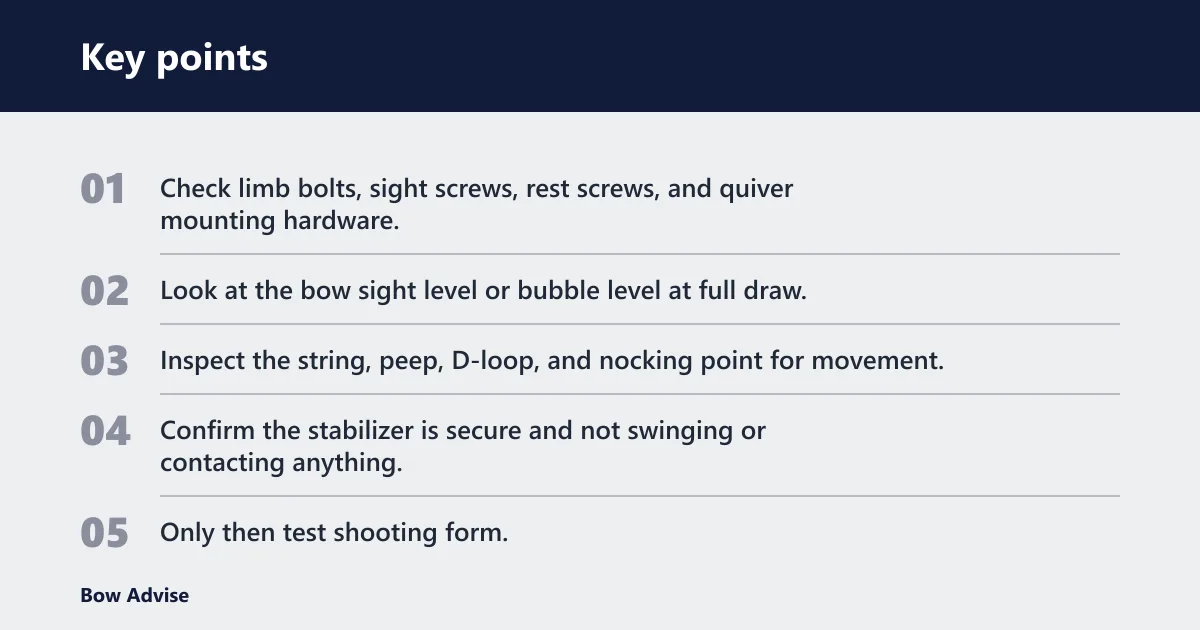
- Check limb bolts, sight screws, rest screws, and quiver mounting hardware.
- Look at the bow sight level or bubble level at full draw.
- Inspect the string, peep, D-loop, and nocking point for movement.
- Confirm the stabilizer is secure and not swinging or contacting anything.
- Only then test shooting form.
Why did my arrows start missing left or right?
A sudden left-right miss usually starts with a change, not with the target. Look for a moved sight, a bumped rest, a quiver added to the bow, a different grip pressure, or a new distance where drift becomes easier to see. If the pattern appeared after one clear change, inspect that change first.
Sudden shift vs long-term drift
Sudden shift points to something that changed today. Long-term drift points to repeated form error or a bow that is slowly moving out of tune. If the group was centered yesterday and is far left today, the bow or setup may have changed. If it has slid a little each session, the shooter or bow balance may be changing shot to shot.
Picture a compound archer who adds a full quiver to the bow side and then sees groups move left at 20 yards. That accessory weight can tip how the bow sits in the hand. A stabilizer, especially a front or side-mounted one, can help the bow sit level, but it should not be treated as a fix for bad grip pressure.
When to suspect bow setup first
Suspect the bow first when the same left-right miss repeats with a clean release, a steady anchor, and the same sight picture. Also suspect the bow if the sight bubble shows the bow is not vertical, or if the miss began after the bow was bumped, strung, or loaded with new accessories. Arrow tuning can also be part of the answer, but only after the bow is confirmed straight and stable.
Is the bow causing the left-right miss?
Yes. The most common bow-side causes are torque, canting, accessory balance, and tune. Bow-caused misses tend to repeat in the same direction at the same distance. If the pattern stays stable across several arrows, the bow deserves a careful check before any sight move.
Bow torque and grip pressure
Arrow direction problems may come from torque caused by an improper grip. A loose bow-hand grip is recommended instead of gripping the handle. A wrist sling is suggested to reduce fear of dropping the bow, which often leads to a hard grip and extra twist at the shot. Torque is easy to miss on a sighted compound because the sight picture can hide how much the hand changes the riser angle.
Even slight tilting at full draw can cause left-right misses. Keep bow hand pressure light and repeatable. If the riser turns in the hand from shot to shot, the arrow does not leave the bow the same way each time.
Bow canting and sight level use
Canting means holding the bow so it is no longer vertical. Many archers use canting to combat the wind, but it changes how the arrow leaves the bow and how repeatable the shot looks. A bow sight level or bubble level helps detect canting so the archer can keep the bow plumb when that is the goal.
Recurve archers sometimes cant on purpose. That can be fine if it is consistent. The problem starts when the amount of cant changes from shot to shot. Then the arrow impact shifts, and the group may look like a tuning issue when it is really a repeatability issue.
Accessory weight and arrow tuning
Accessory weight, especially from a bow quiver, can tip the bow and change how it balances in the hand. A front-heavy setup may drive the bow forward; a side-heavy setup can pull it off level. That balance change can alter left-right impact and make the sight bubble harder to trust.
Arrow tuning is also a bow-side cause. An out-of-tune bow can drift left or right, and that effect can look like poor form. If the bow has been bumped, the rest moved, or the string hardware changed, confirm alignment and tune before moving the sight farther.
Is my form causing the left-right miss?
Form is the better suspect when the miss changes from shot to shot, or when one group is left and the next is centered. A relaxed bow hand, a stable anchor, and a clean release matter more than a perfect-looking sight picture. If those parts vary, the arrow will vary too.
Relaxed bow hand and wrist sling use
Grip pressure is a frequent source of left-right error. A relaxed bow hand lets the bow move the same way every time after release. A wrist sling helps the archer keep that hand soft because there is less fear of dropping the bow. That matters for both recurve and compound shooting.
Say a beginner keeps tightening the fingers as the pin settles. The first shot lands center, the next drifts left, and the next right. In that case, the bow has not changed. The hand has.
Release-side tension and collapse
Random impact can come from peeking or jerking the bow away on release. It can also come from release-side tension that changes the string path. If the hand moves, the elbow drops early, or the face pulls away at the shot, left-right spread grows fast. A simple reminder to follow through can fix some sudden accuracy problems.
Head position and anchor repeatability
Anchor point consistency matters because even small shifts are hard to detect but easy for the arrow to punish. A higher anchor can send shots high; a lower anchor can send them low. A head that moves forward or back changes the relationship between anchor, sight, and string picture.
Compound and recurve clues are different. A compound shooter may see a side miss tied to peep alignment, face pressure, or a change in the way the release hand comes off the face. A recurve shooter may see the same left-right miss from a grip that rotates or a string picture that is not held the same way.
Why are arrows hitting high or low?
High-low misses usually trace back to anchor, grip, or flinch. They are often easier to miss than left-right problems because the bow may still look level. If the vertical point of contact changes, the arrow leaves from a different height and the group climbs or drops.
Anchor point shifts
Can a loose anchor cause high or low impacts? Yes. A small shift in anchor point can move impact vertically, and that shift may be hard to see in the moment. The jaw, nose, string reference, and release hand all need to return to the same place every shot.
Heeling and grip changes
Heeling happens when the bow hand pushes too much into the grip during the shot. That changes how the bow rolls forward and can move impact high or low. It also often pairs with torque, so a vertical problem can look like a sideways one if the hand is unstable.
Flinch and bow hand movement
Flinching often shows up as a low miss, though it can vary. If the archer punches the trigger, jerks the release, or pushes the bow hand as the arrow starts forward, the vertical result can move. One-shot checks help here: if only the first arrow after a pause goes low, shooter timing deserves attention before any sight move.
Why do groups scatter instead of moving together?
Random scatter points more toward shooter timing than bow tune. When arrows land left, right, high, and low with no steady pattern, the shot process is changing. Poor follow-through, peeking, and release timing are the usual reasons. A bow issue can create spread, but it more often creates a repeatable bias.
Follow-through and peeking
Follow-through keeps the shot alive after release. It prevents peeking and jerking the bow away, both of which can move the arrow at the worst moment. If the archer looks for the arrow too early, the body often collapses or twists. That opens the group.
Random impact can come from peeking or jerking the bow away on release. A simple reminder to follow through can fix some sudden accuracy problems because it restores the same finish to every shot.
When spread points to shooter error
If the bow is plumb, the accessories are secure, and the tune has not changed, then wide spread usually points to inconsistent execution. Short-range groups are useful here. If 10-yard arrows are scattered, that is a strong hint that the bow is not the main problem. If 10 yards is tight and 30 yards opens badly, distance and wind become more important.
What changes with distance and wind?
Arrow drift grows with distance, so a problem that looks minor at 10 yards can look serious at 30 yards. Wind can make that effect look like bad tune or bad form, especially on lighter arrows. The key is to separate a repeatable pattern from a distance-driven change.
How to know if wind is causing the miss
A light 10 mph wind can affect arrow drift at 30 yards. At short practice distance, wind is often a small factor. As distance increases, the same wind has more time to move the arrow, so left-right impact can shift even if the bow and form are unchanged. If the misses move with gusts and settle when the wind drops, wind is part of the answer.
How to rule out wind before tuning
Do a short test at a closer distance in calmer air. If the group recenters at 10 yards but spreads again at 30 yards, drift is likely involved. If possible, shoot the same arrows in the same lane, then compare the pattern on a calm end and a breezy end. Do not move the sight until the pattern is clear.
When to retest at a shorter distance
Retest at about 10 or 15 yards when the far target shows a left-right miss that does not repeat the same way at close range. That shorter check helps separate wind and distance drift from a bow issue or a form problem. If the close-range group is also off, the issue is more likely on the bow or in the shot process.
Bow-vs-shooter diagnosis checklist
Use this checklist in one session. It separates symptom pattern, likely bow cause, and likely shooter cause so you can decide whether to adjust the bow, fix form, or retest. Work from top to bottom. Do not skip the close-range check.
| Test step | Likely bow cause | Likely shooter cause |
|---|---|---|
| 5 arrows at 10 yards, same target spot, same stance | Group stays left or right together even with a level bow and clean release | Scatter, sudden pulls, or changing left-right points between shots |
| Check the bow sight level at full draw | Bubble is off, or the bow is being canted without intent | Bow hand and head position are changing from shot to shot |
| One-shot pause test after a reset | Same miss repeats after the same setup and same hold | First shot is off, then the next one changes after the archer settles in |
| Compare 10 yards to 30 yards | Drift grows with distance, or wind pushes a weak tune more clearly | Form error becomes more visible as the target gets farther away |
| Inspect grip, anchor, and follow-through | No clear change, so look harder at accessory balance or tune | Hard grip, loose anchor, peeking, or jerking the bow |
- Check the bow for anything loose, bumped, or newly added.
- Verify the sight level or bubble at full draw.
- Shoot three to five arrows at close range.
- Watch whether the group moves together or scatters.
- Repeat at a longer distance only if the close-range test is clean.
- Adjust the bow if the same bias repeats; fix form if the shot changes.
The rule is simple: when a group keeps moving the same direction with the same setup, adjust the bow. When the pattern changes from shot to shot, fix form and retest. If the bow was bumped or accessory weight changed, inspect and confirm setup first. If wind or distance is the main variable, wait for a cleaner test before changing tune.
Frequently asked questions
Why are my arrows hitting left or right all of a sudden?
A sudden left-right miss usually means something changed in the bow, the setup, or the shot. Check for torque from grip pressure, a tipped bow from accessory weight, a moved rest, or an off-level sight bubble. If the miss began after one change, inspect that first before adjusting the sight.
How do I tell if the bow is the problem or my form?
Use pattern and distance. If the arrows land in the same direction at 10 yards and 30 yards with the same setup, the bow is a stronger suspect. If one shot is off and the next is not, or the group opens and closes, form is more likely the cause.
Can grip torque make arrows go left or right?
Yes. Torque from improper grip is a common reason arrows land off center. A hard bow hand or a twisting wrist can tilt the riser, and even slight tilting at full draw can cause left-right misses. A loose bow hand and wrist sling help reduce that pressure.
Does bow canting change arrow impact?
Yes. Canting means the bow is not vertical, and that can move impact if it changes from shot to shot. Some archers cant on purpose to deal with wind, but it has to be repeatable. A bow sight level helps detect unwanted cant and keeps the shot more consistent.
What should I check first when arrow groups move?
Check the bow before the sight. Look for loose screws, a bumped rest, peep movement, quiver position, and whether the bow is sitting level at full draw. If the setup is stable, then check grip, anchor, and follow-through. Sight changes should come after that, not before.
How do I know if wind is causing the miss instead of my shooting?
Wind becomes more important as distance increases. A light 10 mph wind can affect arrow drift at 30 yards, but it is less convincing at short range. If the miss grows farther downrange and settles when the wind drops, wind is likely part of it. Retest at a shorter distance if needed.
Can a loose anchor cause high or low impacts?
Yes. A loose anchor can move impact vertically, and the change may be small enough to hide during the shot. Anchor point consistency matters because small shifts are hard to detect but easy for the target to show. Recheck the same face contact and string reference on every arrow.
What bow setup changes help reduce left-right misses?
First, make sure the bow is level at full draw and all components are tight. Then check accessory weight, especially a quiver that tips the bow. A stabilizer can help the bow sit level, but it should support a consistent shot, not cover up torque or a poor grip.