What Hand Protection Did Native American Archers Use?
Native American archers often protected the bow arm with a bowguard or bracer. Without a guard, the string can hit skin, leave bruises or cuts, and throw the shot off. This guide separates hand from forearm protection, traces leather bowguards and later ketohs, and explains when a guard mattered most.
Bowguard types and the Navajo ketoh


Most evidence points to forearm protection, not a dedicated hand shield. The usual concern was the bowstring striking the inside of the bow arm, so guards were aimed at that contact point. Where protection appears in Native American archery, it is often a bowguard, arm guard, or wrist guard rather than a glove for the string hand.
That distinction matters because the question can be read two ways. A “hand” question may mean the drawing hand, which is treated differently from the arm-side protection system that kept the bowstring from hitting skin. Those are not the same thing.
Bowguard, arm guard, wrist guard, and ketoh
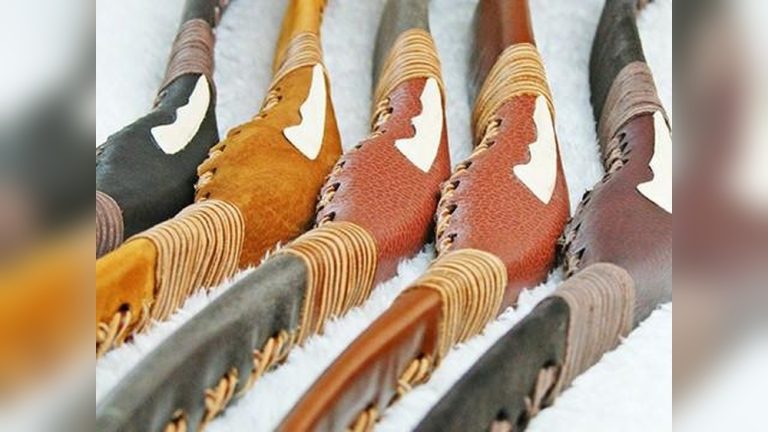
A bowguard is the broad term for a protective piece on the bow arm. It can be full length or partial, and partial arm guards are usually centered on the forearm or wrist. “Arm guard” points to forearm coverage, while “wrist guard” points to a shorter piece placed lower on the arm.
The Navajo bowguard is called a ketoh. In historical examples, the ketoh consists of a metal plate attached to leather, and the plate may be wrought or cast. That makes it a specific kind of bowguard, not a separate category of protection.
The terms overlap in casual use, which causes confusion. A leather strip over the forearm, a short wrist piece, and a metal-plated ketoh all solve the same basic problem, but they are not identical in form or period.
Why string slap matters
String slap happens when the bowstring contacts the inside of the arm. It is the injury bowguards are meant to prevent. The result can be bruising, cuts, or a flinch that throws the shot off line.
Risk changes with body shape, draw form, and clothing. A short forearm, a narrow grip, or an elbow that collapses inward can make contact more likely.
Skill also changes the risk. A steady anchor, correct elbow rotation, and repeatable release reduce contact. Fatigue can undo that consistency. A tired shooter is more likely to let the elbow drift and invite string slap.
Picture a hunter drawing from kneeling cover in cold weather. A thick sleeve may help a little, but a sloppy elbow position can still bring the string back onto the arm. In that case, a guard is doing real work; with cleaner form, the same guard might never be touched.
Native archery protection evidence table
The table below separates the term, the body area it protected, the material, the historical period, and how strong the evidence is. Read the last column as a guide to certainty, not as a claim that every group used the item the same way.
| Term | Body area protected | Material | Historical period | Reliability of evidence |
|---|---|---|---|---|
| Bowguard | Inner forearm or wrist | Hide leather; later stiffer materials | Broadly historical, with later variations | Moderate to strong |
| Arm guard | Forearm | Leather, sometimes with added stiff parts | Historical and later traditional use | Moderate |
| Wrist guard | Wrist or lower forearm | Leather; later beaded forms appear | Later forms are more visible in the record | Moderate |
| Ketoh | Bow arm, usually forearm area | Metal plate attached to leather | Historical and ceremonial contexts | Strong for Navajo use; limited for general Native use |
Were bowguards made of leather or metal?
Both, but not in the same period or the same way. The examples discussed here include leather bowguards and metal-plated ketohs. The shift does not mean leather disappeared; it means construction became more varied.
Leather was the earlier and broader material in the examples discussed here. Metal shows up more clearly in later bowguard designs and in the Navajo ketoh, where the plate is part of the object’s structure. In other words, metal is an important later development, not the original baseline.
Hide leather bowguards in early use
Hide leather worked because it could be cut into a broad band and placed where the bowstring would pass. That band did not need to be decorative to be useful. Its job was simply to absorb or deflect contact before the string hit skin.
This kind of guard could be full length or partial. A longer piece protected more of the forearm, while a shorter one sat closer to the wrist. The shape depended on the shooter and on how the bow was held.
Metal plate ketohs in later examples
The Navajo ketoh is the clearest later example. The bowguard is called a ketoh, and it consists of a metal plate attached to leather. The plate may be wrought or cast. That construction shows a move toward a stiffer, more formalized guard.
Ketohs appear in historical and ceremonial contexts. That matters because a ceremonial object may preserve a form after everyday hunting use has changed. Decorative survival is not the same thing as universal pre-contact practice.
Did all Native American archers use hand protection?
No. Some Native American archers used no guard at all. A clean draw, favorable body mechanics, and the right bow size could make a guard unnecessary. The absence of a guard does not mean the archer lacked skill.
It also does not mean the question has a single answer across all groups and periods.
Why some shooters used no guard
A guard is practical when the string is likely to contact the arm. If the draw arm rotates cleanly and the bow is fit to the shooter, the string can clear without help. In that case, a guard is optional, not mandatory.
Some archers also relied on technique rather than extra gear. That choice may reflect personal form, local style, or the specific bow in use. A well-matched bow and repeatable mechanics can reduce the need for added protection.
Clothing, fatigue, and nock failure
Clothing changes the equation. A loose sleeve can catch the string or hide poor elbow position. Cold-weather layers may cushion contact, but they can also interfere with the draw if they bunch at the wrist or forearm.
Fatigue matters too. When form breaks down late in a hunt or after many shots, the elbow may drift inward. A no-guard archer who was fine earlier can suddenly start taking string hits.
A common mistake is assuming that a stripped-down leather tab or glove will protect every finger from a heavy pull just because the bow feels manageable on the first draw. Then a second shot, taken while the bow arm is tired, lands a hard string slap on the forearm. The setup did not change; the shooter’s form did.
How did Native American archers prevent string slap?
They used a mix of guard choice, shooting form, and equipment fit. The guard absorbed the contact point. Form kept the elbow out of the string path. Proper bow sizing reduced the odds that the string would travel close enough to strike the arm.
That combination is more useful than any single fix. A leather bowguard can help even with imperfect form, but it works best when paired with a consistent anchor and a steady bow arm. A stiff ketoh does the same job with a different material profile.
Guard choice
Choose a guard when repeated string contact is likely. A partial wrist guard may be enough for some shooters. A longer forearm piece is better when the string path sits higher on the arm or when clothing makes contact more likely.
Shooting form
Rotate the bow elbow away from the string. Keep the arm relaxed but not collapsed. That small change often matters more than the guard itself, because a guard only covers the impact; form prevents the impact in the first place.
Equipment fit
Use a bow that matches the archer’s draw and stance. A poorly matched setup can make protection seem necessary when the real issue is fit.
Frequently asked questions
What hand protection did Native American archers use?
Most of the documented protection was for the bow arm rather than the drawing hand. Native American archers commonly used bowguards, arm guards, or wrist guards to stop string slap.
Did Native American archers wear arm guards or wrist guards?
Yes, but not in a single universal form. Sources describe bowguards as full length or partial, with partial guards centered on the forearm or wrist. That means both arm guards and wrist guards appear in the tradition, depending on the group, period, and bow setup.
What is a ketoh bowguard?
A ketoh is the Navajo bowguard. It is a protective archery accessory made from a metal plate attached to leather. Historical examples and ceremonial examples are well known, but they should not be treated as proof that every Native American group used the same kind of guard.