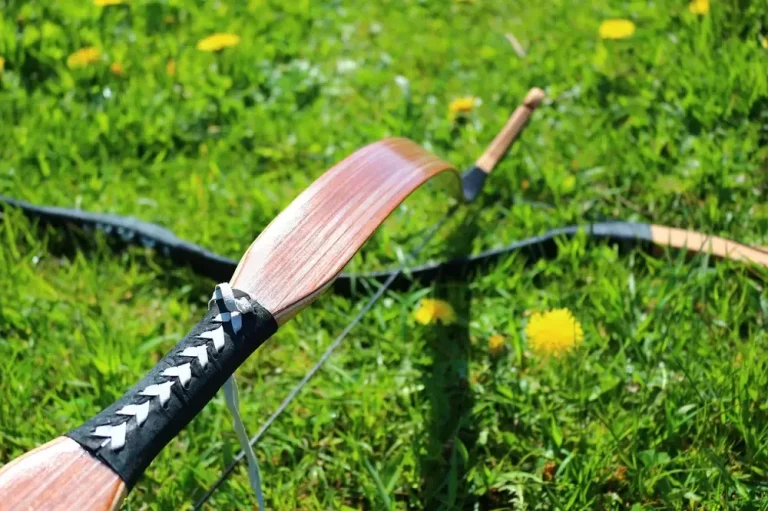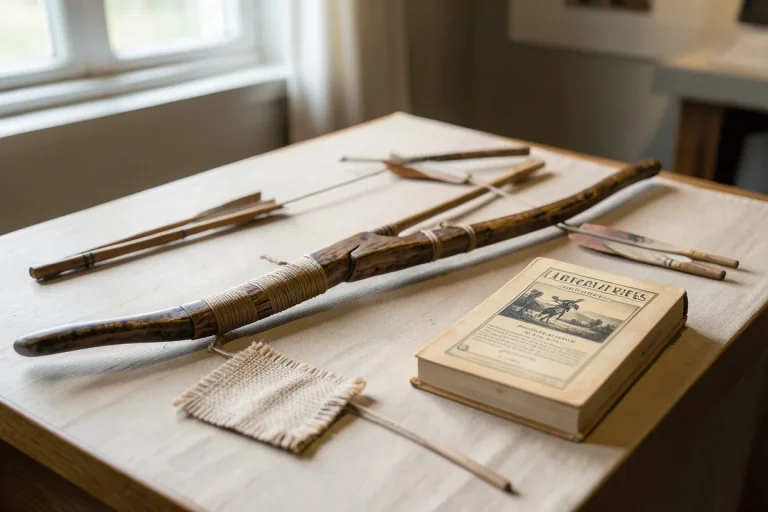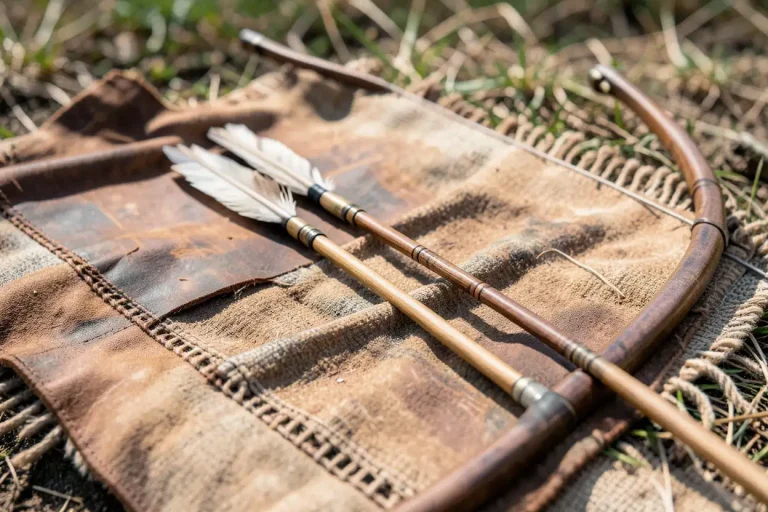
Native American bow types explained: self, flatbows
Native American self bows, flatbows, and composites are three build paths. Pick a self bow for simple portability using local wood, choose a flatbow when thicker limbs need efficient strength, and use a composite when you can add sinew or adhesive to boost power and efficiency even if the wood is harder to source. Pick the wrong type and you risk slow, weak shots or limb failure from poor tiller, drying problems, or glue breakdown. This guide explains how each construction answers mobility, durability, and power using real material constraints and what typically fails.


Native archery: what problem each bow type solves
Self bows, flatbows, and composites solve three constraints. They answer how you carry the bow while moving, how long it survives handling and weather swings, and how much stored energy you get from woods and backings you can reliably make. In my own shop, the right choice matches what I can prepare without shortcuts.
Portability drives bow length. Mounted use forces the bow to stay manageable, so shorter profiles show up where reach and maneuvering matter. When you shorten a bow, geometry has to compensate, so reflexed profiles show up, especially in Plains contexts.
Durability drives construction choices. Wood that handles tension and compression the way you expect can behave differently after drying, after hard flexing, and after weather exposure. A one-piece build tolerates everyday handling better, while layered builds can raise performance potential but also add build-time steps and more ways to fail.
Power storage drives backing and limb design. If your woods are less springy or shorter than ideal, you compensate with a wider limb plan, reflexed geometry, or added energy-storing layers. The best bow type is the one that moves bending load into the materials you can actually build and keep sound.
Portability constraints and why shorter bows matter
Mounted use changes the math. A longer bow is harder to carry safely, harder to place on the body during movement, and awkward around reins and gear. Plains bows are commonly short, around 42-48 inches, and they often carry a gull-wing profile.
I’ve carried bows through rough transitions on and off the line while coaching, and the difference shows up fast. A compact bow sits better and gets moved less. Short designs fit that practical need when the bow must stay out of the way while you travel and shoot.
Durability needs: handling, transport, and weather swings
Every bow fails through stress plus environment. With a self bow, the wood’s grain strength and its ability to handle repeated bending drive most of the outcome. With composites, the glue line and the backing moisture response become part of the stress story.
Sinew-backed builds can be powerful, but they demand attention to humidity and drying schedules. Composite bows are more sensitive to moisture than simpler bows, so weather management becomes part of the tool.[3]
Power storage tradeoffs with local woods and available backings
When wood quality varies, bow makers compensate with geometry and backing. Plains designs often pair short length with reflexed profiles to improve effective power for a shorter build length. Some regions also lean on woods that are dense and resilient.
Osage orange is widely considered the best self bow wood in North America, and it shows up where makers want strong tension survival in a self bow or efficient stiffness in flat limbs. When makers work with ash, chokecherry, or juniper, the limb plan often changes to match what the wood can carry safely.
According to Plains Indian Weapons, part I: the Bow and Arrows — Plains bows are often short, around 42-48 inches. (source)
What is the difference between a self bow, flatbow, and composite bow?
A self bow is a single piece of wood that must handle both bending jobs: back tension and belly compression. A flatbow uses wide, flat limbs to spread stress across more limb width. A composite stacks multiple materials, like wood plus sinew or horn/antler, to store more energy. That can raise efficiency, but it adds build steps and moisture sensitivity.
Self bow: one-piece wood and tension/compression mechanics
Self bows are made from a single piece of wood. A self bow has no laminations, fibreglass backing, or composite layers. Typically, the back of a bow faces away from the archer and is under tension, while the belly faces the archer and is under compression.[2]
Species choice matters because the back has to resist stretch along the grain, and the belly has to resist crushing along the same bending cycle.
Flatbow: wide, flat limbs to manage stress distribution
A flatbow uses wide, flat limbs to distribute stress across more area. That shape helps the bow maker avoid concentrating bending stress into a narrow strip of material, which matters when the wood is less forgiving for a narrow long-limb plan.
On the bench, wide limbs can also make tiller refinement easier because the limb can be tuned across width. If you’ve ever worked a flat-limbed recurve-like taper into a stiff board, you’ve felt how stress spreads instead of staying locked into one edge.
Composite bow: laminated stacks for added energy storage
Composite bows can be made from horn, antler, bamboo, wood, or sinew. The concept is a wood main limb plus added backing layers that take part in the bending job. These extra layers can store more energy per unit length than a single piece, but they take more time to build and they are more sensitive to moisture than simpler bows.
Where a self bow asks one wood to do everything, a composite asks multiple materials to share the stress path. When the build’s adhesion and moisture balance are right, the bow shoots hard. When they are wrong, the risk shifts toward glue line problems and layer separation.
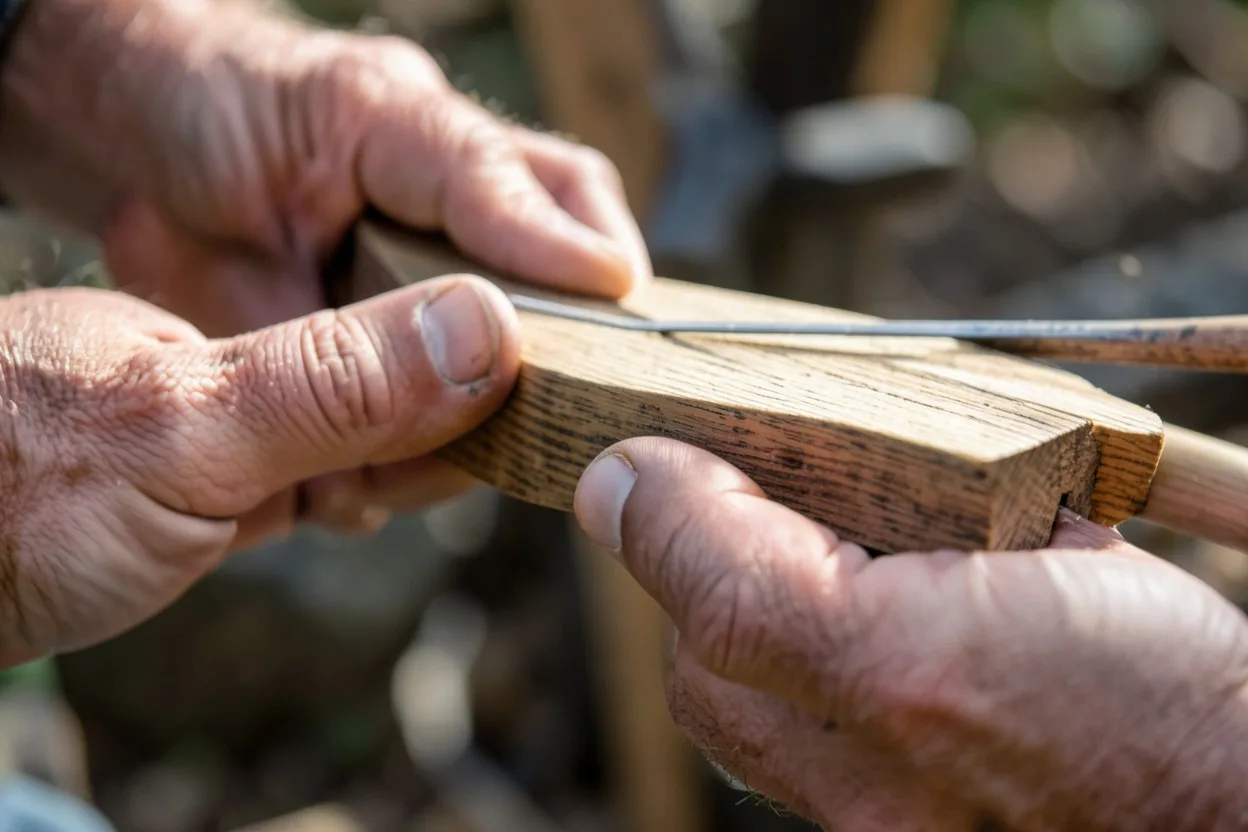
Self bows: one-piece wood and the tension/compression job
Self bows are built from one continuous wood piece, so the same material must survive tension on the back and compression on the belly each draw cycle. When the grain and strength match the bow’s bending demands, self bows can stay durable for practical hunting forms, including lighter carry setups. Their main failure risks come from poor grain direction or bad drying.
How the back and belly work (back under tension; belly under compression)
Bow back and belly work is simple if you track load direction. The back faces away from the archer and runs in tension. The belly faces the archer and runs in compression. If the maker’s tiller puts too much strain near a weak section, that section becomes the first place the bow complains.
That’s also why “looks straight” on the stave isn’t the whole story. Grain runout, uneven density, and thickness variation all change where tension spikes show up.
Species fit: grain, density, and strength needed for tension on the back
For self bows, the back is your life insurance. Osage orange is widely considered the best self bow wood in North America, and it’s a frequent choice because it has the density and resilience makers want for one-piece tension survival.
On the Plains and surrounding regions, makers also used materials like ash and chokecherry, and those choices often track whether a self form or a flat form makes more sense for the wood’s behavior under bending.
Common Native use patterns for self bows, including lighter hunting forms
Self bows show up in lighter hunting forms because the construction stays straightforward and doesn’t require a layered backing system to reach performance. When you travel on foot, a simpler bow build can also mean fewer variables tied to adhesives and added layers.
Flatbows: why wide limbs show up in some regions
Flatbows solve a stress management problem with shape. By building wide, flat limbs, the bow spreads bending stress across more limb width, which better fits less dense woods or woods that don’t tolerate high stress concentration. Flatbows are often simpler than recurved composite forms, but they still fail when set and stress flow are off.
Geometry basics: wide and flat limbs to manage stress distribution
Flatbow geometry does the heavy lifting. A flatbow uses wide, flat limbs to distribute stress across more area, so bending strain doesn’t stay trapped in a narrow zone. That helps when the maker needs stiffness without pushing a single thin band too hard.
It also changes how the bow maker tracks tiller. With wide limbs, thickness changes and tip mass shifts affect the whole face differently, so the bow’s bend profile becomes more sensitive to where you remove wood.
Wood selection logic: what tends to work better in less dense woods
Plains bows are commonly made of ash, chokecherry, or juniper. Chokecherry and ash are part of the regional toolkit, and their use connects to how flatbow width reduces stress concentration in the bending zone.
Where southern Plains makers used osage orange as a main wood, it often supported a thicker limb, strong back approach that can fit both self and flat builds when the goal is strong, portable performance.
Typical failure modes: set, warping, and tips breaking
Flatbow failure often shows up as set, warping, or tip breakage when stress flow doesn’t match the limb’s grain and stiffness. If the bend concentrates toward the tip or one side, that zone can over-stress and start a structural crack along the grain path.
Competently made flatbows can be sturdy, but the shape relies on consistent limb thickness and careful drying. Moisture swings during storage can still shift how the wood holds tension and compression over time.
Composite bows: when sinew backing or horn laminations make sense
Composites add energy storage by laminating multiple materials. The wood provides structure, while layers like sinew or horn/antler contribute extra performance. The tradeoff is time and sensitivity, composite bows are more sensitive to moisture than simpler bows. That means you have to protect the glue line and the backing surfaces.
Material stack concept: wood main limb plus added backing layers
Composite bows are built from multiple materials laminated together, with wood, sinew, horn or antler possibilities. The point is mechanical sharing. One material can handle tension better, another can handle bending energy differently, and the combined system can hold more stored energy than a single wood piece of the same length.
Sinew backing in practice: buffalo or elk sinew, pounded threads, layered glue
Sinew backing is layered with glue from hide or sinew scraps. The backing itself is made from buffalo or elk sinew, pounded into fine threads and layered in glue. That extra structure increases power and break resistance by changing how the bow survives repeated bending loads.
Sinew backing makes bows faster-shooting, more powerful, and sturdier. In plain shop terms, the backing helps resist the early damage pathways that start when tension stress exceeds what plain wood can tolerate.
Tradeoffs: extra time and moisture changes the build’s safety margin
Because composite bows depend on glue and layered materials, moisture behavior is part of the design. Composite bows are more sensitive to moisture than simpler bows, so storage and handling matter. If the backing absorbs moisture and then dries unevenly, layer tension can change and bonding lines can suffer.
In my own testing mindset, I treat composites as tools that reward good care. When you rush drying or rush prep, the failure mode is often layer separation rather than a clean wood crack.
Did Native American bows use sinew backing or horn laminations?
Many Native American bows used sinew backing, and Plains examples often feature sinew layers as part of the performance plan. Horn and antler show up as possible composite components in the broader tradition of laminated bows. Added layers increase resistance and energy storage, while also raising the stakes for moisture control.
Sinew backing: what it is and what it does
Sinew backing is made from buffalo or elk sinew, pounded into fine threads, then layered with glue from hide or sinew scraps. That layered approach increases power and break resistance, and it improves speed in the shot.
Horn and antler: where laminations enter the stack idea
Composite bows can include horn or antler as part of the laminated stack. Horn/antler options share the same purpose, they provide energy storage properties and a different stress response than plain wood.
Plains Indian bows were often short and reflexed. Why?
Reflexed bows curve away from the archer, which improves effective power for short length. Plains mounted-use realities favor a compact bow for maneuvering and reach management, so short builds around 42-48 inches appear with a distinctive gull-wing profile. Many Plains bows also land around 50-70 pounds draw weight, though it varies by builder and archer.
Reflexed profile: limbs curve away to boost power for short length
Reflexed bow profile means the limbs curve away from the archer. This geometry helps create more stored energy in a shorter bow. You’ll often see this in short mounted-use bows because the bow has less length to do the work, so the shape must compensate more.
Mounted-use realities: reach, maneuvering, and keeping the bow out of the way
When shooting from horseback, the bow has to live in a tight working space. A shorter bow is easier to control while mounting, transitioning, and swinging into position. The gull-wing profile is a common visual marker of these Plains short mounted designs.
I learned early that carrying comfort affects accuracy. When I shot more from unstable positions during coaching practice, my groups tightened when the gear sat better and demanded fewer compensations. Reflexed compact bows fit that practical demand.
Typical ranges to expect: around 42-48 inches and roughly 50-70 pounds draw weight
Plains bows are often short, around 42-48 inches, and they often have a distinctive gull-wing profile. Plains Indian bows commonly average about 50-70 pounds draw weight. Builders and users varied those values across archer strength, specific hunts, and individual bow architecture.
Native bow type comparison
Here’s the bowyer-style comparison I use to keep the taxonomy clean. I map each type to the constraint it best serves, the geometry that matches that constraint, the backing or materials that support energy storage, and the failure modes that show up when the maker mismatches wood strength, moisture behavior, or stress flow.
| Bow type | Length (typical) | Limb geometry | Backing / material stack | Best woods (examples) | Mobility | Weather tolerance | Likely use-case | Common failure |
|---|---|---|---|---|---|---|---|---|
| Self bow | Varies by region | Narrow-to-medium wood profile | One piece of wood; no laminations | Osage orange (top choice); ash/juniper/chokecherry used regionally | High portability due to simple construction | Generally more forgiving than layered builds | Lighter hunting forms; practical mobile hunting bows | Tension-side weakness from grain issues; belly crushing if tiller concentrates compression |
| Flatbow | Varies by region | Wide, flat limbs | One wood piece; no layered backing required for the form | Ash, chokecherry, juniper; osage orange in southern Plains as a strong main wood | High portability | Good everyday handling when properly dried | Efficient strength in thicker limbs; regions using local medium-density woods | Set and tip cracking when stress path or tiller concentrates strain in narrow zones |
| Composite bow | Varies by design | May be reflexed or layered-tuned | Laminated stack; wood plus sinew and/or horn/antler | Wood main limb with sinew or other added materials | Mobility depends on build size, but often used for performance | More sensitive to moisture than simpler bows | When you need more energy storage from the materials available | Moisture-driven glue or layer failure; delamination risk if humidity changes badly |
Common failure notes by type (plain-language mechanics)
Self bows fail when the wood cannot survive tension on the back and compression on the belly in the actual tiller shape. Flatbows fail when the stress path concentrates despite wide limbs, causing set or tip failure. Composites fail when added materials lose bonding or change behavior after moisture exposure.
Which Native American bow type was most common in different regions?
In practice, you’ll see all three forms, but regional materials and mobility needs shape what becomes common. Plains contexts frequently show short bows around 42-48 inches and often use ash, chokecherry, or juniper, with some Southern Plains builds using osage orange. When makers had strong one-piece wood and simple work flows, self and flat forms also dominated.
Plains patterns: short mounted bows and local wood choices
Plains bows are commonly made of ash, chokecherry, or juniper. Southern Plains bows often use osage orange as a main wood. Plains arrows may be made from red osier dogwood, showing how tightly makers matched both shafts and bows to what grew locally.
Wood availability drives the “most common” outcome
Where dense, resilient wood was common, builders could push self bow or flatbow designs without needing layered backing for strength. Where wood needed help for energy storage, composite backing concepts made sense. The common form follows the supply chain and the mobility demands, not one universal template.
What woods were used for Native American self bows and flatbows?
Native self and flat bows followed local timber logic. Osage orange is widely considered the best self bow wood in North America, while Plains makers also used ash, chokecherry, and juniper. Those woods fit different limb geometries because the maker’s goal stays the same, survive tension on the back and compression on the belly across the bending cycle.
Osage orange: why high density and resilience fit self and flat geometries
Osage orange is widely considered the best self bow wood in North America. That reputation traces back to simple mechanics: it gives makers strong back survival in one-piece builds and strong performance support in other limb plans that ask the wood to bend and recover.
Ash and chokecherry: regional fit and how properties influence limb design
Plains bows are commonly made of ash, chokecherry, or juniper. When the wood can’t safely handle very high stress concentration in a narrow limb, flatbow geometry helps by distributing stress across width through wide, flat limbs.
Chokecherry is listed as a Plains bow wood, and ash is a common Plains bow wood. Juniper appears as well, supporting regionally available options that still carry the bow’s mechanical job.
Wood belongs to a shape: grain direction and tension survival
The wood decision isn’t only species. It’s grain direction and thickness selection. The back faces away from the archer, so the maker’s grain planning determines whether the back can handle tension long enough to stay sound after drying and repeated draws.
How do Native American composite bows differ from Eurasian composite bows?
Both traditions build layered energy-storing bows, so the core idea of a material stack is shared. The practical difference shows up in what materials and build paths get used locally, and how moisture management changes the safe handling window. In this guide’s Native framing, sinew backing and moisture sensitivity are central, with layered stacks more sensitive than simpler forms.
Same stack concept, different local material choices
Composite bows can be made from horn, antler, bamboo, wood, or sinew. The “Eurasian versus Native” split often comes down to what’s locally available and what the bowyer can prepare consistently, especially under real weather exposure.
Moisture sensitivity and build-time risk
Composite bows are more sensitive to moisture than simpler bows. That shifts how the bow should be stored and transported, because layer behavior depends on adhesives and the backing’s moisture response.
What makes a Native American style bow better for horseback hunting?
Mounted hunting rewards a bow that is easy to carry, easy to position, and fast to manage while moving. Plains bows are often short, around 42-48 inches, and they frequently show a reflexed profile and gull-wing shape that helps store power in a compact form. When mobility drives the geometry, the shot setup becomes more stable.
Short length and mounted handling
Short bows are easier to keep controlled during mounting and transitions. The bow stays out of the way of the body and gear while you swing into a usable shooting angle, which helps the archer make cleaner decisions at full draw.
Reflexed geometry supports power in a compact package
Reflexed bow profile curves limbs away from the archer. That improves effective power for short length, which matters when mounted-use constraints prevent you from using a long lever arm to store energy.
How much draw weight did traditional Native American bows have?
Plains bows often land around 50-70 pounds draw weight, with variation by archer and bow build. Those values show up alongside short mounted-use design choices, where reflexed geometry and local wood plus backing plans help the bow reach practical energy. Your specific draw weight depends on materials, tiller, and archer strength.
Why variability is expected
Traditional bows were made by individuals for individuals, with different body strength, hunt needs, and available materials. Even within Plains architecture, a maker could build a bow that matched the target user and intended range and game profile.
A quick fit checklist before you choose a type
- Decide mobility first: if you need a compact mounted bow, short reflexed profiles are common.
- Match the wood to the stress job: back tension survival is mandatory for self bows.
- Choose stress spread or energy stacking: wide flat limbs trade on geometry; composites trade on laminated layers.
- Respect moisture risk: composites demand better moisture management than simpler builds.
- Plan for the first likely failure: set or tip cracking for flats; glue/layer issues for composites; tension-side weaknesses for self bows.
Frequently asked questions
Why were some Native American bows short and reflexed?
Short bows are practical on horseback because the bow must stay controllable during movement and shooting setup. Reflexed bow profile curves limbs away from the archer, improving effective power for short length. That helps a compact bow store enough energy for hunting without needing a long bend length.