Native American Bow vs European Bow: Key Design Differences
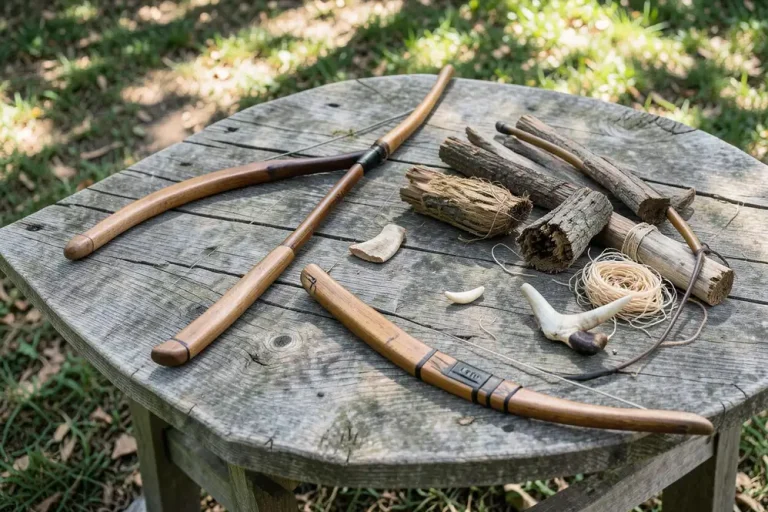
Native American bows (self/flat-D) usually run shorter and flatter-limbed, with tiller that reaches useful load sooner. European longbows tend to use longer working limbs and a deeper, more even bend progression. If you want an easier draw and a more forgiving feel as you learn, Native-style design logic often fits first. Bad bow-and-tiller matching shows up fast, with hard starts, hand shock, and inconsistent arrow flight that can ruin your form and your tuning before you get stable. I’ll compare wood selection, limb geometry, and tiller logic, then tie those choices to shooting behavior, tuning, and beginner-friendly selection.

What design logic makes a Native American bow “Native”?
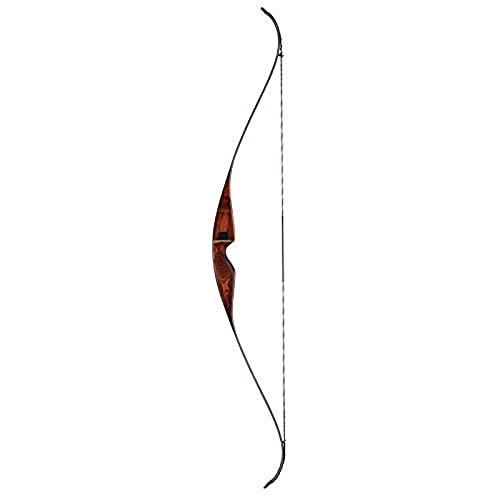
A Native American bow is “Native” because it’s built around a specific tool problem: shoot, carry, and hunt in variable terrain with efficient power delivery in a shorter form factor. That logic drives self-bow construction choices, regional wood selection, a geometry that loads earlier, and string materials that match the system’s maintenance rhythm.
Self-bow and regional forms: how one wood choice and stave prep drive limb shape and behavior
Many Native American bow traditions lean on self-bows, meaning one piece of wood does the work. With that constraint, stave prep and wood selection matter more than people expect, because the entire bow shares one “personality.” You see it in limb thickness, reflex or shelf shapes where present, and how quickly the bow reaches its useful bend.
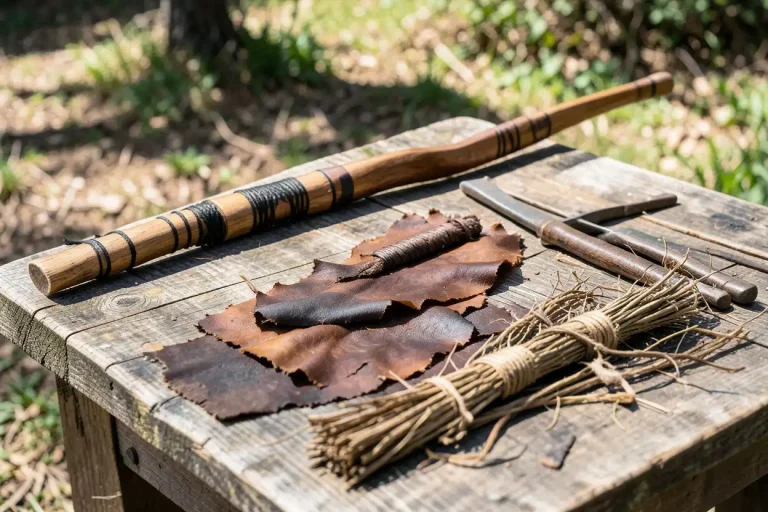
The woods people commonly cite for Native American hunting include hickory, ash, yew, dogwood, willow, and viburnum, with some reference lists also mentioning slippery elm. If you pick a wood that wants to store energy but doesn’t like bending long, you end up with a shorter working length and a different tiller balance than you’d see on a European war bow.
Compactness and maneuverability as design constraints for hunting and carry
Their first issue is usually draw control, and the second issue is comfort. Shorter Native-style bows stay easier to keep pointed in brush, easier to pass around gear while moving, and easier to set into a hunting posture without fighting the bow’s length.
The difference wasn’t magic. The bow didn’t force my shoulders into a long, rigid reach before the shot.
String material and maintenance habits as part of the system, not a footnote
Native-style bowstrings are usually discussed as part of a whole bow-and-arrow routine, because they bring different stretch, strength, and storage expectations. Materials commonly mentioned include sinew, gut, rawhide, and natural fiber cordage. Those choices affect how the bow “settles” as you shoot and how sensitive the string can be to humidity.[2]
I’ve seen this during seasonal shoots. When I skipped string care and kept shooting in damp air, my groups opened and my timing slipped. When I matched string state to the session, the bow felt more predictable.
According to Historical Archery: Asiatic Bows vs. Traditional Longbows — The English longbow example is 6 feet 6 inches tall. (source)
What makes a European longbow a longbow?
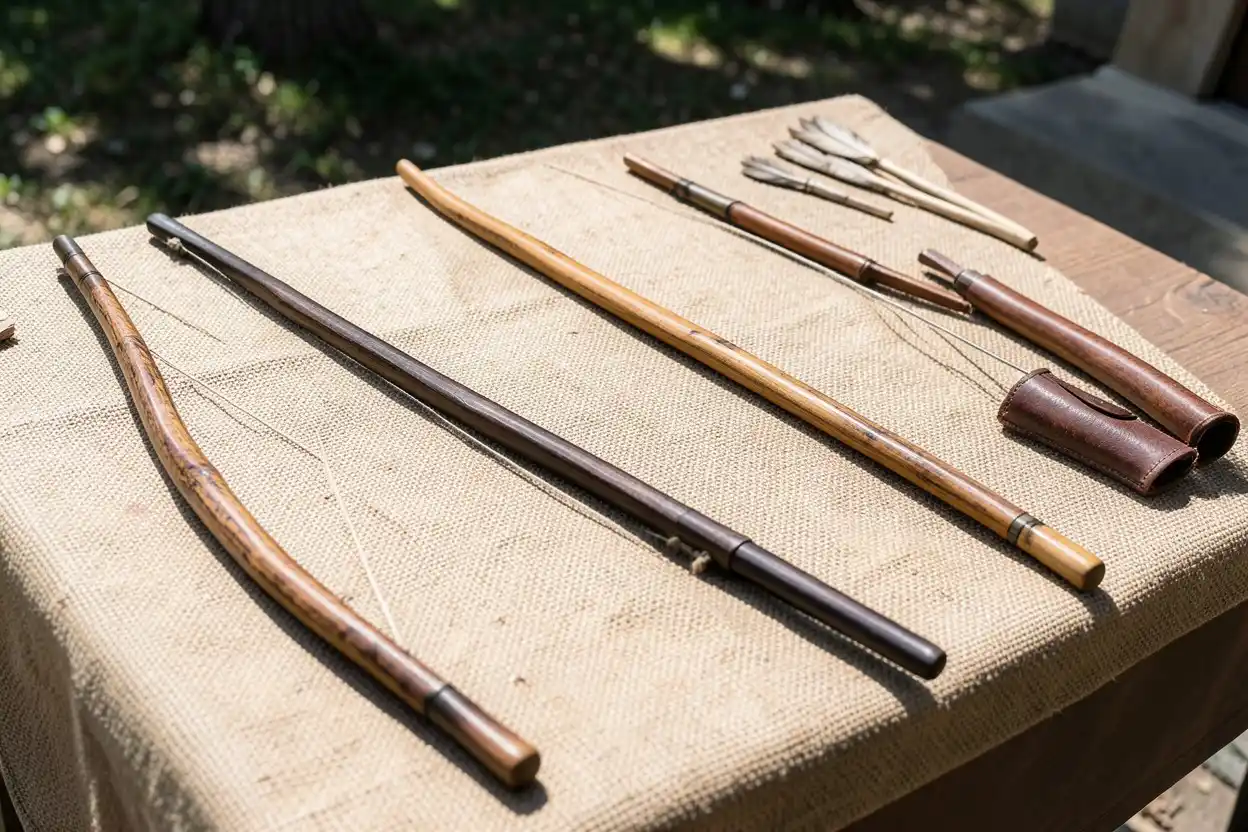
A European longbow is generally described as having tall, straight limbs and a draw process that relies on longer working limbs. The classic picture is yew, and the geometry tends to push energy through a deeper, longer bend progression. That often pairs with a conventional release posture and a different grip habit than many self-bow traditions.
Tall, straight-limbed war-bow geometry and why it matters for energy storage and aiming sightlines
When people say “longbow,” they’re often pointing to a tall, straight-limbed form that builds power through a long bend arc. In competitor examples, one English longbow is 6 feet 6 inches tall and weighs just under 1 kg, or 2.1 lbs, crafted from European yew. That long working length drives the bow toward a particular draw and back-tension feel.
Energy storage also tracks how far the limbs travel through the draw. A longer bow usually gives a different feel early draw, mid draw, and through the final third of the stroke, even before you talk about arrow speed.
Common material associations (yew) and how limb structure changes draw characteristics
Yew gets tied to European longbows again and again because it supports strong limb behavior in a tall, straight-limbed architecture. In the examples cited above, the longbow is European yew. That means the limb profile and tiller target are built around what that wood does when it bends.
Change wood categories, and you change how the bow “resists” at different points of the draw. A beginner then feels more smoothness or more harshness in the last part of the stroke, depending on that build.
Release and grip conventions as the way the bow “wants” to be shot
European longbow shooting is often described in retellings as using a three-finger release. Grip style and the way the string clears the fingers set the hand position and elbow tracking the bow expects. If you try to shoot a longbow with a release posture that wasn’t designed for it, you often feel hand shock or inconsistent clearance.
Bow choice and release choice must match.
Where do composite bows fit (and why competitors mix them up)?
Composite bows sit in a different design category. They combine a core with reinforcements to get compact size and strong power transfer, and they often use thumb draw mechanics associated with thumb rings. When someone blends Native American self-bow comparisons with Turkish or Asiatic composite design, they’re comparing different constraints and release systems.
Composite basics as a separate category: core plus reinforcements, compact size with strong power transfer
Composite examples commonly use a maple wood core reinforced with sinew and horn. In the cited example set, the composite bow uses a brass thumb ring. Those aren’t Native-style self-bow constraints. The core and reinforcements change how the bow stores energy and how the limbs behave under bend.
Because the design can concentrate strength in a smaller package, the bow can be physically compact while still reaching useful draw weight. Competitors sometimes misread that trait as “Native-like,” even when the construction logic is totally different.
Thumb draw and thumb ring context as a release-mechanics difference, not just a cultural label
The thumb ring matters because it changes the release mechanics. It ties into a thumb draw routine, which affects how the string is loaded and how clearance works through the shot. That also changes tuning habits, because the bowstring’s path through your hand and wrist is different.
So when a writer brings in Turkish composite thumb-ring setups while claiming they’re comparing Native versus European longbows, they’re mixing release mechanics into the geometry comparison. It makes the “Native vs European” story harder to interpret.
How composite traits can cause readers to misread Native American self-bow comparisons
Native American bows are often shorter and built around self-bow wood constraints and regional limb logic. Composite bows can also be compact, but their compactness comes from reinforcement layering and core behavior, not from the same stave-dependent tiller targets. If you compare them as if they solve the same design problem, you’ll pick the wrong bow for your draw length and your tuning tolerance.
Native vs European: how size, handle, and limb geometry change use
Native-style bows are often shorter and more compact, which helps in brush and mobile carry. European longbows tend to be tall, with long working limbs that demand a different draw and aiming posture. Where your hand sits, and how the limb profile bends, also affects comfort, torque, and shot consistency.
Length and carry: why “shorter” can mean “more practical” without guessing exact historical averages
European longbow examples are tall, and one cited example is 6 feet 6 inches tall and just under 1 kg, or 2.1 lbs. That scale affects carry, maneuvering in tight spaces, and how quickly you can get into a stable anchor position. Native-style self-bows are often built shorter for field use.
I keep the numbers “per tradition” and “per maker” in my head, because people build too many assumptions from a single museum example. Instead, I judge the draw feel and the geometry in front of me.
Handle section and grip geometry: how “where your hand sits” changes torque and comfort
Grip geometry is part of the limb system. In some Native American forms, a flat D bow is described as lacking a defined handle section in the classic sense. The bow forms a letter D when strung. In northeastern Native collections, the grip/“handle” region can look absent because the working geometry runs through differently.
That doesn’t mean “no geometry.” It means the bow’s stiffness gradient and how the string sits relative to the limb encourages a different hold and follow-through habit than a European longbow with a more conventional grip region.
Likely draw-length tendencies and their effect on hunting shots in brush
In hunting contexts, shorter bows often match shorter, controlled draws. That shows up in brush where full extension is blocked, or where shots happen while you’re moving. European longbows can be very effective, but they tend to ask for more uniform draw positions, and beginners often overreach before they learn restraint.
Bow — village and civil parish in Devon, UK
I’ll keep my terminology consistent, even when names overlap. “Bow” here means the weapon system, not the Devon place name that shows up in search results.
Native American bow vs European bow side-by-side
| Type | Length | Typical materials | Grip/handle shape | Draw style | Likely use case | Mobility | Common failure modes |
|---|---|---|---|---|---|---|---|
| Native American bow (self-bow, incl. flat D examples) | Often shorter and more compact than European longbows (varies by region) | Hickory, slippery elm, American white ash; also regional woods like ash, yew, dogwood, willow; strings from sinew, plant fibers, or rawhide; arrows from wood or reeds; stone arrowheads (flint or obsidian) | Some forms show a flat-D profile when strung; handle section may appear minimal | Usually designed around a pinch-style system in descriptions | Hunting and mobile shooting in brush | High (easier carry and maneuvering) | String follow and set from mismatch; humidity sensitivity; overdraw risk if draw length is ignored; tune drift if string condition is inconsistent |
| European longbow | Example cited: 6 feet 6 inches tall | European yew (example cited); bowstrings typically natural fiber types (tradition dependent) | Conventional grip area for consistent torque control | Often described as three-finger release | War and long-range aiming context | Lower than shorter Native forms due to length | Overdraw and clearance issues with improper release; tuning sensitivity when grip changes; inconsistent finger release causing group scatter |
| Composite bow (category to avoid mixing in Native vs European comparisons) | Often compact compared with longbows (varies) | Maple wood core reinforced with sinew and horn; thumb ring brass in cited example; strings may use natural materials | Handle designed to support thumb draw mechanics | Thumb draw with thumb-ring release context | Compact high power transfer | High due to compact form | Major mismatch risk if you pair it with the wrong release posture; tuning confusion when switching between pinch and thumb-ring mechanics |
Decision checklist for choosing a traditional-style bow
- Match your draw length to the bow’s “early load” feel so you don’t overdraw the working limbs.
- Decide your release habit first. Pinch-style setups and three-finger or thumb-ring setups want different clearance paths.
- Plan your string care. If you can’t keep string condition consistent, your tuning will feel “mysterious.”
- Choose arrow mass that makes clearance and flex timing predictable. Systems built around reeds often behave differently than full wooden shafts.
- Pick the bow type that fits the environment you’ll shoot in, not the one that looks correct in a photo.
Which should you choose for your hunting or practice setup?
If you want mobility and a draw feel that tends to load sooner, Native-style self-bow or flat-D logic usually makes your first steps easier. If you want the classic longbow aiming posture and you can commit to its reach and release discipline, a European longbow is a good fit. Either way, don’t mismatch release style, or you’ll fight tuning.
Quick decision checklist: mobility vs reach, expected tuning workload, string behavior, and safe draw habits
I treat beginner setups like a trap-avoidance exercise. My first compound bow was set 10 lb too heavy.
For practice and hunting, I choose based on three field realities: how often you shoot from awkward angles, how often you move between targets, and how quickly you can reset. Shorter, more compact bows win that conversation often, while longbows win when long, stable shooting lanes exist.
Beginner sanity checks: when a design choice leads to overdraw risk or string follow
Overdraw risk usually shows up when a bow’s working limbs are built for a shorter effective draw, but you keep pulling past the point where the bow’s tiller is designed to carry you. String follow and string-set also become easier to spot if you use mismatched string material and then store it poorly between sessions.
If your form forces the bow to work outside its design envelope, you’ll feel it as hand shock, inconsistent clearance, and a tuning loop that never settles.
What bow-and-arrow system details matter most for performance?
Bow performance comes from the whole system: string behavior, shaft selection, and arrowhead goals. String materials change stretch and storage sensitivity, which shifts release timing and group repeatability. Shaft mass and straightness control clearance and flight stability. For hunting, arrowhead material and penetration goals are where practice becomes ethics.
Bowstring materials: how stretch, strength, and storage conditions influence grouping and repeatability
Native American bowstring materials that are frequently cited include animal sinew, plant fibers, or rawhide. Encyclopedic reference lists also mention natural fiber cordage, sinew, rolled gut, or rawhide. Each choice changes stretch and how quickly the string “settles” during use.
If you switch string types mid-season or store them in damp conditions, grouping can look like a tuning mystery. In reality, you changed the bow’s built-in timing and the string’s effective spring rate.
Arrow shaft selection: straightness, mass, and how release style changes clearance needs
Arrow shafts in Native contexts are often described as wood or reeds. In encyclopedic material, viburnum dentatum is identified as an arrow wood. Shaft straightness and sizing matter because a traditional bow’s clearance and limb flex timing are less forgiving than many modern setups.
Release style affects clearance too. A three-finger release posture and a pinch-style system create different string paths near the hand. Thumb-ring systems are another story entirely, which is why I separate composite discussion from Native vs European comparisons.
Arrowheads/broadheads: how hunting goals connect to the full system, not just the tip
Many Native arrow traditions used stone arrowheads, with flint or obsidian frequently cited. In the bow-and-arrow system, “penetration” comes from point geometry, momentum from arrow mass, and where the arrow flexes during flight. If you pair a stone point with an arrow shaft that doesn’t match the bow’s tune, you’ll see poor penetration and inconsistent wound channels.
So when you ask what matters most, I answer this way: the tip is the visible part, but the string and shaft decide whether the arrow arrives in the right state.
Frequently asked questions
What are the main design differences between Native American bows and European longbows?
Native American bows (often self/flat-D) tend to be shorter and load sooner because their limb geometry and wood constraints were built for compact carry and maneuverable hunting use. European longbows emphasize tall, straight-limbed war geometry with longer working limbs and deeper bend progression, often associated with yew and three-finger release.
Why were Native American bows often shorter than European bows?
Shorter bows fit hunting reality: moving through brush, packing gear, and shooting from awkward stances where extra reach gets in the way. Self-bow construction constraints also steer design choices. If you’re relying on a single wood stave, you shape limbs and tiller around what that wood can handle in a compact package.
Did Native American bows use recurves or reflex designs?
Some Native American forms are described with shapes that can include reflex elements, depending on region and maker. The “Native” part is the logic tied to limb behavior and tiller targets, not a universal curve pattern. A beginner should judge by how the bow loads and how consistently it casts, then verify with tuning.
How did bow materials differ between Native American and European bows?
Native bow traditions cite woods like hickory, slippery elm, ash, yew, dogwood, willow, and viburnum dentatum as bow or arrow woods, with string materials like sinew, plant fibers, gut, or rawhide. European longbows are often associated with European yew, and examples are commonly described in tall war-bow geometry with a different limb construction target.
What arrows and strings were typically paired with Native American bows?
Native pairings often include wood or reed arrow shafts, with stone arrowheads such as flint or obsidian. String materials frequently cited include animal sinew, plant fibers, or rawhide. Encyclopedic references also list natural fiber, sinew, rolled gut, or rawhide for bowstrings, which matters because stretch and storage behavior affect grouping.
Is a Native American bow more compact than a longbow?
Usually, yes. European longbow examples are tall, and one cited example is 6 feet 6 inches. Native American bows are often described as shorter and more compact, especially self-bow and flat-D forms that favor maneuverability. The exact number varies by tradition, but carry practicality usually points the same way.
How did shooting technique differ between Native American and European bows?
European longbow retellings often describe a three-finger release with a conventional grip posture. Native American descriptions frequently reference a pinch-style release system, and some northeastern flat-D contexts are described through that lens. If you use the wrong release habit for the bow’s built-in geometry, you invite clearance problems and inconsistent flight.
Which bow was better for mounted or mobile use?
For mobile use, Native-style compact bows usually fit the job better because they’re easier to keep under control while moving, switching angles, and managing gear. That doesn’t automatically make European longbows bad. It just means longbow length forces more disciplined positioning, while shorter bows let you stay aligned in tight spaces.
What is a flat D bow?
A flat D bow is described as a northeastern Native bow form where the bow shape forms a letter D when strung. The handle section can look minimal because the working geometry is carried through differently than a longbow. That D-profile behavior matters because it changes how the limb bends and how the string clears during release.
Why do modern bows have handles when Native American bows didn’t?
Many Native American self-bow or flat-D forms don’t have a “handle” that looks like a modern longbow grip. The bow may still have a functional hold region, but the handle geometry is integrated into the limb profile so the bow behaves as a single bending system. Modern handles also exist to support repeatable torquing and ergonomics.