How Did Native American Archers Carry Arrows? Quivers
Native American archers carried arrows mainly by keeping them ready on-body, in quivers or back and shoulder racks for steady carry, using belts and hide cords for quick access, and relying on specialized back sets for longer walks or travel. When you use the wrong method, you snag feathers, dull fletchings, lose arrow order, or spend time hunting for your shafts instead of shooting. In this guide, I compare quivers, belts, and back carry options for walking hunts, horseback use, and longer trips, with function-first selection rules.


What counts as “arrow carry” in daily use?
Arrow carry is where the shafts ride while you move, and how that setup sets you up for the next shot. A quiver, an arrow bag, and a bow case all store arrows, but they pull you in opposite directions: speed to reach the next arrow versus protection for fletchings. “Transport” and “shooting” should be planned separately.
Quiver vs arrow bag vs bow case: what each is doing while you move
A quiver is on-body storage built to keep arrow order while you walk, stalk, remount, or travel. An arrow bag is travel-focused storage that cuts down on rain, dust, and impact on shafts. A bow case paired with a quiver set can help protect both bow and arrows during travel, especially when you are not actively shooting between stops.
Two jobs that pull designs in opposite directions: arrow access speed and fletching protection
When I tune any carry system, I treat fletching damage like an accuracy tax you pay later. Fast access usually means the arrows sit where your hand can grab them quickly, near the bow hand or just off your shoulder. Better protection usually means the arrows sit deeper, with more covering and less exposed fletching.
Why “transport” and “shooting” should be separated in your planning
On foot, I want the next arrow within the same motion sequence as my draw. During travel, I care more about keeping fletchings clean and the bow stable. That is why I separate my carry choice into “walking hunt carry,” “travel carry,” and “horseback carry,” instead of forcing one setup to do everything.
Back quivers: when they work, and when they slow you down
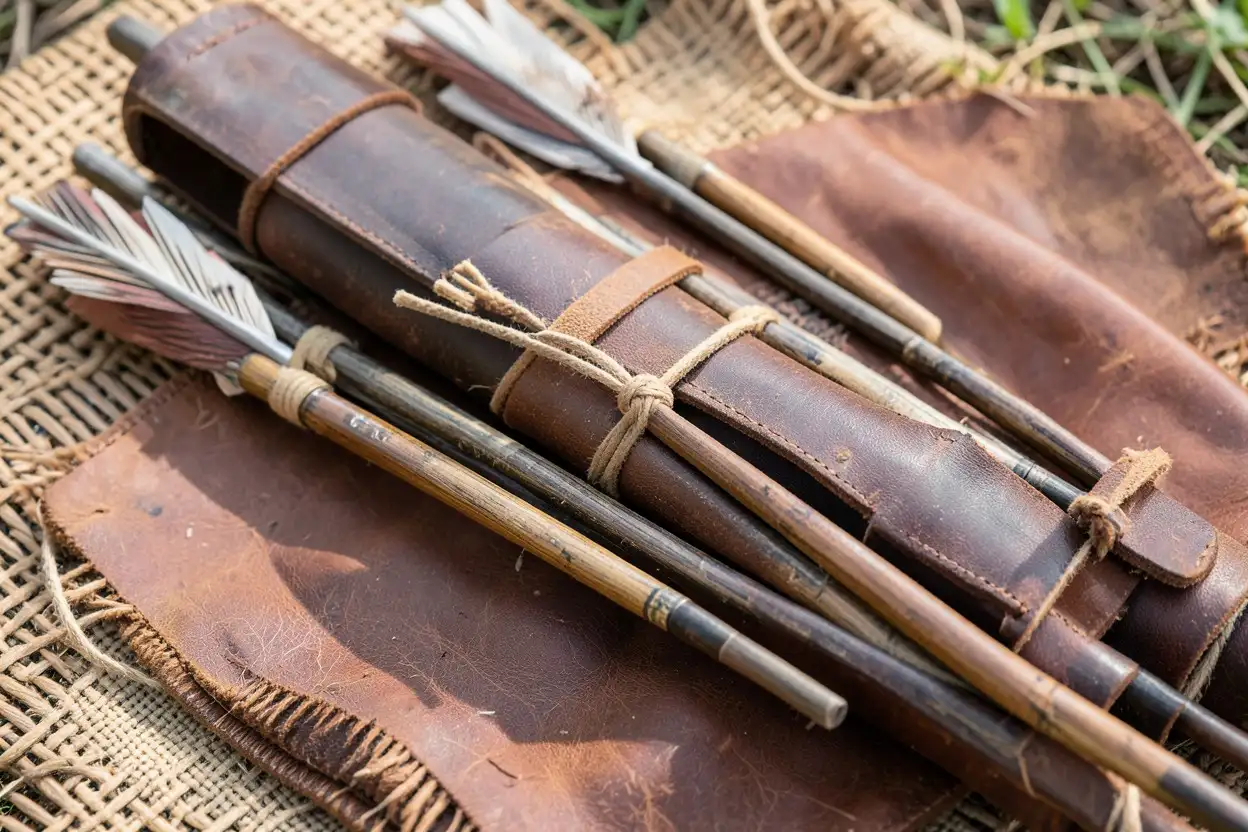
Back quivers can work for long movement when you are not drawing constantly, but the draw line changes. They sit high on the back with arrows extending above the shoulder, so long shafts can interfere with a clean draw. If strap fit is off, they can rattle, let arrows shift, and snag fletchings.[4]
Fit and placement: straps, shoulder clearance, and how long shafts change the draw
Back quivers are secured by leather straps with nock ends above the shoulder. In real movement, that placement matters more than people expect. When arrows ride high, a long shaft can hit your forearm or change your shoulder position at draw, especially when you are stepping uphill or pivoting to follow a trail.
What can go wrong in motion: rattle, arrow fallout, fletching snag risk
In my walk-tests, the first complaint is not “hard to draw,” it is sound and motion. Back carry can rattle, can let arrows fall out during movement, and can snag fletchings when the openings and strap tensions do not match. Once a feather catches or an arrow shifts, you pay with time and lost arrow order.
Reconstruction notes: common strap placement ideas and what to watch during a walk-test
Because back quivers use straps to hold the nock area high, the test is straightforward: wear it, then walk, pivot, and practice a dry draw. I check shoulder clearance first, then listen for rattle. If fletchings brush the quiver edge on turns, that is a design mismatch for your shaft length and your draw angle.
Were back quivers actually common, or mostly an idea from films?
Back quivers were used by native peoples of North America and Africa, but that does not mean every region carried them the same way for the same purpose. Films popularize back transport because the silhouette looks dramatic on camera. For a fair answer, I compare region-specific evidence and the practical needs of foot hunting, travel, and horseback use.
How to judge sources: accounts, museum examples, and region-specific evidence
I treat “used by native peoples” as a starting point, not a finish line. When I reconstruct, I ask what the pieces were associated with and how arrows were stored on-body during the activity described. The best matches explain both protection and access for the exact movement context.
What a fair comparison looks like between Plains-style back transport and other carry habits
Plains hunting and warfare involved heavy travel, quick stops, and gear carried as a system. That is why Plains-style back quivers often show up paired with a bow case. Belt quivers show up across many cultures because they keep arrows close to the bow hand, so you can grab without reaching far. Your choice should follow the activity, not the silhouette.
A reality check: if your arrow length and fletching protection needs don’t match, the back carry won’t behave
Back carry becomes frustrating when your shafts are long enough to swing through the draw path or when your fletchings are exposed in a way that catches on the quiver opening. If you need strong fletching protection for wet travel, a back quiver that prioritizes quick reach will not protect well. Matching carry design to arrow setup is the key test.
What is the difference between a belt quiver, side quiver, and back quiver?
A belt quiver is suspended from the belt or worn at the hip, so it sits close to the bow hand. That tends to give faster access than back carry. A side quiver is essentially hip-adjacent placement on your stronger side or alongside the belt line. A back quiver shifts storage above the shoulder for long transport.
How hip placement changes your draw line and keeps arrows near your bow hand
With belt or hip carry, the arrows sit where your grabbing hand has less travel. On foot, that usually means the next arrow is closer to the same motion space used for draw and nocking. That reduces the “search time” between shots, especially when you move through brush.
Common belt-quiver behaviors: retention, angle, and keeping shafts from bouncing
Belt quivers keep arrows close to the bow hand and may include a pouch or tool storage.If the quiver mouth allows shafts to shift, you feel it as inconsistent arrow feel and noise while walking.
Where belt storage helps beyond arrows (tool pouch integration)
When a belt quiver includes extra storage, you stop carrying separate small items that swing while you move. That matters for walk-hunting where you need a stable kit. Tool pouch integration also helps keep arrow accessories from getting scattered when you stop to reset your gear.
How were arrows kept from falling out of a quiver while moving?
Retention is built into the carry design: strap tension, overlap at the opening, and internal spacers or dividers that limit shaft wobble. Many systems also depend on how the quiver is positioned on your body during movement. If the opening allows arrows to shift freely, movement can cause arrows to shed.
Retention methods by design: openings, overlap, spacers/dividers, and strap tension
Back quivers can use leather straps with nock ends above the shoulder, which helps stabilize the top portion of the arrows. Some systems still let arrows fall out during movement if fit is wrong or the opening allows too much shaft play. Arrow bags often use closure and internal separation so shafts stay in order and protected.[1]
Tip orientation (tips up vs tips down) and how it impacts fletching damage
Arrow transport can be tips up or tips down depending on design. That choice directly affects how fletchings contact surfaces while you walk and when the quiver swings against your jacket or pack. In setups where fletchings face into contact points, protection gets harder unless the bag or quiver opening is built to keep feathers from rubbing.
A simple walk-test checklist for recreators: noise, bounce, snag points
I do a short walk test before trusting any carry system. I listen for rattle, watch for bounce and order shifts, and check for snag points at the quiver opening and along my shoulder line. If the quiver catches on clothing or fletchings brush an edge, I adjust strap tension or switch to a different carry method for the activity.
Did Native American bow cases and quivers work together as a set?
Yes, pairing shows up in reconstruction contexts where bow and arrows are carried together for travel and readiness. Plains-style systems often use a paired bow case and quiver set, both carried on the back, to protect the bow and arrows during movement. The point is consistency: you move as a unit, then grab what you need when you stop.
Drawstring bags: rain/dirt protection and shaft spacing
Arrow bags can be simple drawstring cloth sacks with a leather spacer. When closed, arrow bags protect arrows from rain and dirt. The divider or spacer idea also helps separate shafts so fletchings do not rub each other during travel and so the arrows stay organized.[2]
Bow case + quiver set: why pairing matters for trip handling and protection
Bow case and quiver set storage pairs the bow and arrows in a coordinated carry system. This is common in Plains contexts, often made of leather, rawhide, and cloth, and carried on the back. When both items are protected together, you reduce handling time and protect fletchings from accidental contact with the bow or gear.
Field test logic: when travel carry beats shooting carry
If your day involves long travel between shooting opportunities, travel carry wins because it protects fletchings and reduces cleanup. When you expect repeated shooting from one position or short distances on foot, fast access carry wins. The best “set” is the one that matches your day plan.
Native arrow-carry comparison table (reconstruction-first)
Here is a practical comparison of carry forms, focused on how they behave during movement. I care about access speed, fletching protection, noise, and whether shafts stay stable when you walk, pivot, or ride. Use this table to pick the carry style that fits your hunt flow.
| Carry position | Arrow access speed | Fletching protection | Noise | Movement safety | Likely context | Reconstruction notes |
|---|---|---|---|---|---|---|
| Back quiver: worn on the back with straps; arrows above the shoulder | Slower than belt/hip for quick repeats | Moderate; depends on opening and fit | Can rattle | Can shed arrows; can snag fletchings | Long movement and trip-ready carry | Use leather straps with nock ends above the shoulder; check shoulder clearance and strap tension during a walk-test |
| Belt quiver (hip/side): suspended from belt or worn at the hip[3] | Faster access than back carry | Moderate; improved with tighter mouth/retention | Usually lower than back carry | Stable when retention is firm | Walking hunts and close shooting | Keep shafts near bow hand; if tool pouch is present, secure small items to stop bouncing |
| Plains-style back quiver + bow case set: long, narrow back bag paired with bow case on the back | Slower than hip for repeated shots | High during travel because both pieces are protected | Low to moderate depending on fit | Generally safe for transport when closures and straps hold | Plains hunting and warfare travel and readiness | Made from leather, red wool cloth, and rawhide in associated reconstructions; pair set helps manage trip handling |
| Arrow bag: drawstring cloth sack; may include a leather spacer | Slower; best for stop-and-go access | High when closed; protects from rain and dirt | Low | Safe when tied and spaced to prevent rubbing | Long-distance travel and dirty conditions | Use divider or spacer idea to separate shafts; can be belt-carried or strapped[5] |
Decision takeaways driven by tradeoffs, not vibes
If your day is mostly walking with frequent draws, belt/hip carry tends to win because access stays close to the bow hand. If your day is mostly travel and weather exposure, arrow bags and paired bow-case systems protect better. Back quivers sit in the middle, they work for transport, but they demand strap fit and fletching-aware openings.
How Did Native American Archers Carry Arrows? Quivers, Belts, and Backs
Native arrow carry systems worked because the arrows stayed in predictable order on-body while you moved. Quivers and back sets supported transport, belts improved quick access, and arrow bags protected shafts from rain and dirt. Which choice made sense depended on the day, walking hunts, horseback use, and long-distance travel all change what “ready” means.
Walking hunts: quick access beats maximum coverage
On foot, I want the next arrow without breaking rhythm. Belt quivers are the simplest way I have found to keep shafts near the bow hand, and that usually reduces “arrow hunting” between shots. After switching to a left-hand bow, my groups improved over the following weeks, and the carry system mattered because my draw sequence had to stay consistent.
Horseback use: stability and snag risk become more important than you expect
On horseback, bounce and clothing contact increase. Back carry can still work for transport, but the shoulder-line and opening design matter because fletchings are easy to scuff during jostling. Belt/hip carry can be more predictable when your body position changes with the saddle and stirrups.
Long-distance travel: protect shafts first, then worry about speed
During travel, I prioritize clean fletchings and protected shafts. Arrow bags protect from rain and dirt when closed, and the spacer concept helps prevent feather rubbing between arrows. A bow case paired with a quiver set keeps the whole kit organized and reduces how often you expose shafts in changing conditions.
How many arrows did a typical Native American quiver hold?
I do not claim a single “typical” count because quiver size varies by form, region, and the specific set it was paired with. On reconstructions I have handled, the deciding factor is internal spacing and whether fletchings can ride without rubbing. If your arrows are not spaced correctly, you will lose fletching life fast.
Were back quivers practical for fast shooting on foot or from horseback?
They can work for transport and for situations where shots are spaced out, but they usually trade away speed. Back quivers place arrows above the shoulder and use strap retention, yet they can be awkward when drawing long arrows. If they rattle or let arrows fall out, they cost time right when you need consistency on foot or while mounted.
Frequently asked questions
How did Native American archers carry arrows while hunting and traveling?
They carried arrows mainly by having them ready on-body and in protected storage when movement demanded it. Quivers and back/shoulder carry supported steady transport, while belts and hip carry supported quick access near the bow hand. For longer travel, arrow bags and bow-case quiver sets protected shafts from rain, dirt, and knocks.
Were back quivers actually used by Native Americans, or is that mostly a movie idea?
Back quivers were used by native peoples of North America and Africa, so the idea is grounded. The movie problem is scale and context. Back quivers can be awkward for drawing long arrows and can rattle or shed arrows during movement if fit and openings are not right, which means they often make more sense for transport than rapid repeats.
What materials were Native American quivers made from?
Leather, rawhide, and cloth are common materials in associated reconstructions and traditional forms, including Plains-style back quivers made from leather, red wool cloth, and rawhide. Arrow bags are often simple drawstring cloth sacks, with a leather spacer used to support shaft separation and protection during travel.
How were arrows carried in transport, tips up or tips down?
Arrow transport can be tips up or tips down depending on the design. That choice affects fletching wear because your feathers face different contact points while you walk, travel, or ride. If your feathers are getting rubbed, the carry style and orientation need to change, even if the quiver “fits” on-body.