What Draw Weight Did Native American Bows Usually Have?
Many Native American bows were practical hunting bows, while war bows were often heavier, with lighter or heavier examples depending on region and purpose. Calling every bow “light” or “heavy” hides how they were actually used and leads to bad assumptions about hunting range, accuracy, and historical use. This guide breaks down draw-weight ranges by hunting, war use, region, and draw length.
Draw weight depends on purpose, arrow mass, and terrain
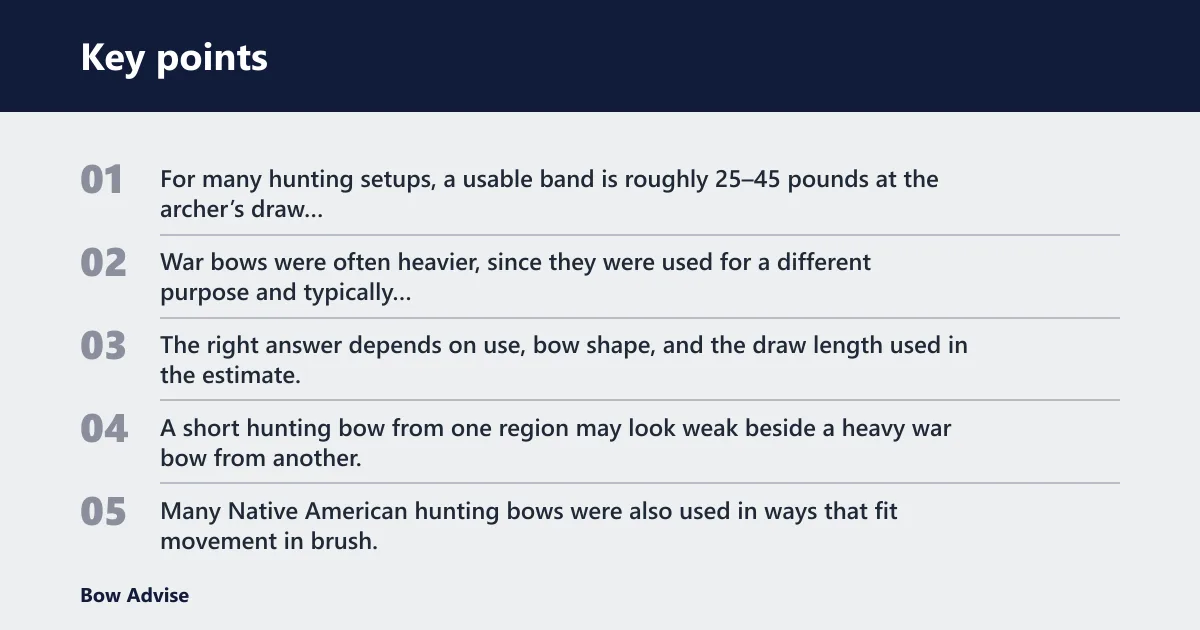


There was no single usual number. For many hunting setups, a usable band is roughly 25–45 pounds at the archer’s draw length. War bows were often heavier, since they were used for a different purpose and typically needed more power. The right answer depends on use, bow shape, and the draw length used in the estimate.
That difference matters. A short hunting bow from one region may look weak beside a heavy war bow from another, yet both can fit their jobs well. Many Native American hunting bows were also used in ways that fit movement in brush, from canoes, and in mixed terrain.
Arrow mass matters here too. A bow that launches a light hunting arrow well may not handle a heavier war shaft the same way, and the reverse is also true. Historical descriptions often make more sense when the arrow and target are considered with the bow.
Native bow draw-weight table
| Region or tribal bow context | Likely use | Practical draw-weight band at 28 inches |
|---|---|---|
| Eastern and Southeastern U.S. whitewood bows | Hunting, all-purpose | 25–40 pounds |
| Plains-style bows with stronger backing or compact build | Hunting, some war use | 35–55 pounds |
| Heavier bows kept for conflict or penetration | War | 50–80+ pounds |
| Shorter bows used for mobility in wooded or river settings | Hunting | 20–35 pounds |
| Backed or composite-style bows with reflex or recurved shaping | Hunting, war | 35–70 pounds |
Note: These are practical bands, not universal measurements. A bow’s draw length changes the number, humidity can lower performance, and wood moisture affects bow behavior. Ordinary white wood bows also take set when damp.
How did draw length change the pound estimate?
Draw weight is pounds measured at a stated draw length, and that stated length matters. A bow described at 28 inches may not mean much if the historical archer drew it 2 or 4 inches less. The same bow can read lighter at a shorter draw and heavier at a longer one.
That is why old descriptions need careful reading. If a report does not give draw length, the pound estimate is only a rough guide. Modern readers often assume one standard length, but historical archers did not all draw the same distance.
Say a surviving bow is described as “about 40 pounds.” If that figure came from a 24-inch draw, it does not equal a modern 28-inch rating. The bow may have looked modest on paper and still have been fully adequate for hunting at the actual draw used.
How to read old descriptions carefully
- Check whether the source states draw length.
- Separate hunting bows from war bows before comparing numbers.
- Look at arrow type and intended target.
- Note whether the bow is self, backed, reflexed, or recurved.
- Account for climate and wood moisture before treating a poundage as fixed.
What made Native American bows strong or light?
Bow strength came from design as much as from wood. Self bows, flatbows, and backed bows could all work well, but each set different limits on safe draw weight, cast, and durability. Reflex, recurve, and good limb shaping could improve performance, while string follow and set reduced it.
A self bow is made from one piece of wood. A flatbow spreads stress better than a narrow stick-style limb. Backed bows, including sinew-backed forms, add extra working strength. Composite forms can push performance further, but they are more sensitive to construction quality and maintenance.
Wood length also matters. Shorter bows can be powerful, but they usually need careful shaping or backing if draw weight rises. Longer bows often tolerate strain better, but they may be less handy in thick cover.
Reflex, recurve, and string follow
Reflex and recurved shaping can store more energy in a shorter bow. That helps where compact size matters. String follow, by contrast, is a sign that the limbs have taken a permanent forward bend, which usually means lost performance and a weaker return.
Set is a related issue. A bow that takes set does not return fully to its original shape after use. That is one reason fire-hardening and drying were valued with white woods: both aimed to keep the limbs working rather than permanently bending forward.
Which woods were used for Native bows?
White woods were common because they were available and workable. Hickory, elm, white oak, and sweetgum all appear in historical and modern discussion of Native-style bows. These woods can make serviceable hunting bows, especially when shaped and dried with care.
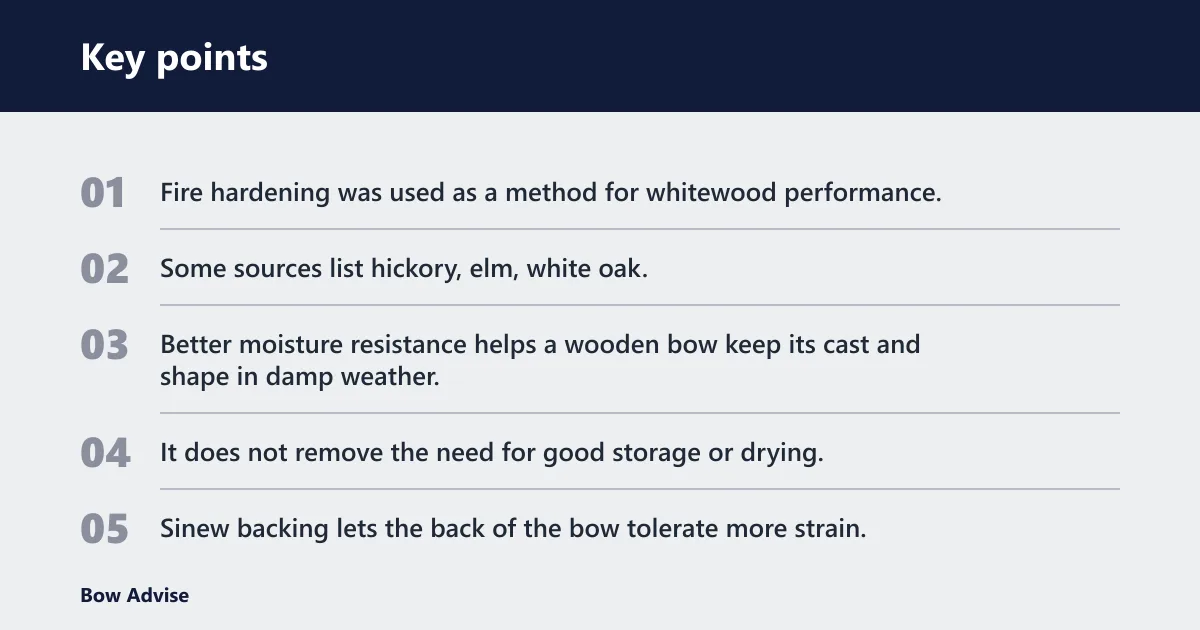
Fire hardening was used as a method for whitewood performance. Some sources list hickory, elm, white oak, and sweetgum as bow woods discussed in connection with fire hardening.
Better moisture resistance helps a wooden bow keep its cast and shape in damp weather. It does not remove the need for good storage or drying.
Sinew backing and composite builds
Sinew backing lets the back of the bow tolerate more strain. That can raise practical draw weight or let a shorter bow remain useful at moderate draw weights. Composite builds go further by combining materials to manage tension and compression more efficiently.
These designs help explain why a simple one-number answer fails. Two bows of the same length and apparent size can behave very differently if one is a plain self bow and the other has backing or recurved shaping.
Fire-hardening, drying, and moisture sensitivity
Native hunters in the Eastern and Southeastern U.S. dealt with humidity and moisture. Moisture can affect performance, which is why drying and storage matter.
Ordinary white wood bows take set when damp. That is the practical problem for a hunting bow carried in wet country. A bow may still shoot, but cast and recovery can slip enough to change point of impact and usable hunting range.
A common first-timer mistake is assuming a dry-looking bow is ready simply because it is not visibly wet. A bow stored in a humid room can absorb moisture without obvious surface dampness, and that extra moisture can change how it bends under draw.
How did hunting and war uses differ?
Hunting bows and war bows were not built for the same job. Hunting generally favored enough draw weight for clean penetration on game, but also enough speed and control for realistic shot distances. War bows often needed heavier arrows and more striking power, so they were commonly heavier.
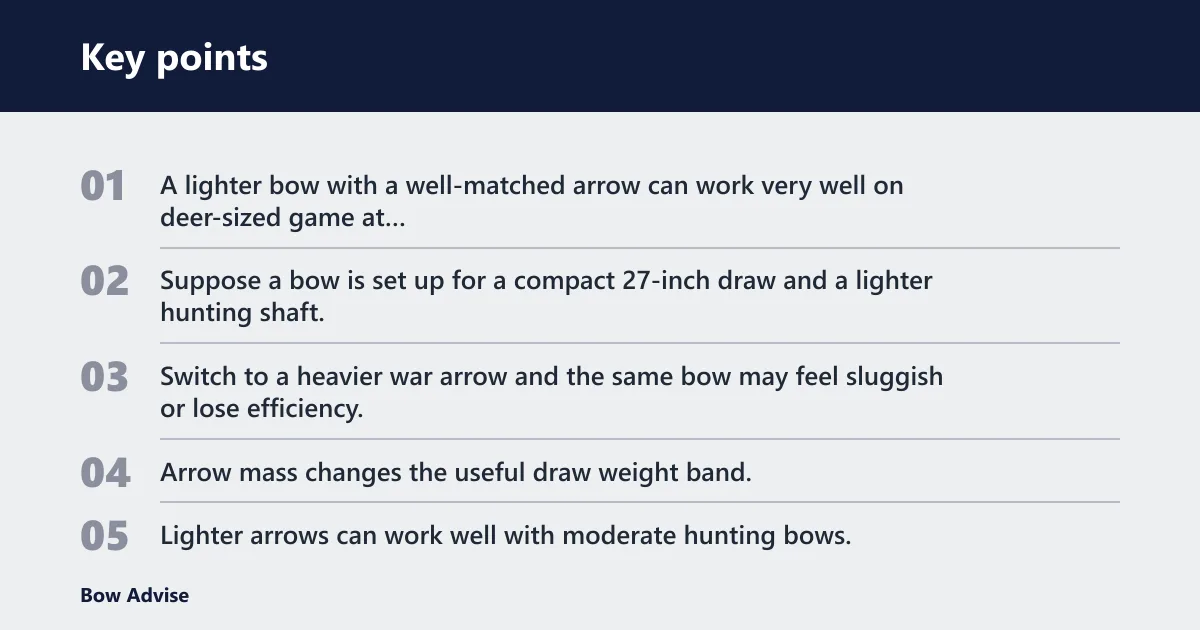
That does not mean hunting bows were weak. It means they were tuned for practical use. A lighter bow with a well-matched arrow can work very well on deer-sized game at sensible ranges, especially in close terrain where shot placement matters more than raw poundage.
Suppose a bow is set up for a compact 27-inch draw and a lighter hunting shaft. That setup can be plenty for woods hunting. Switch to a heavier war arrow and the same bow may feel sluggish or lose efficiency, which is why use case has to come first.
Arrow mass and target type
Arrow mass changes the useful draw weight band. Lighter arrows can work well with moderate hunting bows. Heavier shafts for conflict or deep penetration ask more from the bow and from the archer’s draw. That is part of why historical war bows tend to sit in the higher pound ranges.
Functional accuracy also matters. A bow that is accurate at 15 to 25 yards with a matched hunting arrow may be a better field tool than a heavier bow that is harder to control. Historical efficiency was about the whole system, not just pounds on paper.
Mobility versus penetration
Many Native American hunting bows were compact because the user needed to move. Shorter bows are easier to carry through cover, into lodges, or in boats. War use could justify more weight if penetration and range through barriers mattered more than quick handling.
That helps answer the “weak or powerful” question. They were often neither extreme. Many were tuned to do a specific job very well, and the same cultural tradition could produce a light hunting bow and a heavier war bow side by side.
Frequently asked questions
How strong were Native American bows for hunting?
For hunting, many Native American bows fit a practical band around 25–45 pounds at the archer’s draw length. That is enough for useful field performance with the right arrow mass and good shot placement. Shorter, lighter bows were common where mobility mattered more than long-range power.
How many pounds was a Native American hunting bow?
A Native American hunting bow often falls around 25–45 pounds at a given draw length, so the number only matters with the draw length stated. A bow drawn to 24 inches will not compare directly with one drawn to 28 inches. Arrow choice and target size matter too.
Were Native American bows weak or powerful?
They were neither universally weak nor universally powerful. Some were light, quick hunting bows; others were much heavier war bows. The better question is whether the bow fit its intended use, the local wood, and the climate. In that context, many were highly effective.
Did draw weight vary by tribe and region?
Yes. Draw weight varied by tribe, region, available woods, climate, and intended use. Eastern and Southeastern whitewood bows often leaned toward practical hunting weights, while other regions used stronger backed or composite forms. Comparing all Native bows as one class hides those differences.
What draw length should be used when estimating Native American bow weight?
Use the stated draw length if it is known. If not, treat any poundage as approximate and avoid treating it like a modern 28-inch rating. Draw length can shift the estimate enough to change how a bow is classified, especially for shorter historical bows.
How does humidity affect a Native American style bow?
Humidity raises wood moisture content, and that can reduce cast, encourage set, and hurt consistency. Native hunters in the Eastern and Southeastern U.S. dealt with humidity and moisture. That is why drying and storage matter.
What kind of wood was used for Native American bows?
Common bow woods included hickory, elm, white oak, and sweetgum, along with backed or composite forms using sinew and other materials. Some sources discuss those woods in connection with fire hardening. Wood choice, drying, and local climate all affected whether a bow stayed fast, stable, and durable.