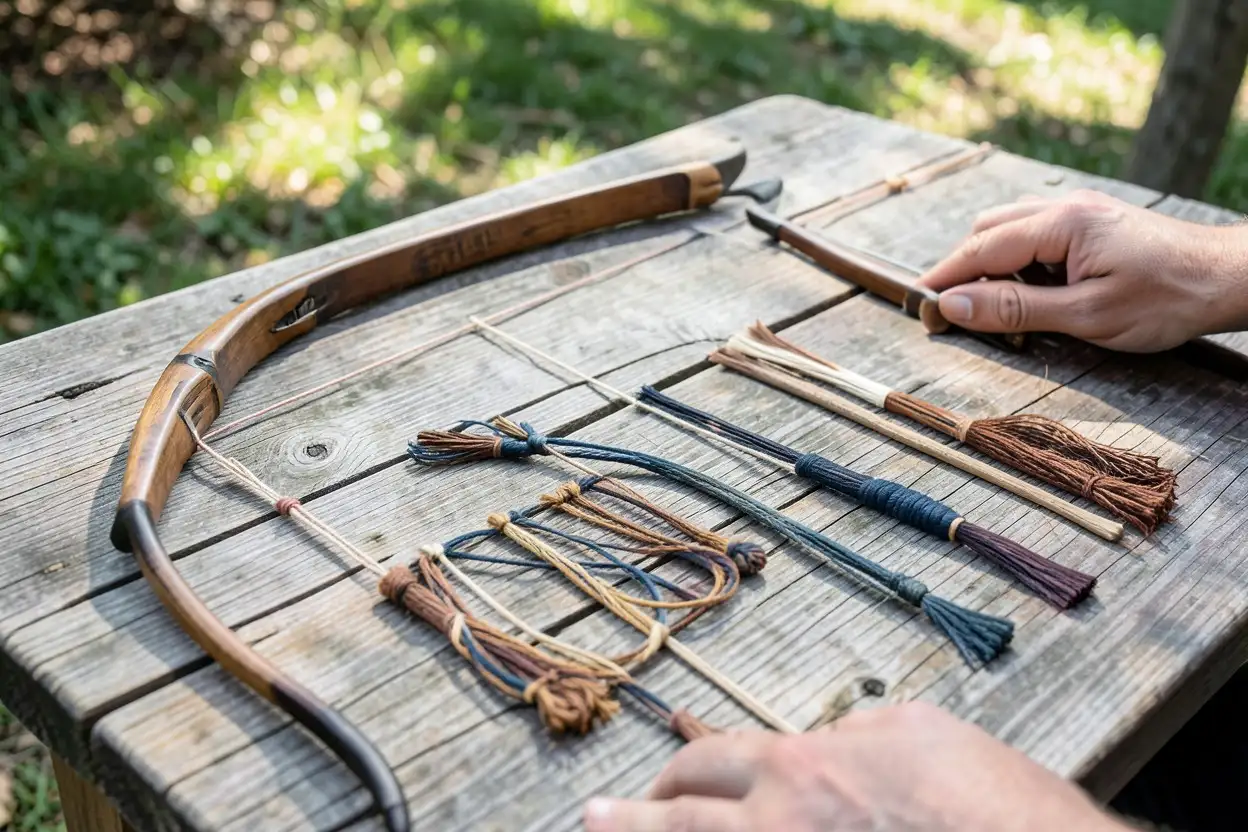
How Strong Were Native American Bowstrings? Materials
Native American bowstrings held up when two things lined up, tension matched to the bow and the string material stayed stable enough to hold brace height. When a natural string creeps or starts fraying early, I see the same results every time, a slow mushy cast, tip wear that speeds up, and sometimes an outright break. I’ll compare stretch, stiffness, and durability by material, then map that to sinew, rawhide, and plant fibers based on how they behave under load.


What were Native American bowstrings made from?
Native American bowstrings were commonly made from sinew, rawhide, and plant fibers such as nettles, milkweed, and inner bark. Sinew came from back or leg tendons of large animals, and Plains bowstrings were made from it. Plant-fiber strings were made from some plants, and yucca fibers are mentioned for lighter bows.[2]
Sinew, rawhide, and plant fibers: where the materials came from
Most Native American bows were made of wood, and the string still had to do the job of storing and releasing energy without losing its shape fast. Sinew was sourced from back or leg tendons, then worked into cordage for bowstrings. Rawhide was also used for bowstrings, typically by twisting into cordage. Plant fiber strings were made from nettles, milkweed, or inner bark fibers.
Yucca fibers and lighter bows
In some Southwestern-style contexts, yucca fibers are mentioned for bowstrings suited to lighter draw weights, roughly around 40 lbs. draw weight or less. When the bow sits in a lower draw range, peak tension drops, so a material that trades some stability for workability can still perform well.
Were sinew bowstrings stronger than plant fiber bowstrings?
Sinew and plant fibers can both work, but “strong” shows up differently when I put them under tension. Sinew-based strings have strong holding power while still stretching, which can help energy return when the string stays consistent. Plant fiber strings were considered the highest quality because they would not stretch out, so your cast stays more repeatable over time.
Stretch and energy return: how strength shows up
When I tune a natural string system, I watch bowstring stretch first. If the string stretches steadily over time, brace height drops, your draw length changes slightly, and efficiency falls. If the material stays stable, brace height stays put and the bow feels the same shot to shot.
Sinew strings have enough give to show up as brace-height sensitivity, especially in the first phase of use while the material settles. Plant fibers are described as the highest quality because they would not stretch out, and that behavior is exactly what you want for long-session consistency.
Stiffness at brace height: what “feel” tells you
Stiffness is a practical trait: it’s how quickly the bow reaches the same tension and recovers after you nock and draw. On sinew strings, that stiffness often changes a bit while the string stabilizes. On plant fiber strings described as non-stretching over time, the bow’s stiffness feel stays steadier, which helps your release timing and sight picture.
Durability: shape retention, humidity, and maintenance
Durability is where natural materials separate in real-world conditions. Sinew can hold up well when I keep it dry and protected, but it’s a worry in wet setups, sweat-heavy hunts and misty mornings both push trouble faster. Plant fibers tend to resist the “creep” that comes with stretch-out, which is why they’re treated as a top choice when consistency matters. Rawhide sits between the two in many traditional setups because it can be workable and strong, but it’s not described as matching sinew’s readiness for bowstring use.
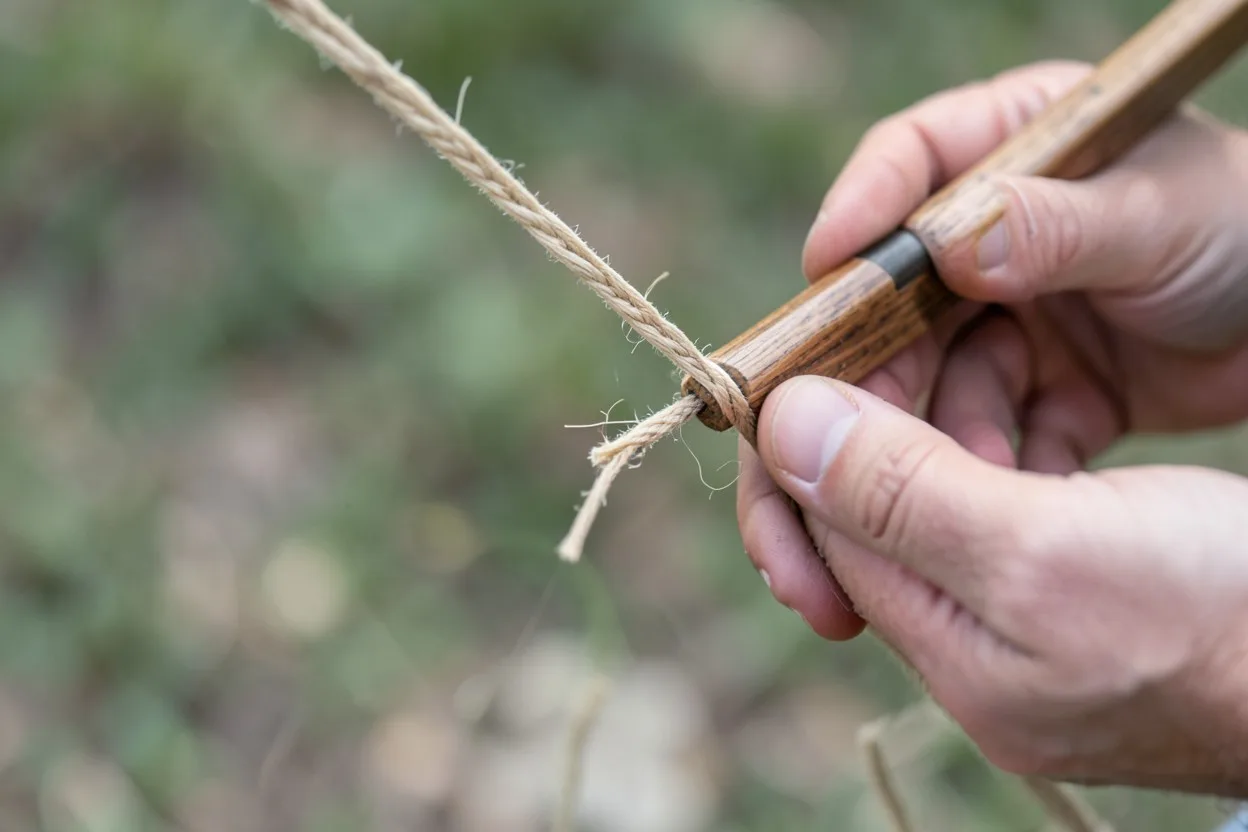
Bowstring stretch: the performance trait behind efficiency and maintenance
Bowstring stretch affects efficiency and maintenance because brace height drifts when the string diameter and length change. More stretch means your bow loses some of its stored energy to “taking up slack,” and your brace height tolerance shrinks. Natural strings can also creep in humidity or after repeated wetting, so periodic re-tension or replacement was part of traditional practice.[3]
Brace-height tolerance and shot-to-shot consistency
In my shop, when a string stretches too much, you feel it before you measure it. The first few shots feel normal, then the cast slows down and the tuning steps that used to work start missing. That’s why I treat brace height like a maintenance clock, not a one-time setting.
What archers had to watch historically
Historically, archers couldn’t rely on synthetic stretch curves, so they watched for practical indicators: the string looking slightly “fatter” or thinner, tips wearing from changed timing, and fraying where cords rub under peak load. If the string begins to creep, brace height drops, your bow’s geometry effectively changes, and power delivery gets inconsistent.
Simple field checks for natural-string creep
- Check brace height at the start of a session and again after a short shooting session.
- Look for fraying at the splice and at the contact points near the tips.
- If the bow feels slower or the arrow group opens up, verify tension before blaming your form.
- Replace a string when diameter shrinks or strands fray, since break risk rises with wear.
How did bow type change the string material choice?
Bow type changes string material choice because geometry and draw weight change peak tension and how sensitive brace height becomes. Older foot bows were typically about five feet long, and they work with longer, more forgiving string systems. Mounted bows often used composite materials and shorter setups, so string choice had to manage stability, handling, and maintenance in different field conditions.[1]
Foot bows: longer string systems, more time to settle
Older hunting bows used on foot were typically about five feet long. With that length, the string system tends to have more “working room” for how stretch plays out. For beginners, that can feel forgiving, but for hunters it still means brace-height checks matter because a stretchy string changes timing.
For wooden self bows, which are common, the string material selection controls how quickly that wood-backed energy delivery becomes consistent. If you’re running natural fiber or sinew, you’re trading work time and maintenance for behavior that matches the bow you built.
Mounted bows: different geometry and practical string needs
The connection to mounted archery is real. Mounted bows were often composite materials, and the shorter practical bow lengths change how the string’s stretch and stiffness translate into arrow launch. You typically want a string that keeps brace height stable because you can’t afford tuning drift while moving quickly between shots.
Lighter Southwestern-style bows: where yucca can make sense
When draw weights stay lower, yucca fibers can be a reasonable choice because the string doesn’t have to survive as much peak tension. That matches the idea of yucca fibers being suited to lighter bows and bowstrings mentioned for roughly 40 lbs. draw weight or less. You still need a sound splice and consistent construction, but the material demand is reduced.
Did Plains tribes use sinew for both bows and bowstrings?
Plains groups are described as using sinew in both bow construction and bowstring work because Plains bowstrings were made from sinew, and the most powerful bows were backed with sinew. In bow-building language, “sinew-backed” means the wood has sinew backing, and pairing that with a sinew string supports a power-focused system.
What “sinew-backed” means in practice
The “most powerful bows were backed with sinew” description lines up with why Plains bows are described as especially powerful. The Hood Museum describes Plains bows as the most powerful because they could shoot through buffalo. When a bow is built to do that kind of work, you want the energy delivery system to stay consistent enough that your brace-height and recovery don’t wander under repeated heavy use.
Why that matches the bowstring material choice
Given that Plains bowstrings were made from sinew, the material choice supports the whole system: wood structure, sinew backing, and a string that tolerates the loads involved. Sinew was described as the most readily available bowstring material, which matters because a power bow is still a field tool that needs replacement capability when wear shows up.
Material performance comparison and selection checklist
If you want an evidence-first way to choose, I rank each material by behavior you can feel: stretch and stability, strength under peak load, splice and repair effort, and humidity sensitivity. Then I match that to the bow you’re running, the likely draw weight, and whether your priority is maximum snap or consistent brace height.
Comparison table: sinew vs rawhide vs plant fibers
| Material | Stretch / stability under load | Strength under load | Splice / repair difficulty | Humidity sensitivity | Best-use bow type (practical match) |
|---|---|---|---|---|---|
| Sinew (tendon cordage) | More stretch than non-stretching plant fibers; tends to settle, so brace height needs watching | High holding power; Plains bowstrings made from sinew | Moderate to high; requires careful working and consistent taping/twisting | Medium; manage wet conditions to preserve shape | Power-focused systems; matches Plains-style sinew-backed bows |
| Rawhide (twisted cordage) | Uncertain vs sinew; expected to behave as a natural cord that can change with conditions | Good strength; used as a bowstring material | Moderate; twisting and forming consistent cord diameter matters | Medium; natural hide behavior can shift when repeatedly damp | General-purpose natural string option when you can fabricate reliably |
| Plant fibers (nettles, milkweed, inner bark) | Lowest stretch in use description; plant fiber strings were considered highest quality because they would not stretch out | Dependable stability for repeatable cast | High; more work to obtain and prepare, and you must build clean cord uniformity | Low to medium; stability helps, but you still protect against damage and fray | Consistency-focused setups; good for tighter tuning tolerance |
Selection checklist: foot bow, mounted bow, lighter Southwestern bow
Use this to choose by behavior, not by tradition alone.
- Foot bow, wood self bow (about five feet typical): If you want stable brace height over many shots, lean toward plant fibers for the non-stretching behavior described. If you can manage settling and want a power-oriented natural option, sinew works well.
- Mounted bow (often composite; shorter practical geometry): Prioritize string stability because fast shooting exposes brace-height drift. Choose plant fibers when you can prep them well, or sinew when the whole system is built around it and you’ll check tension.
- Lighter Southwestern-style bow (around 40 lbs. draw weight or less): Yucca fibers are a plausible fit because the string demand is lower. Keep your splice clean and be honest about how the string behaves after damp conditions.
- If your string feels slower after a session: treat that as stretch-out or creep; measure brace height and replace when diameter shrinks or strands fray.
Frequently asked questions
How much did natural bowstring materials stretch compared with modern strings?
I can’t give a modern-to-natural percentage comparison as an established fact here. What I can say from practical bow tuning is that natural materials differ in stretch behavior enough to change brace-height tolerance and maintenance frequency. Plant fiber strings were considered highest quality because they would not stretch out, while sinew is described as having stretch that affects how the bow settles.
Why were some Native American bowstrings better for hunting on foot or horseback?
Hunting changes what “good” means. On foot, you can check brace height more deliberately, and foot bows were typically about five feet long. On horseback, mounted bows often used composite materials and faster shooting demands tighter consistency. Stable string behavior reduces cast drift and helps avoid tip wear during repeated heavy shots.
Which plant fibers were used for traditional Native American bowstrings?
Plant fiber bowstrings were made from specific plants, including nettles, milkweed, and inner bark fibers. These fibers were considered the highest quality choice because they would not stretch out, which supports consistent arrow flight. Yucca fibers show up in Southwestern contexts for lighter bows.
How did rawhide compare with sinew for bowstrings?
Rawhide was used for bowstrings, twisted into cordage. Sinew is described as the most readily available bowstring material, and Plains bowstrings were made from sinew, which supports its role in power-focused systems. In performance terms, sinew’s stretch and stability behavior tends to be easier to manage when you’re building a sinew-backed bowstring/bow combination.
What made a bowstring strong enough for a powerful Native American bow?
A powerful bowstring had to handle peak tension without creep and without failing at the splice or where it contacts the tips. The system mattered: the most powerful bows were backed with sinew, Plains bowstrings were made from sinew, and sinew came from back or leg tendons of large animals. If the string stretches or frays early, performance drops and break risk rises.
How strong were Native American bows? — How strong were Native American bows?
“Strong” here is about capability under real load, not marketing numbers. Plains bows are described as the most powerful because they could shoot through buffalo. That kind of performance is tied to construction choices like sinew backing for the most powerful bows and matching bowstring materials that can sustain heavy use without losing shape.