Release Aid Mistakes That Send Arrows Off Line and Fixes
Separate release-caused misses from tuning problems with a shot-cycle check: if the bow groups well with a clean release but opens up when your trigger, hook, or follow-through changes, the release is a likely cause. Misreading that costs time, arrows, and tuning changes that never touch the real issue. This guide shows a simple sequence to isolate release mistakes on compound and recurve bows.
This guide is part of our Arrow direction guide for archers series.
What a clean release should do to arrow flight
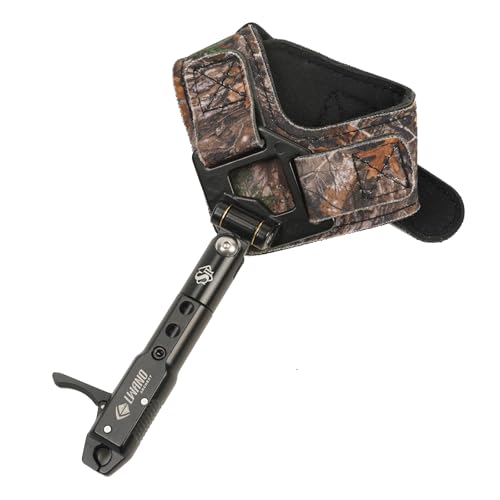
A clean release is the string leaving the hand or release aid without extra side load, twist, or a late tug. In archery, that means the string leaves free, with no added steering.
The first job is simple: let the string exit straight. A clean exit keeps the nock moving forward on line, while a bad exit adds torque that shows up as left-right scatter, fishtailing, or a broadhead that will not settle.
Why follow-through matters more than a fast shot
Follow-through shows whether the hand or release aid stayed out of the string path. If the release hand jumps, opens hard, or rolls across the chest, the string often leaves with a sideways pull. That side load can matter more than raw shot speed.
For compound shooters, the release aid should fire with no punch and no reach. For recurve or finger shooters, the fingers should relax through the shot instead of opening early or snapping away. A clean release is less about speed and more about staying out of the way.
Why do my arrows go left or right after release?
Left or right misses usually come from one of three places: the string did not leave cleanly, the bow hand moved the grip, or the arrow setup is reacting to bad launch conditions. The key is to look at the shot cycle, not the target face alone.
At close range, a release problem can often show as a sudden sideways kick, a twitch of the riser, or a darting tail. A setup problem often looks more repeatable and less tied to one sloppy shot. That difference matters.
Release error versus bow hand torque
Release error happens at the string. Bow hand torque happens at the grip. Both can send arrows left or right, and both can look like a tune issue if the shooter changes form shot to shot.
A useful check is this: if the sight picture stays centered but the arrow still misses off line, inspect the release hand first. If the riser jumps or the grip pressure changes, inspect the bow hand first.
How the same miss looks on compound and recurve
Compound bows often punish trigger punch and late finger pressure with a sharp left-right miss and inconsistent groups. Recurve bows, especially with finger release, often show more visible string pluck and a softer but wider horizontal pattern.
The same impact side does not always mean the same cause. A compound shooter can create a left miss from trigger torque, while a recurve shooter can create one from a pluck that twists the string on exit.

Release aid mistakes that push compound arrows off line
Compound release aid mistakes usually come from trigger travel, hand pressure, and anchor drift. A release aid is the device that disengages the string, and small errors in how it fires can move the string far enough to affect arrow line.
Wrist-strap and handheld release variants behave differently. A wrist-strap trigger often invites a punch from the index finger, while a handheld thumb or hinge style can drift if the hand pressure changes during anchor. Both need repeatable activation.
Trigger punch, creep, and inconsistent trigger travel
Trigger punch is a sudden jab at the trigger face. It often sends the shot off line before the archer expects it. Creep is the slow buildup of pressure while waiting for the release to fire, and it can lead to a surprise lurch that disturbs aim.
Inconsistent trigger travel makes the shot cycle harder to read. If one shot breaks at the same pressure and the next takes a harder press, the archer is usually adding tension or changing the finger angle on the trigger.
Anchor inconsistency and hand pressure
Anchor inconsistency changes string-to-face pressure, peep alignment, and release hand position. Even a small shift can alter how the release aid sits in the hand and how the string leaves the fingers or jaws.
Hand pressure matters too. A death grip on a handheld release can twist the wrist and pull the string sideways. A loose, wandering hand can do nearly the same thing by moving during the expansion phase.
How do you spot string plucking and string torque?
String plucking and string torque show up as side motion the moment the string leaves the hand. Plucking is a sideways pull at release, while string torque is a twist that turns the string rather than letting it exit straight. Both are release faults, not tuning faults.
Look at the first few yards after the shot. If the string snaps sideways, the release hand jumps away from the neck, or the string leaves with a visible twist, the cause is likely in the release sequence. Follow-through should stay quiet and direct.
Visual cues at 5 to 10 yards
At short range, a bad release often shows as a left-right kick before the arrow settles. The shaft may leave with a visible tail wag, and the nock can appear to snake behind the point rather than track straight away from the bow.
Suppose a recurve shooter groups tightly until the release hand opens early. At 10 yards the arrows may print left with obvious tail wobble. That pattern often points to pluck, not weak spine.
What bow hand errors create the same symptoms?
Bow hand torque can copy almost any release problem. Grip pressure, wrist alignment, and palm contact points all change how the riser reacts during launch. A relaxed hand does not mean a floppy hand; it means the bow settles in the same place every time.
If the heel of the palm presses hard into the grip or the wrist bends inward, the riser can rotate at the shot. That rotation changes arrow line and can mimic a bad release aid, especially on a compound with a stiff front end.
Grip pressure and palm contact points
The safest check is contact point consistency. The pressure should land in the same part of the thumb pad or palm each shot, with no squeezing from the fingers. Different pressure points mean different torque, and different torque means different misses.
A common first-timer mistake is trying to hold the bow still by clamping harder. That usually adds torque. A steady grip with repeatable contact points is better than a firm grip that changes from arrow to arrow.
Wrist alignment and torque from the bow hand
Wrist alignment should keep the hand stacked so the bow can roll forward after the shot. If the wrist collapses or turns, the grip can steer the riser left or right. That movement may show up as fishtailing or a stubborn horizontal group.
When the hand is the problem, changing arrow spine rarely helps. The shot still starts with the same unwanted rotation, so the arrow leaves the bow with the same side load.
When is it the arrow setup instead of the release?
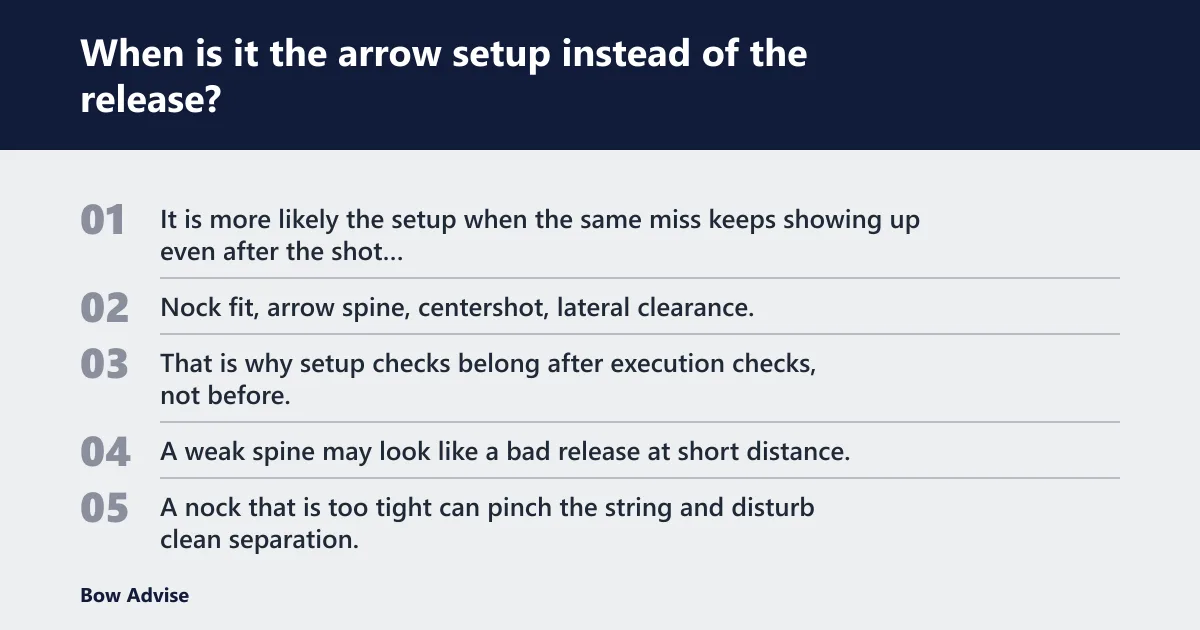
It is more likely the setup when the same miss keeps showing up even after the shot cycle stays clean. Nock fit, arrow spine, centershot, lateral clearance, and rest timing can all mimic release trouble. That is why setup checks belong after execution checks, not before.
Release can also mask setup flaws. A weak spine may look like a bad release at short distance, while a clean release may expose the real issue once the bow is shot with better form.
Nock fit, nock pinch, and serving fit
A nock that is too tight can pinch the string and disturb clean separation. A nock that is too loose can shift before launch. Both problems can create false left-right errors that look like a release aid mistake or a string pluck.
Check that the nock snaps onto the serving with a controlled fit. It should stay put on the string but release without drag. If the nock bind changes from arrow to arrow, the shot will not be consistent enough for useful tuning.
Arrow spine, dynamic spine, and bow type sensitivity
Arrow spine is shaft stiffness, while dynamic spine is how the arrow behaves under real shot forces. Compound bows and recurve bows do not react the same way, and recurve setups are often more sensitive to finger release variables.
A shaft that is borderline weak may show left-right wander when the release gets sloppy. That does not prove the spine is wrong. It may only mean the bow is giving the arrow a poor launch because the release or grip is off.
Centershot, lateral clearance, and rest timing
Centershot alignment should place the arrow in the correct line through the bow window, and the rest must move at the right time. If the rest drops too soon, too late, or in a crooked path, the arrow can kick sideways even with a good release.
Lateral clearance matters as well. If vanes or fletching touch cables, the riser, or an improperly set rest, the result can look like release torque. That is why setup checks need to come after the cleaner shot is confirmed.
Release-mistake diagnostic table
This table separates the miss pattern from the likely cause and the first correction. Use the checks in a sensible order. Start with the shot, then nock fit, then spine, then rest and tune.
| Miss pattern and visual cue | Likely cause for compound shooters | Likely cause for recurve or finger shooters | First fix before changing tune |
|---|---|---|---|
| Left miss with a sudden trigger jab or hand jump | Trigger punch, index-finger activation, or too much hand pressure on a wrist-strap release | Finger opening too fast or hand pulling away from anchor | Slow the shot, hold pressure through expansion, and keep anchor-to-face contact steady |
| Right miss with the release hand creeping forward | Anchor drift, inconsistent trigger travel, or hand rotation in a handheld release | String torque from a twisting finger release or collapsing bow arm | Reset anchor point, relax the hand, and shoot at 5 to 10 yards with a quiet follow-through |
| Tail wag or fishtailing right after launch | Pluck, string torque, or weak follow-through | Pluck, nock pinch, or finger pressure changing at the string | Watch the string exit, check nock fit, and repeat with a cleaner hand path |
| Random left-right spread with no clear pattern | Mixed trigger travel, varying release aid pressure, or bow hand torque | Inconsistent hook depth, anchor changes, or grip pressure changes | Short-range blank bale work, then inspect nock fit and centershot |
| Broadhead hits left or right of field points | Release error still present, or rest timing and centershot not stable | Dynamic spine too stiff or too weak for the bow, often exposed by finger release | Confirm field point grouping first, then use bare shaft or paper tuning later in the sequence |
How do broadheads and fishtailing help confirm the problem?
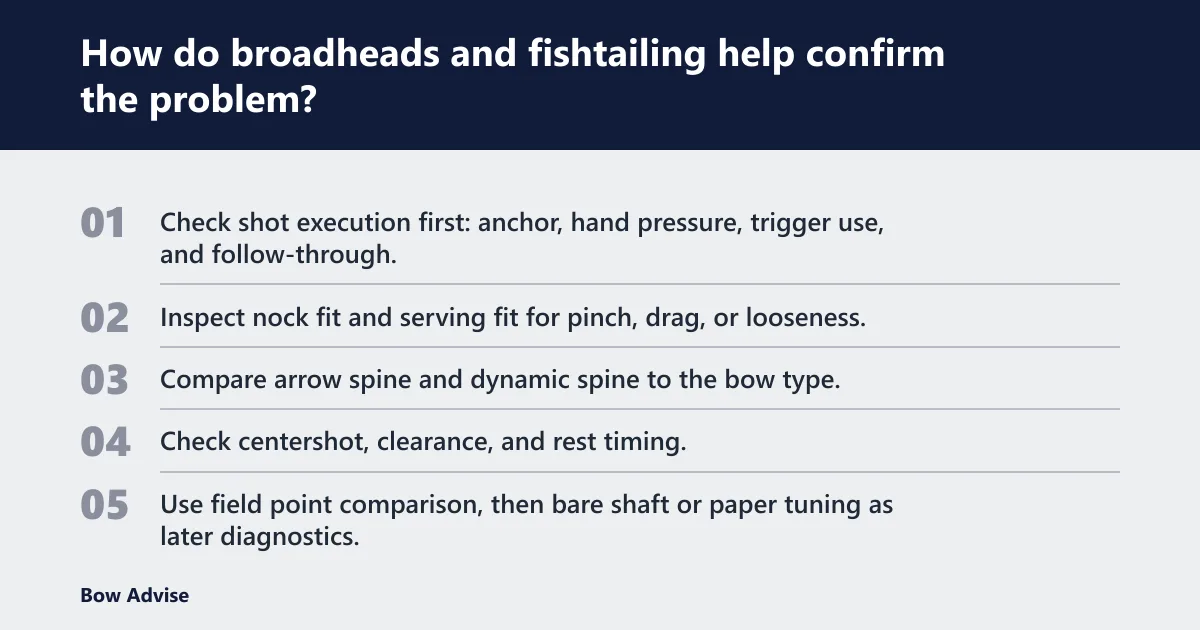
Broadheads and fishtailing help confirm whether the issue is setup or release because they expose small steering errors more clearly than field points. Broadhead tuning can show planing, where the head drives the arrow left or right. Fishtailing shows side-to-side oscillation and rear-of-shaft instability.
If a broadhead and field point strike apart, do not assume the release is the only problem. Check whether the separation persists only at longer distance. If the gap grows with distance, the setup may be reacting to a launch problem or a spine mismatch.
Field point comparison and planing
Field point comparison is useful because it gives a clean baseline. If field points group and broadheads do not, the arrow may be planing. That can come from rest timing, centershot, spine, or a release issue that is still disturbing launch.
Use broadheads later in the process, not first. They are better at confirming a setup issue than at naming the exact cause on their own.
Distance sensitivity and rear-of-shaft instability
Release problems often look worse at short range first, then may settle as distance grows. Setup problems can behave differently, staying consistent or widening as the arrow flies farther. Rear-of-shaft instability often becomes easier to see at 20 yards and beyond.
Picture a compound bow that groups at 7 yards but opens at 30. If the release stays clean and the nock fit is sound, spine or rest timing moves higher on the list. If the hand changes every shot, start back at the release.
- Check shot execution first: anchor, hand pressure, trigger use, and follow-through.
- Inspect nock fit and serving fit for pinch, drag, or looseness.
- Compare arrow spine and dynamic spine to the bow type.
- Check centershot, clearance, and rest timing.
- Use field point comparison, then bare shaft or paper tuning as later diagnostics.
What should I check first when arrows miss the target line?
Start with the shot, not the tune. Check whether the release hand or fingers stayed quiet, whether the bow hand stayed neutral, and whether the anchor was the same. If those pieces change from shot to shot, tuning changes will hide the real issue instead of fixing it.
After that, inspect nock fit. Only then move to arrow spine, rest timing, and broadhead confirmation. This order saves time because it matches how the shot cycle actually creates arrow flight.
How do nock fit and release timing affect arrow flight?
Nock fit and release timing can change the way the string leaves the arrow. A nock that is too tight can hold the string a fraction longer, while one that is too loose can give a sloppy start. Both can look like release mistakes.
Release timing matters because the arrow reacts to the moment the string exits. If the release aid or fingers open while the hand is still moving, the arrow starts with a side load. That side load can mimic spine or rest trouble.
When is bad arrow spine really a release problem?
Bad spine is often blamed too early. If the release hand is plucking, the bow hand is torquing, or anchor pressure changes, the arrow can behave as if the spine is wrong. A clean release is the first filter before any spine call is made.
If the miss stays even after the shot becomes consistent, then spine deserves attention. That is especially true when the same setup produces different results on compound and recurve bows, because dynamic spine sensitivity changes with the bow type.
Frequently asked questions
Why do my arrows go left or right after release?
Left or right misses usually come from release hand movement, bow hand torque, or a setup problem that is being exposed by the shot. The fastest check is to watch whether the string leaves straight and whether the grip stays quiet. If those change, start there before touching tune.
How do I stop release torque from sending arrows off line?
Keep trigger pressure steady, avoid punching, and keep the hand from rotating during the shot. For handheld releases, hold the release in the same part of the palm every time. For wrist-strap triggers, keep the index finger from snapping the trigger face. Consistency matters most.
Can finger release or trigger release cause arrows to fishtail?
Yes. A finger release can pluck or twist the string, and a trigger release can add torque if it is punched or rotated. Either mistake can start rear-of-shaft instability, which shows up as fishtailing. If the arrow wobbles early, check the release before changing the bow.
What release mistakes make a compound bow shoot inconsistently?
Inconsistent anchor, trigger punch, creeping on the trigger, and uneven hand pressure are common causes. A compound bow will also react badly if the release aid changes angle from shot to shot. If groups open only when shot execution changes, the release aid is the first place to inspect.
How do I tell if my release hand is plucking the string?
Plucking usually shows up as a sideways hand motion that pulls away from the string instead of moving straight back or staying relaxed through the shot. At short distance, the arrow may kick sideways and the string may appear to jump off line. Clean follow-through should look quiet and direct.
How do nock fit and release timing affect arrow flight?
Too tight a nock can hold the string and disturb launch, while too loose a nock can shift before the shot. Release timing matters because any late hand movement or early opening changes the angle at string departure. Both can mimic spine or rest issues, so check them early.