Best Bow Accessories for Native Archery (2026): research shows
The best traditional bow accessories for native-style archery are a comfortable shooting glove or tab, quiet string silencers, and properly matched arrows; if you want the biggest gains, buy in that order, with a bow stringer and simple nocking point for setup. Skip the wrong gear and you get sore fingers, noisy shots, and arrows that group poorly even on a well-made bow. I rank accessories by comfort, quietness, and arrow consistency, then I show which ones I add first on a native-style bow.
Quick comparison
| Product | Badge | Best for | Price | ||
|---|---|---|---|---|---|
 | KURUGEILI 12 Pack 125 Grains Archery Traditional BroadheadsKURUGEILI | Our pick | 125 grains · 12-pack · #8-32 screw-in | $11.99 Price as of 1 Oct 2026 | View |
 | Flat Leather String Cord, Suede Ribbon for Jewelry Making,anezus | Also great | $7.99 Price as of 1 Oct 2026 | View |
If you want the short version, start with finger protection, then string silencers, then storage and transport protection. On a native-style bow, the best accessory is the one that fits your draw weight, shooting style, and use, hunting, target shooting, or hanging the bow on a wall.
How we chose
I ranked each accessory by what it changes on the shot first. Comfort matters. Noise matters. Arrow consistency matters more than extra gear that looks traditional and does little.
I also filtered by compatibility with self bows, flatbows, longbows, and one-piece traditional recurves. Lancaster’s categories suggest that much of this gear falls into traditional support, string accessories, carry systems, and protection rather than modern target-only add-ons.
Finally, I kept beginner setups simple. My own first heavy bow taught me a lesson the hard way: I piled on too much at once, flinched on release, and spent weeks undoing my own mistakes.
Finger protection: best for tabs and gloves
Finger protection is the first accessory I buy for most traditional shooters. A tab or glove keeps the string from biting into bare fingers, which makes your release cleaner and your practice longer. If you shoot a native-style bow often, this belongs near the top of the list.
When a finger tab is the better pick
A finger tab is usually the best choice if you want a cleaner string feel and more repeatable release. It works well for split-finger and three-under shooting, and it is easier to size properly than many gloves. I usually steer beginners toward a tab when they want simple consistency and enough protection without losing all string feedback.
Thickness matters more than most new archers think. Too thin, and you still feel pinch or abrasion. Too thick, and you can lose touch with the string and make your release feel mushy. As draw weight goes up, I prefer a little more protection, but not so much that the tab starts hiding the string from your fingers.
When gloves make more sense
Gloves are the better pick when you want full-hand finger coverage and a little more all-around protection. They are common for traditional hunting use because they are fast to wear and they cover the whole hand, not just the drawing fingers. The tradeoff is dexterity. A glove usually gives me less clean string feel than a tab.
If you shoot in cold weather, brush, or wet conditions, gloves can be easier to live with. If you spend most of your time on a target line and want exact finger placement, a tab often feels more precise.
Split-finger vs three-under shooting
Split-finger and three-under both work on native-style bows, but they ask different things from your protection. Split-finger is common for many traditional setups and often pairs well with a tab. Three-under puts more load on the lower fingers, so fit and pressure distribution matter more.
I pay attention to how the tab or glove contacts the string under full draw, not just how it feels at rest. If the leather or synthetic face folds awkwardly, or if the stitching catches, the release gets messy fast.
Shelf protection and arrow support: best for rests and rugs
For most native-style bows, the simplest answer is still the best one: shoot off the shelf or use a very plain rug-style rest. These parts protect the shelf, support the arrow, and keep your setup closer to what traditional bows were built to do. Lancaster groups traditional support gear under Arrow Rests, Plungers & Clickers, and separately lists Traditional Rests & Rugs.
Shoot off the shelf or use a rest
On self bows and many longbows, I prefer either a bare shelf or a thin rug that does not overcomplicate tuning. The more hardware you add, the more you can fight arrow clearance, spine issues, and wear on the bow surface. A simple shelf shot is forgiving when the bow is built for it.
On some one-piece traditional recurves, a low-profile rest can help a beginner get cleaner arrow support without turning the bow into something modern. The key is keeping the contact plain.
How rugs change arrow forgiveness
A traditional rug or shelf protector gives the arrow a softer landing point. The material and thickness matter. A thicker surface can cushion the shaft, but if it is too thick or too grabby, it can make tuning less forgiving and create inconsistent launch behavior from shot to shot.
On a native-style bow, I like the shelf solution to disappear during the shot. If I can feel the arrow dragging or hear it scraping in a loud way, that tells me the rest or rug is part of the problem.
What to avoid on self bows and longbows
Hard, bulky, or overly sticky rests are the wrong fit for many self bows and longbows. They can wear the shelf, change arrow launch, and make a simple bow act more temperamental than it should. I would rather use a plain setup that shoots consistently than a fancy accessory that needs constant attention.
Carry and access: best for quivers
Quivers change more than carry comfort. They affect access, balance, and noise. Lancaster has a dedicated category for hunting carry systems and also distinguishes traditional carry options from other archery accessory categories, which is the right way to think about them on a native-style bow.
Bow-mounted quivers
Bow-mounted quivers are often the most direct choice for hunting. They keep arrows close, fast, and ready. The downside is balance. A quiver mounted on the bow can change the way the bow settles at full draw and may add noise if the hood, hood foam, or arrow grippers are loose.
For target practice, I usually do not want the extra mass on the bow unless I am training exactly as I hunt. If the quiver rattles, it matters more than the convenience it gives you.
Back quivers
Back quivers look traditional and carry a lot of arrows, but they are slower to access and can be awkward from a seated hunting position. They also make quiet arrow removal harder when you need to move carefully. I see them work better as a carry style than as a serious hunting tool.
Belt quivers
Belt quivers sit in the middle. They keep arrows accessible without adding weight to the bow itself. For target shooting, that can be a good compromise. For hunting, they can work well if you are moving on foot and do not want anything hanging off the bow.
Best choice for hunting versus target use
If I had to rank them for hunting, I would usually put bow-mounted first, belt second, and back quiver third. For target use, belt or back is often easier because the bow stays cleaner and quieter in the hand. The best choice depends on whether you value speed, balance, or simple carry.
Quiet and upkeep: best for strings, silencers, wax, and storage
String care is where a lot of traditional bows either feel alive or feel sloppy. Bowstrings affect speed, stretch, and maintenance, and they must match the bow type and brace height setup. Lancaster separates string-related parts into Peep Sights & String Accessories, includes a string-noise category called String Silencers, and offers tools for building and maintaining bowstrings.
String materials and brace height fit
The string material you choose changes how the bow comes off the shot. Some materials feel faster, some stretch more, and some need more careful maintenance. What matters most is matching the string to the bow type and setting brace height where the bow likes it. A bad match gives you more noise, more wear, or a weaker-feeling shot.
On self bows and older traditional builds, I am careful not to force a modern string solution onto wood that wants a softer setup. Fit comes first.
Where silencers help and where they can hurt
String silencers reduce vibration and noise, which is why they are common on hunting traditional bows. They can make a bow sound calmer and feel less sharp in the hand. But placement matters. Put them poorly, and you can shift tune or add wear where the string flexes most.
I like silencers when the bow is going into the woods. I am less concerned with them on a pure target setup if the bow already shoots quietly and the extra material adds clutter.
String keepers and tip protectors
String keepers and tip protectors help with storage, transport, and limb-tip protection. They matter on one-piece bows and take-down bows because loose strings and rough handling can wear the finish or scrape limb tips over time. They are not flashy. They just save damage.
For display-safe storage, these little pieces matter more than most people think. A bow hanging without strain and with the string secured is less likely to get rubbed up by accident.
Bow string wax and routine care
Bow string wax is one of the cheapest habits in traditional archery. It extends string life, helps reduce fraying, and gives some protection from moisture exposure. I treat waxing as routine maintenance, not a fix for a bad string.
If the string looks fuzzy, dry, or exposed in places where it bends a lot, wax should already be in the routine. If the serving is damaged, wax will not save it.
Bow cases and covers
Bow cases and covers protect the limbs, riser, and string during transport. They matter more than people admit because humidity and temperature swings can change how a traditional bow stores and travels. Lancaster lists protection and carry products for bow transport, which is exactly where these items belong in a setup plan.
I use cases to keep a bow from getting knocked around in a truck, leaning in a corner, or picking up grime from other gear. For one-piece bows, a good cover is cheap insurance.
B0F3XCJY42: best for hunting arrow setups
This broadhead set is for archers building hunting arrows for a traditional bow or recurve. Based on the spec sheet and owner feedback, the 125 grain weight and #8-32 screw-in fit make it a practical match for many standard hunting shafts, and the stated CNC-machined tolerance points to more consistent flight than bargain heads with sloppy variation.
What stands out is the straight shooting purpose. If you are tuning a native-style hunting setup, a consistent broadhead matters because poor weight consistency and rough machining can ruin broadhead flight fast. I would treat these as an arrow-side purchase, not a general bow accessory.
The honest drawback is simple: broadheads are not for casual target practice, and they demand tuned arrows. If your bare-shaft tuning is off, these can expose that mistake quickly. They are also specific to screw-in setups, so they will not fit every traditional arrow build.
B0DNJ1SDBV: best for simple string keeper use
This leather cord is the kind of low-cost material I would look at for simple string keeper ties, light protective wraps, or display-safe tie-down projects. Based on the product description, it is not a purpose-built archery part, so I would use it only where a flexible leather cord makes sense and where you can inspect the fit yourself.
What stands out is flexibility. For keeping a string secured during storage or for making a soft, non-metallic tie point, a leather cord can be useful. It is also quiet, which matters if you are trying to avoid hard surfaces rubbing against a bow or string during storage.
The drawback is that it is not an archery-specific accessory. You will need to judge thickness, durability, and abrasion resistance yourself. For actual string keepers, tip protection, or bow transport, a purpose-made accessory is usually the safer first pick.
Native-style bow accessory matrix
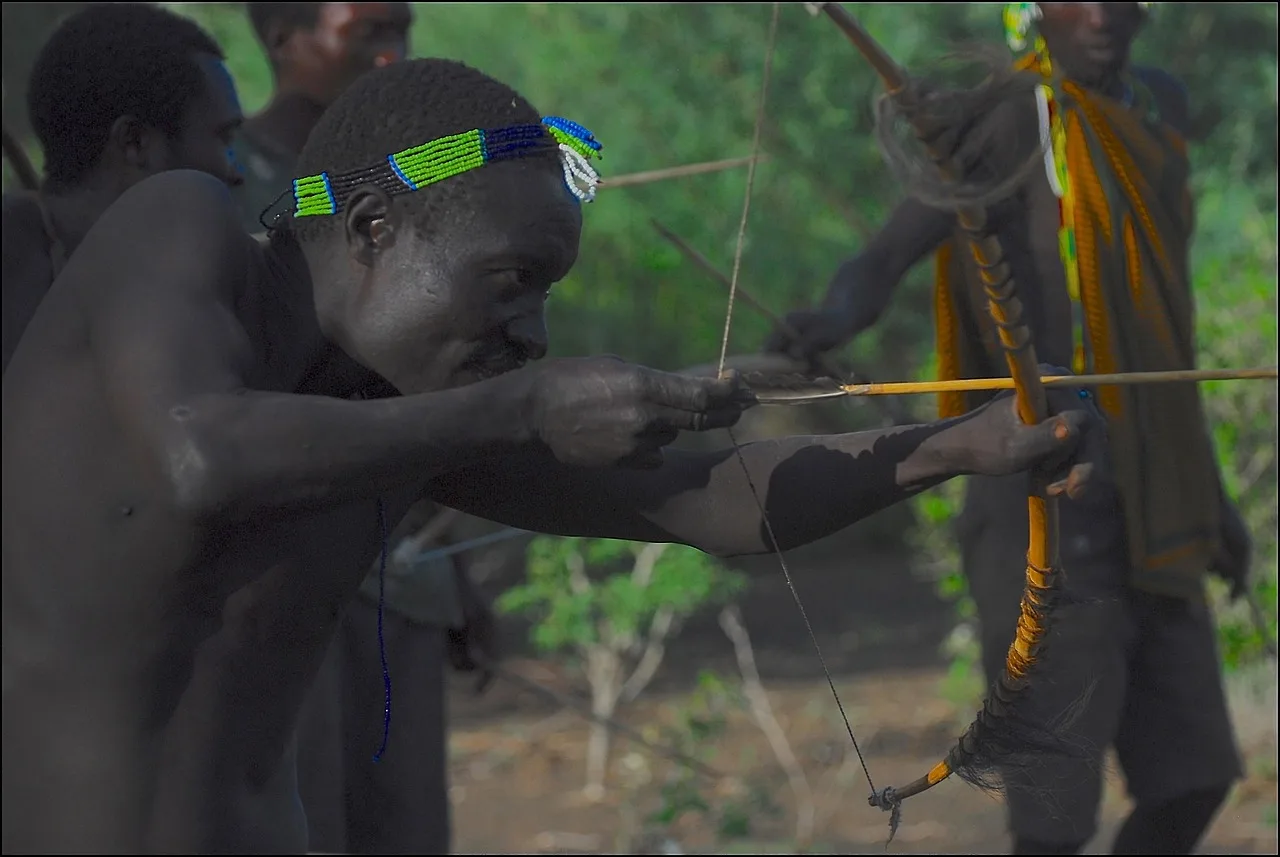
This matrix sorts the common accessories into essential, optional, and situational groups. It is built for native-style bows, not for modern compound habits that do not translate well to self bows, flatbows, longbows, or one-piece traditional recurves.
| Accessory | Use case | Compatibility notes | Common mistakes | Starter priority |
|---|---|---|---|---|
| Finger tab | Protect fingers and improve release consistency | Works well with split-finger and three-under shooting | Too thick, poor fit, stiff leather that folds badly | Essential |
| Glove | Full-hand finger protection for field use | Useful for hunting and cold-weather shooting | Loose fit, reduced dexterity, inconsistent finger feel | Essential for some shooters, optional for others |
| Armguard | Protect forearm from string slap | Important for newer archers and short draws | Fits loose, shifts on the arm, blocks movement | Essential for beginners |
| Traditional rest or rug | Support arrow on the shelf and protect the bow | Best on bows built for shelf use | Too sticky, too thick, bad shelf wear | Essential for some bows, optional for others |
| Quiver | Carry arrows and control access | Bow-mounted, back, or belt styles | Rattling hood, poor balance, slow access | Situational |
| Bowstring | Power transfer and shot feel | Must match bow type and brace height setup | Wrong material, poor serving, bad brace height | Essential |
| String silencers | Reduce noise and vibration | More useful on hunting bows | Poor placement, excess wear, tune changes | Optional |
| String keepers and tip protectors | Storage, transport, limb-tip protection | Useful on one-piece and take-down bows | Leaving strings loose, scraping tips, abrasion | Optional |
| Bow string wax | Routine care and moisture control | Works on most traditional strings | Using wax to hide damage or serving failure | Essential |
| Bow case or cover | Transport protection and weather control | Helpful for one-piece and take-down bows | Leaving bows exposed to heat, cold, and humidity swings | Optional but smart |
Common mistakes and compatibility notes
The biggest mistake is buying everything at once. That usually leads to a cluttered bow and no clear read on what actually improved the shot. Start with finger protection and a safe arrow setup, then add only what solves a real problem.
Another mistake is treating all traditional bows the same. Self bows, flatbows, longbows, and one-piece recurves can want different shelf contact, different string feel, and different amounts of noise control. I always ask what the bow is built to do before I add gear to it.
Beginner starter kits for target, hunting, and display-safe setups
Target starter kit: finger tab, armguard, simple shelf protection or bare shelf if the bow likes it, bow string wax, and a bow case. Add a belt quiver only if you want the arrows off the ground and out of the hand between ends.
Hunting starter kit: glove or tab, armguard, quiet string silencers, hunting quiver, string wax, and bow case. If the bow is tuned for it, keep shelf gear plain and focus on quiet carry and clean arrow flight.
Display-safe starter kit: string keepers or tip protection, bow case or cover, bow string wax, and no unnecessary hardware on the bow. The goal is protection, not performance gear hanging off the limbs.
Which one should you buy
For a beginner, I would buy the fewest pieces that solve the most real problems. A finger tab or glove, an armguard, bow string wax, and a safe way to store the bow cover the basics without turning the setup into a gear project. The best next step depends on whether you shoot targets, hunt, or mostly store the bow.
Best minimalist setup for a beginner
Start with a finger tab if you want crisp release feedback, or a glove if you want more all-around coverage. Add an armguard and string wax. That is enough for most new archers to learn the bow without fighting sore fingers or string slap.
Best setup for hunting
For hunting, I would add a quiet string silencer, a bow-mounted or belt quiver, and a case or cover for transport. If your arrows are tuned, a hunting broadhead option matters too. Keep the rig quiet, plain, and fast to draw.
Best setup for target practice
For target shooting, I would keep the bow light and consistent. Use a tab, armguard, plain shelf support if needed, string wax, and a case. Skip noisy carry gear unless you are training exactly as you hunt.
Best setup for a self bow or longbow
For a self bow or longbow, keep hardware minimal. A well-fit tab or glove, a bare shelf or thin rug, string wax, and a case are usually enough. These bows tend to reward simplicity and punish clutter.
What to skip until later
Skip extra carry gear, heavy rests, and anything that adds noise before you solve comfort and arrow flight. I would also postpone fancy string hardware until the bow is already shooting well. If the basics are not right, more accessories will only hide the problem for a little while.
Frequently asked questions
What are the best traditional bow accessories for native-style archery?
The best accessories are the ones that improve the shot first: a good finger tab or glove, an armguard, string wax, and quiet string silencers if you hunt. After that, add a simple quiver and a case. Most other gear is secondary unless the bow type or use case demands it.
Which accessories do you actually need for a Native American style bow?
You truly need only a few items: finger protection, arm protection, and basic string care. If the bow is stored or carried often, a case or cover helps too. Everything else depends on whether you shoot targets, hunt, or want a display-safe setup.
Do I need a stringer for a traditional recurve or longbow?
Yes, if the bow design calls for one. A stringer helps prevent twisting limbs the wrong way and makes stringing safer and cleaner. I use one on bows that benefit from it, especially when I do not want to stress the limbs or fight the string by hand.
What finger protection is best for shooting a traditional bow?
A tab is usually best for a clean, repeatable release. A glove makes more sense when you want full-hand coverage or you shoot in rough weather. If you use heavier draw weights, fit and thickness matter more, because poor protection changes how the string leaves your fingers.
Should I use a traditional rest or shoot off the shelf?
Use the simplest option the bow likes. Many self bows and longbows do well off the shelf, while some traditional recurves are happier with a plain rug or low-profile rest. If a rest adds noise or shelf wear, I back off and simplify the setup.
Are silencers and dampers worth it on a traditional bow?
Yes, especially on hunting bows. String silencers can cut vibration and make the shot quieter, which matters in the woods. They are less important on a target setup, and poor placement can affect tune, so I add them only when the bow benefits from them.