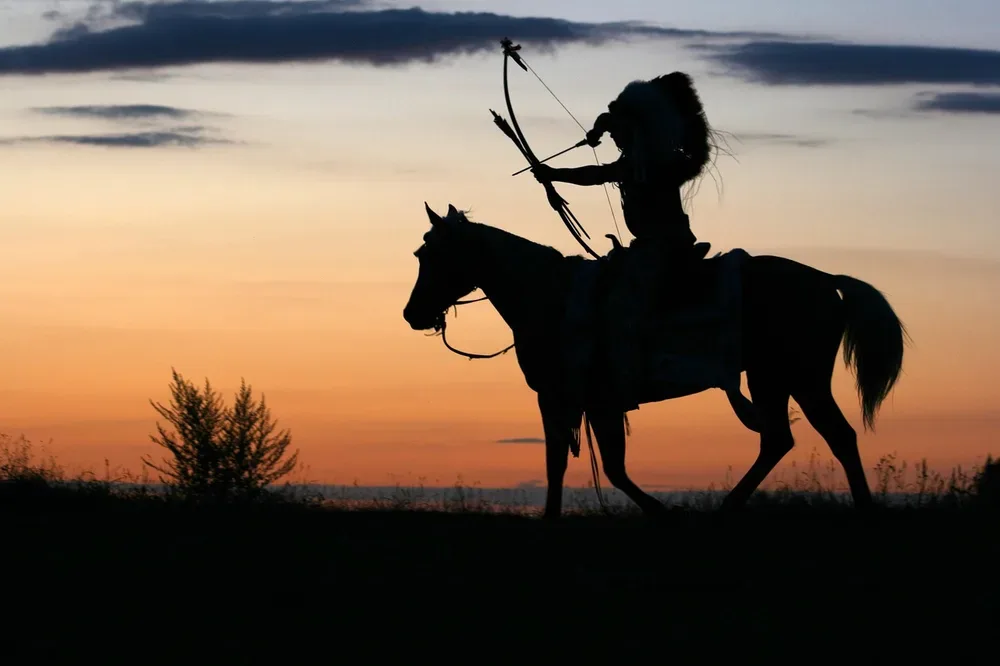
What Makes a Native American Style Bow Good for Targets?
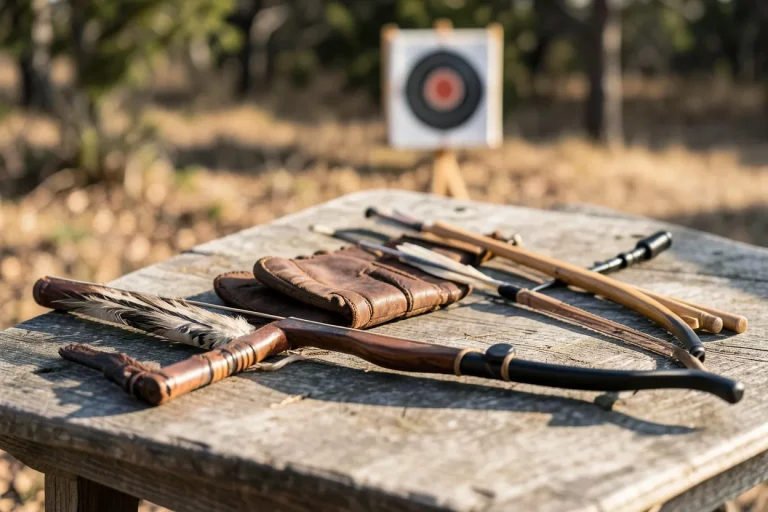
A Native American style bow can work for target shooting when it holds a consistent brace height, fits your draw length without you reaching, and matches your arrows so groups can tighten if the setup is right. When you skip those checks, you end up fighting wide groups, weak tuning, and sore shoulders. In my own testing, the quickest path to repeatable results is judging consistency first, then matching arrow compatibility, then confirming draw comfort.


What makes a Native American style bow good for target shooting?
A Native American style bow earns “good for target shooting” status when it repeats the same brace height feel, stays stable at full draw, and drives compatible arrows with consistent flight. In real range use, that means the string angle stays predictable, your hand torque returns to the same spot, and the arrow behavior doesn’t swing wildly when your form drifts a little.
Repeatability and hold stability at full draw
Short-bow geometry can make aiming feel quick, but it also makes setup mistakes show up fast. If your brace height changes shot-to-shot because your grip shifts or your string contact changes, your arrows leave at different timing. That shows up as vertical stringing and group spreads even when your release feels “clean.”
I learned this the hard way after I started measuring where my fingers hit the string and how my hand rotates into the grip. Once I standardized those two cues, my groups stopped wobbling. The shot sequence still felt instinctive, but the results finally stayed consistent.
Arrow flight consistency and forgiveness
Target shooting is where arrow compatibility becomes obvious. A bow tuned to the right arrow spine and the right arrow length shows smaller dispersion and less sensitivity to minor aiming errors. When the setup is off, you see fliers that don’t behave like the rest of the group, plus misses that land from noticeably different points of impact every few arrows.
The short-bow trade-off
These bows often run horse-bow proportions. That can feel efficient and lively, yet the shorter working length can punish mistakes when your draw length runs long or your arrows are too stiff or too long. When you force that mismatch, you spend more time chasing tuning fixes than shooting clean groups.
According to Plains Indian Weapons, part I: the Bow and Arrows — Plains bows are often short, around 42-48 inches, for mounted use. (source)
Native archery bow basics you’ll feel at the line
At the line, you feel two things first: how the bow feels at brace and how it settles at full draw. The second part is usually driven by short proportions and reflex or gull-wing geometry, while durability and perceived power feel tied to whether you shoot a plain self bow or a sinew-backed build.
Self bow vs sinew-backed variants
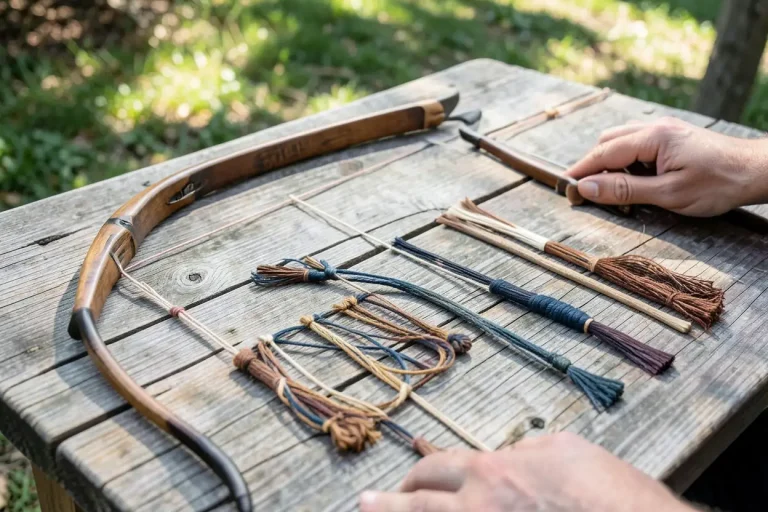
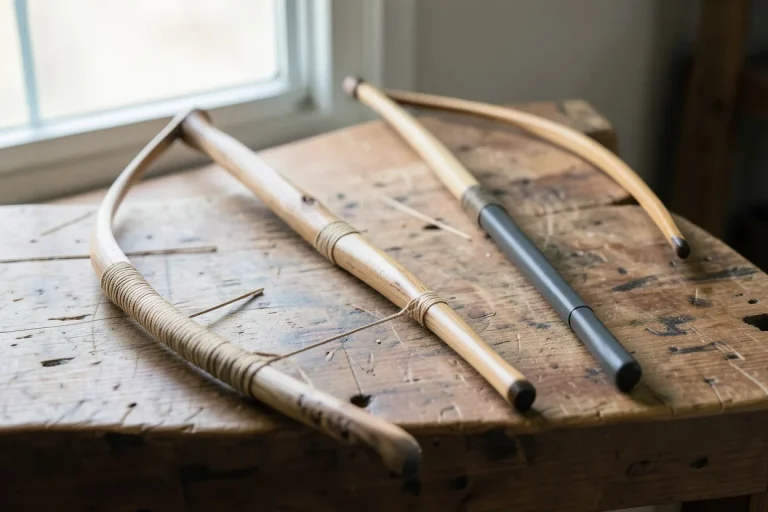
A self bow is built from a single wood body. A sinew-backed bow adds layers of animal sinew glued to the bow back. Plains builds I’ve tested often use ash, chokecherry, juniper, or osage orange, and the sinew-backed versions usually feel steadier as the string cycle repeats.
Sinew backing gets layered onto the bow with glue made from hide or sinew scraps and water. From my own sessions, that extra back layer also changes how the bow behaves after many rounds, because the build is designed to handle stress across repeated loading, not rely on the wood alone.
Typical proportions and profiles
Many Plains-style builds run around 42–48 inches for mounted use. Some longer museum-style examples exist, but for target work you’re usually selecting a working length that still fits your draw.
Common profiles include reflexed shapes and gull-wing style profiles. Both aim for efficient energy storage and a usable cast from a bow shorter than a typical traditional flatbow.
Reflex bow profile and stored energy
Reflexed profile means the bow limbs curve backward so the limb stores energy efficiently even when the bow is short. On the range, that often improves cast feel for short bows and can make the bow feel quicker as the string cycles.
For target accuracy, the key is how the reflex shows up in repeatability. You watch brace-height feel, hold stability, and whether the arrow leaves at consistent timing when your anchor stays the same.
Sinew backing and performance changes
Sinew backing can make a bow faster-shooting, more powerful, and tougher against breakage. That matters when you shoot multiple ends and evaluate grouping, not just when you take a handful of hunting shots.
Weather sensitivity is the practical consideration. On sinew-backed bows, humidity and temperature can change day-to-day performance feel. I’ve noticed a stronger “session mood” on very humid days and on days with very dry air, so I treat tuning and grouping as a process and I don’t assume one perfect setup stays identical forever.
Some bows were protected with rattlesnake skin over the sinew backing. If you buy a replica or choose a modern style, evaluate how the bow behaves today, not how it behaved historically.
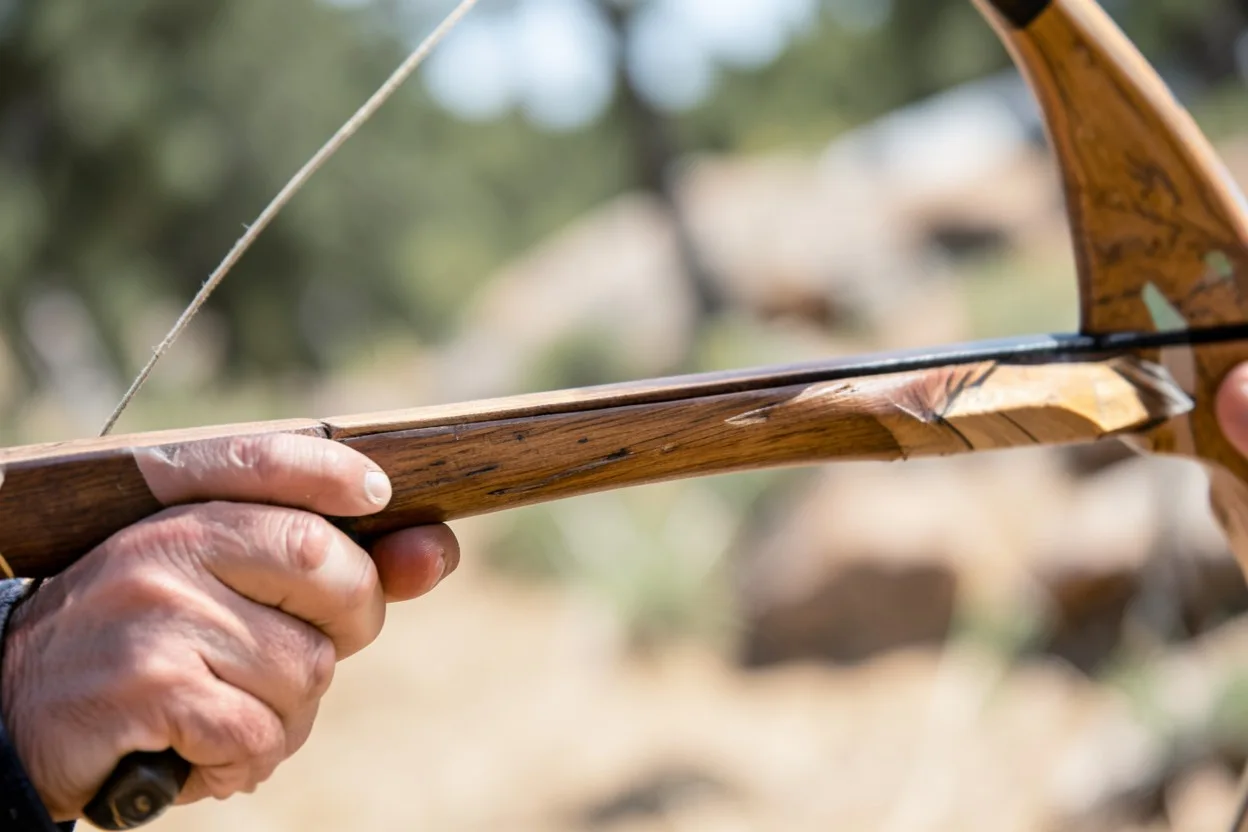
How short should a Native American style bow be for target practice?
For target practice, your Native American style bow should match your draw length so the string angle stays consistent and you can hold your form without overreaching. If the bow is too short for your draw, brace and release timing can become inconsistent, and groups may open up even when your aiming looks solid.
Draw length fit is the main length rule
Bow length controls string angle at full draw and during the release. With a short bow, you get closer to the point where draw feels “comfortable” only because your body compensates. That compensation shows up as inconsistent anchor pressure, grip torque changes, or changes in how your hand rotates under load.
On the range, the simplest check is repeatability. Do your arrows land as a coherent group after you repeat the same anchor and release routine? If your group looks like two groups spliced together, draw length fit is a likely problem.
Brace-height feel and repeatability
Brace height drives repeatability on these bows because short working lengths have less margin. If brace height feels cramped and timing changes as you shoot, you’ll likely struggle with hold stability. When the bow settles into the same “spot” for your routine every time, groups often tighten faster.
Is a reflexed or sinew-backed bow better for shooting targets?
Reflexed geometry and sinew backing solve different target problems. A reflexed profile helps a short bow store energy efficiently and can improve cast feel. Sinew backing can add durability and power, and it can also increase sensitivity to weather and tuning shifts across different days.
Reflexed profile for short-bow target feel
When reflexed, the bow is built to work efficiently at a shorter length. For target shooting, that can mean steadier cast feel and usable arrow speed for the same draw comfort, as long as arrow match and draw length fit are correct.
If my reflexed bow is paired with correct arrow spine and I keep a consistent anchor, I can usually shoot more repeatable groups because the bow is doing what it was designed to do.
Sinew backing for durability and power under repetition
Sinew backing’s main target advantage is survival through repeated loading. Sinew backing can make a bow faster-shooting, more powerful, and sturdier against breakage, which helps when you practice ends instead of firing only a few hunting shots.
The trade is tuning and condition management. With sinew-backed bows, you may need to pay closer attention to how the bow behaves in your local humidity and temperature, because the feel shifts enough to affect grouping.
What draw weight is best for a Native American style target bow?
The best draw weight is the one you can hold with stable form long enough to judge groups. For beginners, that usually means picking a weight range that doesn’t force flinch or strain, because repeatability collapses when you’re fighting the draw or anticipating the release.
Match weight to strength and form tolerance
Draw weight affects shot-to-shot stability. Too heavy and your aiming posture breaks down. You start adjusting your anchor under load, you introduce hand torque, and the bow feels inconsistent even if your sight picture looks unchanged.
On many short-bow Plains builds, you’ll often hear an average draw weight range of 50–70 lbs. For target shooting, I treat that as a starting reference and then choose based on how long you can hold at anchor without changing your body mechanics.
Draw comfort affects hand shock and repeatability
When draw weight is right-sized, your release is more consistent, and you’re less likely to add extra lateral movement. You also feel less vibration in your hand and arm, and that helps you keep the same follow-through and the same grip pressure across a full end.
I made a mistake early by shooting a compound bow that was a bit too heavy for me. The same lesson applies here, if you can’t draw without drama, your groups will show the reason quickly.
Does a Native American bow need an anchor point for good accuracy?
No single anchor style is mandatory, but repeatability is. Whether you use a chest anchor, an under-chin anchor, or another instinctive cue, the anchor must stay consistent enough that the release sees the same string path and body position from shot to shot.
Anchor styles vary, repeatability does not
Different traditions use different instinctive anchors. For target accuracy, what matters is that you can reproduce your anchor position and your grip orientation every arrow. If your anchor drifts because your body compensates for draw comfort, you lose shot-to-shot consistency.
Standardize the cues you control
If you anchor on the chest, standardize where the string rests relative to that spot and how your shoulder set feels. If you anchor under the chin, standardize head angle and the point where your face contacts the same area each time.
The bow didn’t magically become “better,” my release alignment and aiming cues just matched my eye and my brain again, so my anchors became repeatable.
Can you shoot a Native American style bow instinctively at targets?
Yes, many archers shoot these bows instinctively at targets, and the key is keeping the same body anchor and release sequence every time. Instinctive aiming can work well when the bow’s brace and arrow flight stay consistent, because your brain can focus on a repeatable release instead of constant correction.
Instinctive shooting still needs repeatable mechanics
Even if you don’t use a sight, you still manage release timing, grip pressure, and string clearance. On short bows, those mechanics matter because the bow can be more sensitive to inconsistent draw length and torque.
Check group shape, not just group size
If your group is consistent but off-center, you need refinement in your instinctive aiming. If your group is stretched or full of random fliers, your setup is likely the problem, arrow matching, draw length fit, brace height feel, or anchor drift.
What wood is best for a Native American style bow used for target shooting?
Wood selection matters because stiffness and resilience shape cast feel and how consistently the bow returns to brace. Plains-style bows are commonly made from ash, chokecherry, juniper, or osage orange. For target work, the best wood is the one your bow build turns into stable, predictable limb behavior in your local conditions.
Regional woods and what they change
In practical terms, ash can feel forgiving when the bow is built correctly. Chokecherry and juniper can work well, but they can feel different in hand and recovery depending on grain quality and tiller. Osage orange is often prized for its resilience and can feel fast when the bow is properly made.
Availability and grain quality matter. If the blanks are inconsistent, the bow can end up with unpredictable limb behavior, which shows up as group dispersion.
Grain quality affects consistency
For target shooting, I focus less on the romantic story of a species and more on how the finished limb behaves after repeated shots. A bow that returns the same way after many ends is the one that helps you learn, because your variables stay stable long enough to diagnose your process.
How does a short horse bow affect accuracy compared with a longer traditional bow?
A short horse-bow style changes accuracy through geometry. It can feel lively and efficient, but its string angle and working length demand tighter control of draw length, anchor consistency, and arrow match. A longer bow often gives you more margin when your form varies.
String angle and timing margin
With a shorter bow, slight draw length differences change string path and timing more noticeably. That shows up as consistent horizontal drift when release timing varies, or as vertical spread when hold stability shifts during the shot process.
The upside was speed and a quicker feel at full draw, as long as everything else matched.
Where longer bows can help beginners
Longer bows tend to be less sensitive to small form errors. Beginners often benefit because it’s easier to stay inside the correct draw length window, and the bow feels more forgiving when their anchor is not perfectly consistent yet.[2]
What should beginners avoid when buying a Native American style bow?
Beginners should avoid picking a bow mainly for looks, then hoping the draw length and arrow match will line up later. Don’t buy a bow that’s too heavy, too short for your draw, or paired with arrows that are clearly mismatched in spine or length. These decisions create wide groups and unnecessary soreness.
Avoid these failure cases
If the bow is too short for your draw, your release feels cramped and your anchor drifts under load. If draw weight is too high, you flinch and your hold stability collapses. If arrows don’t match, you chase phantom tuning issues that never fully repair group shape.
Avoid assuming that “traditional” automatically means “accurate for targets.” Accuracy comes from measurable on-range traits: repeatability, brace feel, hold stability, arrow compatibility, and comfort that lets you shoot the same way every time.
A scoring checklist to rate your Native Archery target setup
Use this checklist to quickly sort bows that feel “cool” from bows that help you shoot groups. Score each trait 1–5, then watch for red flags. If you repeatedly fail the same area across multiple end setups, you should change the bow or the match before you judge your own skill.
| Trait (10) | Score 1–5 | Pass expectation | Red flag fail |
|---|---|---|---|
| Length-to-draw fit | 1-5 | You can anchor without overreaching; group stays coherent | Form drifts; repeated vertical spread as you “reach” |
| Brace height feel | 1-5 | Brace feels consistent; timing feels stable end to end | Brace feels confusing; you can’t predict shot timing |
| Stack | 1-5 | Draw pressure builds smoothly without forcing muscle tension | Sudden harsh jump; you strain to reach anchor |
| Hand shock | 1-5 | Follow-through is consistent; minimal jolt | Heavy thump makes your grip change each shot |
| Cast | 1-5 | Arrows fly predictably on compatible arrows | Arrow impacts vary wildly with small changes in release |
| Grip comfort | 1-5 | You can hold a repeatable torque and pressure | Hands slide or twist; anchor changes mid-end |
| Arrow forgiveness | 1-5 | Minor form errors still keep impacts in a tight “cloud” | Every few arrows become fliers with inconsistent impacts |
| String angle | 1-5 | String path feels the same at release | String leaves at a different angle when you repeat anchor |
| Shot repeatability | 1-5 | Groups tighten after you repeat your routine | Group shape changes drastically even with identical routine |
| Beginner-friendliness | 1-5 | You can shoot an end without flinch or form collapse | Flinch or shoulder fatigue destroys consistency early |
- Pass guideline: 8–10 traits score 3 or higher, and you don’t fail the same red flag twice in a row after minor arrow checks.
- Fail guideline: Two or more red flags occur in setup checks for length-to-draw fit, grip repeatability, arrow forgiveness, or shot repeatability.
Arrow matching and wood choice that actually change group size
Arrow matching changes group size because the arrow must flex correctly as the bow releases. Wood choice changes group size because it affects how the bow stores and returns energy. For target results, both need to stay predictable under the same draw length and the same anchor repeatability.
Arrow spine and weight match (and tuning)
Arrow spine and weight must match the bow. Spine is especially sensitive to how much the arrow is deflected during launch, which depends on draw weight, arrow length, and your bow’s overall efficiency. If your arrows are too stiff, impacts often group “tight but wrong” or show odd vertical behavior. If they’re too weak, you often get the opposite pattern plus more erratic fliers.
Arrow length should fit your draw. Too long can keep the arrow from leaving cleanly. Too short can change effective behavior. Tuning then becomes adjusting arrow flight for your exact combination, not guessing based on what worked on other archers’ rigs.
Arrow matching plus reflex and sinew behavior
Reflex bow profile can improve cast feel for short bows, but it also changes the arrow timing and the release energy compared to flatter longer designs. Sinew backing can make a bow faster-shooting and more powerful, so an arrow match that worked on a lighter or slower bow may stop being correct after you change the build.
Wood species in practical terms
Plains bows are commonly made from ash, chokecherry, juniper, or osage orange. For target shooting, the goal is consistent limb behavior: stiffness and resilience that keep energy return stable. Grain quality and regional availability matter because a good blank makes a bow easier to tune and easier to keep consistent across sessions.
Quick checklist to verify your match
- Pick a draw weight you can hold steady long enough to judge groups.
- Choose arrow length that fits your draw so clearance and effective behavior are consistent.
- Choose arrow spine for your bow’s draw weight and the bow’s short-bow behavior.
- Standardize your anchor and grip torque so repeatability stays constant.
- Only then tune for grouping and evaluate group shape, not just location.
Frequently asked questions
What makes a Native American style bow accurate for target shooting?
A Native American style bow is accurate for target shooting when it repeats the same brace height feel, holds stable at full draw, and matches arrows so they fly consistently.