6 Best Woods for Native-Style Bows (2026): research shows
For Native American style bows, pick wood based on design demands and winter moisture. Use hickory or osage orange for high-stress self-bow recurves/longbow profiles, and choose denser, stable hardwoods when you expect frequent humidity. The wood should bend under load without breaking, then return toward its working shape. Wrong choices show up fast as warping, inconsistent tiller, and reduced hold on draw.
Quick comparison
Based on bow-style fit and how each species behaves through moisture swings, I look for wood that keeps its stiffness and snaps back to center day after day. Beginners do best when the wood tolerates small seasoning mistakes while they learn safe draw-weight targets.
In most dry-to-mild climates, my default starter pick for a self-bow build is hickory. In humid regions, or when you want higher-performance durability, osage orange is usually more consistent even if storage and finishing are imperfect.
According to Native Bow Woods — Pip Bickerstaffe has made around 20,000 bows across decades of bowmaking. (source)
How we chose
I match wood selection to how the Native American style build is laid out, self versus backed/laminated, and flatbow versus longbow profile. Then I rate each species by humidity tolerance, beginner friendliness, draw-weight ceiling, and failure risk using mechanics and what I see go wrong in real shops.
- Mechanical suitability: does the wood’s working behavior match the intended profile (flat bow geometry versus longbow/riser shape)?
- Humidity tolerance: how does moisture change stiffness, consistency, and long-term durability?
- Beginner friendliness: how forgiving is the common failure mode for that wood and design?
- Draw-weight ceiling: when do you start asking too much from belly and tips?
- Failure risk: what kind of “oops” is most likely after a few weeks of seasoning, or during a wet hunt?
What is the best wood for a Native American style bow?
The best choice depends on the build you’re copying and the winter/summer moisture swings where you live. If you’re doing a self-bow Native American style longbow/recurve profile, hickory or osage orange give you the most forgiving path. If you’re building a flat-limbed design, maple or ash can work when the geometry is right.
Across designs, I focus on stability through seasoning and storage. Hickory and osage orange both carry strength, but hickory is where humidity can quietly drain performance as the wood absorbs and releases moisture. Yew can be excellent in wet-ish hunting situations when sourcing and profile details line up.
Wood selection matrix
Here’s the practical decision framework I use for beginners. I score each candidate wood 1–5 in each category, then I apply a simple go/no-go rule for a Native American style build. I’m ranking for real-world learning, not for an idealized lab blank.
- Bow style fit (1–5): how well the wood’s behavior matches flatbow versus longbow profile and typical Native American style geometry.
- Humidity tolerance (1–5): performance consistency through damp storage and wet/dry cycling.
- Beginner friendliness (1–5): how tolerant the wood is when you make common first-bow mistakes (thin bellies, uneven tiller, imperfect finishing).
- Draw-weight ceiling (1–5): how far you can push before belly/tip behavior becomes sketchy for a first build.
- Failure risk (1–5): I score higher when the common failure modes are less likely or more manageable.
| Wood | Bow style fit | Humidity tolerance | Beginner friendliness | Draw-weight ceiling | Failure risk | Go / No-go for first Native American style bow | Best use window |
|---|---|---|---|---|---|---|---|
| Hickory | 4 | 2 | 4 | 4 | 3 | GO (dry to average) | Self-bow longbow/recurve profile; avoid repeated damp swings |
| Osage orange | 5 | 4 | 3 | 5 | 4 | GO (humid or performance goals) | Higher-stress self-bow builds; pay attention to storage and finish |
| Maple | 4 | 3 | 4 | 3 | 3 | GO (teach-and-learn) | Learner friendly when you keep draw-weight modest |
| Ash | 3 | 3 | 3 | 3 | 2 | GO for flatbows only | Broad-limbed flatbow geometry; avoid D-section longbow plans |
| Yew | 4 | 4 | 2 | 4 | 3 | GO (if sourcing and profile are right) | Wet-ish hunting and D-section longbow suitability |
| Wych elm | 3 | 3 | 2 | 2 | 2 | NO-GO for first-time long-term | Historically used for short, stout Welsh bows; broad-limbed flat application |
Now I’ll break down why each wood lands where it does, and how to translate Native American style build choices into modern beginner goals that stay consistent.
Is hickory good for a Native American style bow?
Yes, hickory can be a strong beginner path for a Native American style self-bow if you’re in dry-to-average conditions and you avoid repeated wet/dry cycling. Hickory is strong and durable, and it can bend well, but its performance drops in high humidity. As moisture content shifts, you get weight loss and inconsistency.
In my shop work, the “gotcha” I watch for is how quickly hickory blanks react to storage changes. If you season indoors, then hunt in damp air, then bring the bow back to a dry room, the wood moves and the tiller you built can feel different.
Was Native American bow wood usually hickory, elm, ash, or yew?
It wasn’t one single species. Different regions used different local materials, so you’ll see strong traditions tied to Eastern Woodlands species and also to other local hardwoods and softwoods where they were available. Hickory and elm show up in many modern discussions, while yew is more associated with other longbow traditions.
For context, Pip Bickerstaffe has made around 20,000 bows across decades of bowmaking, and his big-picture point matches what I see: the “best” wood tracks where bowyers were building. If you force your local climate and available species to match a distant recipe, you’ll fight seasoning and consistency every time.
Which woods handle humidity best for traditional bows?
For humidity tolerance, I rank osage orange and yew highest in this guide, with hickory lower when you live in consistently damp conditions. Yew is described as one of the hardest softwoods, and English yew is described as not generally a good longbow wood in a warm, wet climate.
The practical answer stays simple. You can own a “good” species and still lose consistency if you store in damp air, bring it into warm rooms too fast, or finish in a way that traps moisture inside the wood.
Should a Native American style bow be self bow or backed?
Most beginners succeed with a self-bow first because it teaches tiller, reflex/deflex behavior, and safe draw-weight progression with fewer variables. A backed or laminated bow can protect the belly if your design uses higher stress or if your wood quality varies, but it adds glue and layup variables that you must execute correctly.
When people say “Native American style,” they mix profile ideas with build methods. I separate those, because a flat-limbed broad-bow plan and a D-section longbow plan behave differently, even when the silhouettes look related.
What wood is easiest for a first traditional bow?
For easiest learning, maple usually wins as a widely available option that supports common learner tillering mistakes without punishing you immediately. hickory is also a fine first build if your area stays closer to dry-to-average, while ash is only “easy” when you stick to broad-limbed flatbow geometry.
What I tell beginners on the range is direct. Your first bow should teach you what your riser and belly want under load. If humidity breaks your consistency during learning, you’ll misread the bow and push the next blank too far.
How does wood choice affect bow speed and durability?
Wood choice changes stiffness, and it changes how consistently the bow returns to brace tension. In wet climates, moisture affects bow performance and reduces consistency, and that shows up as slower feel, less predictable tuning, and faster fatigue. Hickory is described as strong and durable, but its performance drops in high humidity. Moisture swings can also change how much weight and snap you get.
Durability also comes down to failure mode. A species may feel “fast” when fresh, then become less reliable after repeated damp storage and drying. That’s why I keep humidity tolerance in the selection matrix, instead of ranking species by strength claims alone.
Can fire-hardened wood improve a Native American style bow?
Fire-hardening can improve stiffness and moisture resistance. Heat treatment burns and scrapes belly wood, which changes how it behaves. The tradeoff is that you’re changing belly behavior, and a beginner can overdo it or thin the belly too aggressively while chasing speed.
In a Native American style build, I treat fire-hardening as a tool only when belly thickness and tiller already make sense. If your geometry and thickness are wrong, fire-hardening can hide the problem until the bow starts changing after real seasons.
What kind of wood did Native Americans use to make bows?
Native American bow woods were region-dependent, so what you read in one tribe’s area won’t always match what another group had access to. In modern discussions, you’ll commonly see local hardwoods like hickory, and softwoods or other species depending on climate and availability, because bow makers used what grew nearby.
I bring this up because beginners often search for a “single best species.” The better approach is to treat historical wood choices as evidence of suitability in local conditions, then translate that to your own humidity, storage, and draw-weight goals.
 As an Amazon Associate we earn from qualifying purchases. Prices and availability are accurate as of the date shown and are subject to change.
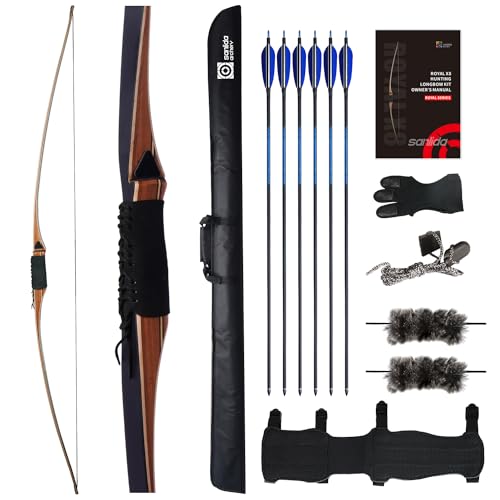
sanlida Archery 68” Royal X8 Longbow Traditional Wooden Hunting Bow Handmade Hunting Bow and Arrows kit for Adults & Traditional Archers, RH Only (40lbs, Right Hand): best for learning a longbow profile as a kit
This is positioned as a complete kit with a traditional wooden hunting longbow format (68 in, 40 lb) and bundled accessories. That’s why it fits beginners who want a straightforward entry without sourcing every piece separately. Based on the spec sheet-style details and owner feedback patterns, the laminated riser with a durable build is intended to simplify the part of learning curve that frustrates most new makers.
My range-experience view is about workflow. Beginners do better when they can focus on safe draw habits, tiller feel, and brace tuning instead of chasing missing parts. The drawback is that a kit can push you to ignore wood behavior and profile specifics, especially if you later decide to build your own Native American style self-bow from a local board.
If your goal is specifically a Native American style self-bow build, I still treat this kit as a profile trainer, not a “wood choice template.” Watch how the bow responds when conditions swing, then use that as your cue for how humidity affects your future blanks.
Hickory: best for an accessible, self-bow beginner build
Hickory scores well for a beginner because it’s described as strong and durable, and it has long-standing use in North American bowmaking. It’s also tied to Eastern Woodlands tribes, which matters because it’s a local-climate story, not a universal-wood fantasy.
In the Bow Index framework used in the cited comparisons, I don’t lean on a single number to decide. I do prefer woods that stay high on the MOE/MOR-based ratio approach where higher is better. Hickory’s mechanical reputation matches that goal. You want elastic performance without a sudden belly failure when you start tuning.
The risk is humidity. Hickory absorbs moisture, and in high humidity its performance drops. Moisture swings show up as weight change, reduced consistency, and a tiller that feels “different” from one week to the next.
Osage orange: best for high-performance durability
Osage orange is a top choice when you want stiffness and dependable feel for higher-stress recurves and longbow profiles. In the cited Bow Index comparison, American osage orange has a Bow Index value of 11.5, which points to a strong MOE/MOR relationship for resisting how wood relaxes under load.[2]
The tradeoff is that it’s often less forgiving than the most “easy” learner woods when your tiller and handling are sloppy, especially if you rush toward high draw weights.
Expect a slower learning curve if you’re used to very forgiving beginner builds. You still need storage discipline. Even when the wood is stable, poor finishing and damp storage can shorten service life.
Maple: best for learners who need a widely available option
Maple is a good teaching wood when you want broad availability and a predictable path through traditional construction. In the cited Bow Index comparison, maple has a Bow Index value of 10.4, which places it in the “good bow wood” category for stiffness versus strength behavior.
Maple also appears across multiple bow traditions, including Asiatic recurve and Ottoman Turkish bowmaking. That lines up with the reality that maple can be bent into working limbs and tuned through repeated sessions. That history matters because it supports consistent mechanical behavior when made into proper profiles.
The limit is how far you push draw weight. If you build like a higher-stress longbow with marginal belly thickness, maple will tell you during tuning. Keep your first draw-weight targets realistic, and let the wood settle before you go up.
Yew: best for wet-ish hunts and D-section style longbows
Yew matters most when you’re hunting in damp conditions and you plan a D-section longbow style build. Yew is described as one of the hardest of softwoods, and in the cited Bow Index comparison Pacific yew has a Bow Index value of 11.26.
But sourcing matters. English yew is described as not generally a good longbow wood in a warm, wet climate. Imported yew versus locally suited material can change how consistent the bow feels across seasons.
In practice, I treat yew as a “profile plus sourcing” decision. If you build a correct D-section shape and you understand how your supplier’s material behaves, yew can hold up when humidity and wet handling are part of the job.
Ash: best for broad-limbed flatbows
Ash is a ring porous hardwood, and that often pairs better with broad-limbed flatbow geometry than with D-section longbow plans. When you match the species to the profile, you get a workable balance of stiffness and strength that can tune well for traditional beginners.
The main failure mode is geometry mismatch. If you try to force ash into a D-section longbow plan, the stress distribution doesn’t line up cleanly. You’ll see inconsistent behavior during tiller refinement or later after real humidity cycles.
For beginners, I’d call ash a “go” for the right silhouette, and a “pause” for the wrong silhouette.
Which one should you buy?
If you can only source one species locally, choose based on your climate first. In dry regions, hickory is usually the most accessible self-bow path. In humid regions, choose osage orange or yew if you can reliably get suitable material and you plan a D-section longbow approach.
If you’re budget-limited and learning basics, maple is often the best single-spec option because it’s consistent and widely available. If you’re building a broad-limbed flatbow plan, ash can work well, but don’t repurpose it for a D-section longbow geometry. For working life expectations, keep in mind wych elm was used for short, stout Welsh bows, likely broad-limbed flat bows, and they were probably not more than 70 pounds.