How to Check If Your Compound Bow Is Tuned
A compound bow is tune-ready for broadheads if paper tear is clean, field-point impact is close enough to compare reliably, and cam timing is correct; if not, fix the setup before broadhead testing. A poor tune can send broadheads several inches off target, waste arrows, and hide setup problems that get worse at hunting distance.
This guide is part of our Archery basics: beginner guide to bows and shooting series.
What you’ll need


- Bow square for nocking point and basic reference checks
- Paper or butcher paper stretched taut over a frame
- Allen keys for rest and accessory adjustments
- Serving tool for minor serving corrections
- Marker or tape for marking reference positions
- Target, field points, and broadheads for comparison shots
- Optional draw board for cam timing checks
- Bow press only if string, cable, or cam work is needed
Broadhead readiness checklist table
| Check | Acceptable result | Red-flag result | Likely fix | DIY or pro-shop |
|---|---|---|---|---|
| Paper tear type | Bullet hole or close to it | Clear left, right, high, or low tear | Adjust rest or nocking point, then re-shoot | DIY |
| Cam timing | Both cams hit the stops at the same time | One cam reaches the stop early | Twist cables or correct timing on a draw board | DIY if simple; pro-shop if press work is needed |
| Center shot | Start near 13/16 to 7/8 inch from the riser | Rest clearly off that lane | Reset rest to the starting reference | DIY |
| Nocking point height | About 1/8 inch above level to start | Nock sits too high or too low | Move in small steps with a bow square | DIY |
| Rest alignment | Arrow tracks cleanly through paper and at distance | Horizontal tear or broadhead drift | Move rest in small changes, often 1/32 inch | DIY |
| String condition | Serving is intact, peep is stable, cams track cleanly | Separation, damaged serving, or peep rotation | Repair or replace strings and serving | Pro-shop |
| Field-point vs broadhead impact consistency | Impacts stay close enough to confirm the setup is consistent | Broadheads print noticeably away from field points | Recheck rest, nocking point, timing, and spine | DIY first; pro-shop if the pattern stays inconsistent |
Step-by-step check
- Inspect strings, cables, peep alignment, and cam tracks before touching tune settings.
- Set center shot by looking down the string and starting near 13/16 to 7/8 inch from the riser.
- Set the nocking point about 1/8 inch above level, then verify it with a bow square.
- Paper tune at about 6 feet with paper or butcher paper stretched taut, then read the tear direction, not the sight pin.
- Check cam timing at full draw or on a draw board and confirm both cams hit the stops at the same time.
- Shoot field points first, then compare broadhead impacts to that baseline.
- Make one change only, then re-shoot the same test sequence.
How do I know if my compound bow is tuned for broadheads?
The quickest pass mark is a clean paper hole, correct cam timing, and field-point impacts that stay close enough to compare with broadheads. That does not mean the bow is perfect in every condition. It means the setup is ready for broadhead testing without obvious left-right or timing errors hiding in the system.
Fixed blade broadheads are less forgiving than field points and often expose weak or stiff spine issues. Mechanical heads can still reveal setup problems if the rest or timing is off, so a clean paper tear is a starting point, not the finish line.
What paper tune tear means my bow is out of tune?
A tear that points left, right, high, or low means the arrow is leaving the bow in a way that needs correction before broadhead work. A clean bullet hole is the pass mark. A right tear can point to a stiff arrow or a rest set too far right, while a left tear can point to a weak arrow or a rest set too far left.
Start with the rest and nocking point before blaming the arrow. If the tear stays the same after a small rest move, the spine or cam timing deserves a closer look.
If the tear is horizontal, try this next
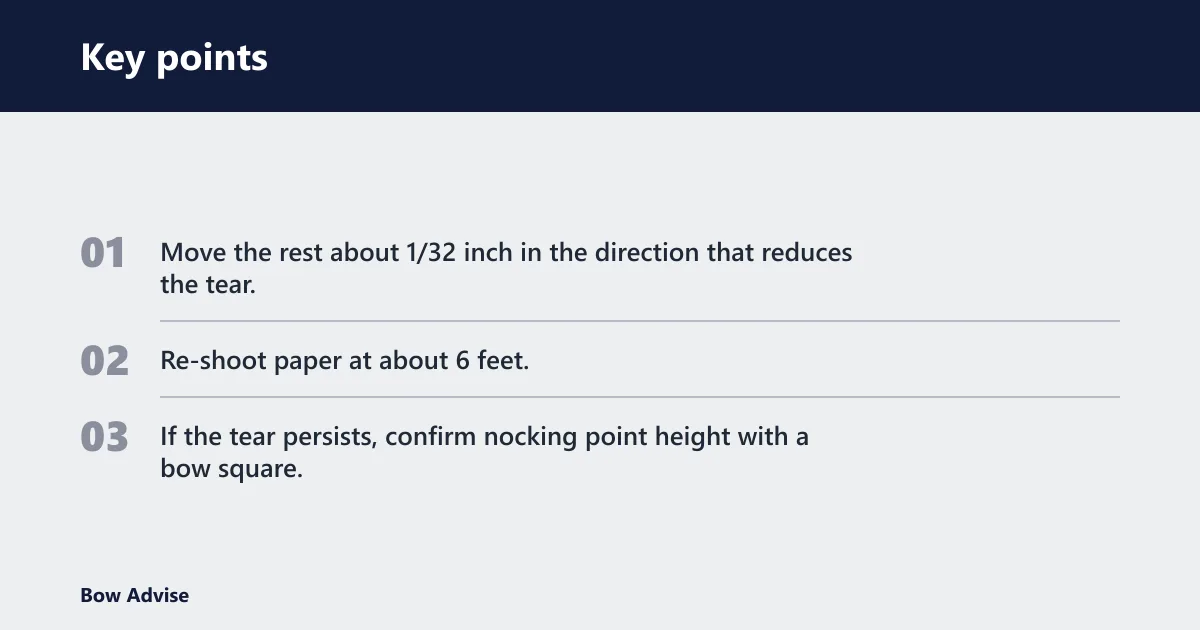
- Move the rest about 1/32 inch in the direction that reduces the tear.
- Re-shoot paper at about 6 feet.
- If the tear persists, confirm nocking point height with a bow square.
Should I tune for field points or broadheads first?
Tune with field points first. They give the initial baseline, and they are the comparison shot for broadheads later. If field points are not grouping predictably, broadhead testing only adds noise. The order matters because broadhead impact can expose issues that were already there.
Once field points are close and paper tears are clean, broadheads become the final validation step. That sequence makes setup problems easier to separate from sight adjustments.
What is center shot on a compound bow?
Center shot is the starting left-right position of the arrow relative to the riser. A common starting reference is 13/16 to 7/8 inch from the riser, with the arrow lined up by looking down the string. That gives the rest a proper baseline before paper tuning begins.
Do not treat center shot as a final answer. It is the reference that lets the rest and spine behave predictably during the first paper test.
How do I check cam timing before shooting broadheads?
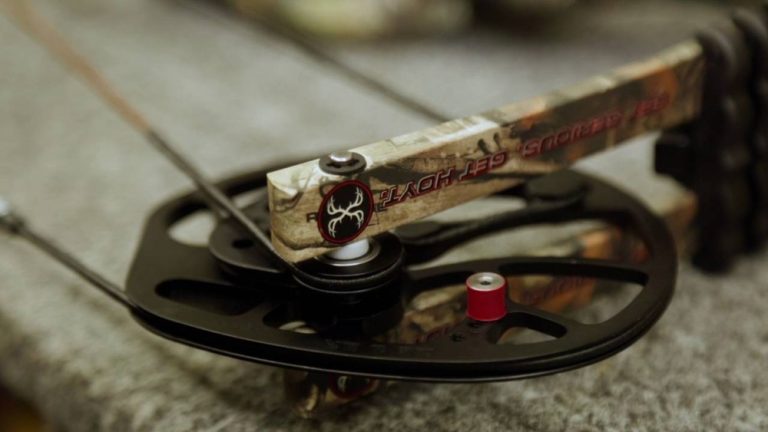
Check cam timing at full draw or on a draw board. On dual-cam bows, both cams should hit the stops at the same time. If one cam arrives early, arrow launch can vary, and broadheads often show that problem faster than field points do.
Timing changes that require a press or cable work belong in a shop if the bow setup is unfamiliar or the needed correction is not straightforward.
If that didn’t work, try this next
- Mark the current cam position before any twist changes.
- Use the draw board to confirm which cam reaches the stop first.
- Correct timing with the proper cable adjustment, then re-check paper.
Can I broadhead tune without a bow press?
Yes, sometimes. Rest moves, nocking point checks, paper tuning, and field-point comparison can be done without a bow press. A press is needed for some string, cable, and cam jobs, so it is not required for every tuning step. If the fix involves serving, timing changes, or cam work, a press may be part of the job.
A bow press is not the tool for every correction. It becomes necessary when the adjustment is outside the rest, nock, or sighting system.
What nocking point height should I start with?
Start about 1/8 inch above level. Archery Sarasota also notes that many compound setups want the nock sitting 1/8 to 3/16 inch above 90 degrees. Use a bow square, then change it in small increments rather than making a large jump.
If paper tears show high or low nock influence, move the nocking point a little and test again. That keeps the correction controlled and easier to read.
Why do my broadheads hit differently than field points?
Broadheads can reveal setup issues that field points hide, especially left-right errors, weak or stiff spine, rest alignment, and timing problems. Fixed blades are the most sensitive. If broadheads print away from field points after a clean paper hole, the bow still needs a closer look before hunting use.
Say your field points group into about 2 inches at 20 yards, but fixed blades land about 5 inches left. That is a setup clue, not a sight issue. Recheck rest position, center shot, nocking point, and cam timing before changing sight pins.
Common mistakes
Using paper tune as if it were final broadhead proof wastes time and hides later problems. Paper tells you about arrow flight. Broadhead comparison tells you whether that flight holds up with a hunting point.
Chasing sight marks before fixing tear direction or timing also sends the work in the wrong direction. Make the bow shoot straight first, then set the sight.
A common mistake is overcorrecting the sight or rest after a broadhead group shows a slight left-right difference. Small changes such as 1/32 inch are easier to read and easier to undo.
Failure case after a clean tear
Suppose paper gives a bullet hole, but broadheads still hit about 4 inches right at 30 yards. That usually means the setup is close, but not finished. Recheck rest alignment first, then confirm cam timing, then confirm spine match before blaming the broadhead itself.
If broadhead impact still wanders after those checks, the problem may need a shop-level correction rather than another sight change.
Re-check sequence after a change
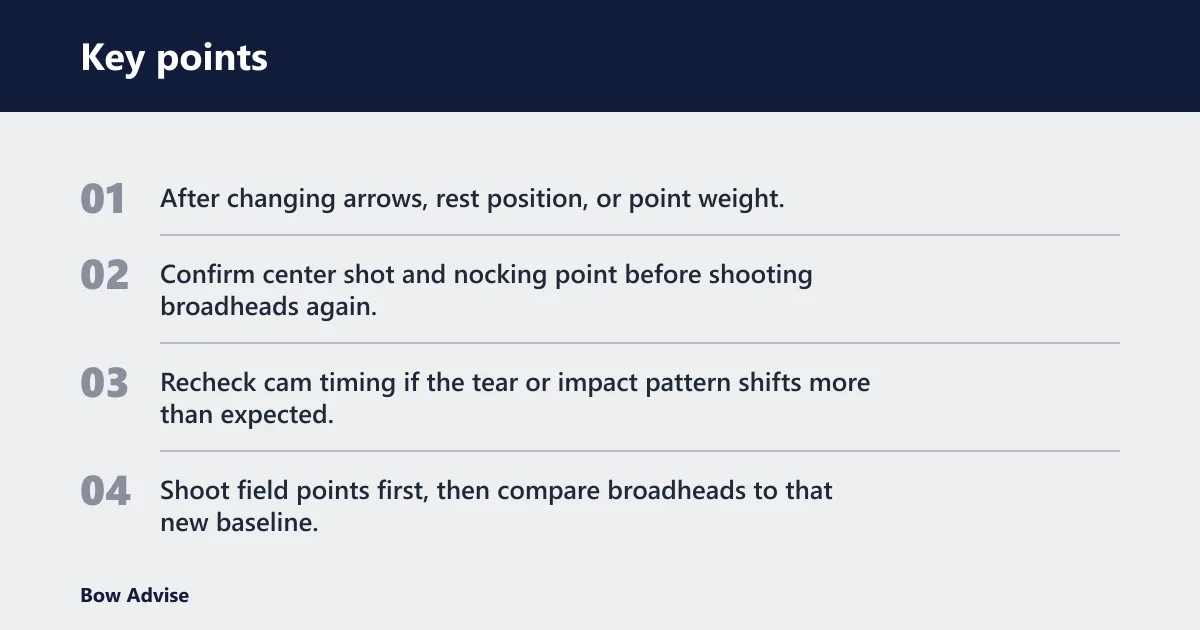
- After changing arrows, rest position, or point weight, return to the same paper-tune setup at about 6 feet.
- Confirm center shot and nocking point before shooting broadheads again.
- Recheck cam timing if the tear or impact pattern shifts more than expected.
- Shoot field points first, then compare broadheads to that new baseline.
Record the rest position, nocking point height, and point weight before changing any part of the setup. That makes it much easier to return to a known baseline if the next test moves the bow the wrong way.