Compound Bow Arrow Length Vs Draw Length: Find Your Perfect Fit
Selecting the perfect arrow length for your compound bow can feel confusing, especially for new archers. You might wonder, “Should my arrows match my draw length?” or “What if my arrows are too short or long?” These questions matter, because the right arrow length affects safety, accuracy, and how the bow feels in your hands. Even small mistakes can lead to poor performance or, worse, dangerous accidents. This article explains the relationship between compound bow arrow length and draw length in clear, practical terms. By the end, you’ll know exactly how to choose the right arrow length for your needs, whether you shoot for target practice or hunting.
This guide is part of our Archery basics: beginner guide to bows and shooting series.


Understanding Compound Bow Draw Length
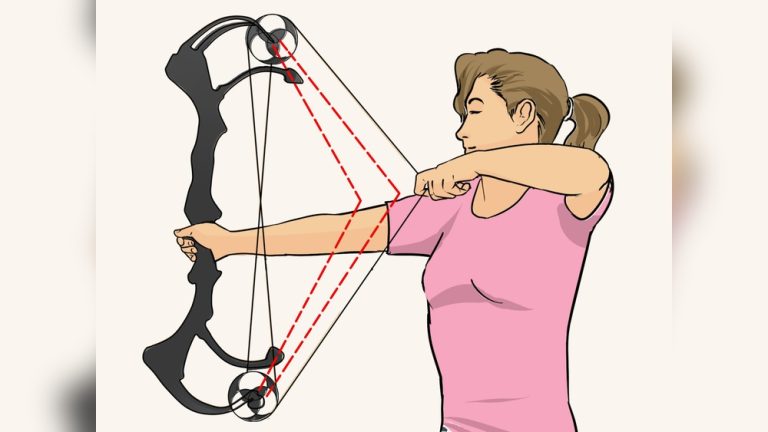
The draw length of a compound bow is the distance from the bowstring (at full draw) to the grip’s pivot point, plus 1.75 inches. Most adult archers have a draw length between 26 and 31 inches. It’s a fixed measurement for compound bows, set when you adjust your cams or modules.
Why does this matter? Because using a bow with the wrong draw length can hurt your accuracy, strain your muscles, and even make shooting uncomfortable. For example, if your draw length is too long, you’ll overextend and lose control. Too short, and you’ll feel cramped, losing power and stability.
Key point: Your true draw length is about your body, not the bow. Measure it by spreading your arms wide, measuring from fingertip to fingertip, then dividing by 2.5. This gives a good starting estimate.
What Is Arrow Length And Why Does It Matter?
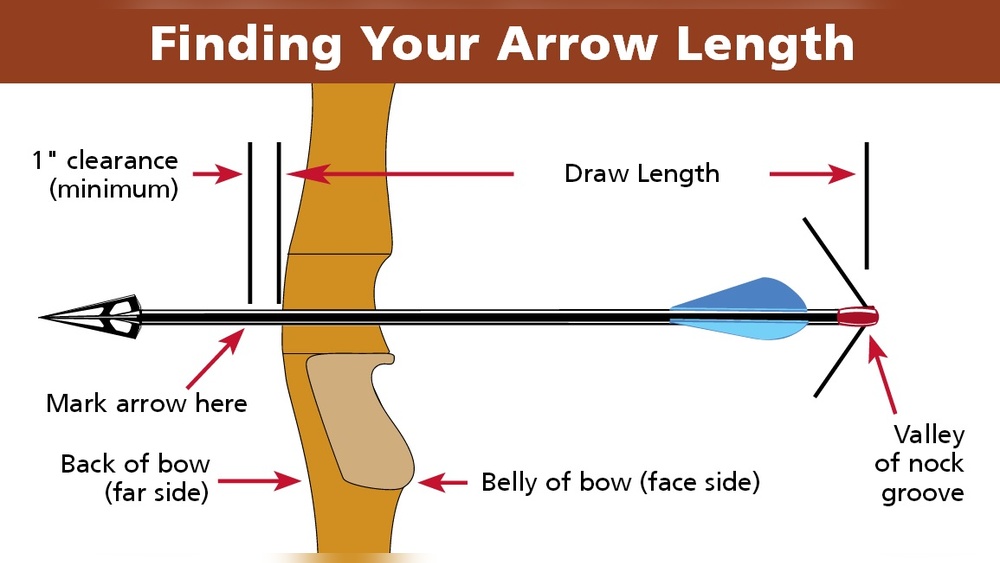
Arrow length is measured from the nock groove (where the string sits) to the end of the shaft, not including the tip or insert. For compound bows, choosing the right arrow length is vital for two reasons:
- Safety: Arrows that are too short can fall off the rest and be drawn past the bow, risking a dry fire (which can destroy your bow and cause injury).
- Performance: Arrow length affects spine (stiffness), weight, and flight. Too long or too short, and your arrows may not fly true.
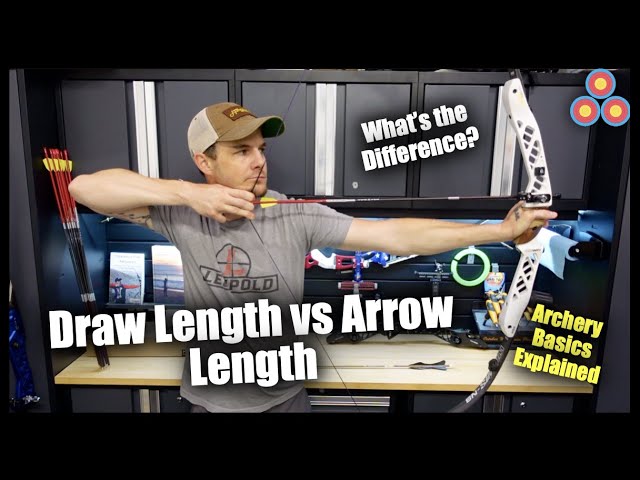
Most archers use arrows 1 to 2 inches longer than their draw length. But there are exceptions depending on your setup, arrow rest type, and personal preference.
How Draw Length And Arrow Length Are Connected
Your draw length directly limits your minimum safe arrow length. If your arrow is shorter than your draw length, it becomes unsafe, there’s a risk you’ll draw the tip inside your arrow rest or past the bow, causing serious problems.
Example: If your draw length is 28 inches, your arrow shaft should be at least 28 inches, ideally 28.5 or 29 inches for a safety margin.
But it’s not just about being “not too short. ” Too long, and your arrow may be heavier than needed, drop faster, and flex more, reducing accuracy.
Here’s a comparison to clarify:
| Draw Length (inches) | Typical Arrow Length (inches) | Arrow Safety Margin |
|---|---|---|
| 26 | 27, 28 | +1 to +2 |
| 28 | 29, 30 | +1 to +2 |
| 30 | 31, 32 | +1 to +2 |
Pro Tip: Never cut your arrows shorter than your draw length, even if you want to reduce weight. The safety risk is not worth it.
How To Measure Draw Length And Arrow Length
Measuring Your Draw Length
Here’s a simple step-by-step method:
- Stand with your arms stretched out, palms facing forward.
- Have someone measure the distance from the tip of one middle finger to the other.
- Divide this number by 2.5. This is your estimated draw length in inches.
For example, if your wingspan is 70 inches: 70 ÷ 2.5 = 28 inches.
Measuring Arrow Length
To measure arrow length for a compound bow:
- Place the arrow on your bow, nock it, and draw to full draw (with a helper watching for safety).
- Mark where the arrow meets the arrow rest or the front of the riser.
- Add at least 1 inch to this point for safety. The arrow should extend beyond the rest, even at full draw.
Many pro shops use an arrow length gauge, a special ruler with a nock on one end and inch markings along the shaft.
Warning: Never test arrow length by drawing a bare shaft without a field point or insert. The sharp end can cause injury if you slip.

Credit: www.outdoorlife.com
How Arrow Length Affects Arrow Spine
Arrow spine refers to how much an arrow flexes when shot. Both the draw weight of your bow and the length of your arrow affect spine. The longer the arrow, the more it bends under the same force. If your arrows are too long for your draw length and bow setup, they may be too flexible, causing erratic flight.
If you shoot a heavy compound bow (say, 70 lbs draw weight), a longer arrow will need a stiffer spine. Conversely, for a lighter bow, you have more flexibility.
This relationship is why arrow manufacturers provide spine charts. These charts match draw weight and arrow length to the correct spine rating. Here’s a simplified example:
| Draw Weight (lbs) | Arrow Length (inches) | Recommended Spine |
|---|---|---|
| 40, 50 | 28 | 500 |
| 50, 60 | 29 | 400 |
| 60, 70 | 30 | 340 |
Key insight: If you increase arrow length without adjusting the spine, your arrows may flex too much, reducing accuracy. Always check the manufacturer’s chart for your exact setup.
Factors To Consider When Choosing Arrow Length
Several factors affect your ideal arrow length. Here are the most important:
- Your draw length: The foundation for your minimum arrow length.
- Arrow rest type: Some rests (like drop-aways) allow for slightly shorter arrows, while full-capture rests may need extra length.
- Point type: Broadheads require more clearance than field points.
- Shooting style: Target shooters may prefer longer, more stable arrows, while hunters might choose shorter, faster arrows.
- Safety margin: Always leave at least 1 inch beyond the riser at full draw.
Example: When I tested my own setup, I found that using arrows just half an inch longer than my draw length made a big difference in both confidence and accuracy. Too short, and I was always nervous. Too long, and my arrows felt sluggish.
Mistakes Beginners Make With Arrow Length
Choosing the wrong arrow length is a common mistake. Here are some errors to avoid:
- Cutting arrows too short: This is dangerous and can lead to injury or equipment damage.
- Ignoring arrow spine: Focusing only on length without matching spine can ruin accuracy.
- Copying others’ setups: Your ideal arrow length depends on your body and bow, not someone else’s.
- Guessing measurements: Always measure your draw length accurately.
Pro Tip: Visit a reputable archery shop for your first setup. Pros can measure you and cut arrows safely.
Effects Of Arrow Length On Performance
Speed And Trajectory
Shorter arrows are lighter and shoot faster, but only if the spine matches your bow’s draw weight and length. Faster arrows have flatter trajectories, meaning they hit closer to your aiming point at different distances. But too short, and you lose safety and stability.
Longer arrows are heavier, which slows them down. However, they can be more forgiving of minor mistakes and may group better at close range.
Accuracy And Consistency
The right arrow length helps you anchor consistently, meaning you draw to the same spot every time. Consistency is key for tight groups and reliable results. If your arrow is the wrong length, it can feel awkward, making it harder to build good form.
Safety
This cannot be stressed enough: always err on the side of longer arrows. An arrow drawn past the rest can result in a dry fire, which can destroy your bow and cause injury.
Credit: www.youtube.com
Customizing Arrow Length For Different Purposes
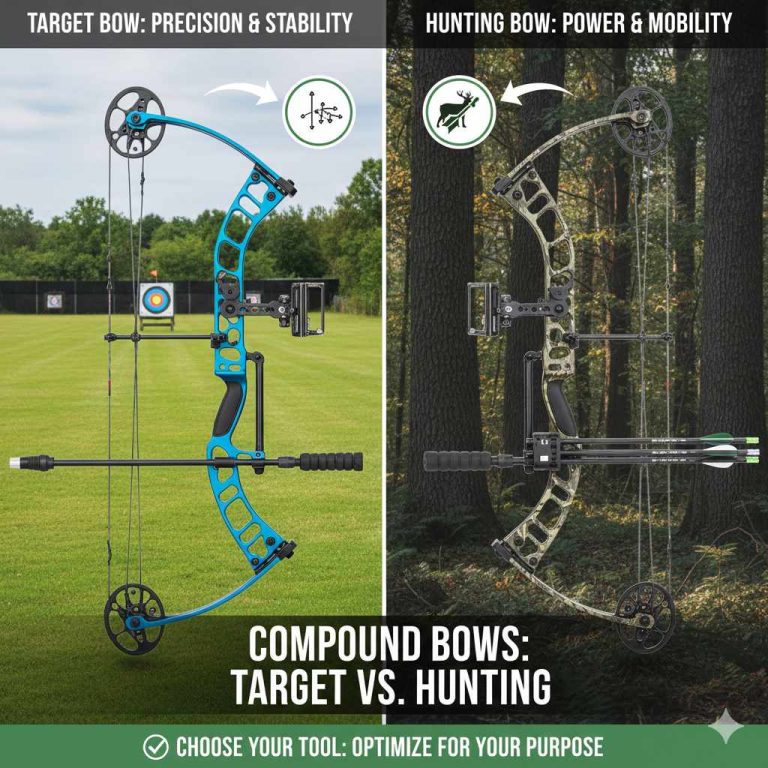
Hunting
Hunters often prefer slightly shorter arrows for speed and penetration, but not so short that safety is at risk. Broadheads need extra clearance, so measure carefully.
Target Shooting
Target shooters may use longer arrows for better stability and forgiveness. Heavier, longer arrows also resist wind drift better at long ranges.
Youth And Beginners
For young archers, always leave room to grow. Arrows can be cut shorter later but cannot be made longer. Start with a safe margin.
Practical Steps To Selecting Arrow Length
Follow these steps for a safe, accurate setup:
- Measure your draw length as described earlier.
- Decide your purpose: Hunting, target, or general shooting.
- Choose an arrow rest and note if it requires extra length.
- Select an arrow shaft that matches your draw weight and spine needs.
- Cut arrows to 1, 2 inches longer than your draw length.
- Test at the range for comfort and accuracy.
- Adjust if needed, always staying on the safe side.
Example: If you have a 29-inch draw length, use arrows 30 to 30.5 inches long for most purposes. If you switch to a new bow or rest, re-measure before cutting new arrows.

Credit: www.outdoorlife.com
How Arrow Length Affects Arrow Weight And Foc
Arrow Weight
Longer arrows weigh more because there’s more material. Weight affects arrow speed, kinetic energy, and trajectory. For hunting, many experts recommend a total arrow weight of 5, 6 grains per pound of draw weight.
Foc (front Of Center)
FOC is the balance point of your arrow. More FOC (weight toward the front) can improve penetration and stability, but too much can cause the arrow to nose-dive. Longer arrows naturally shift FOC back, so you may need a heavier point to maintain balance.
Here’s a quick comparison:
| Arrow Length (inches) | Approx. Weight (grains, bare shaft) | Typical FOC (%) |
|---|---|---|
| 28 | 250 | 10, 12 |
| 29 | 260 | 9, 11 |
| 30 | 270 | 8, 10 |
Key insight: As you increase arrow length, check your FOC and adjust point weight if needed for proper balance.
Advanced Considerations: Tuning And Arrow Rest Types
Tuning Your Setup
Advanced archers “tune” their arrows by adjusting length, spine, point weight, and fletching. Micro-changes can improve grouping and broadhead flight. But for most archers, matching arrow length to draw length plus a safety margin is enough.
Arrow Rest Types
- Drop-away rests: Allow for slightly shorter arrows since they drop out of the way, but always maintain a safety margin.
- Full-capture rests: Like the Whisker Biscuit, may require slightly longer arrows to avoid contact at full draw.
Pro Tip: Test your setup at full draw with your broadhead of choice before cutting all your arrows.
Common Myths About Arrow And Draw Length
- Myth: Shorter arrows are always better.
- Fact: Too short is unsafe and may not fly well.
- Myth: Arrow length does not affect spine.
- Fact: Longer arrows are weaker (more flexible) at the same spine rating.
- Myth: Any arrow will work if it fits the bow.
- Fact: Arrows must match your draw length, draw weight, and spine for safety and accuracy.
- Myth: You can use the same arrows for any compound bow.
- Fact: Each bow setup is unique; always check specs.
Where To Get Reliable Information
The best sources for arrow length and draw length guidance are:
- Pro archery shops: Staff can measure and cut arrows precisely.
- Arrow manufacturer charts: Always check these for spine and length combinations.
- Experienced coaches or club members: Can share practical tips.
- Reputable online resources: For example, the Archery Trade Association and Wikipedia offer detailed overviews.
Frequently Asked Questions
How Much Longer Should My Arrow Be Than My Draw Length?
Most experts recommend arrows be 1 to 2 inches longer than your draw length for compound bows. This extra length ensures safety and gives flexibility if you change rests or broadheads. Some advanced shooters may use arrows closer to draw length, but this is only safe with precise tuning and experience.
Can I Use The Same Arrows If I Change My Draw Length?
If you increase your draw length, your old arrows may become too short for safe use. If you reduce draw length, your arrows will be longer than needed, which is safe but may affect speed and trajectory. Always check arrow length at full draw after any change.
Is It Possible To Shoot Arrows That Are Too Long?
Yes, but it’s less dangerous than shooting arrows that are too short. Overly long arrows can be heavier, slower, and may flex more, possibly reducing accuracy. However, for beginners, this is safer than risking arrows that are too short.
How Does Arrow Length Affect Broadhead Flight?
Broadhead-tipped arrows need enough length to clear the rest and riser fully. Too-short arrows may cause contact, deflecting shots or damaging equipment. Longer arrows may help with stability, but if too long, may reduce penetration or make tuning harder.
Should I Cut My Own Arrows At Home?
It’s possible, but not recommended unless you have the proper tools and experience. Using a specialized arrow saw ensures clean, square cuts, which are critical for both safety and performance. Pro shops can cut and insert arrows quickly and often