Compound Bow Draw Length Vs Recurve: Key Differences Explained
Choosing the right bow is a big step for anyone interested in archery. Whether you’re buying your first bow or upgrading, you’ve probably seen the terms compound bow and recurve bow. But one question that often confuses people is: What’s the difference between draw length for compound bows versus recurve bows? Understanding this can make the difference between enjoying archery and struggling with discomfort or poor accuracy.
Many beginners think draw length is the same for all bows or that it only matters for tall people. But the truth is, draw length works differently for each bow type, and knowing how it affects your performance is essential.
In this article, I’ll guide you through the key differences, practical advice, and real-world examples. By the end, you’ll feel confident about choosing the right draw length for your bow, and avoid common mistakes that waste money and time.


What Is Draw Length And Why Does It Matter?
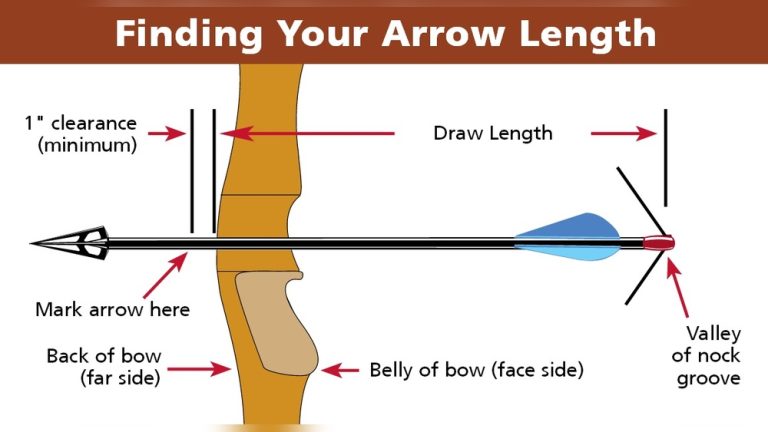
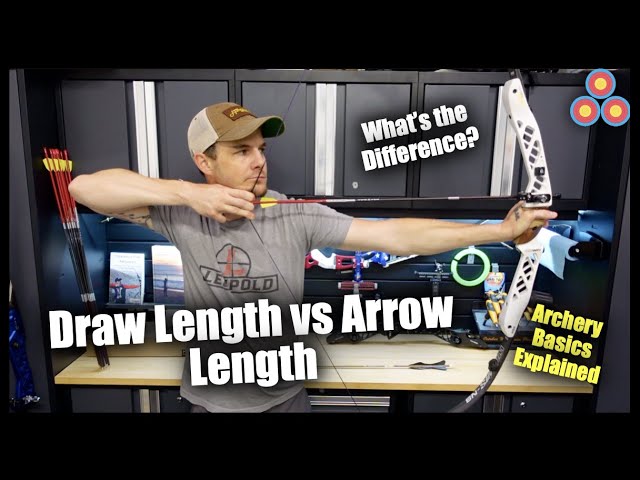
Draw length is the distance from the bowstring to the grip (plus 1. 75 inches) when the bow is fully drawn. It’s the measurement of how far you pull the string back. This affects how comfortable your shooting stance is, how much power your shot has, and how accurate you can be.
If your draw length is too short, you may feel cramped and lose power. If it’s too long, you’ll strain your shoulders and risk injury. The right draw length helps you shoot comfortably and accurately.
For both compound and recurve bows, the draw length is based on your arm span, shooting style, and sometimes personal preference. But the way draw length works in each bow is very different, which is why this comparison is so important.
Understanding Compound Bow Draw Length
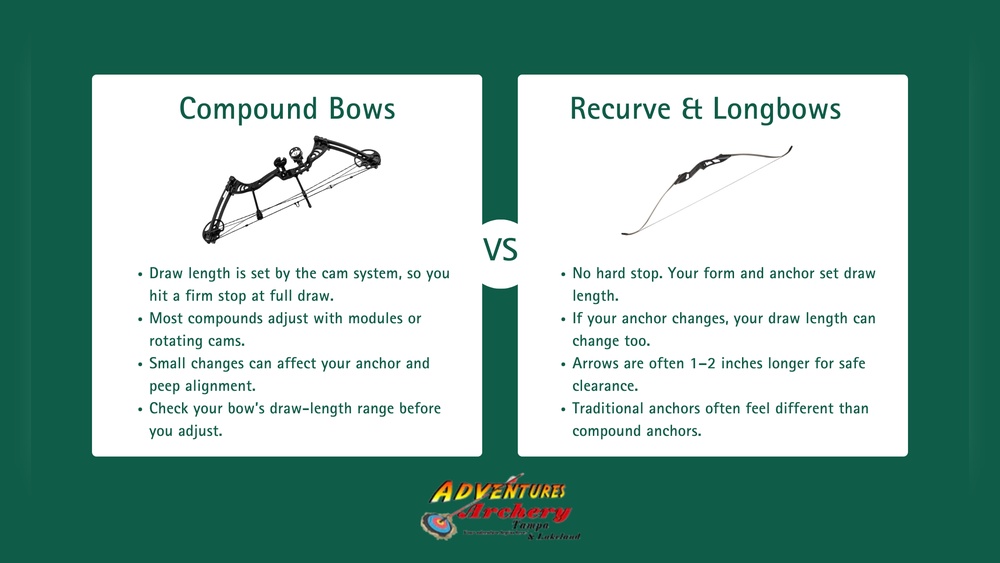
Compound bows use a system of cams and pulleys. This design allows archers to draw heavier weights and hold them comfortably. The draw length on a compound bow is usually fixed, meaning you set it once and it stays the same every time you shoot.
How Compound Bow Draw Length Is Measured
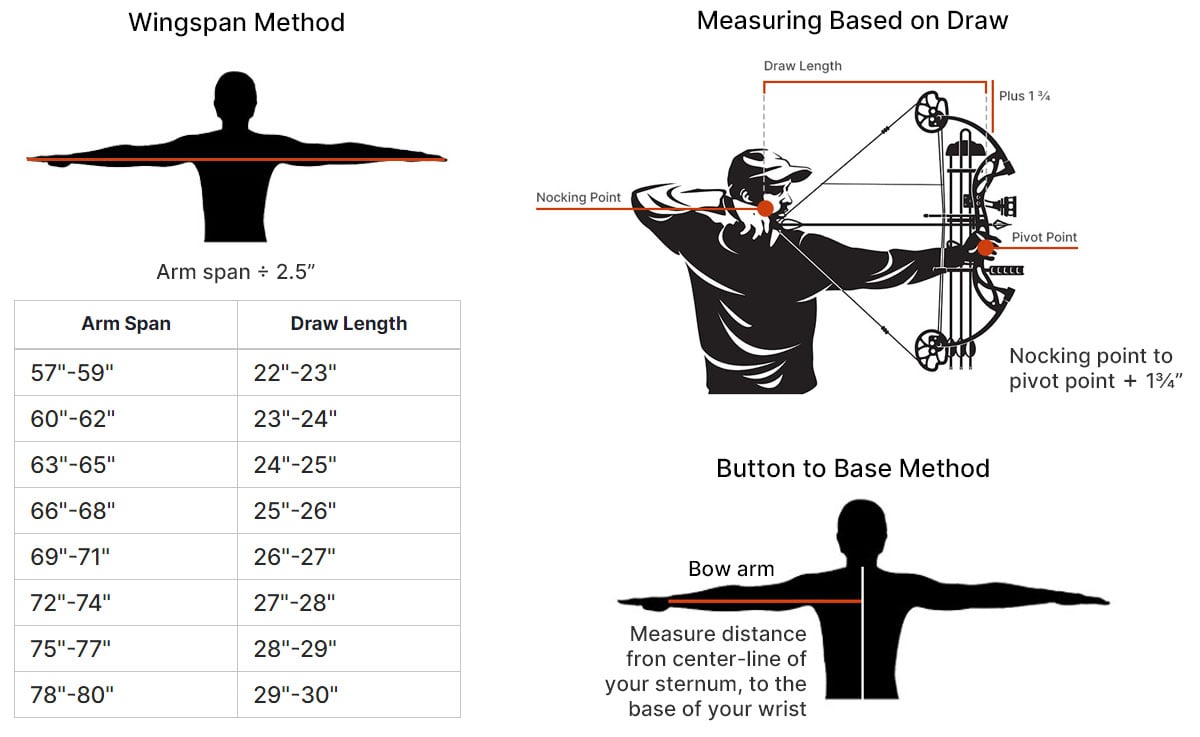
For compound bows, manufacturers use the ATA (Archery Trade Association) standard. This means the draw length is measured from the nocking point (where the arrow sits) to the deepest part of the grip (the pivot point), plus 1.75 inches.
Example: If your measured draw length is 28 inches, your compound bow will be set to this length, and you won’t be able to pull further.
Adjusting Compound Bow Draw Length
Most modern compound bows allow you to adjust the draw length within a certain range. This is done by moving modules or rotating cams. However, the adjustment is limited, usually 1-3 inches.
Pro Tip: Make sure you get your draw length measured professionally before buying a compound bow. Even a half-inch error can affect your accuracy and comfort.
Why Fixed Draw Length Matters
The fixed draw length is important because it creates a consistent shooting experience. You pull the string back to the same spot every time, which improves accuracy. This is one reason compound bows are popular for hunting and target archery.
In my experience, shooting a compound bow with the wrong draw length feels uncomfortable and can cause muscle strain. Once I adjusted mine to fit, my groups tightened, and shooting felt easier.
Credit: www.sportsmans.com
Understanding Recurve Bow Draw Length
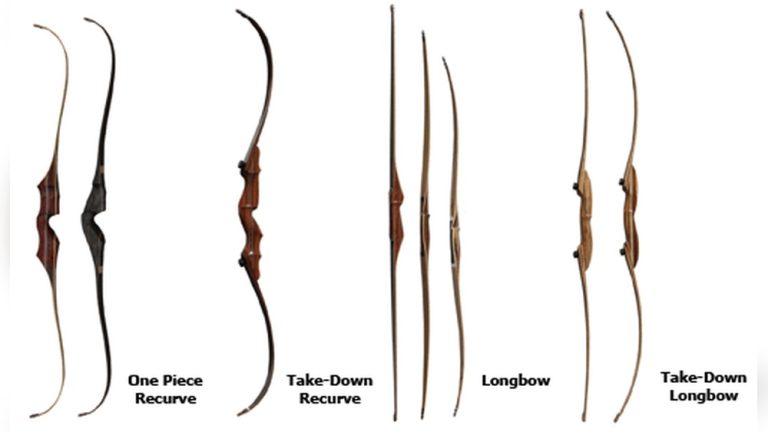
Recurve bows are traditional bows with curved tips. They don’t have cams or pulleys. The draw length on a recurve bow is not fixed, you can pull the string back as far as you like, but the further you pull, the harder it gets.
How Recurve Bow Draw Length Is Measured
For recurves, draw length is measured from the nocking point to the bow’s grip (pivot point) at full draw, plus 1. 75 inches. However, you control how far you pull. This means each shot can have a slightly different draw length.
Example: If your comfortable draw length is 28 inches, you might sometimes pull 27.5 or 28.5 inches, depending on your form.
Why Variable Draw Length Matters
Because the draw length isn’t fixed, recurve archers must pay close attention to their form. Any change in draw length affects arrow speed, accuracy, and consistency.
Pro Tip: Use a clicker (a small device attached to the bow) to help keep your draw length consistent. When the arrow reaches the right length, the clicker clicks, signaling you to release.
Compound Bow Vs Recurve Bow: Draw Length Comparison
The two bow types work differently, which makes their draw length requirements unique. Let’s compare the main differences:
| Feature | Compound Bow | Recurve Bow |
|---|---|---|
| Draw Length | Fixed, set once | Variable, depends on form |
| Adjustment | Limited (1-3 inches) | Unlimited, but practical limits |
| Consistency | High, same every shot | Depends on archer’s form |
| Ease of Use | Easier for beginners | Requires more practice |
Credit: www.sportsmans.com
Calculating Your Draw Length
Your body size determines your ideal draw length. The most common method is the arm span method:
- Stand with arms stretched out, palms facing forward.
- Measure the distance from fingertip to fingertip.
- Divide this number by 2.5.
Example: If your arm span is 70 inches, your draw length is 28 inches (70/2.5).
Pro Tip: Always measure while wearing what you’ll wear when shooting. Thick clothing can add half an inch.
Effects Of Draw Length On Performance
Draw length impacts several key areas:
- Accuracy: Proper draw length helps you anchor consistently, improving aim.
- Power: Longer draw length means more arrow speed, but only if you can handle it.
- Comfort: Short draw length can make you feel cramped; too long can strain your back.
Compound Bows
Compound bows are forgiving if you set the draw length correctly. You anchor at the same spot, and the let-off (reduced holding weight) makes it comfortable.
Example: A compound bow with a 28-inch draw length will give you consistent arrow speed, usually between 270-310 fps, depending on the bow.
Recurve Bows
Recurve bows require more discipline. If you pull less one shot, your arrow will fly slower and drop more. If you pull too far, you might lose control.
Example: A recurve bow with a 28-inch draw length might shoot an arrow at 180-220 fps, but this changes every shot if your draw length changes.
Choosing The Right Draw Length For Compound Bows
Choosing the right draw length for a compound bow is essential. Here’s how to get it right:
- Get measured professionally: Many archery shops offer free fitting.
- Test before buying: Try different settings to see what feels natural.
- Check anchor points: Your anchor (where you touch your face) should be comfortable.
- Adjust for form changes: If you change your shooting style, recheck your draw length.
Warning: Don’t guess your draw length based on height alone. Two people of the same height can have different arm spans.
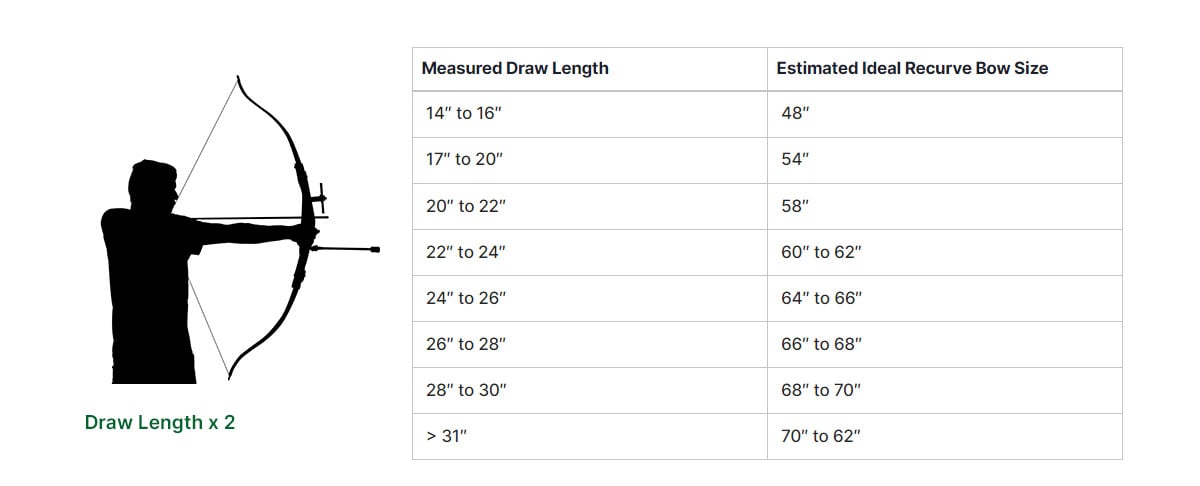
Choosing The Right Draw Length For Recurve Bows
For recurve bows, draw length is more flexible, but consistency matters. Follow these steps:
- Measure your arm span: Use the method explained earlier.
- Practice with a clicker: This helps keep your draw length steady.
- Adjust arrow length: Longer arrows are safer for beginners.
- Review your form: Changes in form can affect draw length.
Example: If you switch from target to field archery, you might need to adjust your draw length and arrow length.
Common Mistakes Beginners Make
Many new archers make mistakes when choosing draw length. Here are some to avoid:
- Guessing draw length: Always measure, never guess.
- Ignoring body changes: Weight gain or loss can affect draw length.
- Buying before testing: Try different bows and settings.
- Not using a clicker: For recurve, this tool helps keep shots consistent.
- Ignoring anchor points: If your anchor feels forced, your draw length may be wrong.
Pro Tip: Take notes when testing bows. Record what feels comfortable and what doesn’t.
Compound Bow Draw Length Adjustment Table
Compound bows often allow for draw length adjustments. Here’s a typical adjustment table:
| Bow Model | Draw Length Range | Adjustment Method |
|---|---|---|
| Hoyt PowerMax | 24, 30 inches | Module rotation |
| Bowtech Carbon Zion | 25, 31 inches | Rotating module |
| Bear Archery Cruzer G2 | 12, 30 inches | Module and cable change |
Always check the manufacturer’s specifications for exact adjustment methods.
Recurve Bow Draw Length And Arrow Speed Table
Draw length affects arrow speed for recurve bows. Here’s a sample table:
| Draw Length (inches) | Arrow Speed (fps) |
|---|---|
| 26 | 180 |
| 28 | 200 |
| 30 | 220 |
This shows why consistent draw length is important for recurve shooters.
Which Is Easier For Beginners: Compound Or Recurve?
If you’re new to archery, you might wonder which bow type is easier. Compound bows are generally easier for beginners because the draw length is fixed and the let-off makes holding the string easier. You can focus on form without worrying about pulling too far or too little.
Recurve bows are more challenging. You need to develop muscle memory to pull the string back the same distance every time. This takes practice and patience.
Example: I started with a compound bow. It was easier to learn because I didn’t have to worry about variable draw length. When I switched to recurve, I had to train my muscles and mind to keep my draw length consistent, which took months of practice.
Performance Differences In Hunting And Target Shooting
Draw length affects hunting and target shooting differently for compound and recurve bows.
Compound Bow In Hunting
- Fixed draw length gives consistent power.
- Easier to hold at full draw while waiting for game.
- Let-off reduces fatigue.
Recurve Bow In Hunting
- Variable draw length can affect shot power.
- Harder to hold at full draw for long periods.
- Requires more practice to shoot accurately under pressure.
Compound Bow In Target Shooting
- Consistent draw length improves accuracy.
- Easier to repeat shots with same power.
Recurve Bow In Target Shooting
- More challenging to maintain consistency.
- Clicker helps, but still requires discipline.
Advanced Tips For Draw Length Selection
Once you understand the basics, there are advanced factors to consider:
- Bow tuning: Changing draw length can affect arrow flight. Tune your bow after adjusting.
- Arrow spine: The stiffness of your arrow should match your draw length and weight.
- Shooting style: If you shoot with a high anchor, your draw length may be shorter.
- Physical changes: Injuries or changes in flexibility can affect your ideal draw length.
Pro Tip: Keep a record of your measurements and changes. This helps when switching bows or updating equipment.
Real-world Example: Olympic Archery
Olympic archers use recurve bows and must maintain strict consistency in draw length. They use clickers and practice for years to develop muscle memory. Compound archers in competitions rely on their fixed draw length for accuracy and speed.
Both types require careful measurement and adjustment, but the way they achieve consistency is different.
How Draw Length Affects Arrow Selection
Your draw length affects the length and spine (stiffness) of your arrows.
- Longer draw length: Requires longer, stiffer arrows.
- Shorter draw length: Can use shorter, less stiff arrows.
Warning: Using the wrong arrow length or spine can cause poor accuracy and even damage your bow.
Example: If your draw length is 29 inches, your arrow should be at least 29.5, 30 inches long to avoid “overdrawing” and risking injury.
Credit: www.youtube.com
Compound Bow Draw Length Vs Recurve: Which Is More Forgiving?
Compound bows are more forgiving because you set the draw length once and rely on mechanical consistency. Recurves demand more from the shooter. If your form slips, your shot will suffer.
This is why many beginners and hunters choose compound bows, while traditionalists and Olympic archers prefer recurve bows for the challenge and skill.
Frequently Asked Questions
What Happens If My Draw Length Is Too Long For A Compound Bow?
If your compound bow’s draw length is too long, your anchor point will feel forced, and you’ll overextend your shoulder. This can cause poor accuracy and may lead to shoulder injuries. Always adjust to a comfortable, natural draw length.
Can I Change My Draw Length Easily On A Recurve Bow?
Yes, you can change your draw length on a recurve bow by adjusting your form or anchor point. However, frequent changes will affect your consistency and arrow flight. It’s best to find a comfortable draw length and stick to it.
Do I Need Special Arrows For Different Draw Lengths?
Yes, arrow length and spine should match your draw length. Longer draw lengths need longer, stiffer arrows for safety and performance. If you switch between bows or change your draw length, recheck your arrow specs.
Is A Clicker Necessary For Recurve Archery?
A clicker is not required, but it’s highly recommended for recurve archers. It helps you pull to the same length every time, improving accuracy and consistency. Even experienced archers use clickers for training and competition.
Are Compound Bows Always Better For Beginners?
Compound bows are easier for most beginners because of their fixed draw length and let-off. However, some people prefer the challenge and tradition of recurve bows. The best bow is the one that fits your needs and helps you enjoy archery.
If you want more details on archery standards and measurements, you can check the official ATA Archery Trade Association guidelines.
Choosing between compound and recurve bows, and understanding draw length, is a personal journey. With the right knowledge, you’ll avoid common mistakes and enjoy archery more, whether you’re shooting for fun, competition, or hunting.