Compound Bow Draw Weight vs Speed: Which Matters More?
Compound Bow Draw Weight Vs Speed: What Really Matters for Archers
If you’re interested in compound bows, you’ve probably heard a lot about draw weight and arrow speed. Some archers say a heavier draw weight always means faster arrows, better accuracy, and more power. Others suggest that higher speed can cause problems and a lighter draw weight is more than enough for most shooters. The truth sits somewhere in the middle.
Choosing the right draw weight and understanding its relationship to arrow speed is one of the most important decisions for archers, whether you’re a target shooter, bowhunter, or just getting started. If you choose wrong, you could end up with a bow that feels uncomfortable, causes injury, or simply doesn’t perform the way you want.
This guide will help you understand how compound bow draw weight and speed affect each other, what you should consider, and how to make the right choice for your body and your style of shooting. Along the way, you’ll find real-world data, comparison tables, and a few key insights that even experienced archers often miss.


Understanding Compound Bow Draw Weight
Draw weight is the amount of force, measured in pounds, needed to pull the bowstring back to full draw. For example, if a bow has a 60-pound draw weight, you must pull with 60 pounds of force to reach the anchor point.
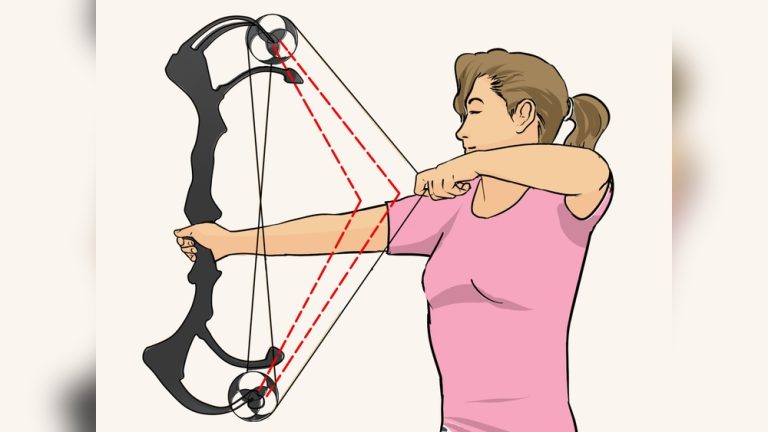
Compound bows have a special design using cams and pulleys. This allows for let-off, meaning you hold less weight at full draw than the peak draw weight. For example, a bow with 80% let-off and a 60-pound draw weight only requires you to hold about 12 pounds at full draw.
Why Draw Weight Matters
The main reasons draw weight is important:
- Power: Higher draw weights store more energy, sending arrows faster and with more force.
- Penetration: For hunting, enough draw weight helps the arrow penetrate the animal.
- Personal comfort: Too much draw weight can cause injury, poor form, and reduce accuracy.
Common Draw Weight Ranges
- Youth/Beginner: 15, 30 pounds
- Target Archery (adult): 30, 50 pounds
- Bowhunting (deer): 40, 70 pounds
- Big Game Hunting: 50, 80 pounds
Laws in many US states require a minimum draw weight (usually 40 pounds) for hunting larger animals. Always check your local regulations.
How Draw Weight Affects Arrow Speed
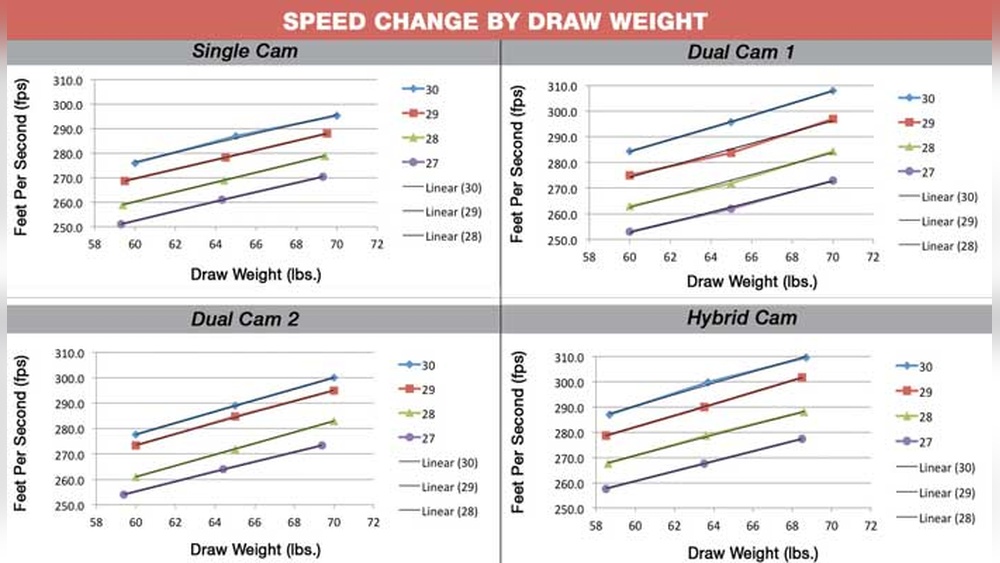
As a general rule, higher draw weight means faster arrows, up to a point. This happens because more energy is transferred from the bow to the arrow. But the relationship isn’t perfectly linear, and other factors influence speed.
Key Factors That Affect Speed
- Arrow weight: Heavier arrows move slower but deliver more force.
- Draw length: Longer draw lengths increase speed because the string moves farther.
- Bow efficiency: Modern cams, limbs, and materials affect how well energy is transferred.
- String and accessories: Heavier strings, peep sights, and silencers can slow arrows slightly.
The Speed Formula
Manufacturers often use the IBO speed (International Bowhunting Organization standard) as a reference. This measures speed with:
- 70-pound draw weight
- 30-inch draw length
- 350-grain arrow
If you reduce draw weight, use a shorter draw length, or shoot a heavier arrow, your actual speed will be lower than the IBO rating.
Comparing Draw Weight And Speed: What The Numbers Show
To see how draw weight affects speed, let’s look at a practical example using a modern compound bow. This is based on real measurements from archery tests.
| Draw Weight (lbs) | Arrow Weight (grains) | Draw Length (inches) | Measured Speed (fps) |
|---|---|---|---|
| 40 | 400 | 28 | 240 |
| 50 | 400 | 28 | 260 |
| 60 | 400 | 28 | 280 |
| 70 | 400 | 28 | 295 |
Key insight: Every 10-pound increase in draw weight adds roughly 10, 20 fps, depending on the bow and setup. However, after about 60, 70 pounds, the gains become smaller, and the extra draw weight can be hard to handle for most shooters.
The Trade-off: Power Vs. Comfort
It’s tempting to think more draw weight is always better. But there are important trade-offs.
- Higher draw weight = more speed and power, but more stress on your body.
- Lower draw weight = easier to shoot, but less speed (which may not matter for target archery).
Real-world Example
On a compound bow, moving from 50 to 60 pounds increases arrow speed by about 18 fps. But after a full practice session, accuracy often drops at 60 pounds because muscles get tired. At 50 pounds, I could shoot longer and with better form.
Pro Tip: If you cannot draw your bow smoothly and hold it at full draw for at least 10 seconds without shaking, your draw weight is probably too high.
How Much Speed Do You Really Need?
For most archers, chasing the highest possible speed is less important than finding the right balance. Here’s why:
- Accuracy matters more than speed. Arrows that hit the target consistently are better than fast misses.
- Heavier arrows can be more stable. They are less affected by wind and keep their energy better over long distances.
- Noise increases with speed. Faster arrows can make the bow louder, which is a concern for hunting.
Minimum Speeds For Common Uses
- Target Archery: 180, 240 fps is plenty for most competitions.
- Hunting (deer): 220, 260 fps is effective if you use the right broadhead and aim well.
- Long Range/3D Shoots: 270+ fps helps reduce arrow drop, but it’s not critical for everyone.
How Arrow Weight Changes The Equation
Arrow weight is just as important as draw weight and speed. Lighter arrows fly faster but carry less energy. Heavier arrows are slower but hit harder.
| Arrow Weight (grains) | Speed (fps) at 60 lbs | Kinetic Energy (ft-lbs) | Usage |
|---|---|---|---|
| 350 | 295 | 67 | Target |
| 400 | 280 | 70 | Hunting |
| 500 | 255 | 72 | Big Game |
Key insight: For hunting, energy (kinetic energy and momentum) matters more than speed alone. Many bowhunters use heavier arrows for better penetration, even if it means slower speeds.
Bow Efficiency And The Law Of Diminishing Returns
Modern compound bows are more efficient than ever. A good bow can transfer over 80% of the stored energy to the arrow. However, as you increase draw weight, you hit a point of diminishing returns, where more draw weight adds less and less speed.
- Example: Moving from 40 to 50 pounds might add 20 fps, but going from 60 to 70 pounds may add only 10 fps.
- At very high draw weights, the added speed may not be worth the extra effort, especially if it hurts your accuracy.
Choosing The Right Draw Weight For You
The best draw weight is the one you can shoot comfortably and accurately, not the highest number you can pull. Here’s how to choose:
- Test different weights: Most archery shops will let you try various draw weights.
- Focus on form: You should be able to draw smoothly and hold at anchor without shaking.
- Consider your goals: Target shooters don’t need as much power as hunters.
- Think about your body: Age, gender, fitness, and injury history all matter.
Draw Weight Recommendations By Body Type
| Archer Type | Recommended Draw Weight (lbs) |
|---|---|
| Youth (under 15) | 15, 25 |
| Teen Female | 25, 40 |
| Teen Male | 30, 50 |
| Adult Female | 30, 50 |
| Adult Male | 40, 70 |
Warning: Trying to shoot a bow that’s too heavy can cause shoulder, elbow, or back injuries over time. Start lighter and move up only when you’re ready.
Draw Weight And Speed For Bowhunting
For hunters, draw weight and speed both matter, but not as much as shot placement and arrow choice. Here’s what to remember:
- Minimum draw weight: Most states require 40 pounds for deer, 50 pounds for larger animals.
- Speed helps, but isn’t everything: Fast arrows can shoot flatter (less drop), but accuracy and penetration are more important.
- Heavier arrows for bigger game: Penetration is key for animals with tough hides or thick bones.
Pro Tip: Many bowhunters successfully take large game with 50, 60 pound bows using proper shot placement and heavy arrows.
Advanced Considerations: Tuning And Customization
Once you find your ideal draw weight and speed, you can fine-tune your setup for even better results.
- Arrow spine: Heavier draw weights need stiffer arrows to fly correctly.
- Peep height and anchor point: Adjust to keep your form consistent.
- Release aid and grip: These affect how much force you can handle and your accuracy.
You can also experiment with different arrow materials (carbon, aluminum, or hybrids) and fletching types to see what works best for you.
Common Mistakes When Choosing Draw Weight And Speed
- Choosing the highest draw weight you can pull once: You need to shoot many times comfortably, not just once.
- Ignoring arrow weight: Focusing only on speed can make you choose arrows that are too light and may damage your bow.
- Believing more speed means more accuracy: Speed helps, but only if you can maintain good form.
- Not adjusting for let-off: A bow with high let-off (80, 90%) is much easier to hold at full draw, so you may be able to handle a bit more draw weight.
- Overlooking bow fit: Draw length and grip are just as important as draw weight for comfort and accuracy.
Real-world Scenarios: Speed And Draw Weight In Action
Target Shooting
For target archers, consistency is king. Most shoot draw weights between 35 and 50 pounds. Speed is less critical, what matters is arrow grouping and form. Many top competitors shoot slower arrows for better control.
3d Archery
In 3D shoots, where targets are at unknown distances, a little extra speed can help. Most competitors use 50, 60 pound bows, but again, accuracy is more important than chasing the highest speed.
Hunting
A hunter might use a 60-pound bow, shooting a 400, 450 grain arrow at 270 fps. This setup is effective for deer and even elk if the shot is good. Some bowhunters prefer heavier arrows at 240, 250 fps for better penetration.
Example: I once switched from a 350-grain to a 450-grain arrow for elk hunting. Speed drops by about 30 fps, but penetration improves, offering more confidence in the setup.
The Hidden Factors: What Most Archers Overlook
- Noise and Vibration: Faster, lighter setups can make your bow louder and vibrate more. This can scare game animals and hurt your shooting comfort.
- Tuning Difficulty: High-speed setups can be harder to tune. Small errors in arrow spine or rest position make a bigger impact at higher speeds.
- Fatigue Over Time: Drawing a heavy bow for many shots in practice or a tournament can tire you out, causing poor form and missed targets.
The Role Of Technology And Modern Bows
Modern compound bows are more efficient, quieter, and more customizable than ever. Thanks to advanced cams, carbon limbs, and better strings, today’s bows can deliver impressive speed even at moderate draw weights.
You can now find bows that shoot over 340 fps IBO at just 60, 65 pounds draw weight. This means you don’t have to sacrifice comfort for performance.
For more on modern bow technology and testing standards, see the Wikipedia page on compound bows.
Frequently Asked Questions
What Is The Best Draw Weight For Beginners?
Most beginners start with 20, 30 pounds for youth and 30, 40 pounds for adults. This allows you to focus on form and accuracy without risking injury. You can increase draw weight as you build strength and confidence.
Does A Faster Arrow Always Shoot Flatter?
Generally, yes. Faster arrows have less drop over distance. However, at typical bowhunting ranges (20, 40 yards), the difference is small, usually just a few inches. Wind and arrow weight can also influence trajectory.
Can I Use A Light Arrow For More Speed?
You can, but be careful. Most manufacturers recommend not shooting arrows lighter than 5 grains per pound of draw weight (e. g. , 300 grains for a 60-pound bow). Lighter arrows may damage your bow and reduce penetration.
Is Higher Speed Better For Hunting All Animals?
Not always. For small game, speed can help with accuracy. For larger animals like deer or elk, penetration is more important. Heavier arrows at moderate speeds often perform better.