Is Bow Draw Weight Static? Unveiling the Truth for Archers
If you’ve just picked up archery or you’re thinking about buying your first bow, you might hear a lot about draw weight. People often ask: “Is bow draw weight static?” This question matters because draw weight affects your accuracy, comfort, and even safety. Understanding whether draw weight stays the same or changes can help you choose the right equipment and improve your shooting. Let’s explore what draw weight means, how it works, and whether it’s really static.
What Is Bow Draw Weight?
Draw weight is the amount of force you need to pull back the string of a bow to a certain distance, called the “draw length.” It’s measured in pounds (lbs). For example, a 40 lb draw weight means you need to pull 40 pounds of force to reach full draw.
Draw weight is important because it determines:
- How much power your arrow will have
- How far and fast the arrow will travel
- How easy or hard it is to pull the bow
If you use too heavy a draw weight, you might get tired quickly or even hurt yourself. Too light, and your arrows won’t go far or hit hard.
Is Bow Draw Weight Always The Same?
Many people think draw weight is fixed, but the answer is more complex. Whether draw weight is static (unchanging) depends on the type of bow, the way you use it, and even the conditions.
Let’s look at the details.
Types Of Bows And Their Draw Weight Behavior
Not all bows behave the same way when you pull the string. Here’s a comparison of the main bow types and how their draw weight works.
| Bow Type | Draw Weight Behavior | Notes |
|---|---|---|
| Recurve Bow | Variable | Draw weight increases as you pull |
| Longbow | Variable | Similar to recurve; non-static |
| Compound Bow | Mostly Static | Draw weight peaks, then drops (“let-off”) |
| Crossbow | Static | Fixed draw weight until cocked |
Recurve And Longbows
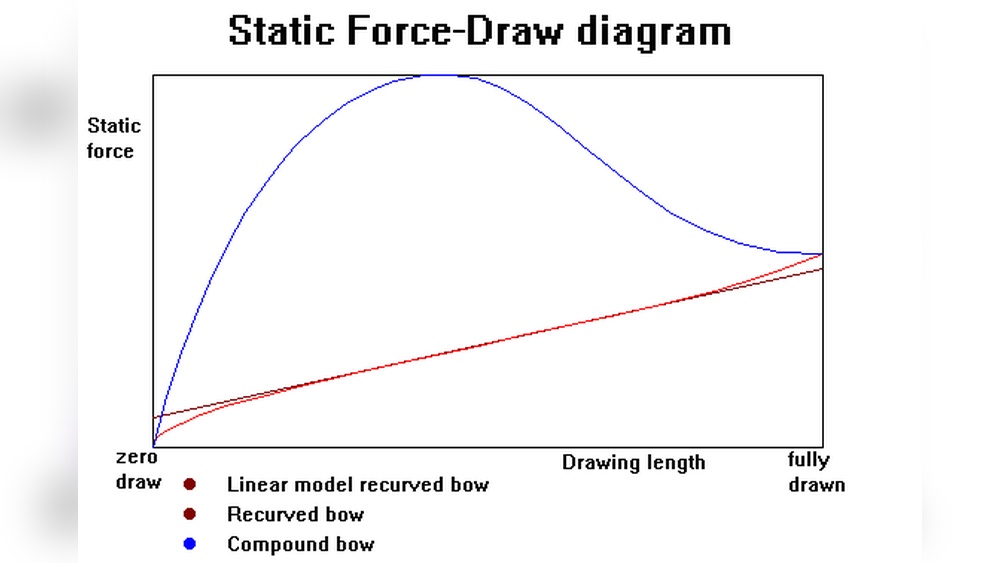
With recurve bows and longbows, the draw weight changes as you pull the string back. The farther you draw, the heavier it gets. This is called a “linear” or “progressive” draw force curve. It means the draw weight is not static.
- At the start, it’s easy.
- At full draw, it’s at the maximum listed on the bow.
Compound Bows
Compound bows use cams and pulleys. As you pull, the draw weight rises, peaks, and then drops near the end. This drop is called let-off. At full draw, you hold much less weight, sometimes just 20% of the peak draw weight.
For example, a compound bow with a 60 lb peak draw weight and 80% let-off means you hold only 12 lbs at full draw. So, draw weight is not static through the pull, but at full draw, it’s almost fixed.
Crossbows
Crossbows are different. You cock the string and lock it. The draw weight is fixed for each shot and does not change during use. This is the closest to being truly static.
How Draw Weight Changes As You Draw
Let’s look at how draw weight changes during the draw cycle for different bows.
| Stage of Draw | Recurve/Longbow | Compound Bow |
|---|---|---|
| Start of Draw | Low | Low |
| Mid-Draw | Medium | Rising |
| Peak Draw | High (Max weight) | High (Peak weight) |
| Full Draw | High (Stays high) | Low (Let-off applied) |
Example: When testing a 40 lb recurve bow, the string feels light at the start, but as one pulls to the anchor point, it gets much heavier. With a 60 lb compound, it peaked halfway and became easy to hold at full draw.
Pro Tip: If you’re not sure what draw weight fits you, try different bows in a shop. Your comfort matters more than big numbers.
Factors That Affect Draw Weight
Even with the same bow, draw weight can change based on several factors. Here are some you might not know:
1. Draw Length
Draw length is the distance from the bow grip to your anchor point (usually the corner of your mouth) when the bow is fully drawn.
- For recurve/longbows, longer draw length = higher draw weight.
- If you have long arms, you’ll “feel” more draw weight than someone with short arms using the same bow.
2. Bow Design And Materials
The shape and material of the bow limbs change how draw weight feels and behaves.
- Laminated wood and fiberglass limbs often feel smoother.
- Some bows stack (get much harder to pull) near the end of the draw, this is called stacking.
3. Temperature And Humidity
Extreme heat or moisture can soften some traditional bow materials, slightly lowering draw weight. This isn’t a big change for modern bows, but traditional wooden bows can lose a few pounds of draw weight in high humidity.
4. String Type And Condition
Old or stretched bowstrings may reduce draw weight by a small amount. A new, tight string can increase it.
5. Limb Adjustment (takedown And Compound Bows)
Many modern recurve and compound bows allow you to adjust limb bolts. This changes the draw weight range, sometimes by 10-15 lbs.
- Tightening the limb bolts increases draw weight.
- Loosening lowers it.
Is Draw Weight Labeled At A Specific Draw Length?
Manufacturers usually list draw weight based on a standard draw length, often 28 inches for adults. If you draw shorter or longer, your actual draw weight will differ.
Example: A recurve bow labeled 40 lbs at 28 inches will be about 37 lbs if you draw 26 inches, or 43 lbs if you draw 30 inches.
Real-world Impact: Why Draw Weight Variability Matters
Understanding that draw weight is not always static is key for:
- Accuracy: Variable draw weight can affect your aim, especially if you struggle to reach full draw.
- Consistency: Shooting with the same draw weight every time helps your muscle memory.
- Arrow Selection: Heavier draw weights need stronger, stiffer arrows.
- Injury Risk: Using too much weight increases risk of shoulder, elbow, and finger injuries.
Pro Tip: Don’t chase high draw weights. Most archers start with 20-30 lbs and work up as their technique and strength improve.
Comparing Bow Types: Static Vs. Variable Draw Weight
Here’s a side-by-side look at how different bows compare:
| Bow Type | Is Draw Weight Static? | Suitability for Beginners |
|---|---|---|
| Recurve | No (Variable) | Yes, easy to learn |
| Longbow | No (Variable) | Yes, but requires more strength |
| Compound | Mostly (at full draw) | Yes, but more complex |
| Crossbow | Yes (Static) | Yes, but not traditional archery |
How To Measure Actual Draw Weight
Want to know your real draw weight? You can measure it at your personal draw length.
Steps To Measure:
- Use a bow scale: Attach a scale to the string and pull to your anchor point.
- Record the weight: This is your true draw weight at your draw length.
- Repeat: Check a few times to be sure.
Warning: Always use proper safety gear when measuring draw weight. Never dry-fire (release the string without an arrow), as it can damage the bow and injure you.
Misconceptions About Static Draw Weight
Many beginners think a bow’s draw weight is always what’s written on the label. That’s not always true.
- Myth: “My 40 lb bow is always 40 lbs.”
Reality: Only at the labeled draw length and under specific conditions.
- Myth: “Compound bows are always hard to hold.”
Reality: They’re easier at full draw because of let-off.
How Draw Weight Influences Your Shooting
Draw weight affects every part of archery:
- Speed: Higher draw weight shoots arrows faster.
- Penetration: More weight means deeper arrow penetration (important for hunting).
- Fatigue: Too much weight causes shaky hands and poor form.
- Learning: Lighter bows are better for mastering technique.
Example: When starting, use a 25 lb recurve. Accuracy is often much better with lighter bows than with a 40 lb bow, even though the heavier bow feels “stronger.”
How To Choose The Right Draw Weight
Picking the correct draw weight is personal. Here’s what to consider:
- Your strength and experience: Start light if you’re new.
- Purpose: Target shooting needs less weight; hunting may need more.
- Bow type: Compounds allow heavier draw weights thanks to let-off.
- Age and gender: Younger and smaller shooters need lighter bows.
Pro Tip: If you can’t shoot 20 arrows with good form, the draw weight is too high.
Adjusting Draw Weight On Modern Bows
You can adjust draw weight on many modern bows.
- Takedown recurves: Swap limbs for higher/lower weight.
- Compound bows: Turn limb bolts to increase/decrease weight (usually in 2-4 lb increments).
- Fixed bows: (like traditional longbows) cannot be adjusted.
Warning: Only adjust draw weight as recommended by the manufacturer. Over-tightening or loosening limb bolts can damage your bow.
How Weather And Maintenance Affect Draw Weight
- Heat/Humidity: May lower draw weight in wood bows.
- Cold: Can stiffen some materials, making them feel heavier.
- String Stretch: Old strings reduce draw weight; new strings increase it slightly.
- Limb Fatigue: Over time, limbs may lose a small amount of weight.
Static Draw Weight: When Does It Matter Most?
A static draw weight is most important for:
- Tuning your arrows: Consistent draw weight makes arrow tuning easier.
- Competitive archery: Rules often specify draw weight limits.
- Hunting: Laws may require a minimum draw weight for ethical kills.
- Training: Consistency helps you build muscle memory.
Insights Most Archers Miss
- Your real draw weight is personal. The number on the limb is only a starting point. Measure at your own draw length for accuracy.
- Draw weight changes with technique. If your form improves, you may pull slightly more or less weight.
- Let-off is a big advantage. Compound bows let you hold less weight at full draw, making aiming much easier, even at high peak weights.
Should You Worry About Static Draw Weight?
For most archers, focusing on consistency is more important than worrying about whether draw weight is 100% static. Learn your bow’s behavior, measure your real draw weight, and choose equipment that matches your strength and goals.
Example: When switching from a recurve to a compound, users are often surprised by how easy it is to hold at full draw, even though the peak draw weight is higher. It helped my accuracy and made longer practice sessions possible.
When Static Draw Weight Is A Problem
- Mismatched arrows: Arrows that are too weak for a higher draw weight can break.
- Competition: If your bow’s draw weight is over a limit, you can be disqualified.
- Injury: Trying to shoot with too much draw weight can strain or injure your muscles.
Summary: Is Bow Draw Weight Static?
- Traditional bows (recurve, longbow): Draw weight is variable, not static.
- Compound bows: Draw weight changes during the pull but is mostly static at full draw due to let-off.
- Crossbows: Draw weight is static while cocked.
- Other factors: Draw length, bow design, weather, and string condition all influence your real draw weight.
Knowing this helps you choose the right bow, avoid injury, and improve your shooting skills.
For more technical details on archery physics, see this Wikipedia article on bow draw weight.
Frequently Asked Questions
Does Bow Draw Weight Affect Arrow Speed?
Yes, higher draw weight usually means your arrow will travel faster. This is because more energy is stored in the bow, which is transferred to the arrow upon release. However, arrow weight and design also play a big role in speed.
Can I Increase Draw Weight On My Bow At Home?
If you have a takedown recurve or a compound bow with adjustable limb bolts, you can increase draw weight at home. Always follow your manufacturer’s instructions. For fixed-limb bows, you cannot change the draw weight yourself.
How Does Let-off In Compound Bows Affect Shooting?
Let-off allows you to hold much less weight at full draw, making it easier to aim. This helps archers hold steady and improves accuracy, especially for longer periods. However, the initial pull can still feel heavy.
Is It Better To Start With A Heavier Or Lighter Draw Weight?
It’s best to start with a lighter draw weight so you can focus on learning proper form and technique. Most beginners start between 15-30 lbs. Moving to heavier weights too soon can cause injuries and bad habits.