How To Adjust Weight Bow To Maximum Compound
For archers seeking greater power and precision, optimizing a compound bow’s draw weight is a transformative step. Whether you’re a seasoned hunter, target shooter, or just passionate about archery, understanding how to safely and effectively adjust your compound bow’s weight is essential to unlocking its full potential.
This detailed guide will walk you through the science, mechanics, and best practices for maximizing your bow’s draw weight, without sacrificing accuracy or safety.
A compound bow’s draw weight directly impacts arrow speed, penetration, and overall performance. However, pushing your bow to its maximum weight isn’t as simple as turning a few screws. It requires technical knowledge, the right tools, and careful consideration of your skill level and shooting style.
Drawing from expert advice and manufacturer guidelines, this article will provide you with actionable steps, comparison tables, and real-world examples to help you safely adjust your compound bow to its maximum draw weight.
Key Takeaways
- Draw weight adjustment is critical for maximizing a compound bow’s power, but must be approached methodically.
- Use the manufacturer’s specifications as your upper limit to prevent equipment damage and personal injury.
- Proper tuning, maintenance, and gradual increases in draw weight yield better accuracy and shooting comfort.
- Understanding your physical limits is as important as maximizing bow performance.
- Detailed, step-by-step instructions and real-world examples are included to ensure a safe, effective process.

Credit: www.wikihow.com
Understanding Compound Bow Draw Weight
Compound bows are engineered for precision, efficiency, and power. Draw weight, the force required to pull the bowstring to full draw, directly influences arrow speed and kinetic energy. Knowing how draw weight works and why it matters forms the foundation for any adjustment.
How Draw Weight Impacts Performance
Higher draw weights increase arrow velocity and penetration, crucial for hunting larger game or achieving flatter trajectories in target archery. However, excessive draw weight can lead to poor shooting form, fatigue, and even injuries. According to Archery Trade Association guidelines, most adult bows range from 40 to 70 pounds of draw weight, with hunting bows typically set at 60, 70 pounds.
Mechanical Principles Behind Adjustment
Compound bows use a system of cams, limbs, and cables to store and release energy efficiently. Adjusting draw weight primarily involves altering the tension in the limbs through limb bolts, which changes the potential energy stored during the draw cycle. It’s vital to recognize that each bow has a specific draw weight range, exceeding this range can damage the bow or void warranties.
Manufacturer Limits And Safety
Each bow’s riser and limbs are designed to handle a specific draw weight range. For example, a bow rated for 50, 70 pounds should never be adjusted below or above those limits. Pro Tip: Always consult your bow’s owner’s manual or the manufacturer’s website for precise specifications.
Common Misconceptions
Some archers believe that heavier draw weight always equates to better performance. In reality, shooting with a weight beyond your comfort or skill level can reduce accuracy and enjoyment. Consistency and control are as important as raw power.
Preparing To Adjust Your Compound Bow
Before making any changes, preparation is key to safety and success. This section covers the essential tools, workspace setup, and safety protocols required for adjusting your bow’s draw weight.
Essential Tools And Equipment
You’ll need the following items:
- Allen wrench set (typically 3/16″ or 7/32″ for most limb bolts)
- Bow press (for advanced limb or cam adjustments)
- Draw weight scale (for precise measurement)
- Manufacturer’s manual
- Lubricant (for limb bolts)
- Safety glasses
Setting Up A Safe Workspace
Choose a well-lit, clutter-free area. Use a bow vise or stable table to secure your bow during adjustments. Keep all tools within arm’s reach and ensure children and pets are kept away.
Inspecting Your Bow Before Adjustment
- Check for cracks or damage on limbs and riser.
- Examine cables, strings, and cams for signs of excessive wear.
- Ensure all screws and bolts are tight but not over-torqued.
Example: In my experience, failing to inspect the limbs before increasing draw weight resulted in a hairline crack expanding, which could have led to catastrophic failure during use.
Recording Initial Settings
Use a draw weight scale to measure and record your current draw weight. Note the number of turns on each limb bolt to maintain symmetry during adjustments.
Step-by-step Guide: Adjusting Draw Weight To Maximum
This section offers an in-depth walkthrough for increasing your compound bow’s draw weight safely and effectively.
Locating And Understanding Limb Bolts
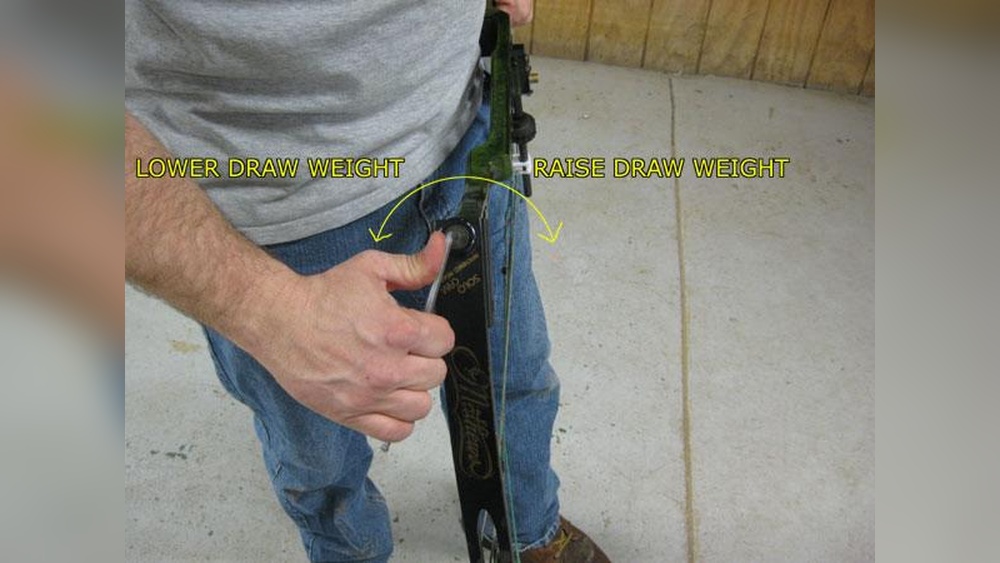
The main adjustment mechanism is the limb bolts located where each limb meets the riser. Turning these bolts clockwise increases draw weight; counterclockwise decreases it.
Manufacturer’s Maximums: Read Before Adjusting
Refer to your manual for the maximum number of turns out from fully tightened. Exceeding this can cause limb separation or void warranties. Most bows allow 2, 4 full turns from the fully tightened position.
| Bow Model | Draw Weight Range (lbs) | Max Turns Out | Factory Setting (lbs) |
|---|---|---|---|
| Hoyt PowerMax | 40, 70 | 3 | 60 |
| Bear Archery Divergent | 45, 70 | 4 | 60 |
| Bowtech Carbon Zion | 45, 70 | 3 | 65 |
Step-by-step Adjustment Process
- Loosen Limb Bolts Evenly: Always adjust both top and bottom bolts in equal increments, typically 1/4 or 1/2 turn at a time, to maintain limb alignment and cam timing.
- Tighten to Increase Draw Weight: Turn each bolt clockwise, counting the number of turns. Most bows reach maximum draw weight when bolts are fully seated (tightened), but never over-tighten.
- Measure After Each Adjustment: Use a draw weight scale after each incremental adjustment to avoid overshooting the maximum.
- Check Cam and Limb Alignment: Visually inspect cams and limbs for parallelism and proper seating.
- Repeat Until Maximum Is Reached: Stop once you reach the manufacturer’s rated maximum or when bolts are fully seated.
Warning: Never shoot your bow with the limb bolts excessively loosened or overtightened, as this can cause catastrophic failure.
Double-check All Settings
Once at maximum draw weight, recheck:
- Limb bolt tightness
- Cam synchronization and timing
- String and cable condition
Example: Maximizing A Hoyt Powermax
A user with a Hoyt PowerMax (40, 70 lbs) starts at 60 lbs. By tightening both limb bolts 1/2 turn at a time and measuring with a scale, they reach 70 lbs at 2.5 turns in. They stop, inspect the bow, and confirm cam alignment before shooting.
Tuning And Testing After Adjustment
After maximizing draw weight, fine-tuning and testing are crucial for safety and performance. This section details the best practices for post-adjustment tuning.
Paper Tuning For Arrow Flight
Paper tuning helps assess arrow flight. Shoot an arrow through a suspended sheet of paper at close range and examine the resulting tear. Adjust rest position, nocking point, and cam timing as needed for a clean “bullet hole” tear.
Checking Cam Timing And Synchronization
Use a bow press or timing cable markers to ensure both cams rotate in unison. Improper timing can lead to inconsistent arrow flight and increased wear.
Verifying Draw Length
Increasing draw weight can sometimes affect draw length slightly, especially on bows with modular cams. Double-check your draw length to ensure proper fit and comfort.
Shooting Test Groups
- Shoot several groups at short and long distances to gauge accuracy.
- Note any changes in point of impact or grouping size.
- Adjust sight pins as necessary.
Example: Post-adjustment Accuracy Improvement
A target archer increases draw weight from 50 to 60 lbs and notices a 10% reduction in arrow drop at 40 yards, according to their digital rangefinder, resulting in improved long-range accuracy.
Safety Considerations And Common Pitfalls
Maximizing draw weight should never come at the expense of safety. This section outlines critical safety checks and the most frequent mistakes to avoid.
Regular Inspection And Maintenance
- Inspect limbs, riser, strings, and cables for wear after each adjustment session.
- Replace components showing signs of fatigue or cracking.
Recognizing Personal Physical Limits
Even if your bow can handle a higher draw weight, your body may not. Overexertion can cause shoulder injuries and poor shooting form. According to the Mayo Clinic, repetitive strain injuries in archery are common among those who shoot beyond their comfort level (Mayo Clinic).
Common Mistakes To Avoid
- Uneven limb bolt adjustment (causes cam misalignment)
- Ignoring manufacturer’s max turns
- Dry firing (shooting without an arrow), which can destroy the bow
- Skipping post-adjustment tuning
Signs You’ve Gone Too Far
- Difficulty drawing smoothly
- Noticeable cam lean or misalignment
- Rattling or creaking noises during draw
Pro Tip: If you notice any of these symptoms, back off the adjustment and consult a professional bow technician.
Matching Arrows And Accessories To Increased Draw Weight
Boosting draw weight means your arrows and accessories may also need upgrading. Mismatched components can cause poor accuracy or even dangerous failures.
Arrow Spine And Weight
Higher draw weight increases the force exerted on arrows, requiring a stiffer spine (lower deflection value). Use manufacturer spine charts to select appropriate arrows for your new draw weight.
| Draw Weight (lbs) | Recommended Arrow Spine | Typical Arrow Weight (grains) |
|---|---|---|
| 40, 50 | 500, 400 | 300, 350 |
| 50, 60 | 400, 340 | 350, 400 |
| 60, 70 | 340, 300 | 400, 450 |
Broadheads And Points
Heavier draw weights can handle larger, heavier broadheads, increasing penetration for hunting. However, ensure total arrow weight remains within safe limits for your bow.
Upgrading Sights, Rests, And Stabilizers
More powerful bows produce greater vibration and shock. Consider upgrading to sturdier accessories designed for higher kinetic energy.
Example: Arrow Failure At Higher Draw Weight
A hunter increased draw weight from 55 to 70 lbs but did not switch to stiffer arrows. The result: frequent arrow shaft flexing and one catastrophic shaft failure during a practice session. Upgrading to a 340-spine arrow resolved the issue.
Real-world Case Studies
Examining real-world scenarios offers practical insights into the process and challenges of maximizing compound bow draw weight.
Case Study 1: Hunting Scenario
A bowhunter using a Bear Archery Divergent adjusted from 60 to 70 lbs for an elk hunt. After tuning and switching to heavier, stiffer arrows, penetration on 3D targets improved markedly, and field accuracy at 50 yards increased. The hunter noted increased fatigue after extended shooting sessions, leading to a moderate reduction in draw weight for daily practice.
Case Study 2: Target Archery
A competitive archer with a Bowtech Carbon Zion increased draw weight to 65 lbs, expecting better long-range performance. After careful tuning and sight adjustment, group size at 60 yards decreased by 15%. However, the archer reported that shooting more than 40 arrows per session led to form breakdown, prompting a reevaluation of optimal draw weight for competition.
Case Study 3: Youth Transition To Adult Draw Weights
A teenage archer moving from a 45-lb to a 60-lb draw weight struggled with form until gradually increasing by 2 lbs every two weeks, focusing on strength training and form drills. This incremental approach allowed for safe adaptation and improved scores at local tournaments.
Maximizing Performance: Pro Tips And Advanced Adjustments
Beyond basic draw weight adjustment, experienced archers can employ advanced techniques to further optimize performance.
Adjusting Let-off And Cam Modules
Some bows allow for let-off adjustment, the percentage of weight held at full draw. Lower let-off increases holding weight, potentially yielding more arrow speed but requiring greater strength. Cam modules may also be swapped to modify draw length and let-off characteristics.
Custom Strings And Cables
Upgrading to high-quality, low-stretch strings and cables can improve energy transfer and consistency, especially at higher draw weights.
Limb Dampeners And Vibration Control
Adding limb dampeners, stabilizers, and string silencers reduces noise and shock, enhancing comfort at maximum settings.
Periodic Professional Inspection
Annual tune-ups at a certified pro shop ensure cams remain in time, limbs are safe, and all hardware is secure.
Pro Tip: Regularly log your adjustments, arrow specs, and performance results in a shooting journal to track progress and identify trends.
Frequently Asked Questions
What Happens If I Exceed The Manufacturer’s Maximum Draw Weight?
Exceeding the specified draw weight can result in limb failure, voided warranties, or personal injury. Manufacturer limits are based on rigorous testing; always stay within their guidelines.
How Do I Know If My Arrows Are Stiff Enough For My New Draw Weight?
Check your arrow’s spine rating against manufacturer charts for your new draw weight. Too little spine (too flexible) can cause erratic flight or shaft breakage. It’s best to consult a pro shop or use spine calculators provided by reputable arrow brands.
Can I Increase Draw Weight Without A Bow Press?
For most draw weight adjustments, a bow press is not required, simply use an Allen wrench to turn the limb bolts. However, if you need to adjust cam modules or replace strings, a bow press may be necessary.
What Is The Ideal Draw Weight For Hunting Different Game Animals?
The ideal draw weight varies:
- Deer: 40, 60 lbs
- Elk: 50, 70 lbs
- Large game (moose, bear): 60, 70 lbs
Always check local regulations, as some states have minimum draw weight requirements for hunting.
Will Increasing My Draw Weight Improve My Accuracy?
A higher draw weight can increase arrow speed, but accuracy depends on your ability to control the bow. If you struggle to draw smoothly or maintain proper form, your accuracy may decrease. Increase draw weight only to the level you can handle comfortably and consistently.
After following the steps outlined in this article, you’ll be equipped to safely and effectively maximize your compound bow’s draw weight. Remember, the key is balancing power with control, and always respecting your bow’s, and your own, limits. For the most accurate and up-to-date information, consult your manufacturer’s manual and work with a certified archery technician or coach. For further reading on compound bow mechanics and safety, visit the Compound Bow Wikipedia page. Happy shooting!