Best Bow Setup for Elk Hunting: What to Look for in the Mountains
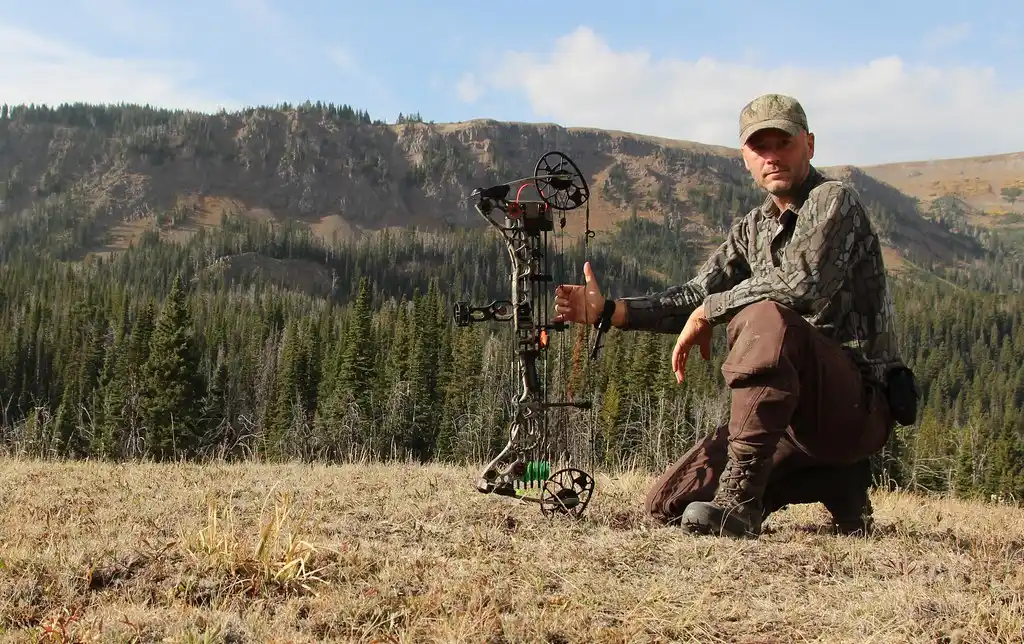
Pick a bow that is about 28–33 inches axle-to-axle, about 5.5 pounds or less bare, with draw weight you can hold cleanly. That range usually balances mountain carry, steadiness, and steep-angle forgiveness for elk. Set it up wrong and you get fatigue, twitchy aiming, and sloppy form on steep shots. This guide covers the tradeoff triangle, bow length, weight, brace height, arrow setup, and the features that matter most above timberline.
What matters most in a mountain elk bow setup?


The best elk setup in the mountains is the one that keeps you shooting well after a long climb. That means balancing three things: shootability, packability, and steep-angle forgiveness. A bow that sits steady on target but feels awful to carry can cost shot quality by mile six.
Mountain terrain changes the priority stack. Long approaches make every ounce matter. Wind pushes light setups around. Steep shots punish poor form, weak angle compensation, and short brace height. For elk, the setup should favor a calm pin float and clean arrow flight more than raw speed alone.
Mountain elk setup decision table
| Hunter type | Axle-to-axle length | Draw weight | Stabilizer length | Arrow weight |
|---|---|---|---|---|
| Backcountry | 28–30 inches | 50–60 pounds | 4–7 inches | 430–500 grains |
| Saddle | 30–32 inches | 55–65 pounds | 6–10 inches | 410–490 grains |
| Spot-and-stalk | 31–33 inches | 55–70 pounds | 8–12 inches | 400–475 grains |
Backcountry hunters usually need the shortest carry-friendly bow that still settles at full draw. Saddle hunters can tolerate a bit more length because they spend more time shooting from a stable position. Spot-and-stalk hunters often benefit from the most stability because they may shoot from uneven ground, kneeling positions, or wind-exposed ridges.
What bow specs should you prioritize?
Start with axle-to-axle length, draw weight, brace height, let-off, and holding stability. Those five determine how the bow carries, how it behaves at full draw, and how forgiving it is when the shot angle gets ugly. IBO speed matters, but it comes after control for elk in the mountains.
Axle-to-axle length and carry length
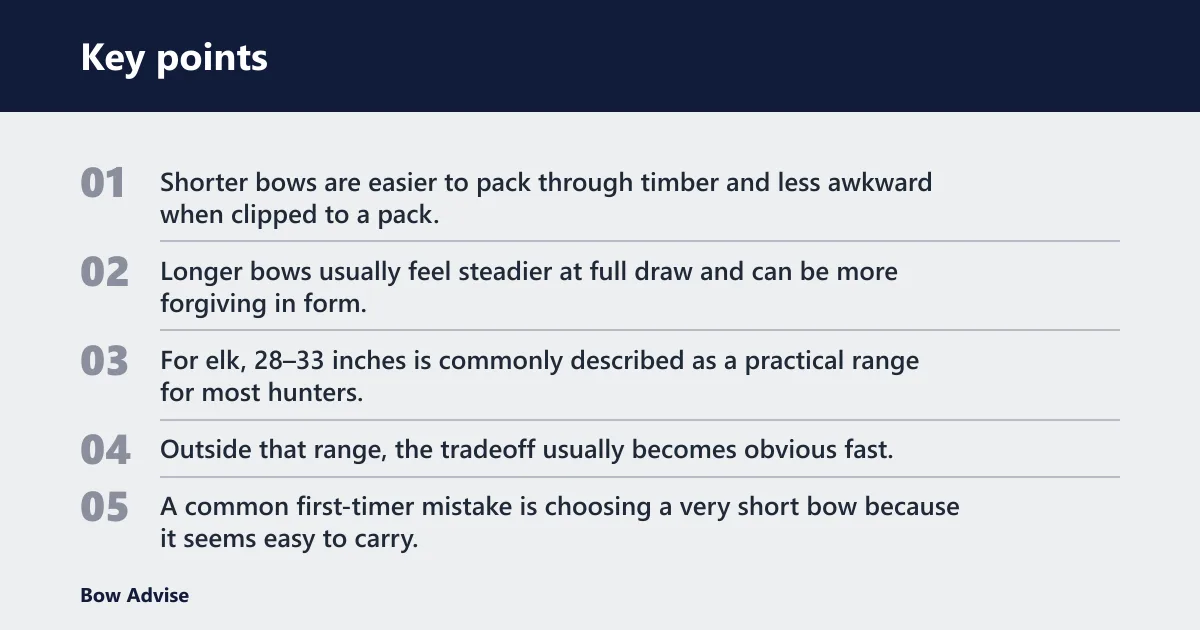
Shorter bows are easier to pack through timber and less awkward when clipped to a pack. Longer bows usually feel steadier at full draw and can be more forgiving in form. For elk, 28–33 inches is commonly described as a practical range for most hunters. Outside that range, the tradeoff usually becomes obvious fast.
A common first-timer mistake is choosing a very short bow because it seems easy to carry, then finding that the pin drifts harder in wind and on steep sidehill shots. Say your bow is 25 inches axle-to-axle and you are aiming downhill at 38 yards; the shorter frame can feel lively in hand, but that liveliness often turns into more movement at the anchor point.
Draw weight, let-off, and holding stability
Draw weight should match the hunter’s form in cold weather, at altitude, and under stress. A cleanly held 55-pound bow beats a shaky 70-pound setup for most elk hunters. Let-off helps at full draw, but it does not fix poor holding stability or fatigue from a heavy bow arm.
Choose a weight you can draw and hold without creeping, collapsing, or shaking badly after the climb. That matters more than chasing top-end speed. The goal is a repeatable shot from awkward angles, not a lab number.
Brace height and forgiveness
Brace height affects how forgiving the bow feels when form is less than perfect. A slightly taller brace height can help on steep terrain because it gives a little more margin if the shot breaks from a kneeling position or from a hard sidehill stance. For elk, forgiveness is often worth more than a few extra feet per second.
IBO speed versus real elk setup speed
IBO speed is a useful comparison number, but real elk setup speed depends on the full package: arrow weight, broadhead choice, tune, and the way the bow holds at full draw. A fast bow with poor balance still shoots badly if the pin float is busy and the draw cycle tires the shooter.
How should you set up your sight and rangefinder?
For mountain elk, the sight and rangefinder matter because steep shots require accurate distance and a sight picture that does not waste time. Bowhunting requires knowing the precise yardage to your target because arrows travel much slower than bullets. In steep country, a rangefinder with angle compensation is not optional.
Single-pin vs multi-pin for elk country
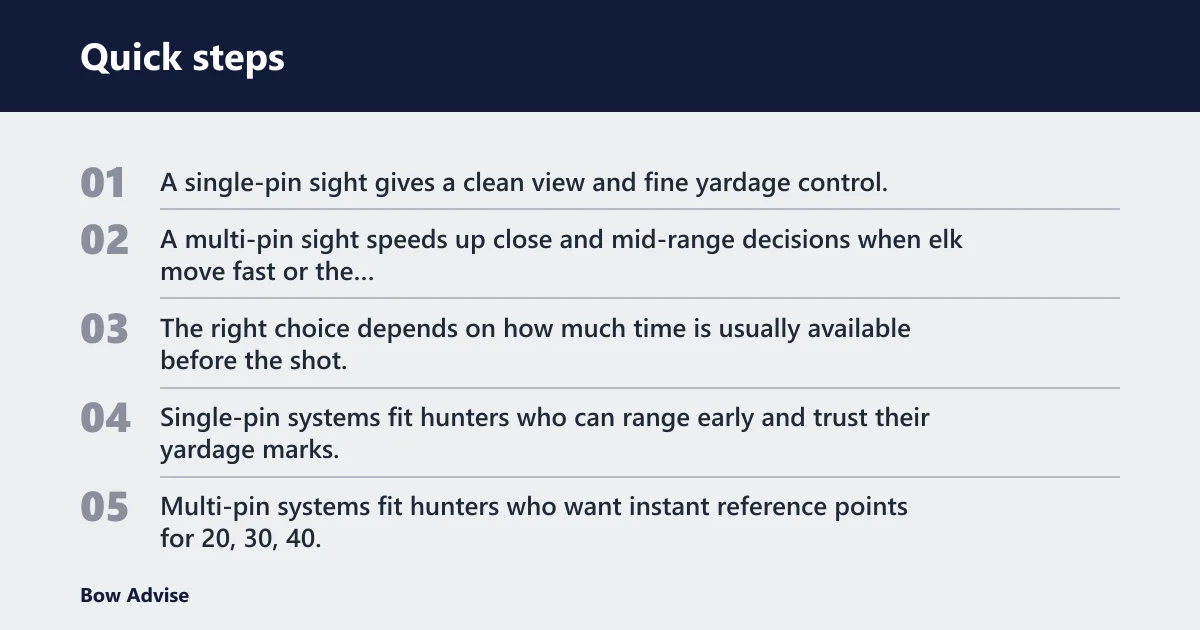
A single-pin sight gives a clean view and fine yardage control, which helps when exact distance is known. A multi-pin sight speeds up close and mid-range decisions when elk move fast or the shooter does not want to dial under pressure. The right choice depends on how much time is usually available before the shot.
Single-pin systems fit hunters who can range early and trust their yardage marks. Multi-pin systems fit hunters who want instant reference points for 20, 30, 40, and 50 yards without adjusting the housing. Both can work well if the pins are set for real hunting distances, not range-only logic.
Why angle compensation matters on steep shots
Steep downhill and uphill shots shorten the effective distance. A rangefinder with angle compensation helps prevent the common mistake of aiming at raw line-of-sight distance instead of the true shooting distance. The Leupold RX-FullDraw 5 ranges from 6 to 1,200 yards, includes Flightpath technology for archery-specific ranging, and has a 20-yard pin solution designed to help with steep shots by removing the need for a cut chart.
The Sig Sauer KILO4K is image stabilized and has archery mode. It also has a 5.3-yard minimum range, which matters when an elk appears at close range in timber or on a tight bench.
Yardage marks, micro-adjustments, and lighted pins
Yardage marks should be readable and repeatable. Micro-adjustments matter because mountain shots often happen at odd distances, not neat round numbers. A lighted pin can help in dark timber or at last light, but it should stay usable without bloating the sight picture.
Outdoor Life recommends the Vortex Diamondback 2000 as best for mountain archers. The Hawke LRF800 is listed as the best budget option, while the Bushnell Broadhead is listed as best for whitetail hunters. Those labels show that not every rangefinder is built with the same archery priorities.
Minimum range and close-range precision
Close-range precision matters because elk often appear inside 20 yards in broken country. A rangefinder that struggles up close can create confusion right when speed matters most. Archery mode, minimum range, and angle compensation should be checked before season so the first close elk does not become a guess.
What arrow setup works best on elk?
The best arrow setup is one that matches the bow’s draw weight, tunes cleanly, and carries enough mass for broadhead stability. On elk, the goal is durable flight and broadhead consistency. Fixed and mechanical heads both work, but the rest of the setup has to support the choice.
Arrow spine for your draw weight and draw length
Arrow spine should match the bow’s actual draw weight, draw length, point weight, and broadhead type. Too weak and the arrow can plane. Too stiff and tuning gets harder. The correct spine is the one that bareshafts or groups in tune with the chosen point setup.
Total arrow weight for mountain hunting
Heavier arrows tend to carry momentum well and often behave more calmly in wind. Many elk setups land in roughly the 400 to 500 grain range, depending on draw weight and hunting style. That range fits the mountain tradeoff better than ultra-light arrows that chase speed at the expense of control.
Fixed vs mechanical broadheads
Fixed broadheads are simple and durable, and they usually reward clean tuning. Mechanical heads can open up well on impact, but they still need enough arrow speed and a setup that keeps them stable in flight. If broadhead selection changes late, re-check point-of-impact before the hunt.
Suppose a hunter shoots a 65-pound bow with a broadhead-tuned fixed head but switches to a much lighter arrow in the final week. The sight pin may still look right on flat ground, yet the arrow can drift differently on a quartering downhill shot because the whole dynamic changed.
Broadhead compatibility checks before season
- Confirm the spine matches the full arrow build.
- Check point weight, insert weight, and broadhead weight together.
- Paper tune and confirm broadhead impact with field points.
- Verify vane clearance with the quiver attached.
- Re-check after any sight, rest, or arrow change.
How do accessories affect mountain performance?
Accessories matter when they change balance, noise, or consistency. That includes the stabilizer, bow quiver, and release aid. These parts do not replace a sound bow choice, but they can help or hurt the shot in cold weather, wind, and awkward positions.
Stabilizer length, balance, and vibration dampening
A stabilizer should calm the bow without making it miserable to pack. Shorter lengths carry better, while longer stabilizers usually improve balance and reduce movement at full draw. For mountains, the sweet spot is usually enough length to steady the sight pin without turning the bow into a snag point.
Poor balance shows up as a bow that tips forward, dips hard on the wall, or feels noisy after release. Vibration dampening matters more than many hunters think because less hand shock usually helps follow-through and confidence on steep shots.
Bow quiver fit, retention, and noise reduction
A fixed-to-bow quiver should hold arrows tightly, stay quiet, and not ruin balance. Heavy quivers can pull the bow forward and make aiming feel nose-heavy. If the quiver changes the sight picture or causes vane contact, it needs adjustment before the hunt.
Release aid choice for cold-weather usability
Index releases are simple and easy to manage with gloves. Thumb releases can feel cleaner for some shooters, but cold-weather usability depends on trigger feel and how reliably the hand can settle under stress. The best choice is the one that stays predictable when fingers are cold and attention is split.
What should I look for in a bow for long uphill hikes?
For long hikes, look for a bow that stays under control when carried, does not beat up the shoulder, and still holds steady enough for a shot after exertion. Excessive weight, awkward balance, and overbuilt accessories become a problem faster than many hunters expect. Durable boots, weather resistance, camouflage clothing, and a backpack with essentials all matter, but they do not fix a poor bow setup.
Cold-weather reliability matters too. Strings, cables, sight tape, and release feel all change in the mountains when temperatures drop. A compact bow that is easy to transport but impossible to hold cleanly is a bad trade. A slightly longer bow that carries well and settles better can be the smarter choice.
Picture a hunter carrying a very long, heavily accessorized bow through blowdown and sidehill wind. The walk becomes slower, the shoulders tighten, and by the time an elk steps out, the sight picture is less stable than it should be. The problem was not elk country; it was a setup that demanded too much from the hunter.
What setup helps with steep angle shots on elk?
A steep-angle setup is one that ranges accurately, aims cleanly, and tolerates imperfect body position. That usually means a bow with enough brace height to forgive small form errors, a sight that is easy to read, and a rangefinder with solid angle compensation. The arrow should be tuned well enough that point-of-impact stays predictable when the shot angle changes.
For steep shots, the whole system matters more than any one part. The sight cannot fix a bad arrow tune. The rangefinder cannot fix a shaky hold. The bow must be calm enough to keep the pin where it belongs while the body is contorted on a slope.
Frequently asked questions
What bow setup is best for elk hunting in the mountains?
The best mountain elk setup is usually a 28–33 inch axle-to-axle compound that stays under 5.5 pounds bare and holds cleanly at your chosen draw weight. That range gives a workable mix of carry comfort, aiming stability, and steep-angle forgiveness without turning the bow into a burden on long hikes.
What draw weight should I use for elk hunting?
Use the heaviest draw weight you can hold cleanly after climbing, rather than the heaviest weight you can draw once. Many hunters end up in the 50–65 pound range because it supports good arrow performance without creating shaky form. Clean execution matters more than chasing a number.
What axle-to-axle length is best for mountain elk hunting?
Most mountain elk hunters do well with a bow in the 28–33 inch axle-to-axle range. Shorter bows carry better in steep terrain and thick timber. Longer bows generally aim steadier and can feel more forgiving on awkward shots, especially when wind or fatigue enters the picture.
Should I choose a lighter or heavier bow for steep terrain?
Choose the lightest bow that still holds steady and does not feel twitchy at full draw. Excessive weight slows down long approaches and can fatigue the shoulder. A very light bow may pack well, but if it wanders in the pin, the shot quality suffers more than the carry benefit helps.
What accessories matter most for elk hunting from mountains?
The most useful accessories are a solid rangefinder, a stabilizer that improves balance without making the bow awkward, a quiet quiver with good retention, and a release aid that works well in cold conditions. Those parts directly affect shot timing, balance, and the ability to execute on steep terrain.
How important is a rangefinder for mountain bowhunting?
Very important. Bowhunting requires knowing the precise yardage to your target because arrows travel much slower than bullets. In the mountains, angle compensation, archery mode, and close-range precision matter because the true shooting distance often differs from the line-of-sight distance by enough to miss the lane.